







Question: 5 AL bccDc bccDe AaBbc SER 3 1 Normal 1 No Spac... Heading 1 Heading 2 = WS Ed Styles Paragraph 3. Absolut is considering
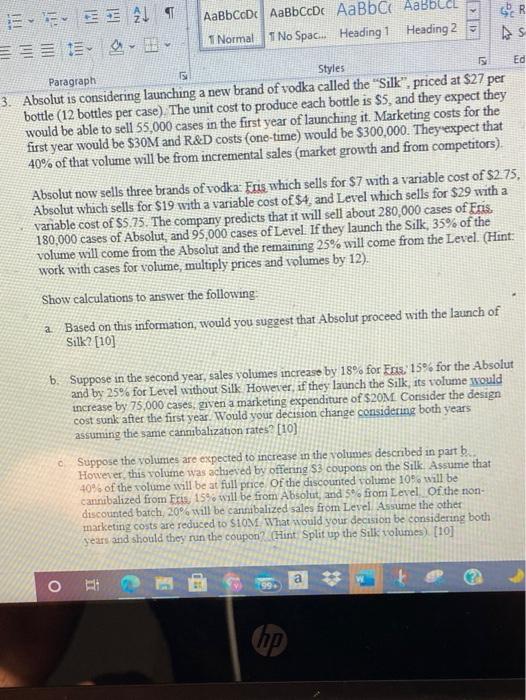
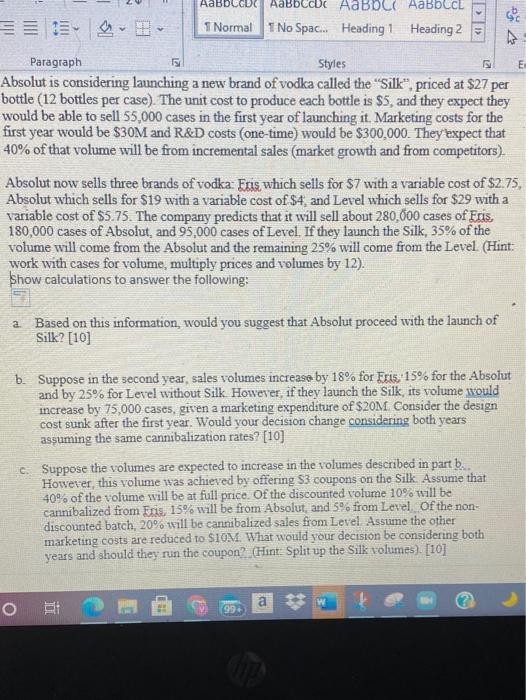
5 AL bccDc bccDe AaBbc SER 3 1 Normal 1 No Spac... Heading 1 Heading 2 = WS Ed Styles Paragraph 3. Absolut is considering launching a new brand of vodka called the "Silk", priced at $27 per bottle (12 bottles per case). The unit cost to produce each bottle is $5, and they expect they would be able to sell 55,000 cases in the first year of launching it. Marketing costs for the first year would be $30M and R&D costs (one-time) would be $300,000. They expect that 40% of that volume will be from incremental sales (market growth and from competitors) Absolut now sells three brands of vodka: Eris which sells for $7 with a variable cost of $275, Absolut which sells for $19 with a variable cost of $4, and Level which sells for $29 with a vanable cost of $5.75. The company predicts that it will sell about 280.000 cases of Fris. 180.000 cases of Absolut, and 95,000 cases of Level If they launch the Silk, 35% of the volume will come from the Absolut and the remaining 25% will come from the Level. (Hint: work with cases for volume, multiply prices and volumes by 12). Show calculations to answer the following: 2. Based on this information, would you suggest that Absolut proceed with the launch of Silk? [10] b. Suppose in the second year, sales volumes increase by 18% for Frs, 15% for the Absolut and by 25% for Level without Silk However, if they launch the Silk, its volume would increase by 75,000 cases, given a marketing expenditure of $20M Consider the design cost surk after the first year. Would your decision change considering both years assuming the same cannibalization rates? [10] c Suppose the volumes are expected to increase in the volumes described in part b. However, this volume was achieved by offering $3 coupons on the Silk Assume that 40% of the volume will be at full price of the discounted volume 10% will be cannibalized from Fris, 15% will be from Absolut, and 5 from Level Of the non- discounted batch 20% will be cannibalized sales from Level Assume the other marketing costs are reduced to SIM What would your decision be considering both years and should they run the coupon? (Hint Split up the Silk volumes) [10] i O a 99 cL 1 Normal I No Spac... Heading 1 Heading 2 > 1 vo E Paragraph Styles Absolut is considering launching a new brand of vodka called the Silk", priced at $27 per bottle (12 bottles per case). The unit cost to produce each bottle is $5, and they expect they would be able to sell 55,000 cases in the first year of launching it. Marketing costs for the first year would be $30M and R&D costs (one-time) would be $300,000. They expect that 40% of that volume will be from incremental sales (market growth and from competitors). Absolut now sells three brands of vodka: Fris which sells for $7 with a variable cost of $2.75, Absolut which sells for $19 with a variable cost of $4 and Level which sells for $29 with a variable cost of $5.75. The company predicts that it will sell about 280,000 cases of Fris. 180,000 cases of Absolut, and 95,000 cases of Level. If they launch the Silk, 35% of the volume will come from the Absolut and the remaining 25% will come from the Level. (Hint: work with cases for volume, multiply prices and volumes by 12). show calculations to answer the following: a. Based on this information, would you suggest that Absolut proceed with the launch of Silk? [10] b. Suppose in the second year, sales volumes increase by 18% for Fris: 15% for the Absolut and by 25% for Level without Silk However, if they launch the Silk, its volume would increase by 75,000 cases, given a marketing expenditure of $20M. Consider the design cost sunk after the first year. Would your decision change considering both years assuming the same cannibalization rates? [10] c. Suppose the volumes are expected to increase in the volumes described in part 1 However, this volume was achieved by offering $3 coupons on the Silk. Assume that 40% of the volume will be at full price. Of the discounted volume 10% will be cannibalized from Fris. 15% will be from Absolut, and 5% from Level of the non- discounted batch, 20% will be cannibalized sales from Level Assume the other marketing costs are reduced to SIOM. What would your decision be considering both years and should they run the coupon? (Hint: Split up the Silk volumes). [10] O a ** 99 5 AL bccDc bccDe AaBbc SER 3 1 Normal 1 No Spac... Heading 1 Heading 2 = WS Ed Styles Paragraph 3. Absolut is considering launching a new brand of vodka called the "Silk", priced at $27 per bottle (12 bottles per case). The unit cost to produce each bottle is $5, and they expect they would be able to sell 55,000 cases in the first year of launching it. Marketing costs for the first year would be $30M and R&D costs (one-time) would be $300,000. They expect that 40% of that volume will be from incremental sales (market growth and from competitors) Absolut now sells three brands of vodka: Eris which sells for $7 with a variable cost of $275, Absolut which sells for $19 with a variable cost of $4, and Level which sells for $29 with a vanable cost of $5.75. The company predicts that it will sell about 280.000 cases of Fris. 180.000 cases of Absolut, and 95,000 cases of Level If they launch the Silk, 35% of the volume will come from the Absolut and the remaining 25% will come from the Level. (Hint: work with cases for volume, multiply prices and volumes by 12). Show calculations to answer the following: 2. Based on this information, would you suggest that Absolut proceed with the launch of Silk? [10] b. Suppose in the second year, sales volumes increase by 18% for Frs, 15% for the Absolut and by 25% for Level without Silk However, if they launch the Silk, its volume would increase by 75,000 cases, given a marketing expenditure of $20M Consider the design cost surk after the first year. Would your decision change considering both years assuming the same cannibalization rates? [10] c Suppose the volumes are expected to increase in the volumes described in part b. However, this volume was achieved by offering $3 coupons on the Silk Assume that 40% of the volume will be at full price of the discounted volume 10% will be cannibalized from Fris, 15% will be from Absolut, and 5 from Level Of the non- discounted batch 20% will be cannibalized sales from Level Assume the other marketing costs are reduced to SIM What would your decision be considering both years and should they run the coupon? (Hint Split up the Silk volumes) [10] i O a 99 cL 1 Normal I No Spac... Heading 1 Heading 2 > 1 vo E Paragraph Styles Absolut is considering launching a new brand of vodka called the Silk", priced at $27 per bottle (12 bottles per case). The unit cost to produce each bottle is $5, and they expect they would be able to sell 55,000 cases in the first year of launching it. Marketing costs for the first year would be $30M and R&D costs (one-time) would be $300,000. They expect that 40% of that volume will be from incremental sales (market growth and from competitors). Absolut now sells three brands of vodka: Fris which sells for $7 with a variable cost of $2.75, Absolut which sells for $19 with a variable cost of $4 and Level which sells for $29 with a variable cost of $5.75. The company predicts that it will sell about 280,000 cases of Fris. 180,000 cases of Absolut, and 95,000 cases of Level. If they launch the Silk, 35% of the volume will come from the Absolut and the remaining 25% will come from the Level. (Hint: work with cases for volume, multiply prices and volumes by 12). show calculations to answer the following: a. Based on this information, would you suggest that Absolut proceed with the launch of Silk? [10] b. Suppose in the second year, sales volumes increase by 18% for Fris: 15% for the Absolut and by 25% for Level without Silk However, if they launch the Silk, its volume would increase by 75,000 cases, given a marketing expenditure of $20M. Consider the design cost sunk after the first year. Would your decision change considering both years assuming the same cannibalization rates? [10] c. Suppose the volumes are expected to increase in the volumes described in part 1 However, this volume was achieved by offering $3 coupons on the Silk. Assume that 40% of the volume will be at full price. Of the discounted volume 10% will be cannibalized from Fris. 15% will be from Absolut, and 5% from Level of the non- discounted batch, 20% will be cannibalized sales from Level Assume the other marketing costs are reduced to SIOM. What would your decision be considering both years and should they run the coupon? (Hint: Split up the Silk volumes). [10] O a ** 99
Step by Step Solution
There are 3 Steps involved in it

Get step-by-step solutions from verified subject matter experts
 Study Help