







Question: 5|CS[.alZ.II1 @ 7 E Case Study on Internal Communicationdocx Word l BBAilneMarteting_Communicotion_PR_Events t Case Study on internal Communication (ose Study on internal Communication E] Immersive
![E] Immersive Reader Open in Desktop App IE! Print {a Share Case](https://dsd5zvtm8ll6.cloudfront.net/si.experts.images/questions/2024/09/66e42c6ed0301_61466e42c6eadc45.jpg)
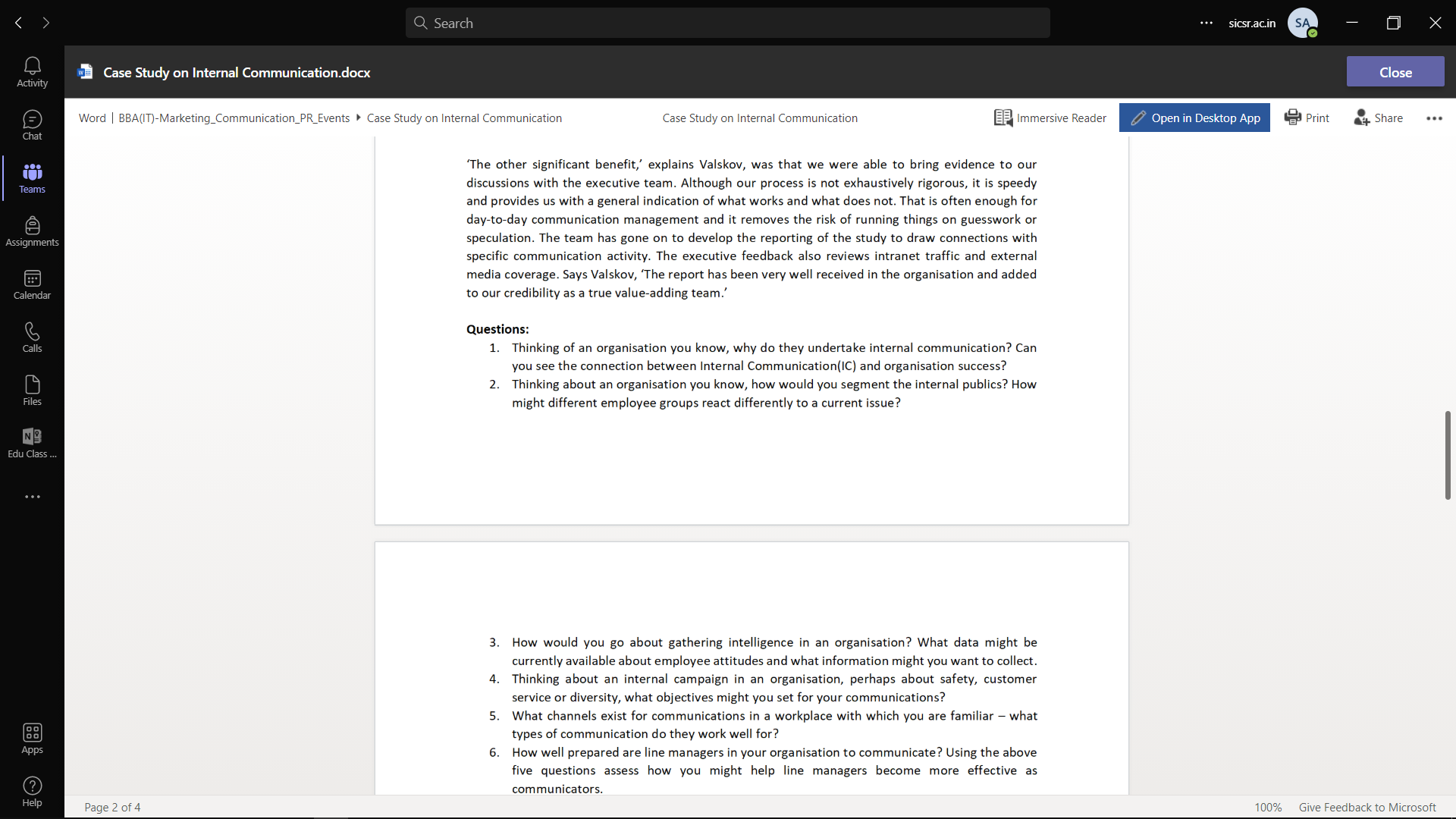
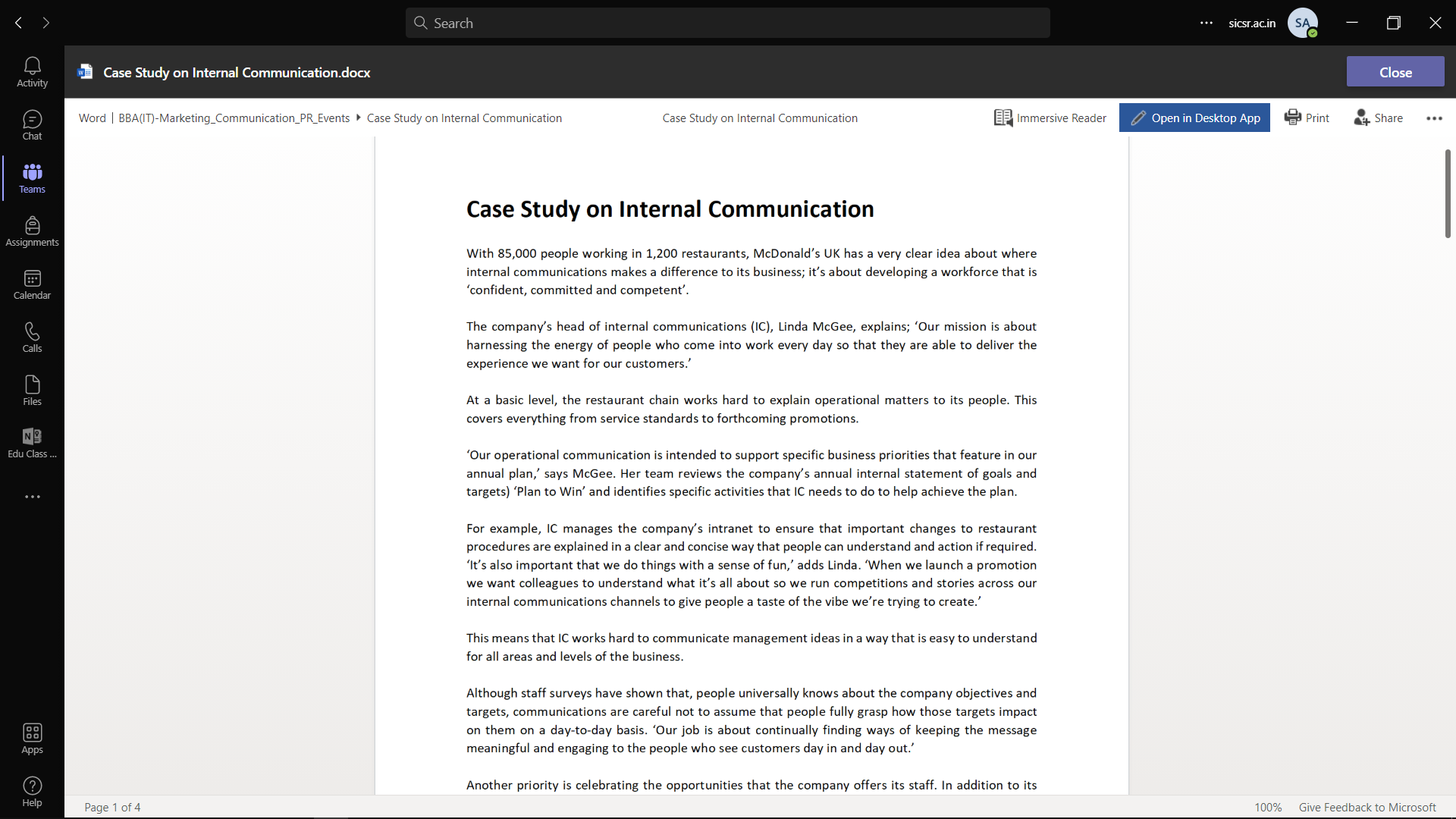
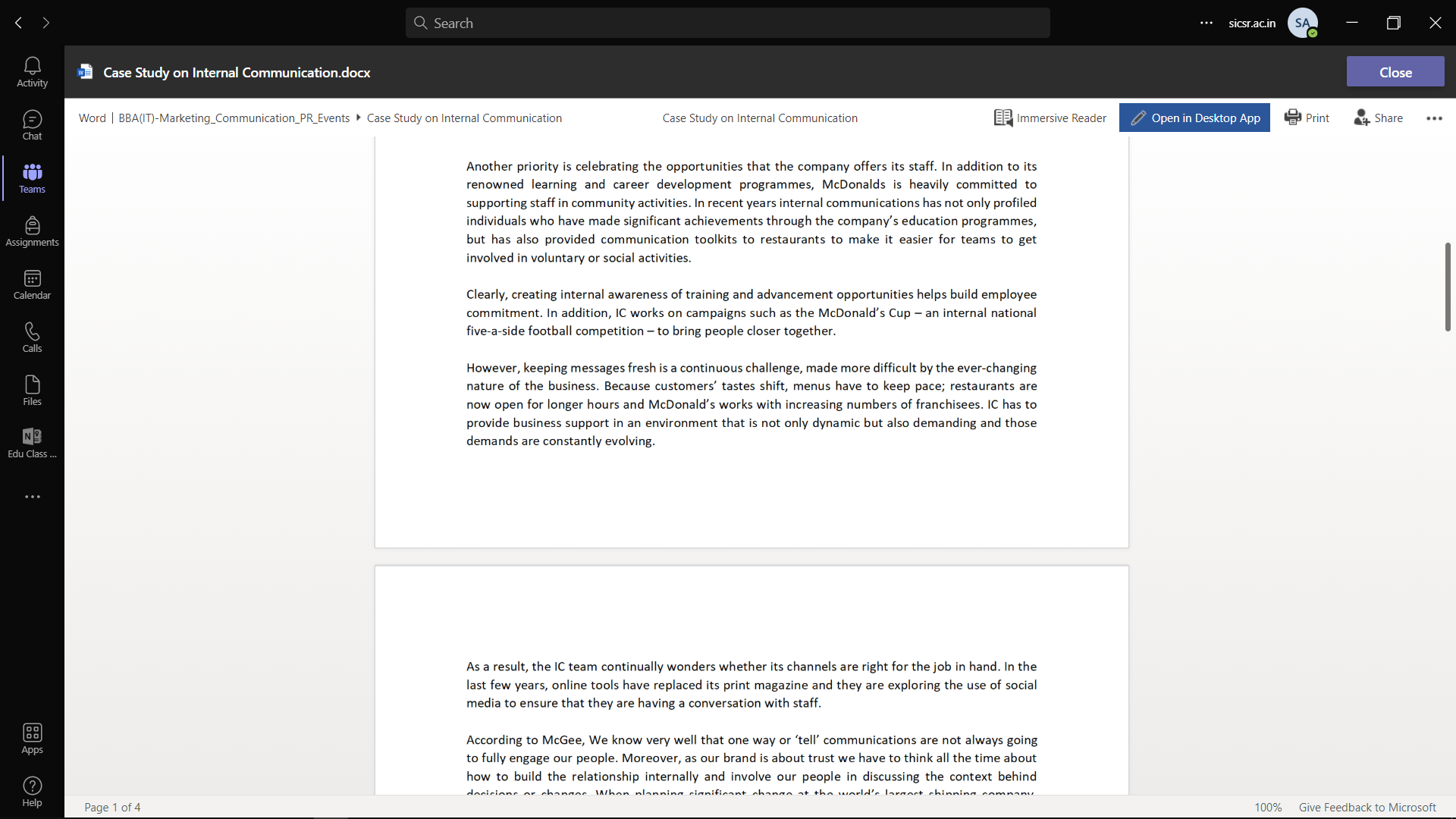
5|CS[.alZ.II1 @ 7 E Case Study on Internal Communicationdocx Word l BBAilneMarteting_Communicotion_PR_Events t Case Study on internal Communication (ose Study on internal Communication E] Immersive Reader Open in Desktop App IE! Print {a Share Case Study on Internal Communication With 85,000 people working in 1,200 restaurants, McDonald's UK has a very clear idea about where internal communications makes a difference to its business; it's about developing a workforce that is 'confident. committed and competentj. The company's head of internal communications (lcl, Linda McGee, explains; 'Our mission is about harnessing the energy of people who come into work every day so that they are able to deliver the experience we want for our customers.' At a basic level, the restaurant chain works hard to explain operational matters to its people. This covers everything from service standards to torthcoming prom otions. 'Our operational communication is intended to support specific business priorities that feature in our annual plan,' says McGee. Her team reviews the company/s annual internal statement of goals and targets) 'Plan to Win' and identifies specific activities that It needs to do to help achieve the plan. For example, It manages the companifs intranet to ensure that important changes to restaurant procedures are explained in a clear and concise way that people can understand and action if required. 'lt's also important that we do things with a sense of fun,' adds Linda. 'When we launch a promotion we want colleagues to understand what it's all about so we run competitions and stories across our internal communications channels to give people a taste of the vibe we're trying to create.' This means that IC works hard to communicate management ideas in a way that is easy to understand {or all areas and levels or the business Although staff surveys have shown that, people universally knows about the company obiectives and targets, communications are careful not to assume that people fully grasp how those targets impact on them on a day-to-day basis. 'Our job is about continually finding ways or keeping the massage meaningful and engaging to the people who see customers day in and day uut.' Another priority is celebrating the opportunities that the company offers its staff. In addition to its Page'l or4 mm Give Feedbackto Microson sicsreciin @ 7 E Case Study on Internal Communicationdocx Word l BBAilDrMarketing_Communication_PR_Events r Case Study on Internal Communication (sse Study on Internal Communication E] Immersive Reader Open in Desktop App IE! Print {a Share Another priority is celebrating the opportunities that the company offers its staff. In addition to its renowned learning and career development programmes, McDonalds is heavily committed to supporting stai'f in community activities. In recent years internal communications has not only proled individuals who have made significant achievements through the compamfs education programmes, but has also provided communication tuulkits to restaurants to make it easier for teams to get involved in voluntary or social activities. Clearly, creating internal awareness of training and advancement opportunities helps build employee commitment. In addition, IC works on campaigns such as the McDonald's Cup an internal national vesa de football competition - to bring people closer together. However, keeping messages fresh is a continuous challenge, made more difficult by the everechanging nature of the business Because customers' tastes shift. menus have to keep pace; restaurants are now open for longer hours and McDonald's works with increasing numbers of franchisees. IC has to provide business support in an environment that is not only dynamic but also demanding and those demands are constantly evolving. As a result, the IC team continually wande rs whether its channels are right forthe job in hand. In the last few years, unline tools have replaced its print magazine and they are exploring the use of social media to ensure that they are having a conversation with staff. According to McGee, We know Very well that one way or 'tell' communications are not always going to fully engage our people. Moreover, as our brand is about trust we have to think all the time about how to build the relationship internally and involve our people in discussing the context behind units...\" -7 "Lemma urn..- alum-" his- Page'l of4 \"30% Give Feedbackto Microsoft M.\" "Lem\" n. st... ...,..i.i'n i......... plainEu"- ...__...... slcsr.ai:.ln @ 7 E Case Study on Internal Communicationdocx Word l BBAllDaMarketlng_Communlcatlon_PR_Events r Case Study on Internal Communltatlon (ase Study on Internal Communitatlon E] Immersive Reader Open in Desktop App IE! Print {a Share According to McGee, We know very well that one way or 'tell' communications are not always going to fully engage our people. Moreover, as our brand is about trust we have to think all the time about how to build the relationship internally and involve our people in discussing the context behind decisions or changes. when planning significant change at the world's largest shipping company, Maersk Line, the communications team use a very simple set of metrics to assess their performance. Theteam began by wrestling with the question: 'How many peopleare getting and understanding our messages?' Significant transformations in how the business was managed meant that the company's 25,000 employees around the world needed to understand what was happening and how change might affect their jobs. As the process was happening over many months and was driven from the headquarters in Copenhagen, having a clear picture of what was working and where more emphasis was needed was essential to the communication team. Head of Communication Klavs Va Iskov explains, we were mindful that the change message takes time to lter through an organisation like ours and that people in the head office who are involved in planning change can be way ahead of everyone else in their understanding and enthusiasm for new ways of working. The team decided to introduce a simple monthly online survey that asked a random sample of employees 20 questions. Staff were asked if they were aware of key messages, whether they understood or agreed with the messages and whether they felt able to implement the changes being asked of them. Over the months. the survey showed the rate at which people were moving from basic awareness, through understanding into indications of behavioural change. Moreover, it highlighted which messages were penetrating better than others were, The key to the effectiveness of the survey was its simplicity, The limited number of questions made analysis quick. Crucially, each month, the CEO was given a very simple set of figures and commentary limited to a few lines. Gathering data in this way enabled the communications team to identity when issues needed more explanation or decide which channels needed attention. Early on, the team identified the need to support local managers with more tools and information. 'The other significant benefit,' explains Valskov, was that we were able to bring evidence to our discussions with the executive team. Although our process is not exhaustively rigorous, it is speedy and provides us with a general indication of what works and what does not. That is often enough for daystosday communication management and it removes the risk of running things on guesswork or speculation. The team has gone on to develop the reporting of the study to draw connections with specific communication activity. The executive feedback also reviews intranet traffic and external Page 2 of4 \"30% Give Feedback to Mitrosof'i sicsratin @ 7 E Case Study on Internal Communicationdocx Word l BBAllDaMarketlng_Cornmunlcation_PR_Events r Case Study on internal Communication Case Study on internal Communication E] Immersive Reader Open ln Desktop App IE! Print {a Share 'The other sig ficant benefit,' explains Valskov, was that we were able to bring evidence to our discussions with the executive team. Although our process is not exhaustively rigorous, it is speedy and provides us with a general indication of what works and what does not. That is often enough for dayatciaday communication management and it removes the risk of running things on guesswork or speculation. The team has gone on to develop the reporting of the study to draw connections with specific communication activity. The executive feedback also reviews intranet traffic and external media coverage. Says Valskovj 'The report has been very well received in the organisation and added to our credibility as a true value-adding team.' Questions: 1. Thinking of an organisation you know, why do they undertake internal communication? Can you see the connection between Internal Communicationllc] and organisation success? 2. Thinking about an organisation you know, how would you segment the internal publics? How might difierent employee groups react differently to a current issue? 3. How would you go about gathering intelligence in an organisation? What data might be currently available about employee attitudes and what information might you want to collect. 4. Thinking about an internal campaign in an organisation, perhaps about safety, customer service or diversity, what objectives might you set for your communications? 5. What channels exist for communications in a workplace with which you are familiar 7 what types of communication do they work well for? 6. How well prepared are line managers in your organisation to communicate? Using the above five questions assess how you might help line managers become more effective as communicators. Page 2 of4 \"30% Give Feedbackto Mitrosoi't
Step by Step Solution
There are 3 Steps involved in it

Get step-by-step solutions from verified subject matter experts
 Study Help