Question: Please help me with this assignment, 100% human! Reference book George, J. M. (2024). Contemporary management (12th ed.). McGraw-Hill Education. keiser library Syahbinah, S., &
Please help me with this assignment, 100% human!
Reference book
George, J. M. (2024). Contemporary management (12th ed.). McGraw-Hill Education.
keiser library
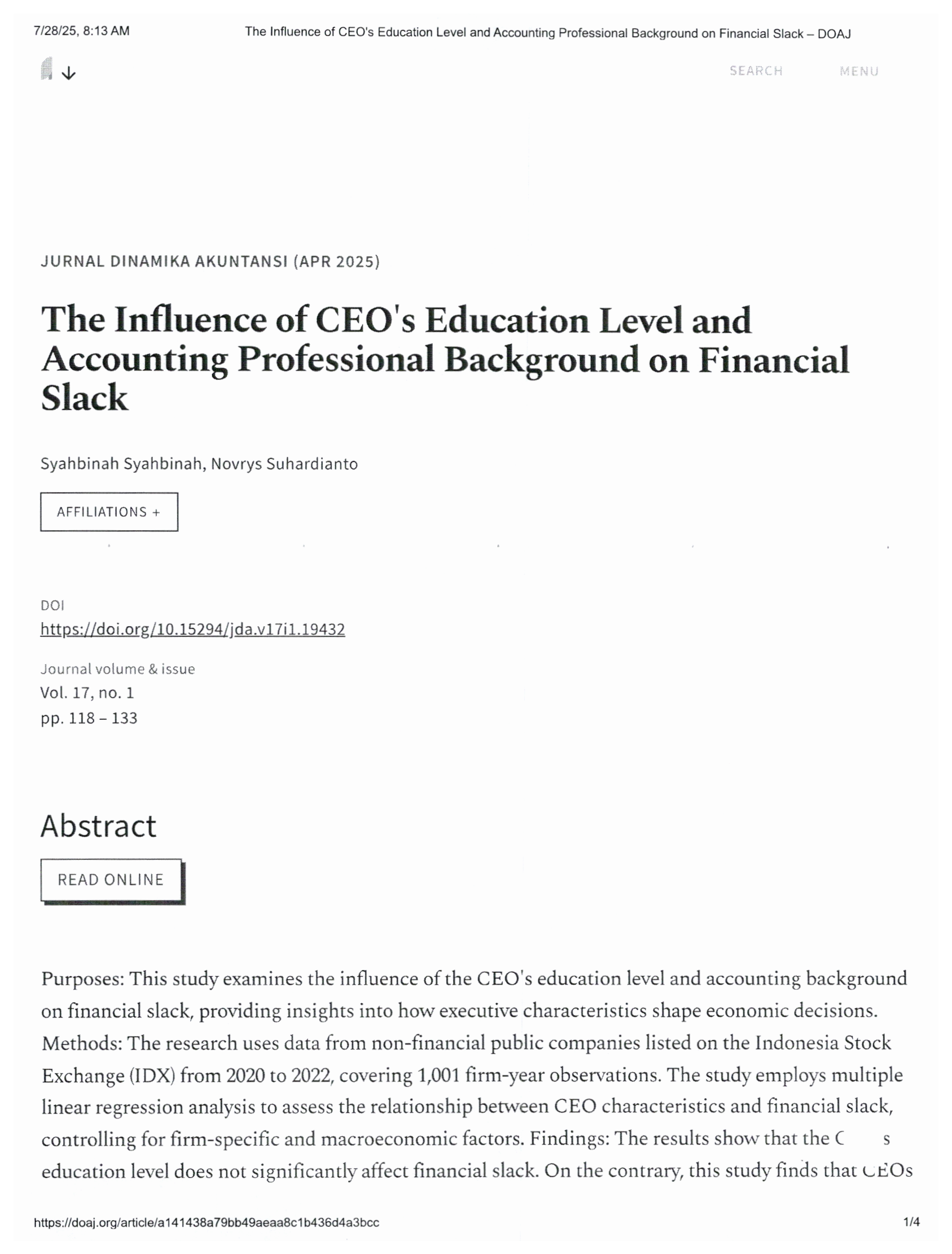
Syahbinah, S., & Suhardianto, N. (2025). The Influence of CEO's Education Level and Accounting Professional Background on Financial Slack. Jurnal Dinamika Akuntansi, 17(1), 118-133. https://doi.org/10.15294/jda.v17i1.19432
?
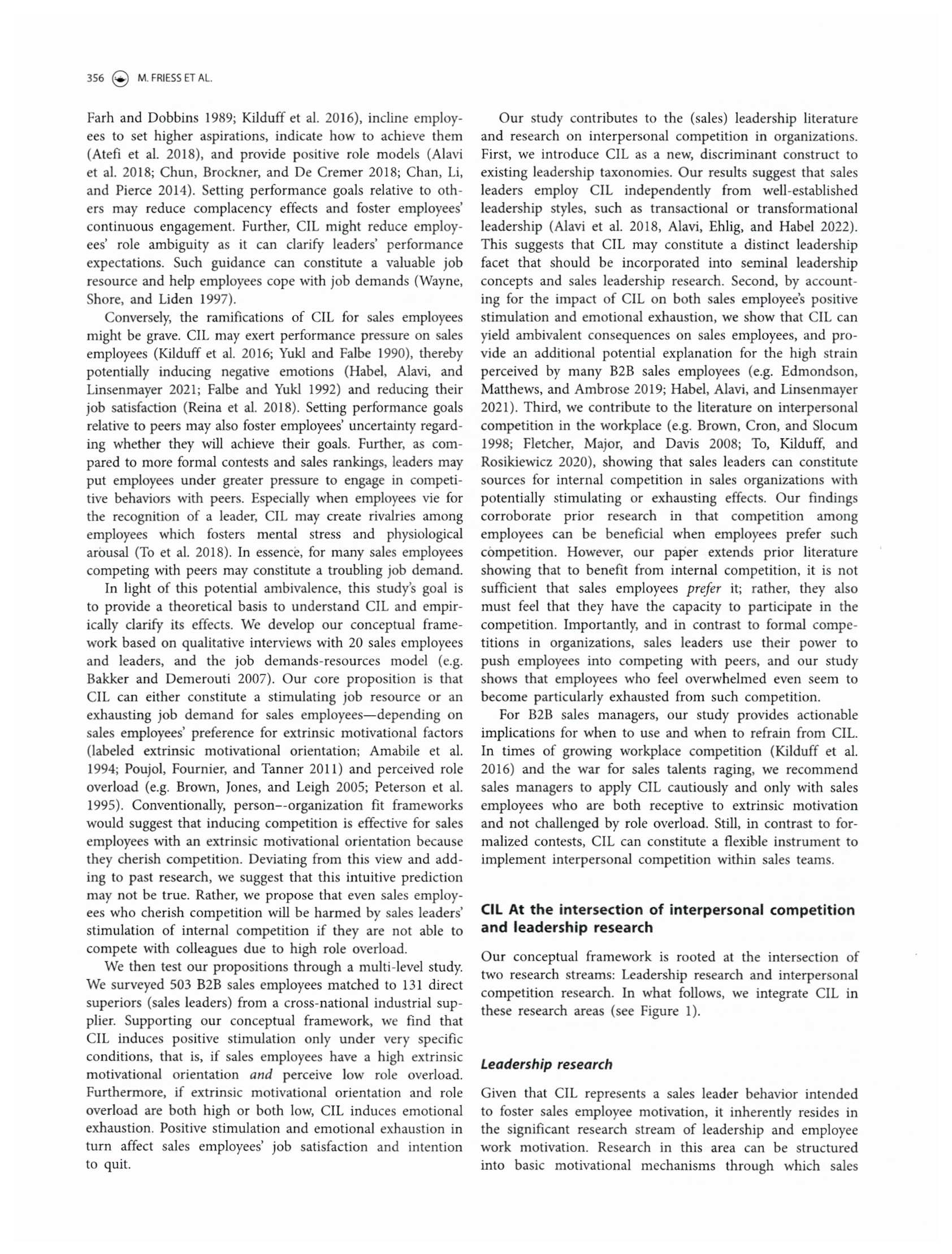
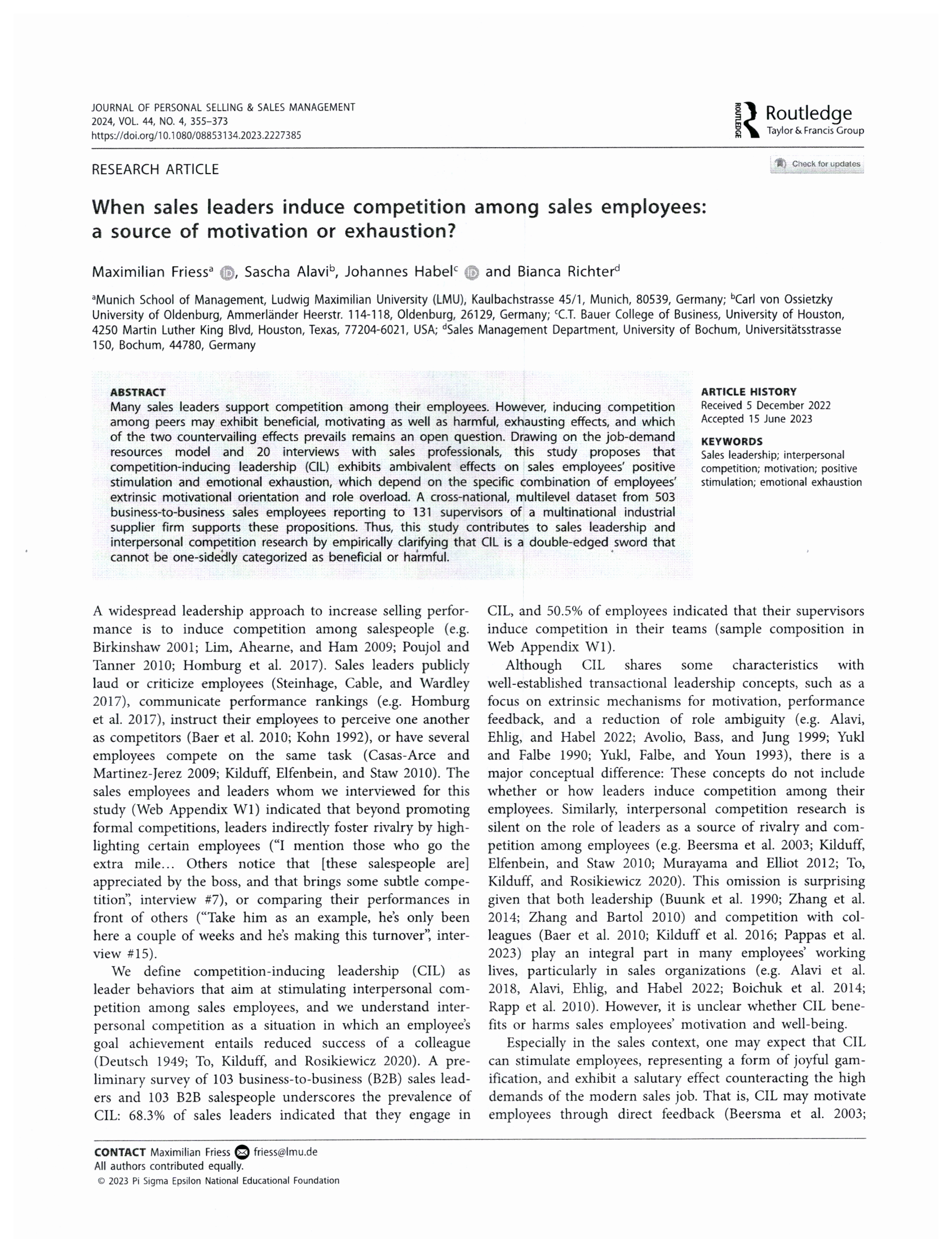
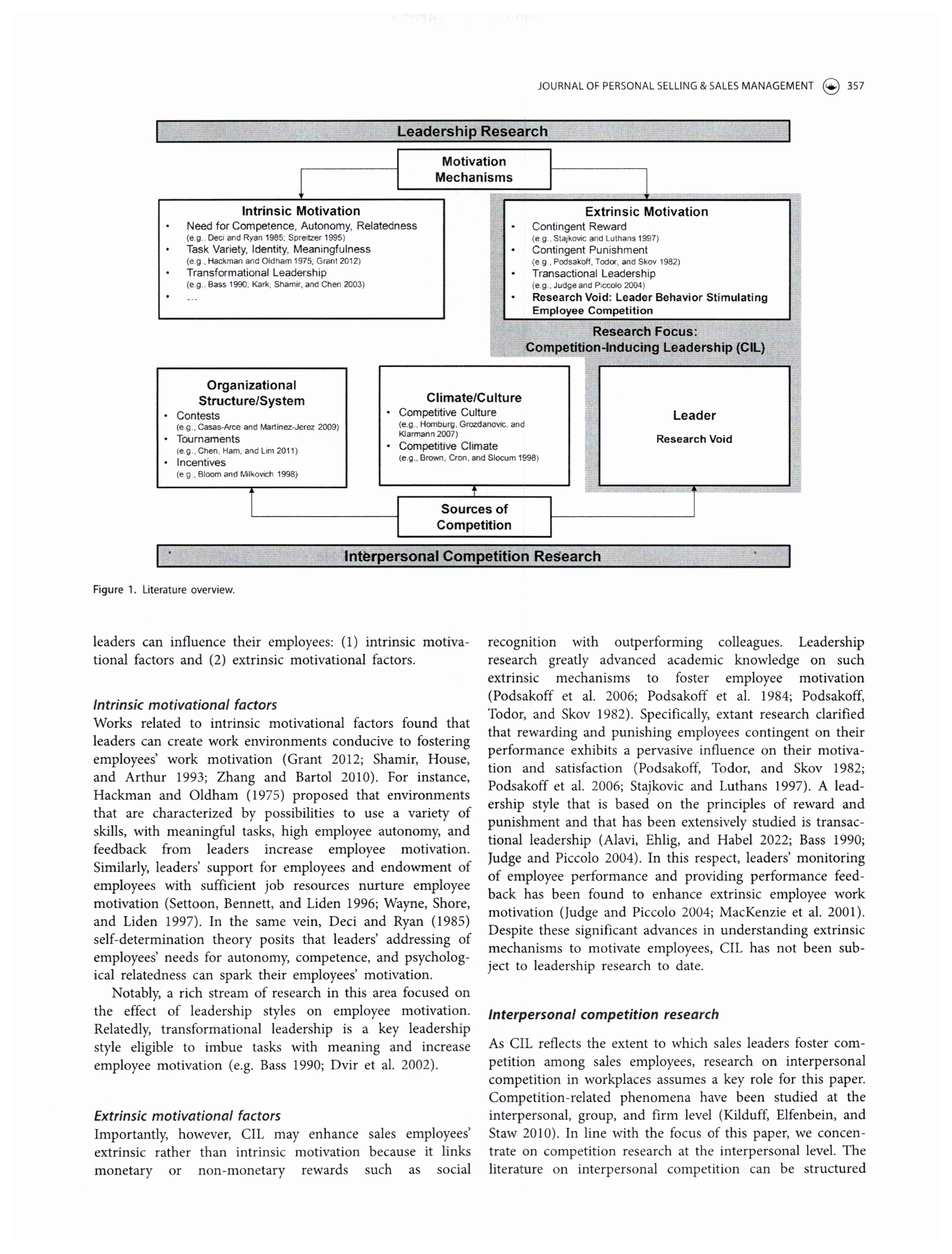
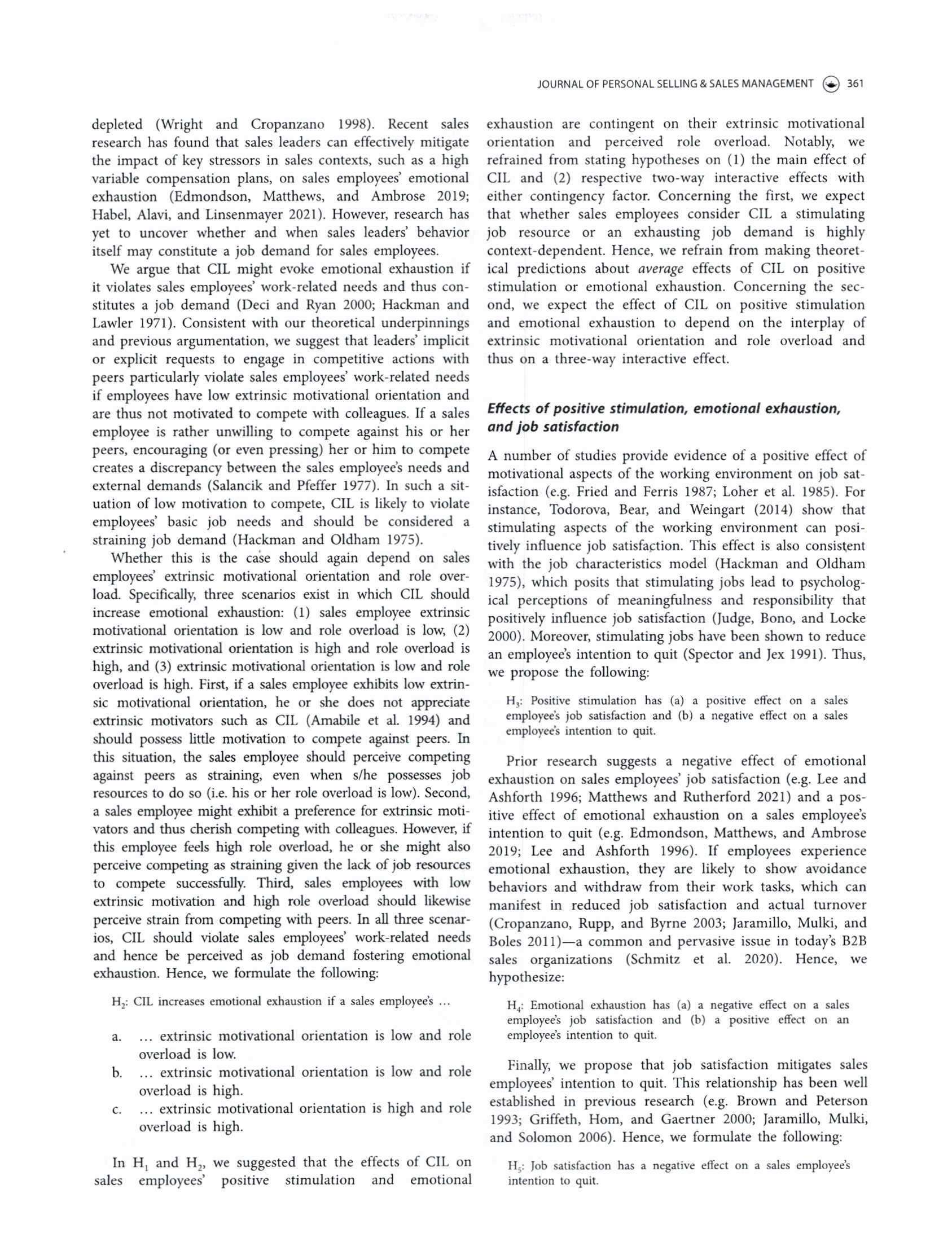
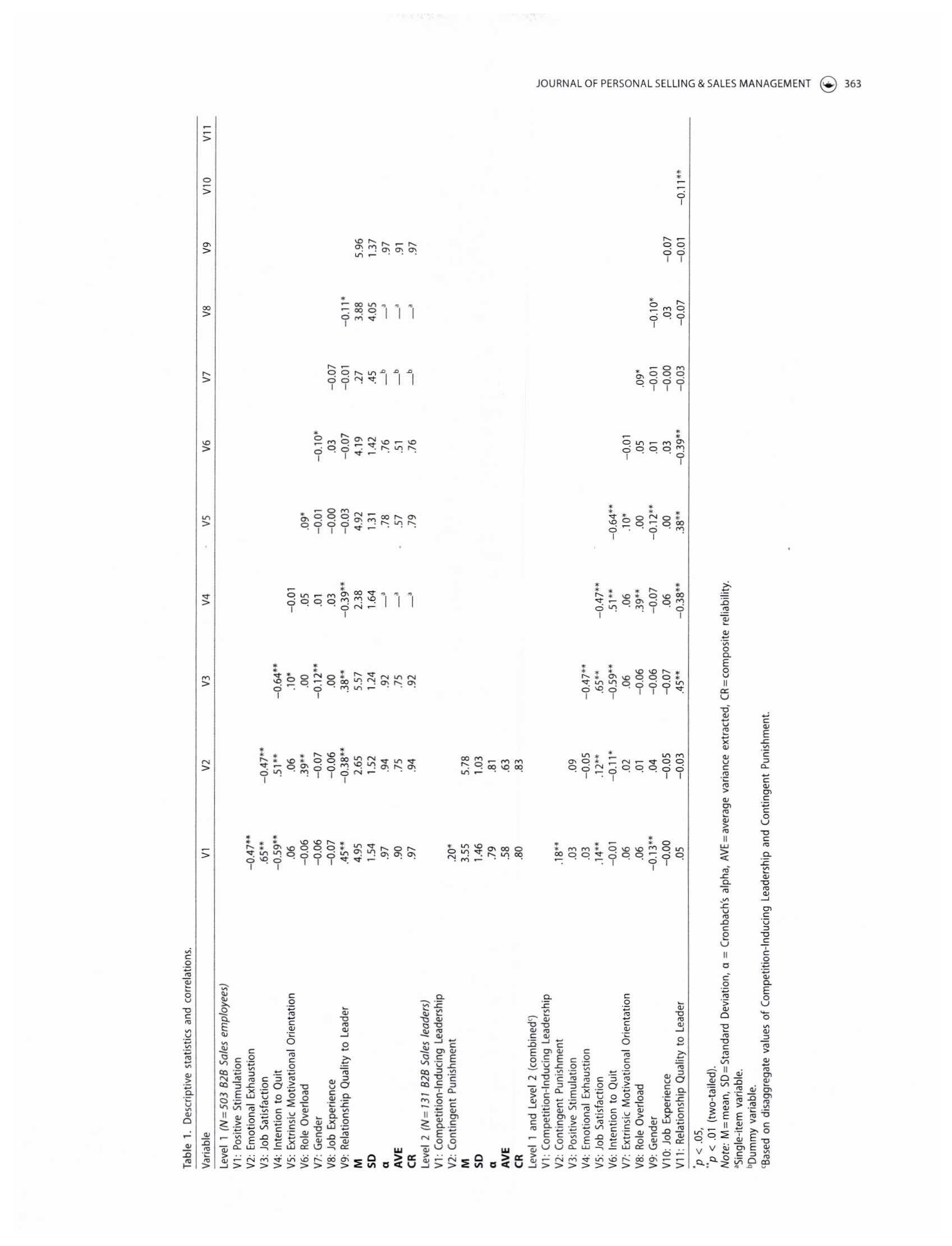
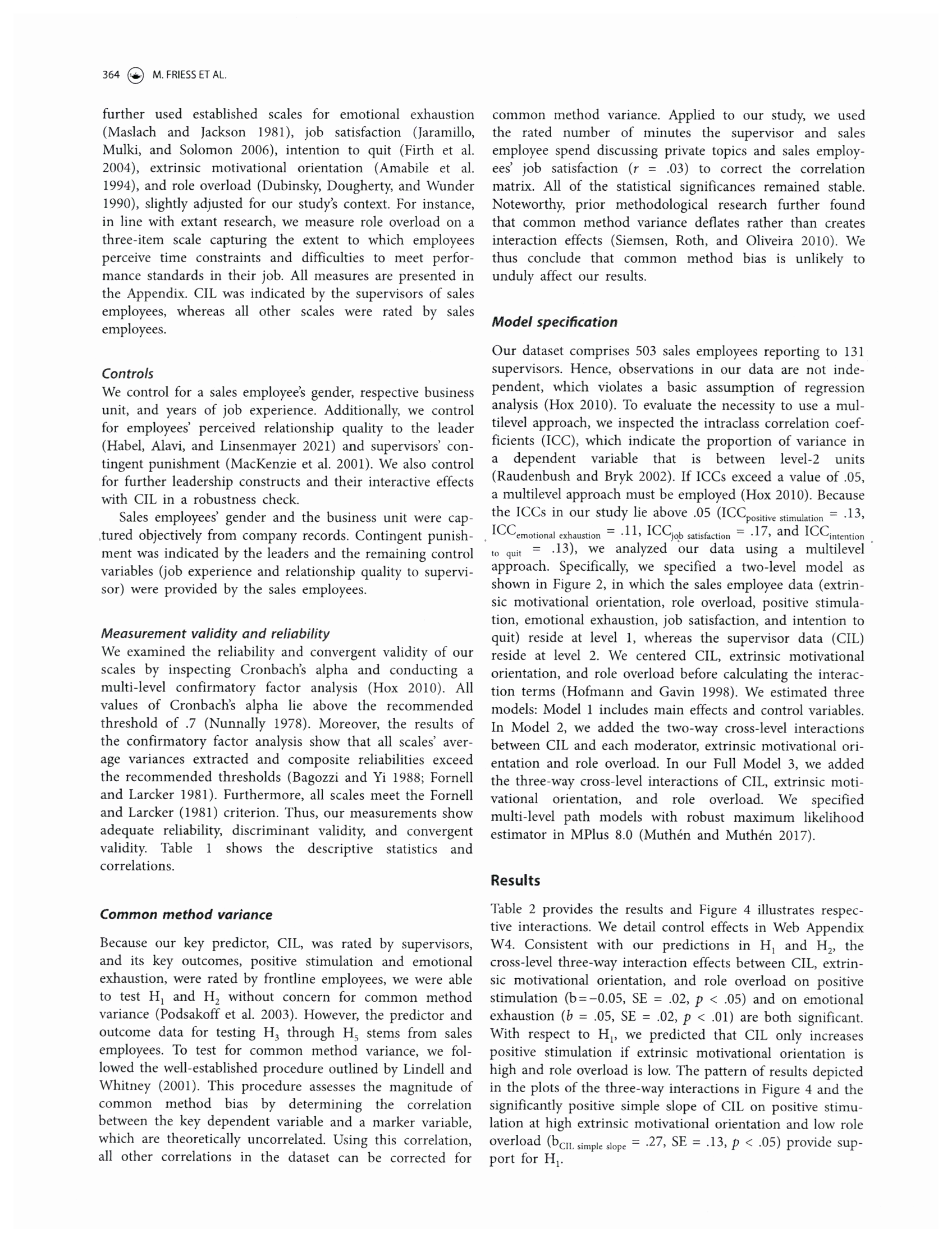
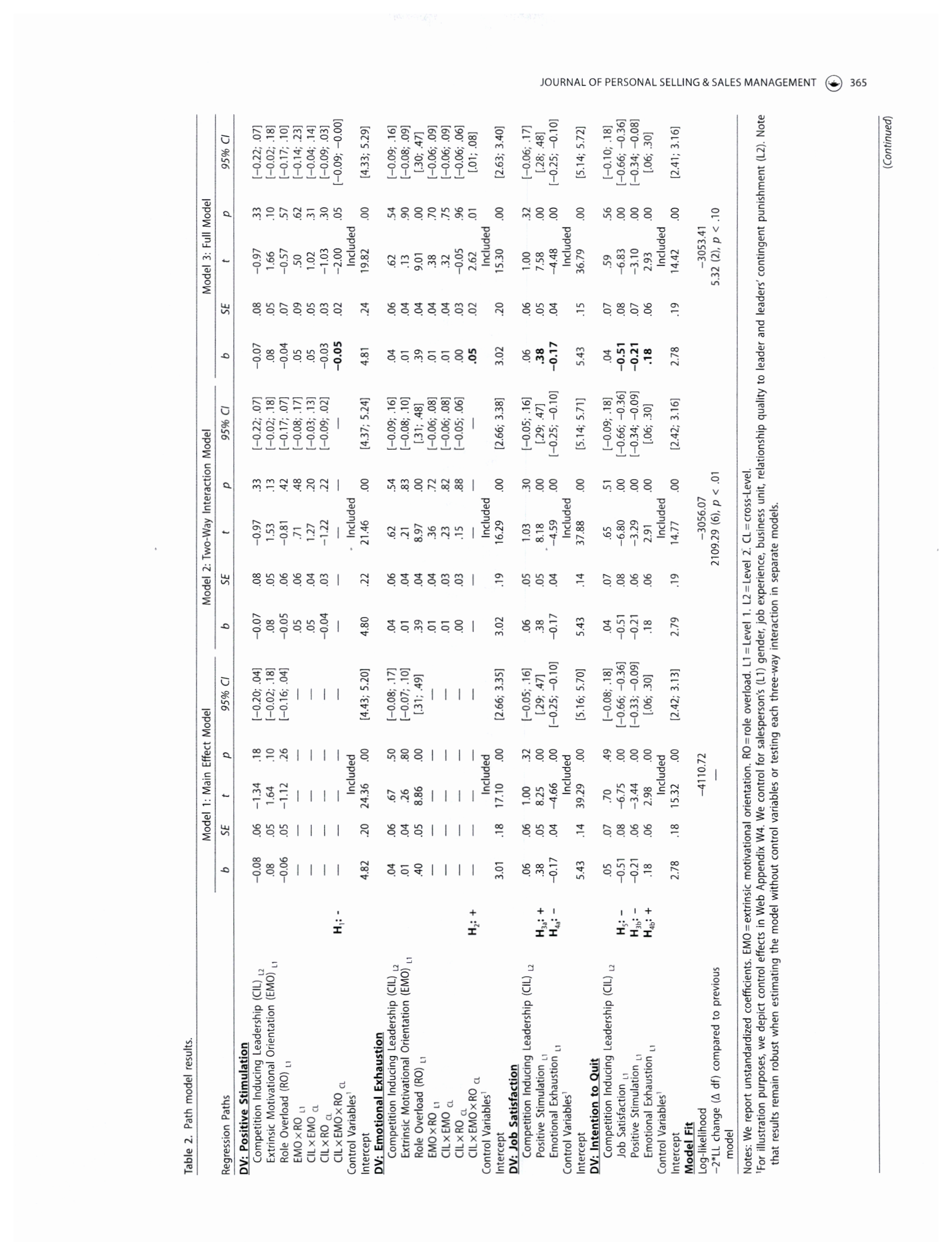
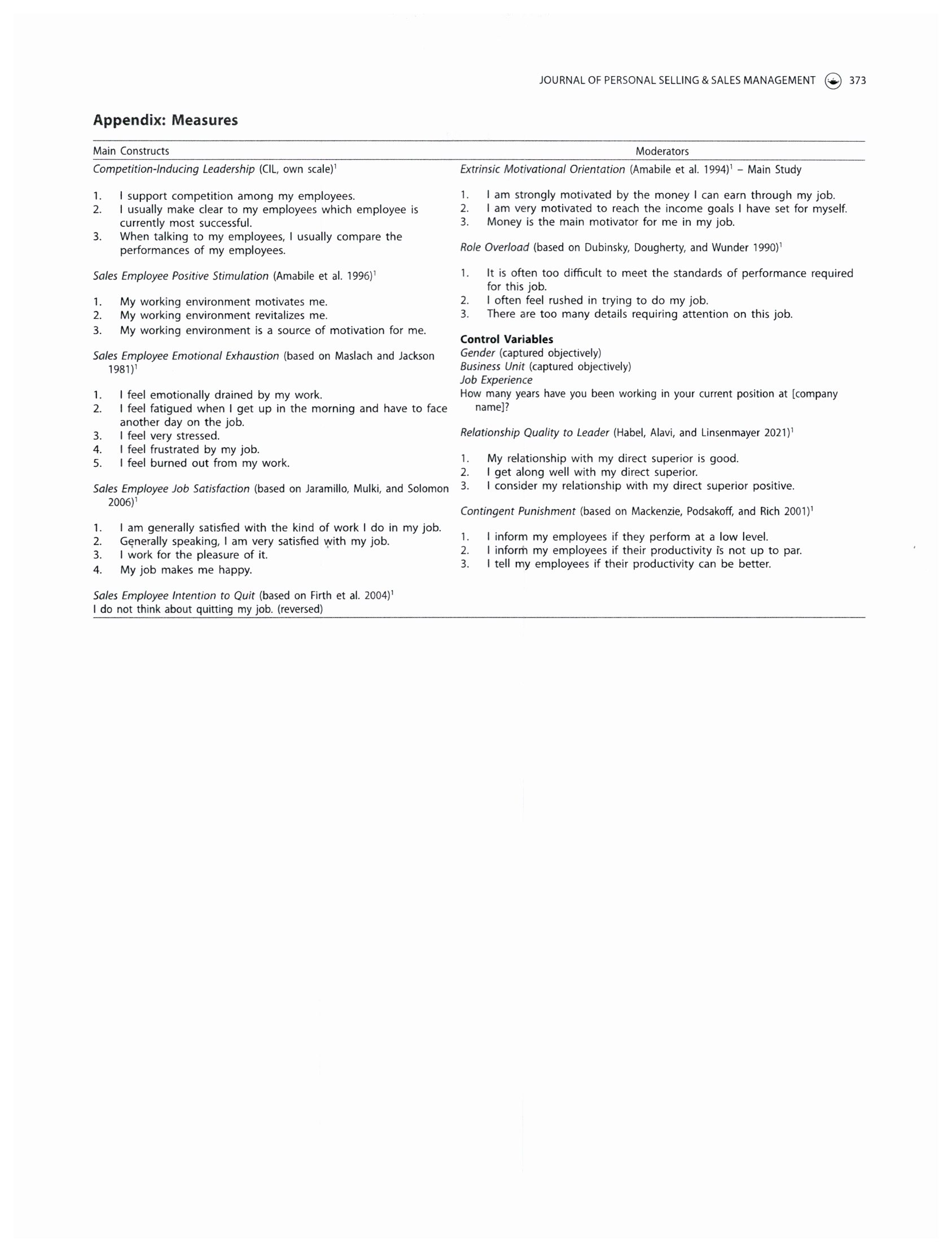
Friess, M., Alavi, S., Habel, J., & Richter, B. (2024). When sales leaders induce competition among sales employees: a source of motivation or exhaustion? Journal of Personal Selling & Sales Management, 44(4), 355-373. https://0630rqp5o-mp03-y-https-doi-org.prx-keiser.lirn.net/10.1080/08853134.2023.2227385
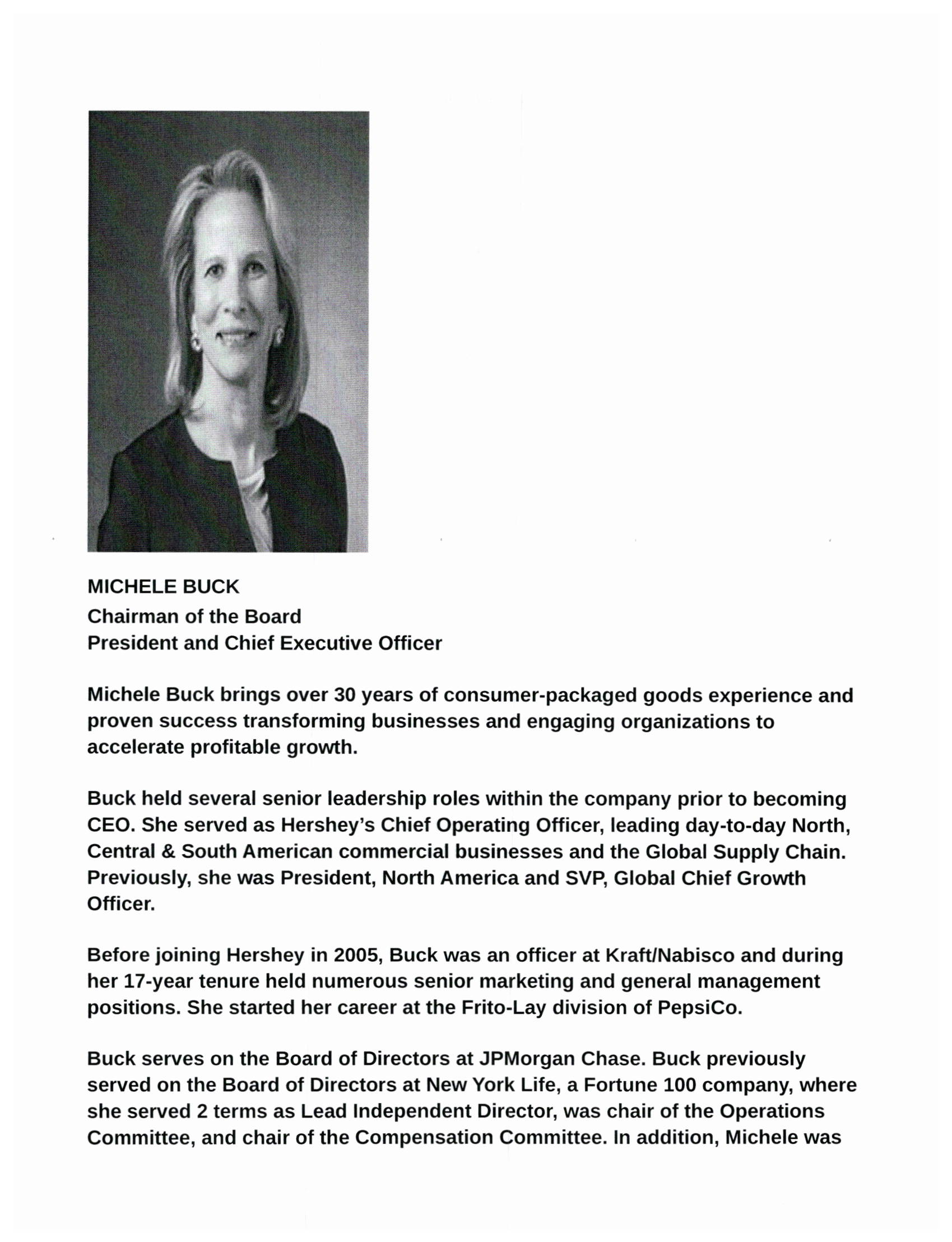
Hershey MICHELE BUCK
The Hershey Company. (n.d.). Our Leadership | The Hershey Company. Www.thehersheycompany.com. https://www.thehersheycompany.com/en_us/home/about-us/the-company/leadership.html
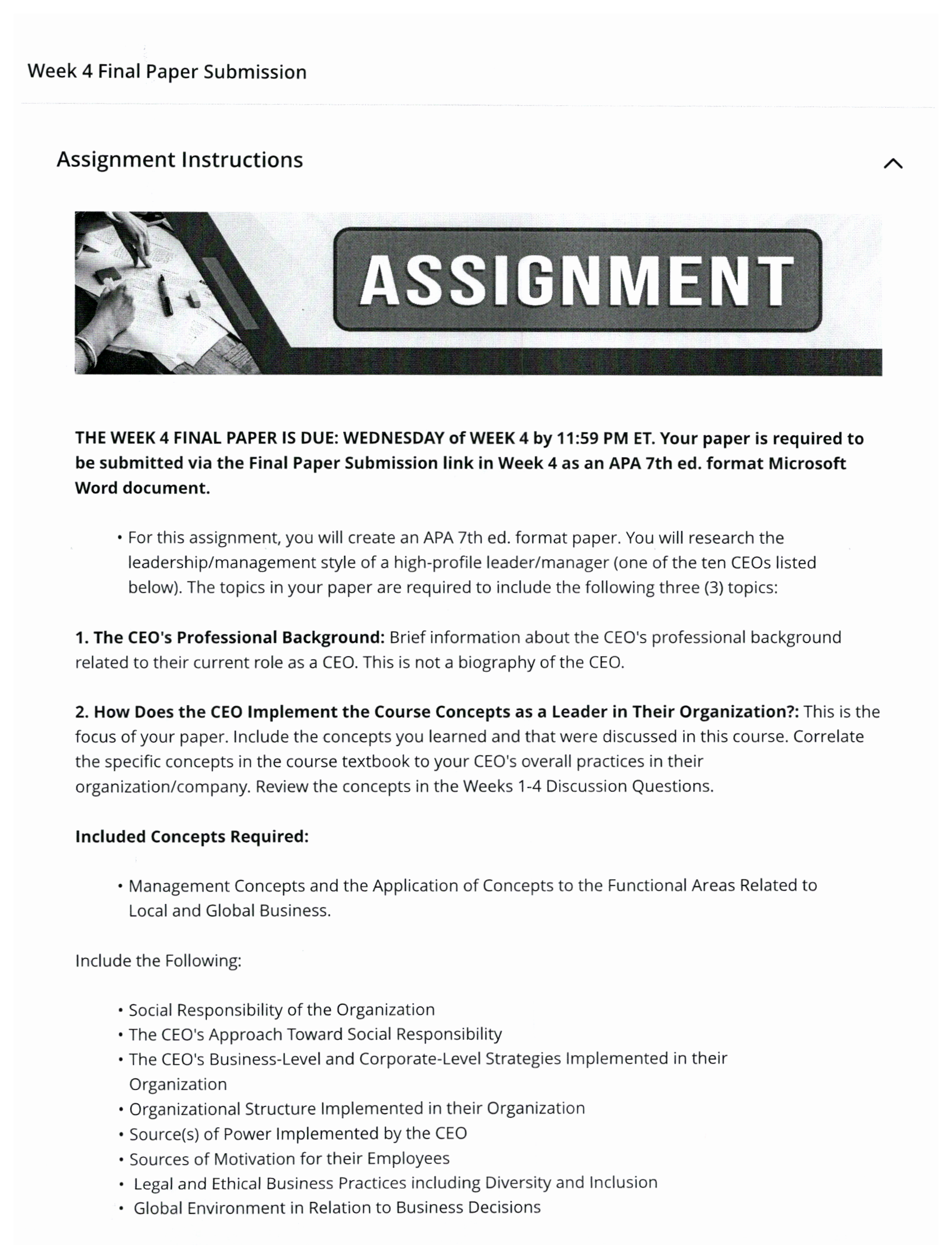
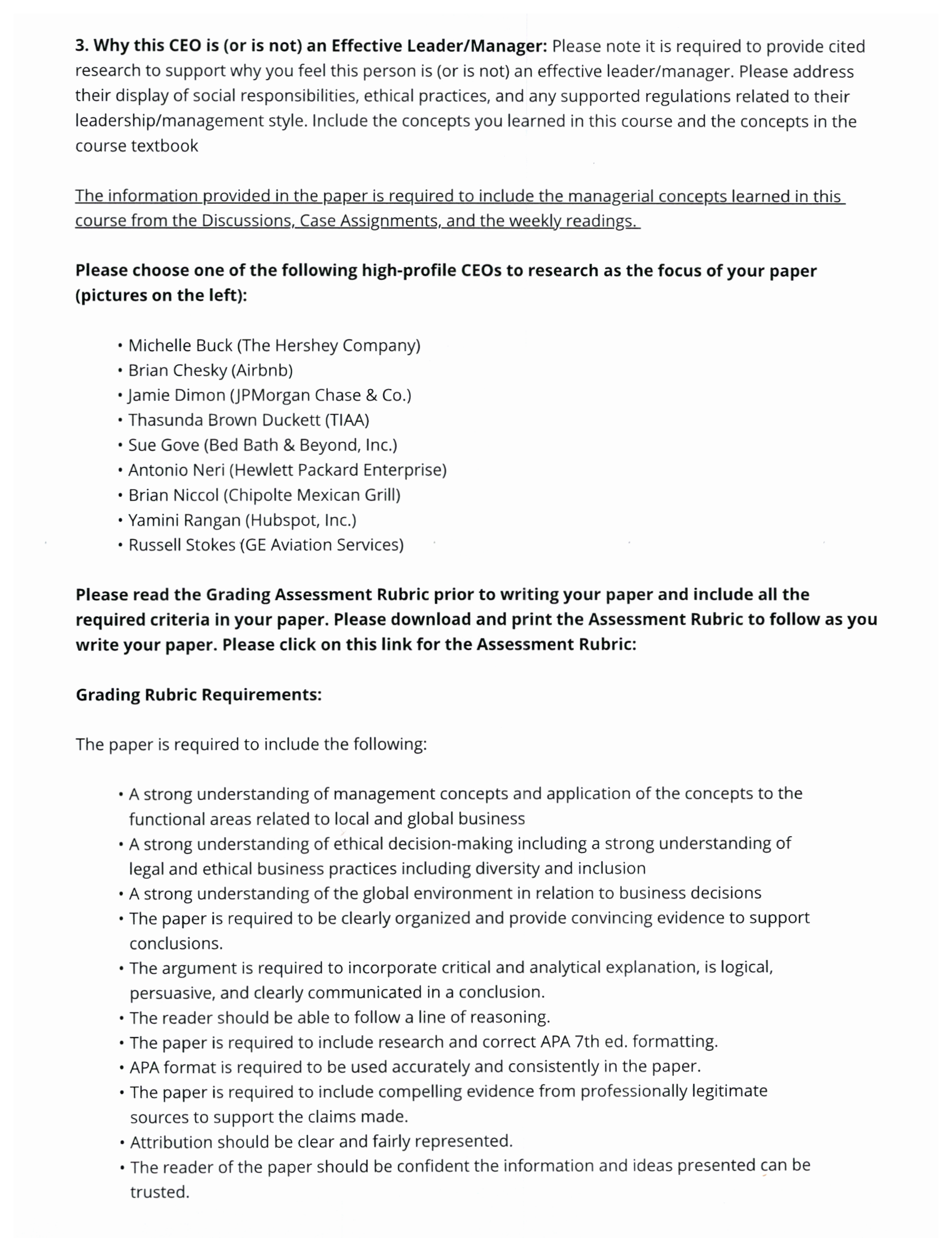
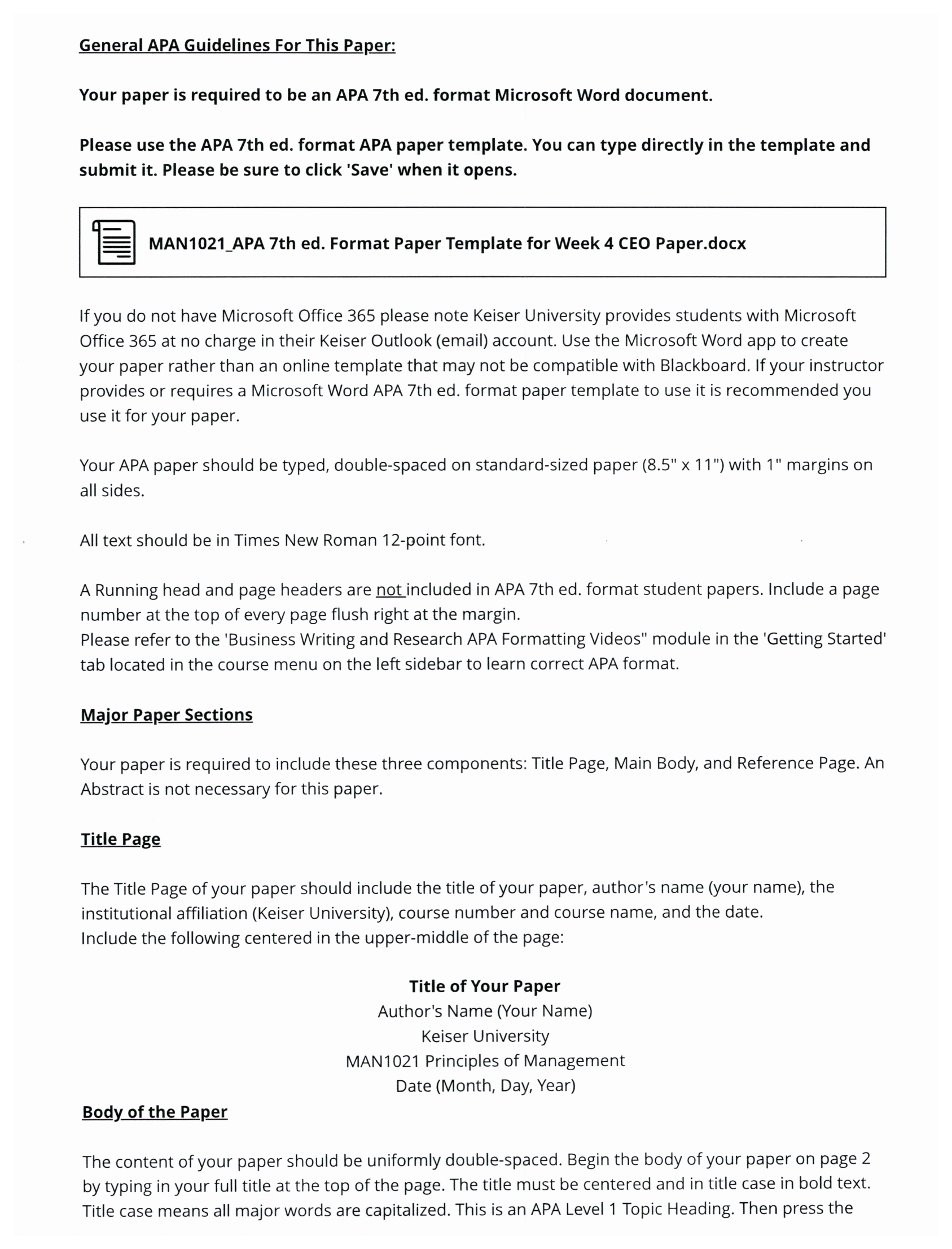
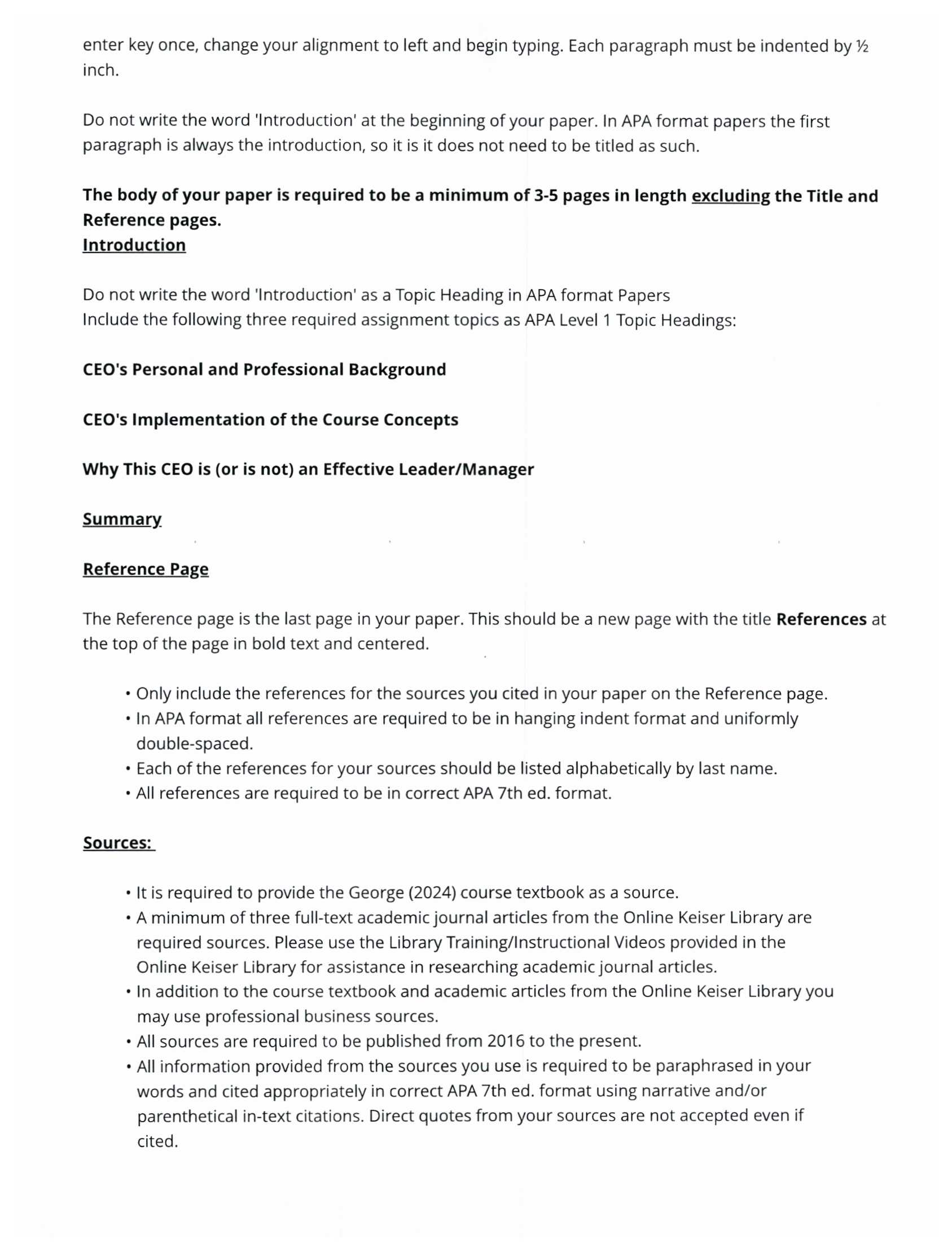
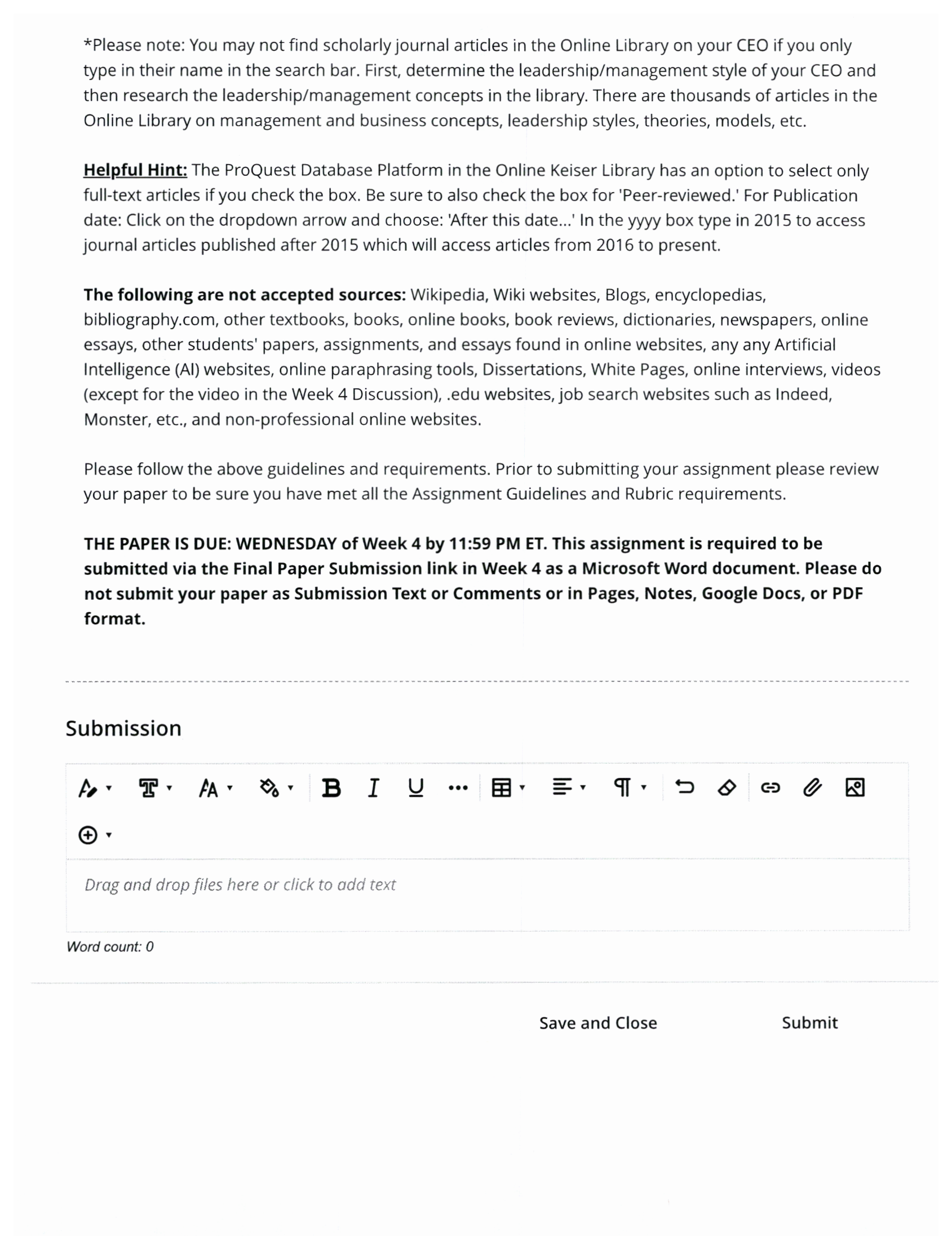
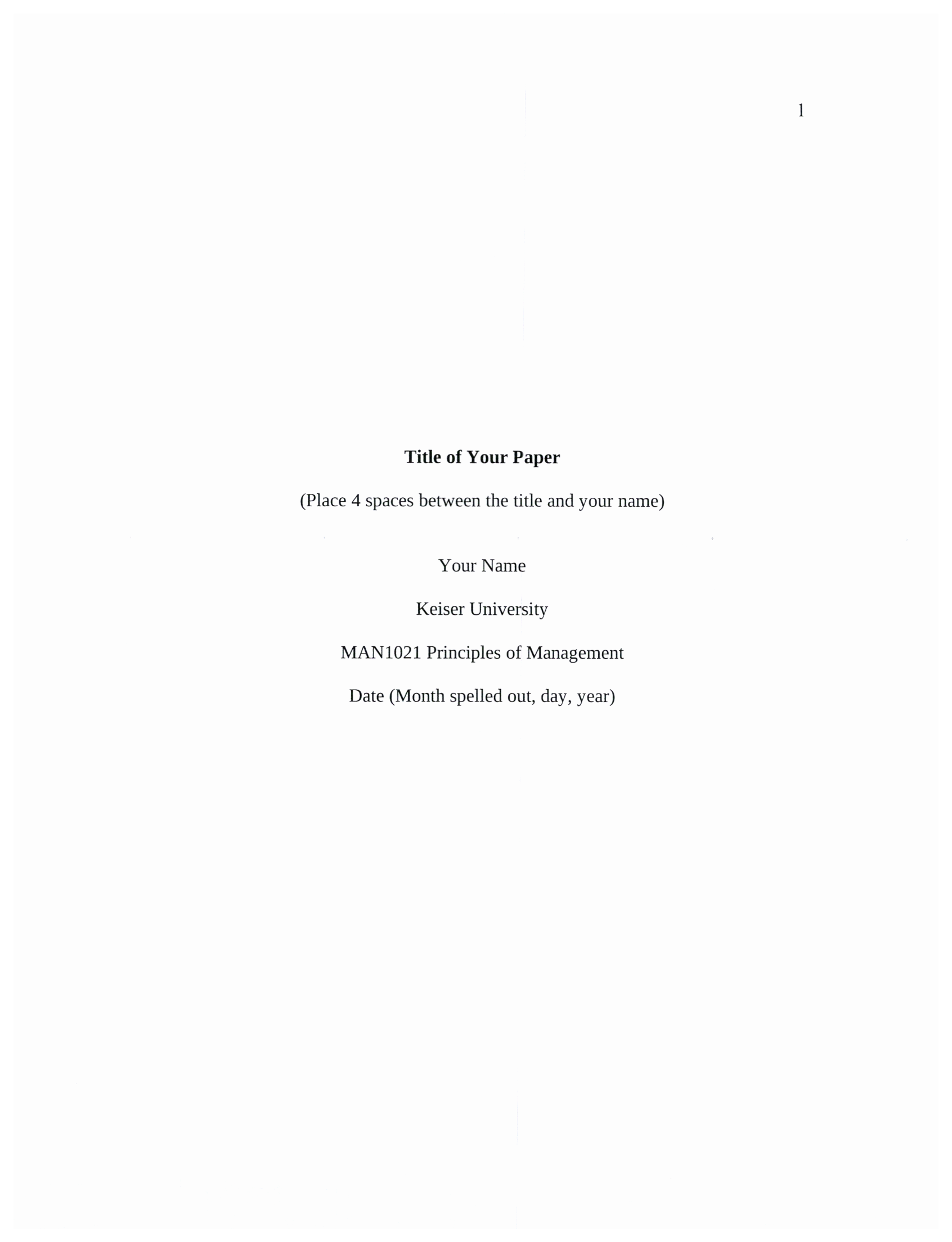
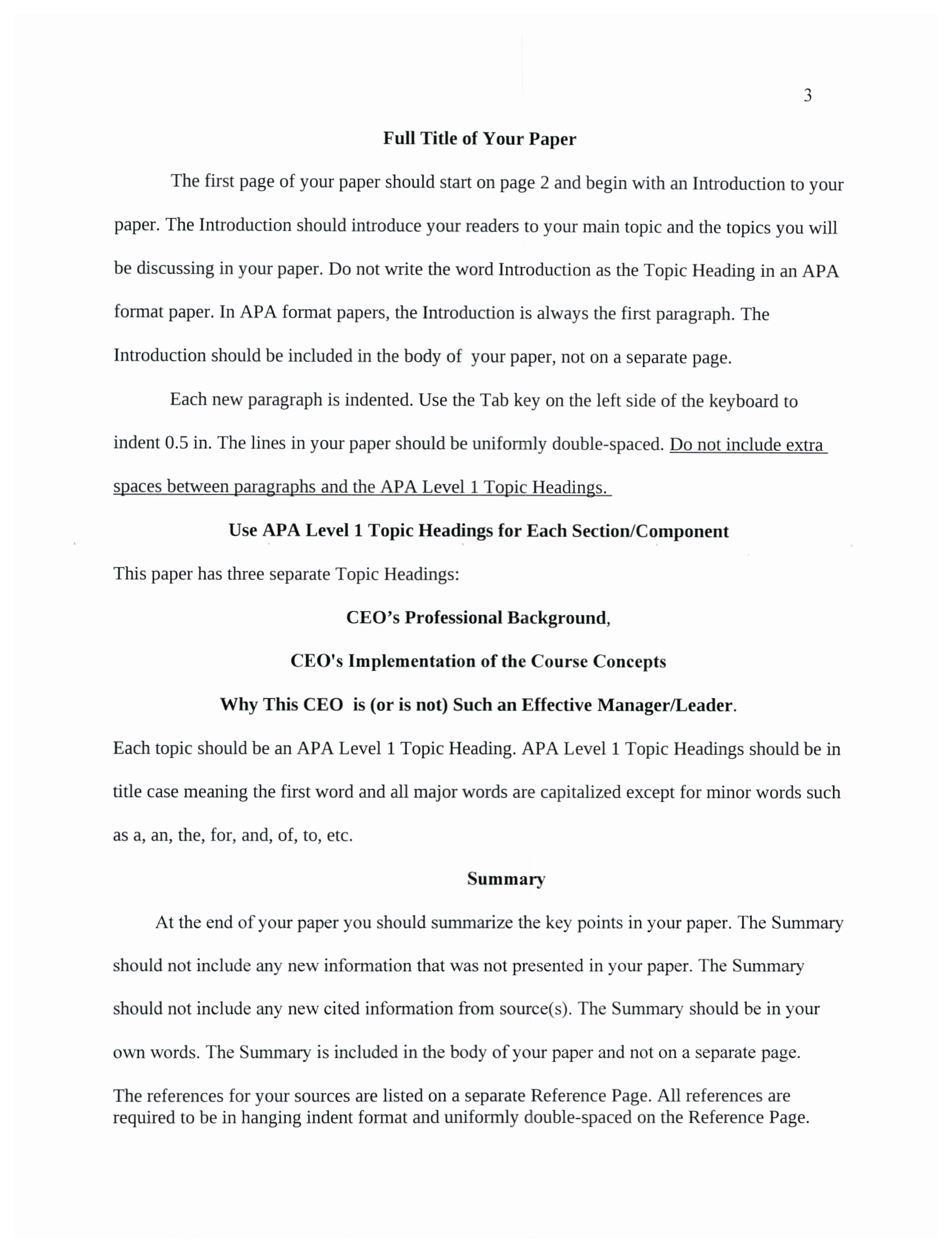
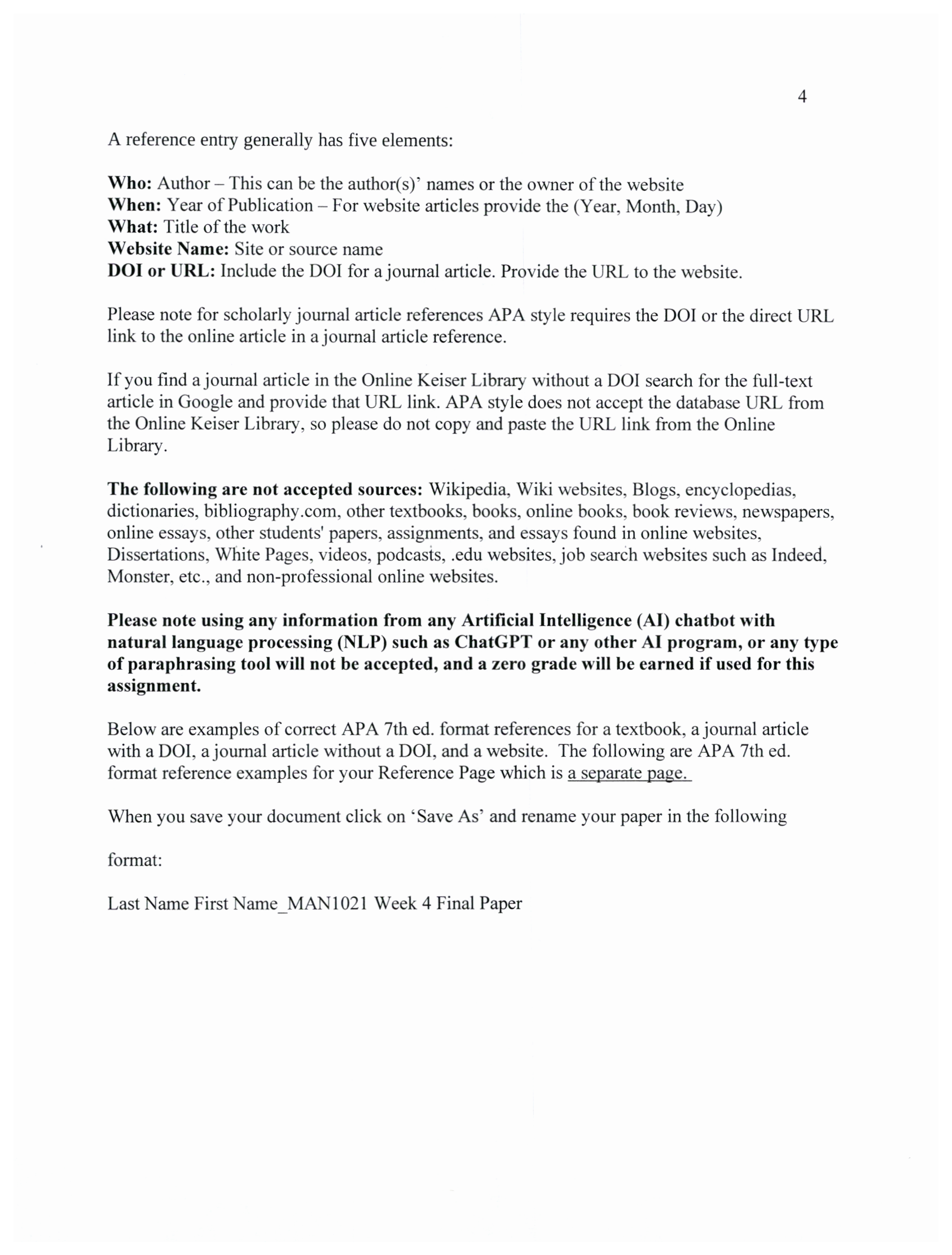
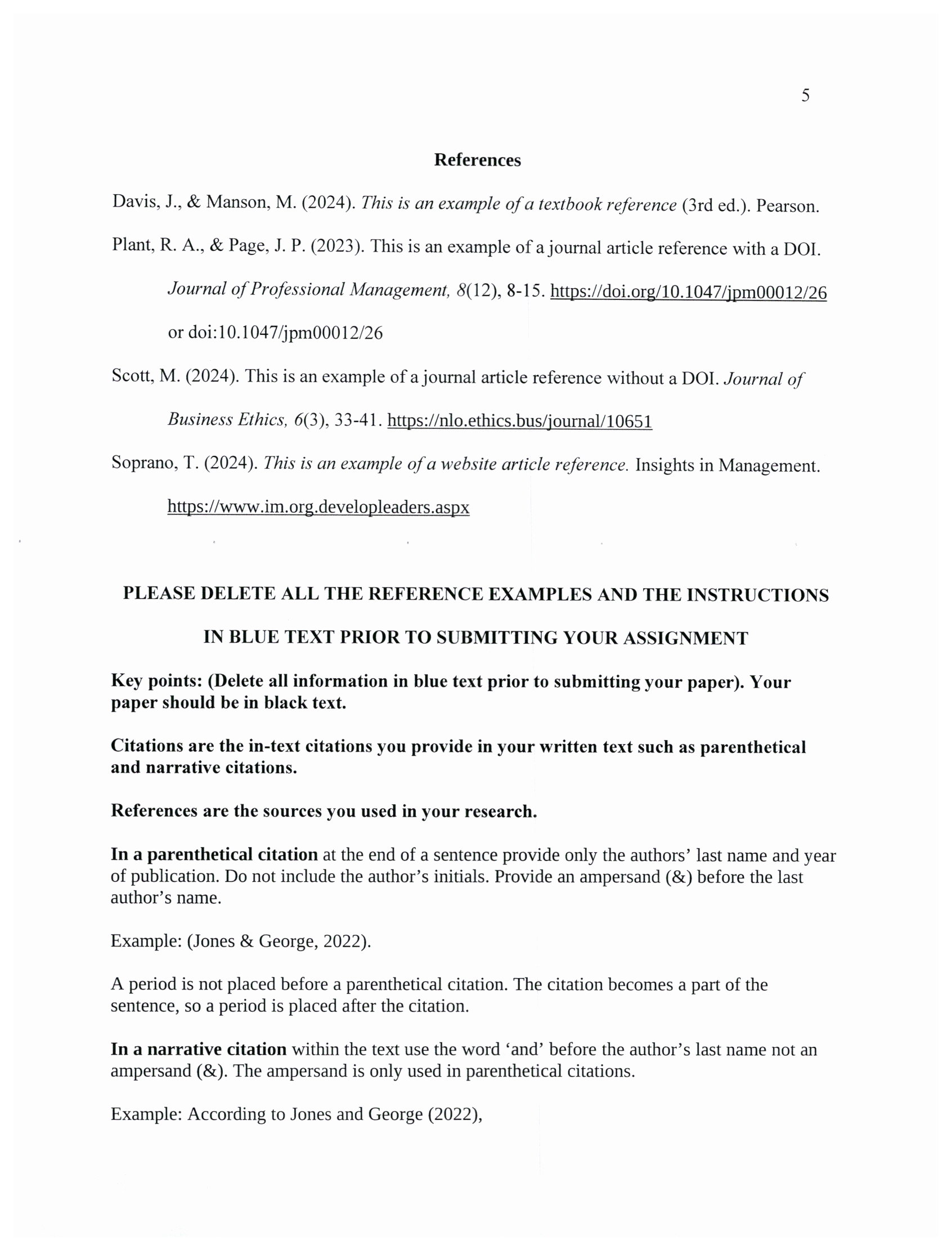
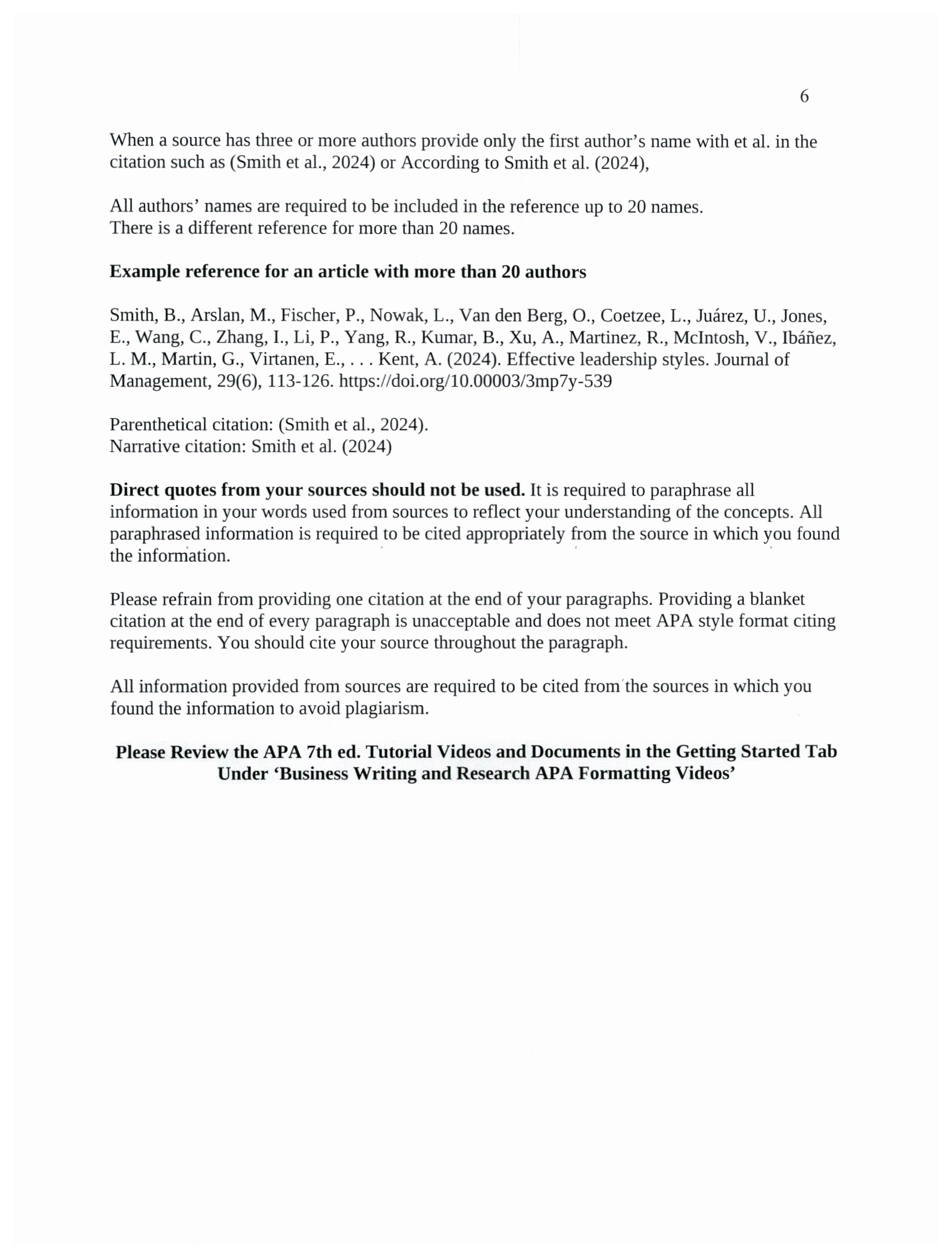
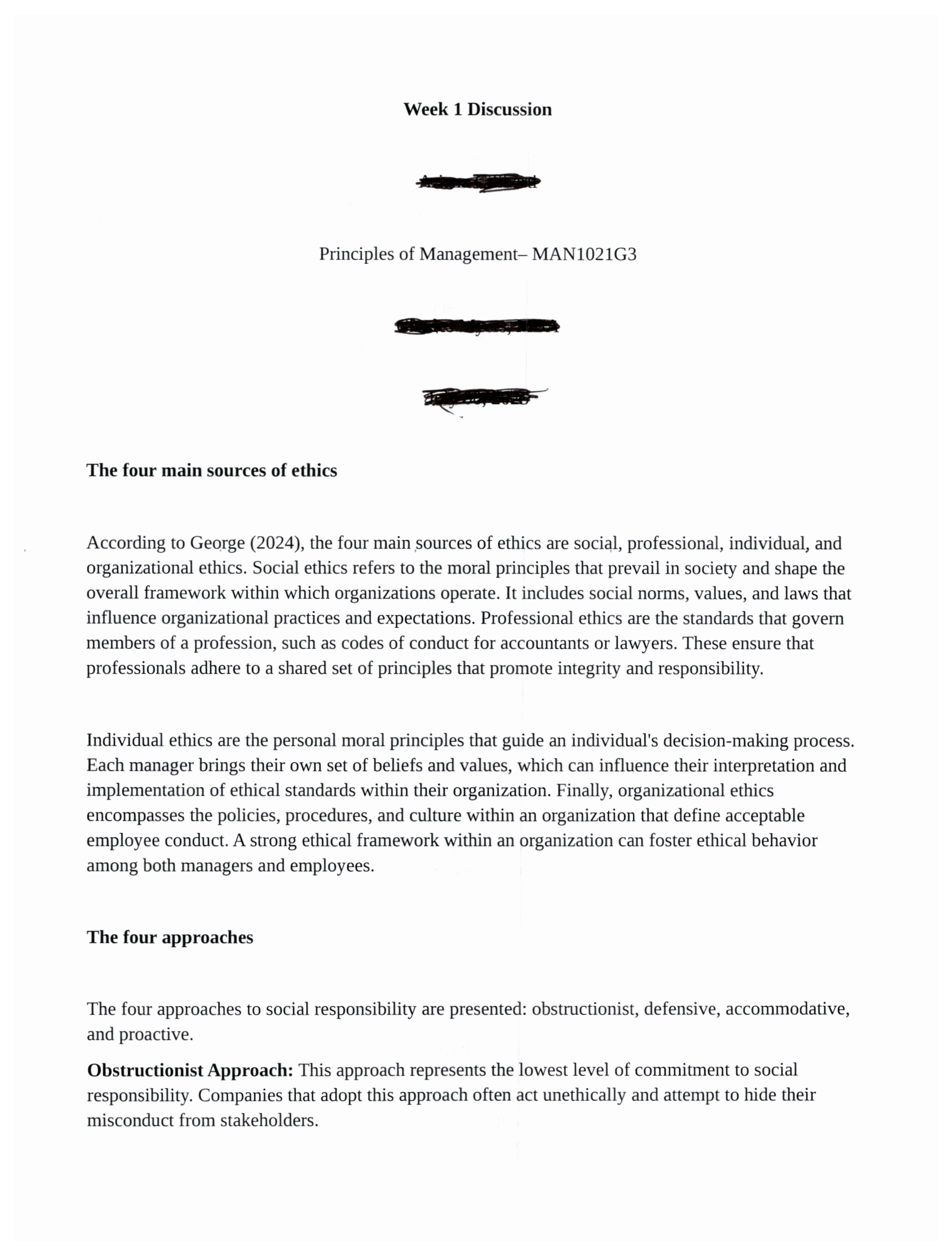
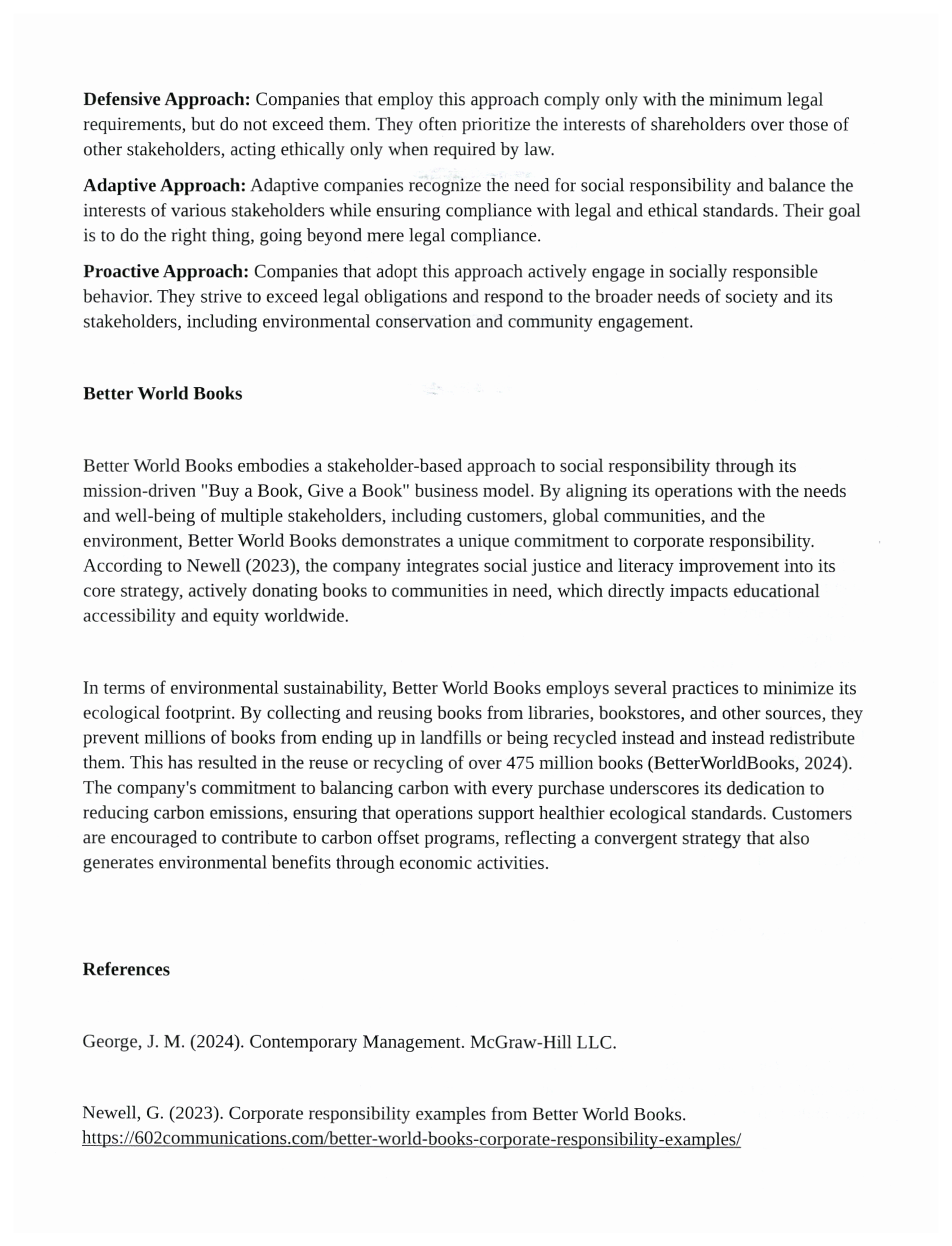
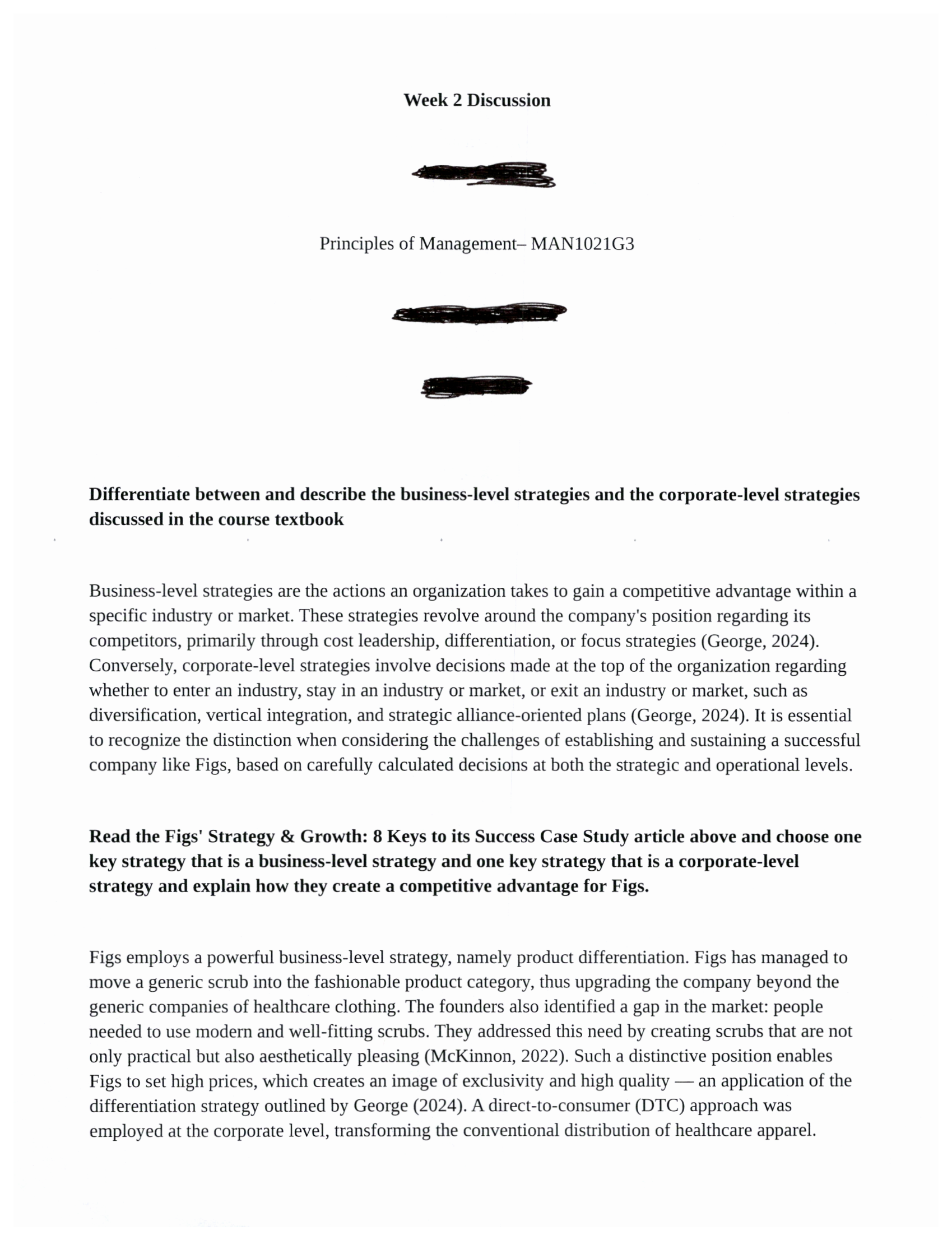
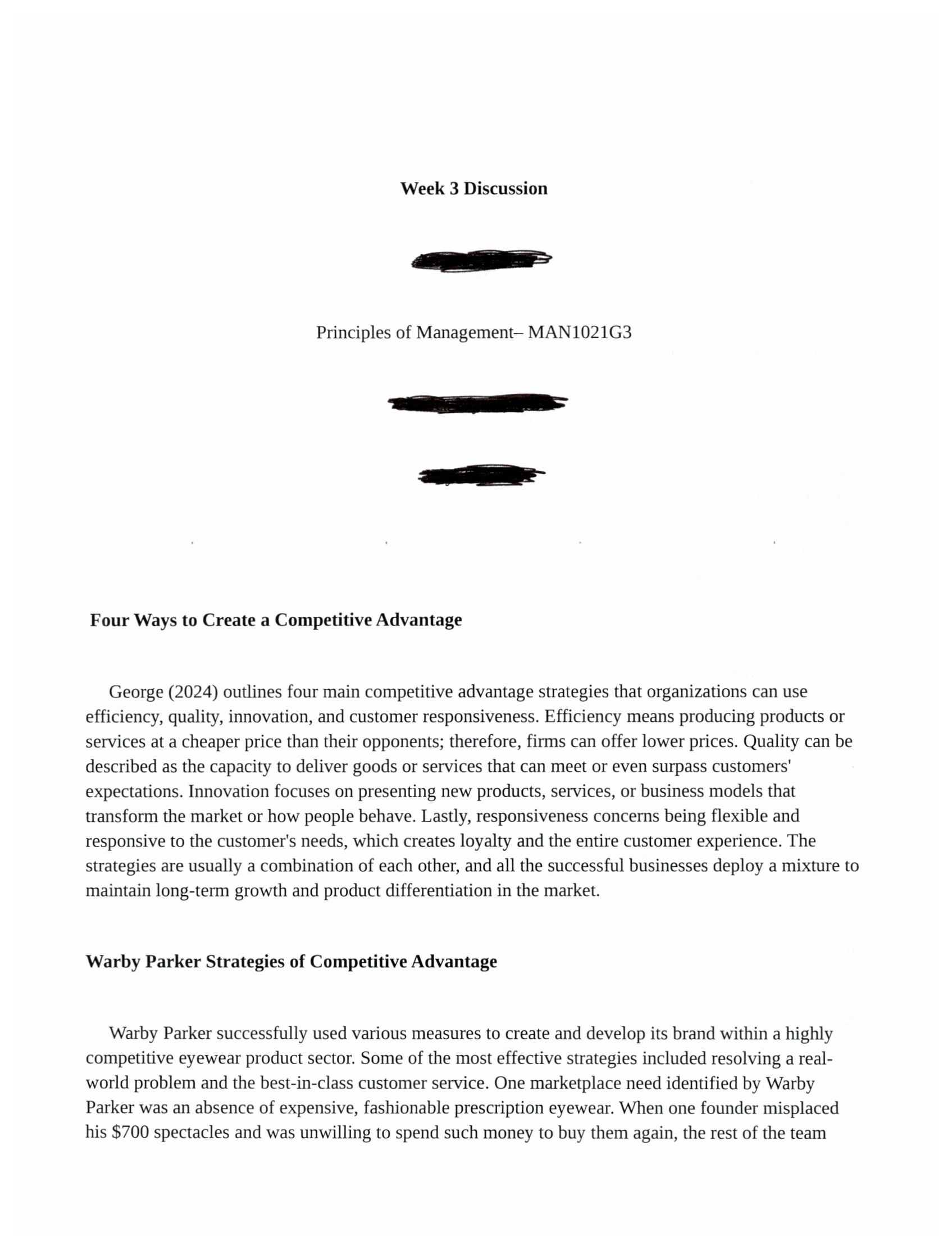
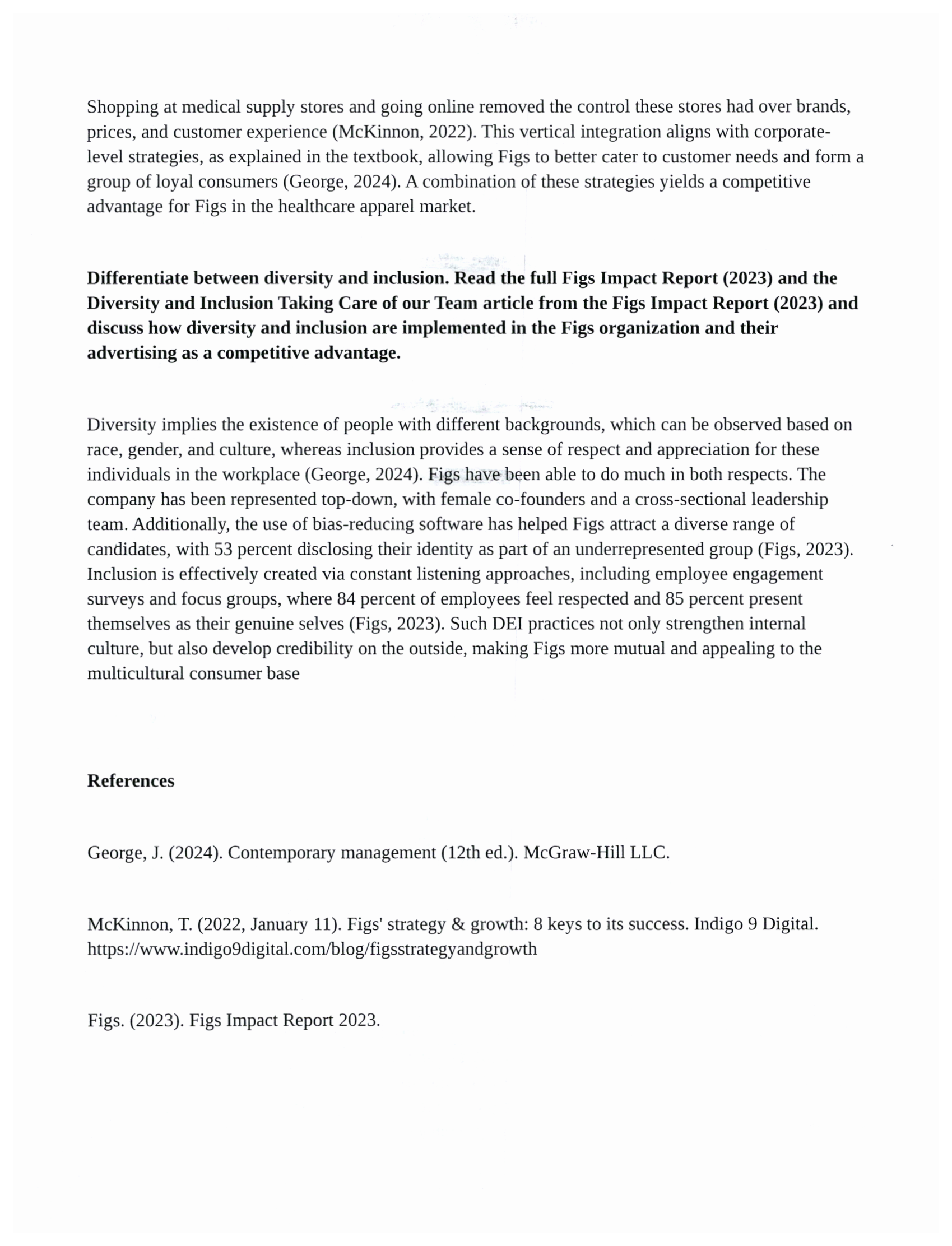
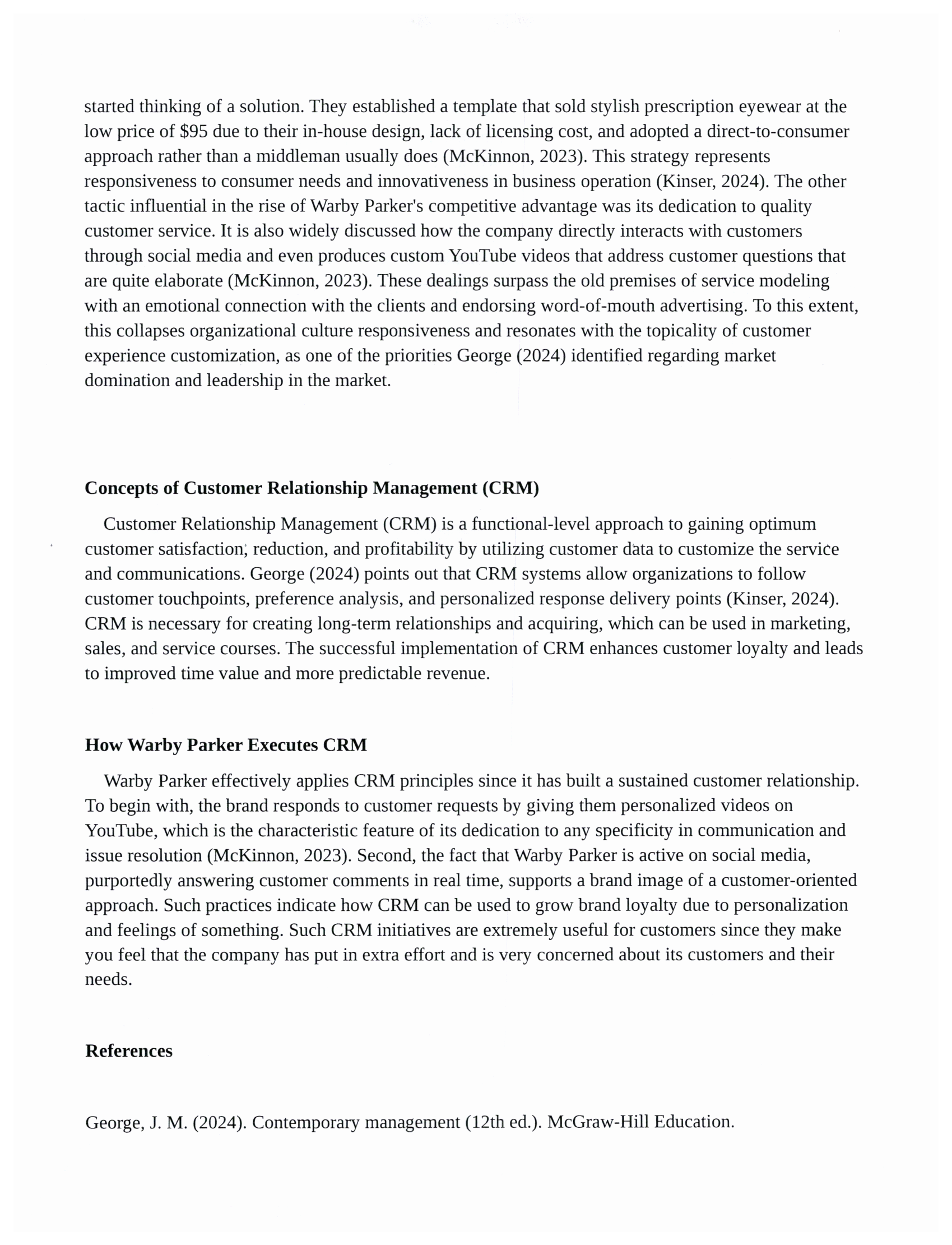
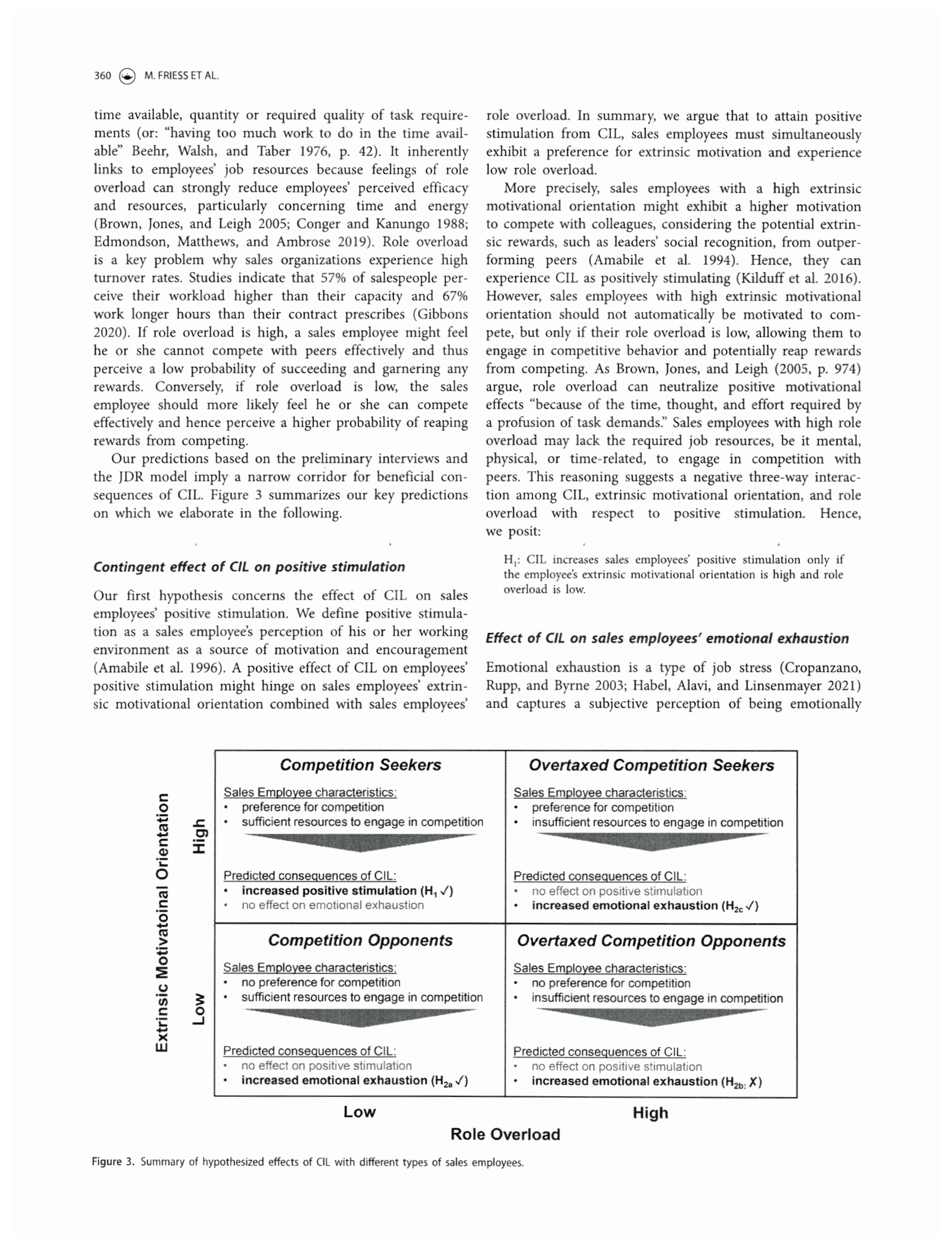
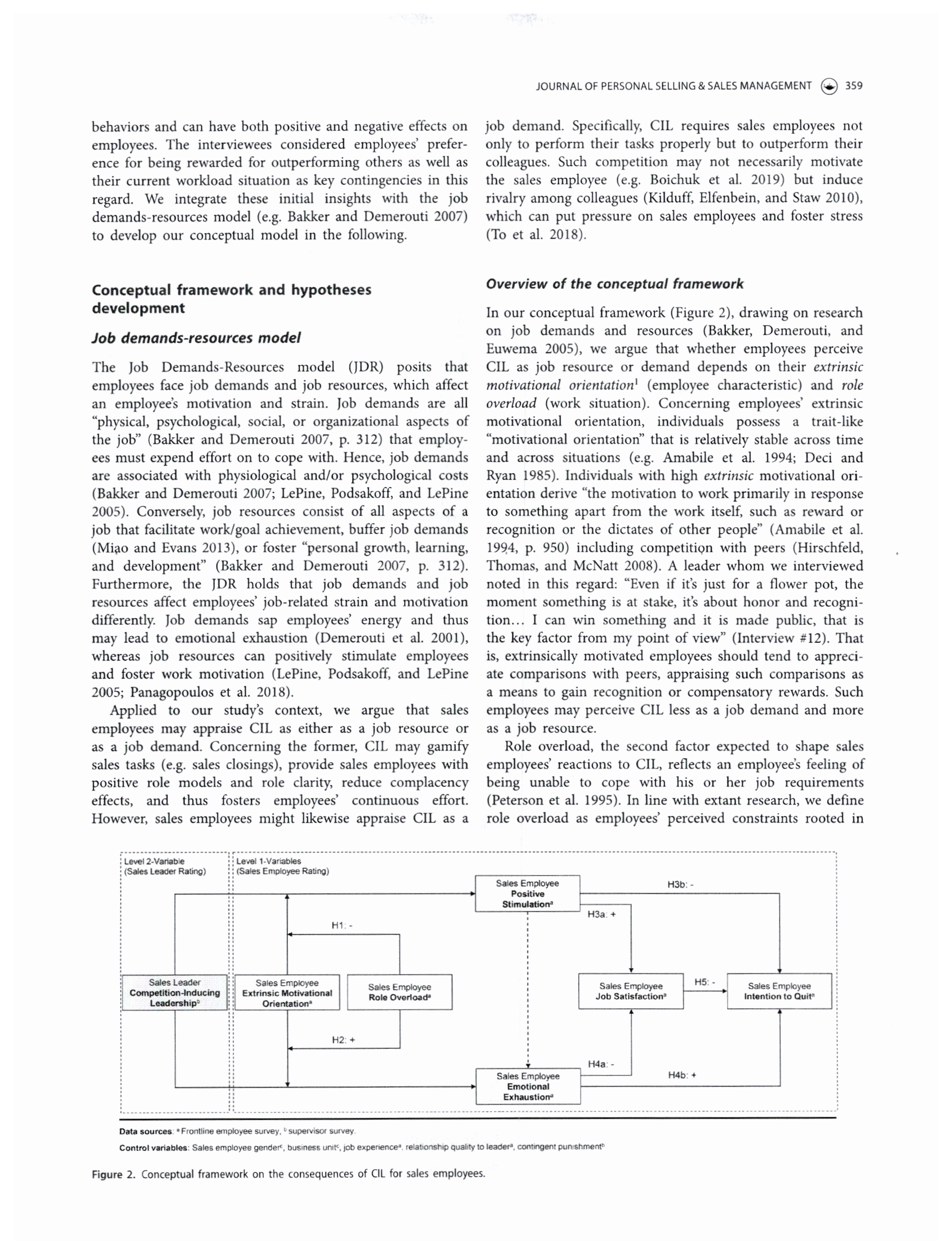
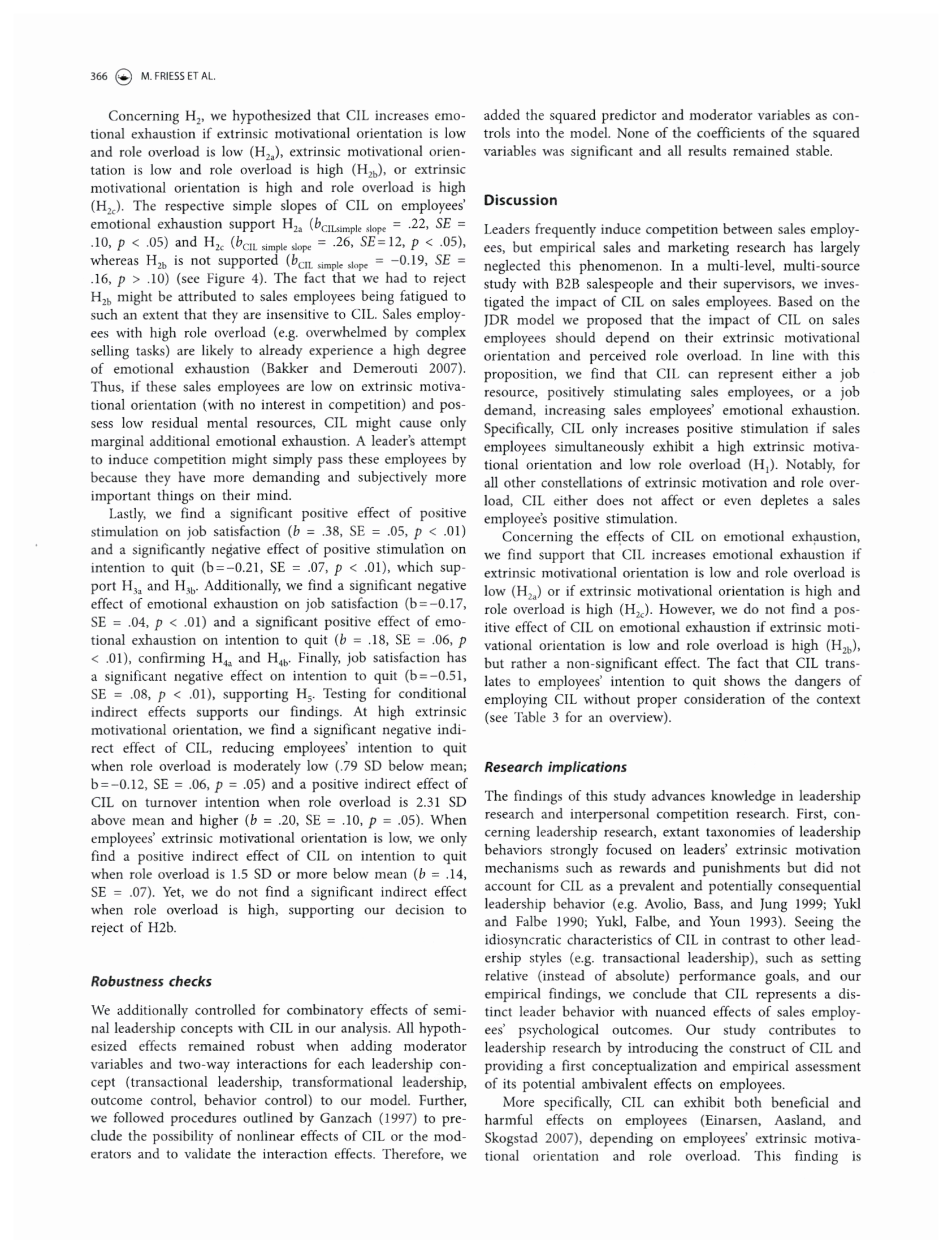
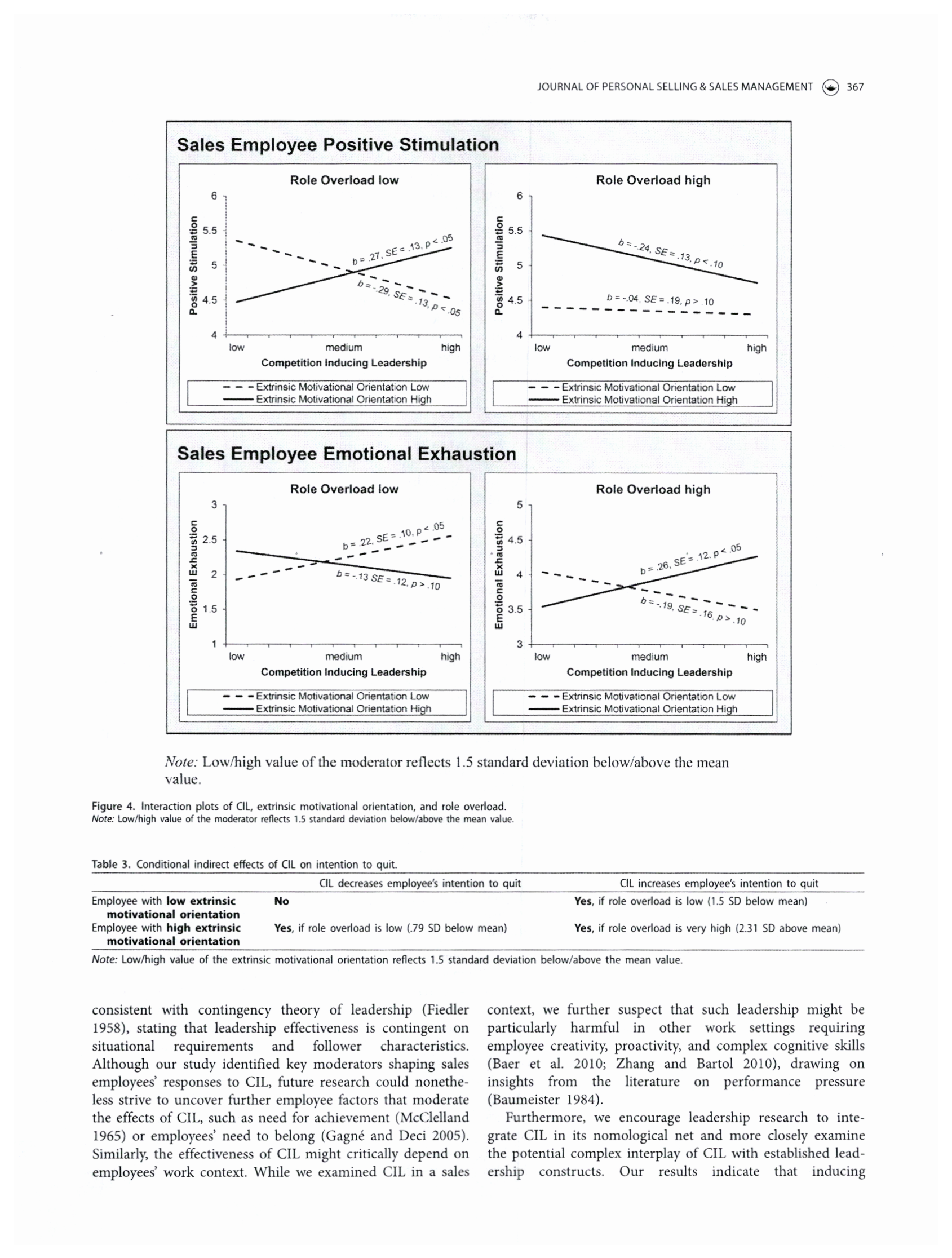
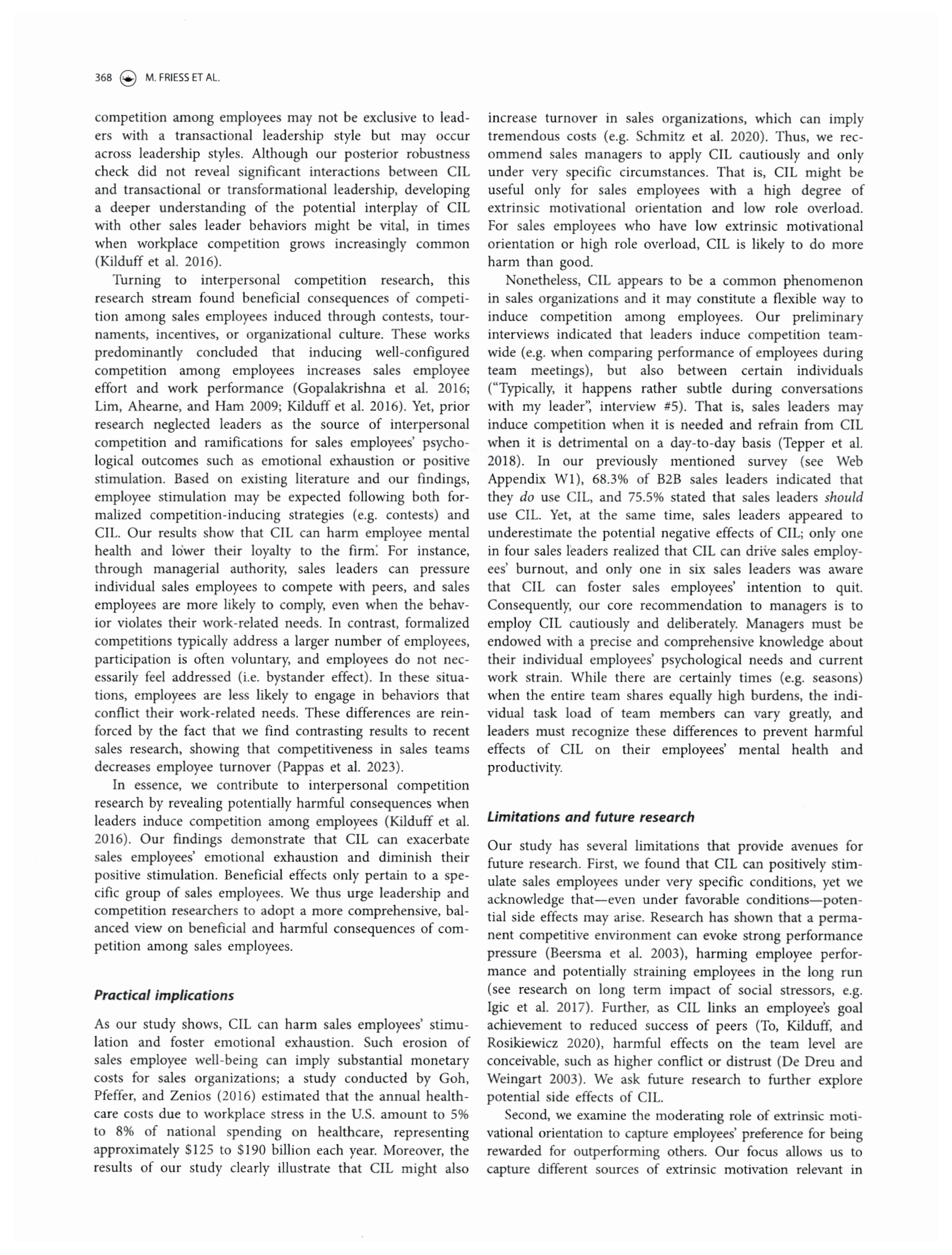
Week 4 Final Paper Submission Assignment Instructions ASSIGNMENT THE WEEK 4 FINAL PAPER IS DUE: WEDNESDAY of WEEK 4 by 11:59 PM ET. Your paper is required to be submitted via the Final Paper Submission link in Week 4 as an APA 7th ed. format Microsoft Word document. * For this assignment, you will create an APA 7th ed. format paper. You will research the leadership/management style of a high-profile leader/manager (one of the ten CEOs listed below). The topics in your paper are required to include the following three (3) topics: 1. The CEO's Professional Background: Brief information about the CEO's professional background related to their current role as a CEO. This is not a biography of the CEO. 2. How Does the CEO Implement the Course Concepts as a Leader in Their Organization?: This is the focus of your paper. Include the concepts you learned and that were discussed in this course. Correlate the specific concepts in the course textbook to your CEO's overall practices in their organization/company. Review the concepts in the Weeks 1-4 Discussion Questions. Included Concepts Required: + Management Concepts and the Application of Concepts to the Functional Areas Related to Local and Global Business. Include the Following: * Social Responsibility of the Organization * The CEO's Approach Toward Social Responsibility * The CEO's Business-Level and Corporate-Level Strategies Implemented in their Organization * Organizational Structure Implemented in their Organization * Source(s) of Power Implemented by the CEO * Sources of Motivation for their Employees * Legal and Ethical Business Practices including Diversity and Inclusion * Global Environment in Relation to Business Decisions 3. Why this CEO is (or is not) an Effective Leader/Manager: Please note it is required to provide cited research to support why you feel this person is (or is not) an effective leader/manager. Please address their display of social responsibilities, ethical practices, and any supported regulations related to their leadership/management style. Include the concepts you learned in this course and the concepts in the course textbook The information provided in the paper is required to include the managerial concepts learned in this course from the Discussions, Case Assignments,_and the weekly readings. Please choose one of the following high-profile CEOs to research as the focus of your paper (pictures on the left): * Michelle Buck (The Hershey Company) * Brian Chesky (Airbnb) * Jamie Dimon (JPMorgan Chase & Co.) * Thasunda Brown Duckett (TIAA) * Sue Gove (Bed Bath & Beyond, Inc.) * Antonio Neri (Hewlett Packard Enterprise) * Brian Niccol (Chipolte Mexican Grill) * Yamini Rangan (Hubspot, Inc.) * Russell Stokes (GE Aviation Services) Please read the Grading Assessment Rubric prior to writing your paper and include all the required criteria in your paper. Please download and print the Assessment Rubric to follow as you write your paper. Please click on this link for the Assessment Rubric: Grading Rubric Requirements: The paper is required to include the following: * Astrong understanding of management concepts and application of the concepts to the functional areas related to local and global business + Astrong understanding of ethical decision-making including a strong understanding of legal and ethical business practices including diversity and inclusion - A strong understanding of the global environment in relation to business decisions * The paper is required to be clearly organized and provide convincing evidence to support conclusions. * The argument is required to incorporate critical and analytical explanation, is logical, persuasive, and clearly communicated in a conclusion. * The reader should be able to follow a line of reasoning. * The paper is required to include research and correct APA 7th ed. formatting. - APA format is required to be used accurately and consistently in the paper. * The paper is required to include compelling evidence from professionally legitimate sources to support the claims made. - Attribution should be clear and fairly represented. * The reader of the paper should be confident the information and ideas presented can be trusted. General APA Guidelines For This Paper: Your paper is required to be an APA 7th ed. format Microsoft Word document. Please use the APA 7th ed. format APA paper template. You can type directly in the template and submit it. Please be sure to click 'Save' when it opens. i MAN1021_APA 7th ed. Format Paper Template for Week 4 CEO Paper.docx If you do not have Microsoft Office 365 please note Keiser University provides students with Microsoft Office 365 at no charge in their Keiser Outlook (email) account. Use the Microsoft Word app to create your paper rather than an online template that may not be compatible with Blackboard. If your instructor provides or requires a Microsoft Word APA 7th ed. format paper template to use it is recommended you use it for your paper. Your APA paper should be typed, double-spaced on standard-sized paper (8.5" x 11") with 1" margins on all sides. All text should be in Times New Roman 12-point font. A Running head and page headers are not included in APA 7th ed. format student papers. Include a page number at the top of every page flush right at the margin. Please refer to the 'Business Writing and Research APA Formatting Videos" module in the 'Getting Started' tab located in the course menu on the left sidebar to learn correct APA format. Major Paper Sections Your paper is required to include these three components: Title Page, Main Body, and Reference Page. An Abstract is not necessary for this paper. Title Page The Title Page of your paper should include the title of your paper, author's name (your name), the institutional affiliation (Keiser University), course number and course name, and the date. Include the following centered in the upper-middle of the page: Title of Your Paper Author's Name (Your Name) Keiser University MAN1021 Principles of Management Date (Month, Day, Year) Body of the Paper The content of your paper should be uniformly double-spaced. Begin the body of your paper on page 2 by typing in your full title at the top of the page. The title must be centered and in title case in bold text. Title case means all major words are capitalized. This is an APA Level 1 Topic Heading. Then press the enter key once, change your alignment to left and begin typing. Each paragraph must be indented by % inch. Do not write the word 'Introduction' at the beginning of your paper. In APA format papers the first paragraph is always the introduction, so it is it does not need to be titled as such. The body of your paper is required to be a minimum of 3-5 pages in length excluding the Title and Reference pages. Introduction Do not write the word 'Introduction' as a Topic Heading in APA format Papers Include the following three required assignment topics as APA Level 1 Topic Headings: CEO's Personal and Professional Background CEO's Implementation of the Course Concepts Why This CEO is (or is not) an Effective Leader/Manager Summary Reference Page The Reference page is the last page in your paper. This should be a new page with the title References at the top of the page in bold text and centered. * Only include the references for the sources you cited in your paper on the Reference page. * In APA format all references are required to be in hanging indent format and uniformly double-spaced. * Each of the references for your sources should be listed alphabetically by last name. * All references are required to be in correct APA 7th ed. format. Sources: * Itis required to provide the George (2024) course textbook as a source. A minimum of three full-text academic journal articles from the Online Keiser Library are required sources. Please use the Library Training/Instructional Videos provided in the Online Keiser Library for assistance in researching academic journal articles. * In addition to the course textbook and academic articles from the Online Keiser Library you may use professional business sources. + All sources are required to be published from 2016 to the present. + All information provided from the sources you use is required to be paraphrased in your words and cited appropriately in correct APA 7th ed. format using narrative and/or parenthetical in-text citations. Direct quotes from your sources are not accepted even if cited. *Please note: You may not find scholarly journal articles in the Online Library on your CEO if you only type in their name in the search bar. First, determine the leadership/management style of your CEO and then research the leadership/management concepts in the library. There are thousands of articles in the Online Library on management and business concepts, leadership styles, theories, models, etc. Helpful Hint: The ProQuest Database Platform in the Online Keiser Library has an option to select only full-text articles if you check the box. Be sure to also check the box for 'Peer-reviewed.' For Publication date: Click on the dropdown arrow and choose: 'After this date...' In the yyyy box type in 2015 to access journal articles published after 2015 which will access articles from 2016 to present. The following are not accepted sources: Wikipedia, Wiki websites, Blogs, encyclopedias, bibliography.com, other textbooks, books, online books, book reviews, dictionaries, newspapers, online essays, other students' papers, assignments, and essays found in online websites, any any Artificial Intelligence (Al) websites, online paraphrasing tools, Dissertations, White Pages, online interviews, videos (except for the video in the Week 4 Discussion), .edu websites, job search websites such as Indeed, Monster, etc., and non-professional online websites. Please follow the above guidelines and requirements. Prior to submitting your assignment please review your paper to be sure you have met all the Assignment Guidelines and Rubric requirements. THE PAPER IS DUE: WEDNESDAY of Week 4 by 11:59 PM ET. This assignment is required to be submitted via the Final Paper Submission link in Week 4 as a Microsoft Word document. Please do not submit your paper as Submission Text or Comments or in Pages, Notes, Google Docs, or PDF format. Submission A TB Ay & BI U- &B: =: Tr DO @e GF @- Drag and drop files here or click to add text Word count: 0 Save and Close Submit Title of Your Paper (Place 4 spaces between the title and your name) Your Name Keiser University MAN1021 Principles of Management Date (Month spelled out, day, year) An Abstract is Not Required For This Assignment Delete this prior to submitting your paper PLEASE DELETE ALL THE INSTRUCTIONS IN BLUE TEXT PRIOR TO SUBMITTING YOUR ASSIGNMENT The content in your paper is required to be in BLACK text. Full Title of Your Paper The first page of your paper should start on page 2 and begin with an Introduction to your paper. The Introduction should introduce your readers to your main topic and the topics you will be discussing in your paper. Do not write the word Introduction as the Topic Heading in an APA format paper. In APA format papers, the Introduction is always the first paragraph. The Introduction should be included in the body of your paper, not on a separate page. Each new paragraph is indented. Use the Tab key on the left side of the keyboard to indent 0.5 in. The lines in your paper should be uniformly double-spaced. Do not include extra spaces between paragraphs and the APA Level 1 Topic Headings. Use APA Level 1 Topic Headings for Each Section/Component This paper has three separate Topic Headings: CEO's Professional Background, CEO's Implementation of the Course Concepts Why This CEO is (or is not) Such an Effective Manager/Leader. Each topic should be an APA Level 1 Topic Heading. APA Level 1 Topic Headings should be in title case meaning the first word and all major words are capitalized except for minor words such as a, an, the, for, and, of, to, etc. Summary At the end of your paper you should summarize the key points in your paper. The Summary should not include any new information that was not presented in your paper. The Summary should not include any new cited information from source(s). The Summary should be in your own words. The Summary is included in the body of your paper and not on a separate page. The references for your sources are listed on a separate Reference Page. All references are required to be in hanging indent format and uniformly double-spaced on the Reference Page. A reference entry generally has five elements: Who: Author This can be the author(s)' names or the owner of the website When: Year of Publication For website articles provide the (Year, Month, Day) What: Title of the work Website Name: Site or source name DOI or URL: Include the DOI for a journal article. Provide the URL to the website. Please note for scholarly journal article references APA style requires the DOI or the direct URL link to the online article in a journal article reference. If you find a journal article in the Online Keiser Library without a DOI search for the full-text article in Google and provide that URL link. APA style does not accept the database URL from the Online Keiser Library, so please do not copy and paste the URL link from the Online Library. The following are not accepted sources: Wikipedia, Wiki websites, Blogs, encyclopedias, dictionaries, bibliography.com, other textbooks, books, online books, book reviews, newspapers, online essays, other students' papers, assignments, and essays found in online websites, Dissertations, White Pages, videos, podcasts, .edu websites, job search websites such as Indeed, Monster, etc., and non-professional online websites. Please note using any information from any Artificial Intelligence (AI) chatbot with natural language processing (NLP) such as ChatGPT or any other AI program, or any type of paraphrasing tool will not be accepted, and a zero grade will be earned if used for this assignment. Below are examples of correct APA 7th ed. format references for a textbook, a journal article with a DOI, a journal article without a DOI, and a website. The following are APA 7th ed. format reference examples for your Reference Page which is a separate page. When you save your document click on 'Save As' and rename your paper in the following format: Last Name First Name _MAN1021 Week 4 Final Paper References Davis, J., & Manson, M. (2024). This is an example of a textbook reference (3rd ed.). Pearson. Plant, R. A., & Page, J. P. (2023). This is an example of a journal article reference with a DOI. Journal of Professional Management, 8(12), 8-15. https://doi.org/10.1047/jpm00012/26 or doi:10.1047/jpm00012/26 Scott, M. (2024). This is an example of a journal article reference without a DOI. Journal of Business Ethics, 6(3), 33-41. https:/lo.ethics.bus/journal/10651 Soprano, T. (2024). This is an example of a website article reference. Insights in Management. https://www.im.org.developleaders.aspx PLEASE DELETE ALL THE REFERENCE EXAMPLES AND THE INSTRUCTIONS IN BLUE TEXT PRIOR TO SUBMITTING YOUR ASSIGNMENT Key points: (Delete all information in blue text prior to submitting your paper). Your paper should be in black text. Citations are the in-text citations you provide in your written text such as parenthetical and narrative citations. References are the sources you used in your research. In a parenthetical citation at the end of a sentence provide only the authors' last name and year of publication. Do not include the author's initials. Provide an ampersand (&) before the last author's name. Example: (Jones & George, 2022). A period is not placed before a parenthetical citation. The citation becomes a part of the sentence, so a period is placed after the citation. In a narrative citation within the text use the word 'and' before the author's last name not an ampersand (&). The ampersand is only used in parenthetical citations. Example: According to Jones and George (2022), 6 When a source has three or more authors provide only the first author's name with et al. in the citation such as (Smith et al., 2024) or According to Smith et al. (2024), All authors' names are required to be included in the reference up to 20 names. There is a different reference for more than 20 names. Example reference for an article with more than 20 authors Smith, B., Arslan, M., Fischer, P., Nowak, L., Van den Berg, O., Coetzee, L., Juarez, U., Jones, E., Wang, C., Zhang, I., Li, P., Yang, R., Kumar, B., Xu, A., Martinez, R., McIntosh, V., Ibanez, L. M., Martin, G., Virtanen, E., . . . Kent, A. (2024). Effective leadership styles. Journal of Management, 29(6), 113-126. https://doi.org/10.00003/3mp7y-539 Parenthetical citation: (Smith et al., 2024). Narrative citation: Smith et al. (2024) Direct quotes from your sources should not be used. It is required to paraphrase all information in your words used from sources to reflect your understanding of the concepts. All paraphrased information is required to be cited appropriately from the source in which you found the information. Please refrain from providing one citation at the end of your paragraphs. Providing a blanket citation at the end of every paragraph is unacceptable and does not meet APA style format citing requirements. You should cite your source throughout the paragraph. All information provided from sources are required to be cited from the sources in which you found the information to avoid plagiarism. Please Review the APA 7th ed. Tutorial Videos and Documents in the Getting Started Tab Under 'Business Writing and Research APA Formatting Videos'Week 1 Discussion ohare EE Principles of Management- MAN1021G3 The four main sources of ethics According to George (2024), the four main sources of ethics are social, professional, individual, and organizational ethics. Social ethics refers to the moral principles that prevail in society and shape the overall framework within which organizations operate. It includes social norms, values, and laws that influence organizational practices and expectations. Professional ethics are the standards that govern members of a profession, such as codes of conduct for accountants or lawyers. These ensure that professionals adhere to a shared set of principles that promote integrity and responsibility. Individual ethics are the personal moral principles that guide an individual's decision-making process. Each manager brings their own set of beliefs and values, which can influence their interpretation and implementation of ethical standards within their organization. Finally, organizational ethics encompasses the policies, procedures, and culture within an organization that define acceptable employee conduct. A strong ethical framework within an organization can foster ethical behavior among both managers and employees. The four approaches The four approaches to social responsibility are presented: obstructionist, defensive, accommodative, and proactive. Obstructionist Approach: This approach represents the lowest level of commitment to social responsibility. Companies that adopt this approach often act unethically and attempt to hide their misconduct from stakeholders. Defensive Approach: Companies that employ this approach comply only with the minimum legal requirements, but do not exceed them. They often prioritize the interests of shareholders over those of other stakeholders, acting ethically only when required by law. Adaptive Approach: Adaptive companies recognize the need for social responsibility and balance the interests of various stakeholders while ensuring compliance with legal and ethical standards. Their goal is to do the right thing, going beyond mere legal compliance. Proactive Approach: Companies that adopt this approach actively engage in socially responsible behavior. They strive to exceed legal obligations and respond to the broader needs of society and its stakeholders, including environmental conservation and community engagement. Better World Books Better World Books embodies a stakeholder-based approach to social responsibility through its mission-driven "Buy a Book, Give a Book" business model. By aligning its operations with the needs and well-being of multiple stakeholders, including customers, global communities, and the environment, Better World Books demonstrates a unique commitment to corporate responsibility. According to Newell (2023), the company integrates social justice and literacy improvement into its core strategy, actively donating books to communities in need, which directly impacts educational accessibility and equity worldwide. In terms of environmental sustainability, Better World Books employs several practices to minimize its ecological footprint. By collecting and reusing books from libraries, bookstores, and other sources, they prevent millions of books from ending up in landfills or being recycled instead and instead redistribute them. This has resulted in the reuse or recycling of over 475 million books (BetterWorldBooks, 2024). The company's commitment to balancing carbon with every purchase underscores its dedication to reducing carbon emissions, ensuring that operations support healthier ecological standards. Customers are encouraged to contribute to carbon offset programs, reflecting a convergent strategy that also generates environmental benefits through economic activities. References George, J. M. (2024). Contemporary Management. McGraw-Hill LLC. Newell, G. (2023). Corporate responsibility examples from Better World Books. https://602communications.com/better-world-books-corporate-responsibility-examples/ Books, B. W. (2024). Better World Books Website. Better World Books. https://www.betterworldbooks.com/go/missionBetterWeek 2 Discussion ames Principles of Management- MAN1021G3 ai Differentiate between and describe the business-level strategies and the corporate-level strategies discussed in the course textbook Business-level strategies are the actions an organization takes to gain a competitive advantage within a specific industry or market. These strategies revolve around the company's position regarding its competitors, primarily through cost leadership, differentiation, or focus strategies (George, 2024). Conversely, corporate-level strategies involve decisions made at the top of the organization regarding whether to enter an industry, stay in an industry or market, or exit an industry or market, such as diversification, vertical integration, and strategic alliance-oriented plans (George, 2024). It is essential to recognize the distinction when considering the challenges of establishing and sustaining a successful company like Figs, based on carefully calculated decisions at both the strategic and operational levels. Read the Figs' Strategy & Growth: 8 Keys to its Success Case Study article above and choose one key strategy that is a business-level strategy and one key strategy that is a corporate-level strategy and explain how they create a competitive advantage for Figs. Figs employs a powerful business-level strategy, namely product differentiation. Figs has managed to move a generic scrub into the fashionable product category, thus upgrading the company beyond the generic companies of healthcare clothing. The founders also identified a gap in the market: people needed to use modern and well-fitting scrubs. They addressed this need by creating scrubs that are not only practical but also aesthetically pleasing (McKinnon, 2022). Such a distinctive position enables Figs to set high prices, which creates an image of exclusivity and high quality an application of the differentiation strategy outlined by George (2024). A direct-to-consumer (DTC) approach was employed at the corporate level, transforming the conventional distribution of healthcare apparel. Week 3 Discussion Principles of Management- MAN1021G3 Four Ways to Create a Competitive Advantage George (2024) outlines four main competitive advantage strategies that organizations can use efficiency, quality, innovation, and customer responsiveness. Efficiency means producing products or services at a cheaper price than their opponents; therefore, firms can offer lower prices. Quality can be described as the capacity to deliver goods or services that can meet or even surpass customers' expectations. Innovation focuses on presenting new products, services, or business models that transform the market or how people behave. Lastly, responsiveness concerns being flexible and responsive to the customer's needs, which creates loyalty and the entire customer experience. The strategies are usually a combination of each other, and all the successful businesses deploy a mixture to maintain long-term growth and product differentiation in the market. Warby Parker Strategies of Competitive Advantage Warby Parker successfully used various measures to create and develop its brand within a highly competitive eyewear product sector. Some of the most effective strategies included resolving a real- world problem and the best-in-class customer service. One marketplace need identified by Warby Parker was an absence of expensive, fashionable prescription eyewear. When one founder misplaced his $700 spectacles and was unwilling to spend such money to buy them again, the rest of the team Shopping at medical supply stores and going online removed the control these stores had over brands, prices, and customer experience (McKinnon, 2022). This vertical integration aligns with corporate- level strategies, as explained in the textbook, allowing Figs to better cater to customer needs and form a group of loyal consumers (George, 2024). A combination of these strategies yields a competitive advantage for Figs in the healthcare apparel market. Differentiate between diversity and inclusion. Read the full Figs Impact Report (2023) and the Diversity and Inclusion Taking Care of our Team article from the Figs Impact Report (2023) and discuss how diversity and inclusion are implemented in the Figs organization and their advertising as a competitive advantage. Diversity implies the existence of people with different backgrounds, which can be observed based on race, gender, and culture, whereas inclusion provides a sense of respect and appreciation for these individuals in the workplace (George, 2024). Figs have been able to do much in both respects. The company has been represented top-down, with female co-founders and a cross-sectional leadership team. Additionally, the use of bias-reducing software has helped Figs attract a diverse range of candidates, with 53 percent disclosing their identity as part of an underrepresented group (Figs, 2023). Inclusion is effectively created via constant listening approaches, including employee engagement surveys and focus groups, where 84 percent of employees feel respected and 85 percent present themselves as their genuine selves (Figs, 2023). Such DEI practices not only strengthen internal culture, but also develop credibility on the outside, making Figs more mutual and appealing to the multicultural consumer base References George, J. (2024). Contemporary management (12th ed.). McGraw-Hill LLC. McKinnon, T. (2022, January 11). Figs' strategy & growth: 8 keys to its success. Indigo 9 Digital. https://www.indigo9digital.com/blog/figsstrategyandgrowth Figs. (2023). Figs Impact Report 2023. Kinser, I. (2024). Small brand giants: Harnessing innovation to disrupt for growth. Journal of Brand Strategy, 13(1), 15-28. https://www.ingentaconnect.com/content/hsp/jbs/2024/00000013/00000001/ art00003 Mckinnon, T. (2023, October 26). Warby Parker's strategy: 6 things it did differently. Indigo 9 Digital. https://www.indigo9digital.com/blog/6-things-warby-parker-did-differently-thatstarted thinking of a solution. They established a template that sold stylish prescription eyewear at the low price of $95 due to their in-house design, lack of licensing cost, and adopted a direct-to-consumer approach rather than a middleman usually does (McKinnon, 2023). This strategy represents responsiveness to consumer needs and innovativeness in business operation (Kinser, 2024). The other tactic influential in the rise of Warby Parker's competitive advantage was its dedication to quality customer service. It is also widely discussed how the company directly interacts with customers through social media and even produces custom YouTube videos that address customer questions that are quite elaborate (McKinnon, 2023). These dealings surpass the old premises of service modeling with an emotional connection with the clients and endorsing word-of-mouth advertising. To this extent, this collapses organizational culture responsiveness and resonates with the topicality of customer experience customization, as one of the priorities George (2024) identified regarding market domination and leadership in the market. Concepts of Customer Relationship Management (CRM) Customer Relationship Management (CRM) is a functional-level approach to gaining optimum customer satisfaction; reduction, and profitability by utilizing customer data to customize the service and communications. George (2024) points out that CRM systems allow organizations to follow customer touchpoints, preference analysis, and personalized response delivery points (Kinser, 2024). CRM is necessary for creating long-term relationships and acquiring, which can be used in marketing, sales, and service courses. The successful implementation of CRM enhances customer loyalty and leads to improved time value and more predictable revenue. How Warby Parker Executes CRM Warby Parker effectively applies CRM principles since it has built a sustained customer relationship. To begin with, the brand responds to customer requests by giving them personalized videos on YouTube, which is the characteristic feature of its dedication to any specificity in communication and issue resolution (McKinnon, 2023). Second, the fact that Warby Parker is active on social media, purportedly answering customer comments in real time, supports a brand image of a customer-oriented approach. Such practices indicate how CRM can be used to grow brand loyalty due to personalization and feelings of something. Such CRM initiatives are extremely useful for customers since they make you feel that the company has put in extra effort and is very concerned about its customers and their needs. References George, J. M. (2024). Contemporary management (12th ed.). McGraw-Hill Education. Week 4 Discussion Discussion Topic Q QA Follow Complete your assigned Week 4 reading (Chapters 14-17) and then read the article below which corresponds to this week's discussion topics. Then answer the questions below the article. Use the concepts from the course textbook and the article to support the information in your initial post. It is required you support your initial posts and peer posts with cited information from all the sources you use and provide all the sources in your reference list to meet the APA style requirements. Bombas Case Study Article Leadership Lessons from a Pair of Socks When David Heath advises entrepreneurs to get close to their product, he is speaking from personal experience. Before officially launching the apparel brand Bombas in 2013, Heath walked around New York City carrying a backpack of prototype socks that he handed out to almost everyone he encountered, including the homeless community, which he considered his target audience. This hands-on interaction gave Heath helpful insights and direct feedback that he took into consideration when designing the perfect sock. Sticking close to your customers is essential for maintaining a mission-focused work culture, Heath told a recent gathering at the Business School. He still personally gives out socks to the homeless during charity events, with participation strongly encouraged among all employees. Bombas holds up to 15 giving events monthly, including serving breakfast at shelters and delivering late-night soups in winter. \"We put a ton of emphasis on company culture\" Heath explains. \"The people at our organization really, really live what we do.... They come into work every day knowing that they're fighting for something because they've made relationships out in the community, and they could see the direct impact.\" Part of a recent crop of for-profit charitable organizations that pledge to give away their product each time they make a sale, New York-based Bombas has donated more than 25 million socks to homeless shelters. Along the way, annual sales have surged beyond $100 million, with year-over-year growth of around 100 percent for what has been called the \"most high-quality, comfortable pair known to man." Heath, who studied business as an undergraduate at Babson College, got the idea for Bombas in 2011 when he read that socks were the most-requested clothing item in U.S. homeless shelters. At that time, the start-up footwear company Toms (founded in 2006) was promising to donate a pair of shoes for every pair sold, a model adopted by Warby Parker when the eyeglasses maker launched in 2010. Heath figured it could also work for socks. Bombas crowdfunded $145,000 in 2013, then raised another $1 million in 2014 from friends and family. That same year, Heath struck a $200,000 investment with Daymond John of Shark Tank. Bombas later raised another $3 million in Series A funding. Within its first two and a half years of business, Bombas sold (and donated) 1 million pairs of socks; the company surpassed 25 million donations late last year. Adding to the company's social appeal, in 2017, Bombas became a Certified B Corporation, a designation given to companies that meet high standards for sustainability, income equality, and community impact. Research suggests millennials and Generation Z consumers really value the fact that companies have a social mission. As with any start-up, Heath acknowledged some challenges over the past six years. At one point, Bombas' dependence on Facebook for marketing became a problem when the social media juggernaut shifted its algorithm in a way that hurt the consumer cost per acquisition. This was a lesson about the need to diversify marketing channels. They have also overcome obstacles in maintaining sufficient inventory. One year, Bombas so under-projected holiday sales that the company had to refund more than 1 million customer orders that could not be fulfilled on time. Another aspect of the learning curve was figuring out how to design a sock that is most helpful to the homeless community. Initially, Bombas donated the same socks it sold. But, the homeless population kept requesting socks in darker colors, which the company's charity partners explained was because of a preference for socks that would not show wear. Bombas tweaked the product to reflect that color preference, along with adding features like an antimicrobial treatment and reinforced seams. In an effort to better measure the social impact of donating socks, Bombas is collecting more quantitative data to determine how communities benefit from its donations. Anecdotally, Heath already knows Bombas is making a difference. By giving socks to a homeless shelter in North Carolina - one of more than 3,000 partners nationwide - the company was able to help the shelter save about $30,000 that was used to send two youths to community college, he said. Bombas is now expanding into channels beyond socks, including t-shirts, and is also looking into opening retail outlets in the future. To keep up with demand, Bombas nearly tripled its headcount over the past year to 120 employees. Out of the 80 new hires, only four people have left, a low rate of turnover that Heath credits to the company's strong social mission. "We attract the right types of people who want to be a part of something that is bigger than just simply showing up to collect a paycheck," Heath said. APA 7th ed. format reference for the above article: Kurczy, S. (2020, February 7). Leadership lessons from a pair of socks. Ethics and Leadership News. https://www8.gsb.columbia.edu/healthcare/publication/8085/leadership-lessons-from-a-pair-of-socks Please Watch This Short Video Organizational Leadership Series with David Heath: CEO Challenges Organizational Leadership Series with David Heath: CEO Challenges APA 7th ed. format reference for the above video: Columbia Business School. (2020, January 13). Organizational leadership series with David Heath: CEO challenges [Video]. YouTube. https://youtu.be/zbKt8P8Ht7E How Leadership Influences Company Culture Answer the following questions: . Describe the concepts related to transformational leadership and explain how managers can engage in being transformational. How does transformational leadership differ from transactional leadership? Please explain. Explain emotional intelligence and discuss how emotional intelligence plays a role in the effectiveness of a leader. Which type of leadership style does Bombas CEO David Heath implement in the management of the company? What challenges did he face and what changes did he make to overcome the challenges? Provide examples from the Bombas Case Study article. Would you say that he is a charismatic leader? Please explain why or why not.- Explain the five source(s) of power discussed in the Week 4 course textbook readings. Determine the source or sources of power David Heath implements to affect other people's behavior. + Discuss the two basic leader styles in Fiedler's Contingency Model of leadership in the Week 4 course textbook readings. Determine the leader style from this model that David Heath implements in his leadership and provide examples to support your choice. Initial Post and Rubric Requirements To post to the discussion, click on Week 1 Discussion above, then click Create Thread. It is required to submit your initial response post to enter the Discussion Forum. If you enter the Discussion Forum prior to submitting your initial response post, you will not earn credit for your initial post. It is required to submit the initial post to the Discussion Forum as a discussion post. Please do not submit the initial post as an attached Word document. Posts submitted as attachments are not able to be graded. Please read each question thoroughly and answer all questions in their entirety in your initial post. It is important to answer all components of the questions in a comprehensive discussion post. One or two- sentence responses are not acceptable. Please note it is required to support your responses with cited information from all the sources you used by providing APA 7th ed. format in-text citations. Peer Post Guidelines and Rubric Requirements It is required to respond to two of your peers' posts. Your peer responses are required to be addressed to the student you are responding to by their name. Your peer post responses are required to include the course textbook concepts. Providing comments or a one or two-sentence response is not acceptable. Simply agreeing with your peers or reiterating the information they provided in their initial post is not acceptable. Your peer posts should include a response that reflects your understanding of the course concepts and provide additional information to add to and further the discussion. Please use the APA 7th ed. format resources found in the 'Getting Started' tab in the 'Business Writing and Research APA Formatting Videos' module to learn how to cite the sources and write the references in correct APA format. Discussion Posts (APA Guidelines) It is required you support your initial posts and peer posts with cited information from the current George (2024) course textbook and the Case Study articles. You are encouraged to provide additional professional sources such as scholarly, peer-reviewed journal articles found in the Online Keiser Library. You may also use other professional business sources. It is required to use correct APA 7th ed. format for citing your sources when writing your discussion posts. Please do not provide any direct quotes from your sources. All information used from sources is required to be paraphrased in your own words and cited appropriately. It is required to cite all your sources and provide the references for all your sources at the end of your posts in a Reference List. When citing information from the Case Study articles cite the reference listed at the end of the article, not the textbook. You should cite the textbook only for the managerial concepts related to the Case Study. Please note any discussion post created using any information from any Artificial Intelligence (Al) chatbot with natural language processing (NLP) such as ChatGPT or any other Al program, or any type of paraphrasing tool will not be accepted, and a zero grade will be earned if used. All sources are required to be published from 2016 to the present year. The following sources are NOT accepted: Wikipedia, Wiki websites, blogs, encyclopedias, dictionaries, online books or textbooks, other books or textbooks, other students' papers found on online websites, online essays, job search websites such as Indeed.com, student dissertations (thesis papers), White Pages, videos, podcasts, social media platforms (Instagram, Facebook, etc.). and non-professional online websites. THE INITIAL POST IS SUGGESTED TO BE SUBMITTED BY THURSDAY BUT IS REQUIRED TO BE SUBMITTED NO LATER THAN FRIDAY. IT IS REQUIRED YOU POST/PARTICIPATE ON A MINIMUM OF THREE SEPARATE DAYS BY SUNDAY TO MEET THE THREE-DAY PARTICIPATION REQUIREMENT. Discussion Assignments will be graded as follows: tl Discussion Rubric .docx 7/28/25, 8:13 AM The Influence of CEO's Education Level and Accounting Professional Background on Financial Slack - DOAJ SEARCH MENU JURNAL DINAMIKA AKUNTANSI (APR 2025) The Influence of CEO's Education Level and Accounting Professional Background on Financial Slack Syahbinah Syahbinah, Novrys Suhardianto AFFILIATIONS + DOI https://doi.org/10.15294/jda.v17i1.19432 Journal volume & issue Vol. 17, no. 1 pp. 118 - 133 Abstract READ ONLINE Purposes: This study examines the influence of the CEO's education level and accounting background on financial slack, providing insights into how executive characteristics shape economic decisions. Methods: The research uses data from non-financial public companies listed on the Indonesia Stock Exchange (IDX) from 2020 to 2022, covering 1,001 firm-year observations. The study employs multiple linear regression analysis to assess the relationship between CEO characteristics and financial slack, controlling for firm-specific and macroeconomic factors. Findings: The results show that the C S education level does not significantly affect financial slack. On the contrary, this study finds that CEOs https://doaj.org/article/a141438a79bb49aeaa8c1b436d4a3bcc 1/47/28/25, 8:13 AM The Influence of CEO's Education Level and Accounting Professional Background on Financial Slack - DOAJ SEARCH MENU echelons ineory, which argues ual top executives characterisues influence strategic decisions. Specifically, CEOs with an accounting background shape financial slack decisions. The findings offer valuable insights for companies on accounting qualifications when hiring CEOs during crises, emphasizing financial slack as crucial for sustaining survival and growth. Additionally, this research aids investors in assessing corporate leadership for better investment decisions, contributing to corporate governance discussions on financial strategies and executive decision-making in uncertain economic conditions. accounting professional background of ceo education level of ceo financial slack governance upper echelons theory Published in Jurnal Dinamika Akuntansi ISSN . 2085-4277 (Print) Publisher Universitas Negeri Semarang Country of publisher Indonesia LCC subjects Social Sciences: Commerce: Business: Accounting. Bookkeeping Website https://journal.unnes.ac.id/journals/jda ABOUT THE JOURNAL SEARCH DOCUMENTATION Journals API https://doaj.org/article/a141438a79bb49aeaaoc1b436d4a3bcc 2/47/28/25, 8:13 AM The Influence of CEO's Education Level and Accounting Professional Background on Financial Slack - DOAJ SEARCH MENU Widgets Public data dump OpenURL XML Metadata help Preservation ABOUT SUPPORT About DOAJ Institutions and libraries DOAJ at 20 Publishers DOAJ team Institutional and library supporters Ambassadors Funders Foundation and Advisory Boards Editorial Policy Advisory Group Volunteers News APPLY STAY UP TO DATE Application form Bluesky Guide to applying Facebook Transparency & best practice Github Publisher information Instagram Licensing & copyright Linkedin Mastodon WeChat Atom feed https://doaj.org/article/a 141438a79bb49aeaa8c1b436d4a3bcc 3/47/28/25, 8:13 AM The Influence of CEO's Education Level and Accounting Professional Background on Financial Slack - DOAJ SEARCH MENU DOAJ 2025 default by all rights reserved unless otherwise specified. Accessibility Privacy Contact T& Cs Code of Conduct Media IS40A Cottage Labs Content on this site is licensed under a Creative Commons Attribution-ShareAlike 4.0 International (CC BY-SA 4.0) license. Copyrights and related rights for article metadata waived via CCO 1.0 Universal (CCO) Public Domain Dedication. Photos used throughout the site. by David Jorre. Jean-Philippe Delberghe, JJ Ying. Luca Bravo, Brandi Redd, & Christian Perner from Unsplash. https://doaj.org/article/a 141438a79bb49aeaa8c1b436d4a3bcc 4/4356 M. FRIESS ET AL. Farh and Dobbins 1989; Kilduff et al. 2016), incline employ- Our study contributes to the (sales) leadership literature ees to set higher aspirations, indicate how to achieve them and research on interpersonal competition in organizations. (Atefi et al. 2018), and provide positive role models (Alavi First, we introduce CIL as a new, discriminant construct to et al. 2018; Chun, Brockner, and De Cremer 2018; Chan, Li, existing leadership taxonomies. Our results suggest that sales and Pierce 2014). Setting performance goals relative to oth- leaders employ CIL independently from well-established ers may reduce complacency effects and foster employees' leadership styles, such as transactional or transformational continuous engagement. Further, CIL might reduce employ- leadership (Alavi et al. 2018, Alavi, Ehlig, and Habel 2022). ees' role ambiguity as it can clarify leaders' performance This suggests that CIL may constitute a distinct leadership expectations. Such guidance can constitute a valuable job facet that should be incorporated into seminal leadership resource and help employees cope with job demands (Wayne, concepts and sales leadership research. Second, by account- Shore, and Liden 1997). ing for the impact of CIL on both sales employee's positive Conversely, the ramifications of CIL for sales employees stimulation and emotional exhaustion, we show that CIL can might be grave. CIL may exert performance pressure on sales yield ambivalent consequences on sales employees, and pro- employees (Kilduff et al. 2016; Yukl and Falbe 1990), thereby vide an additional potential explanation for the high strain potentially inducing negative emotions (Habel, Alavi, and perceived by many B2B sales employees (e.g. Edmondson, Linsenmayer 2021; Falbe and Yuki 1992) and reducing their Matthews, and Ambrose 2019; Habel, Alavi, and Linsenmayer job satisfaction (Reina et al. 2018). Setting performance goals 2021). Third, we contribute to the literature on interpersonal relative to peers may also foster employees' uncertainty regard- competition in the workplace (e.g. Brown, Cron, and Slocum ing whether they will achieve their goals. Further, as com- 1998; Fletcher, Major, and Davis 2008; To, Kilduff, and pared to more formal contests and sales rankings, leaders may Rosikiewicz 2020), showing that sales leaders can constitute put employees under greater pressure to engage in competi- sources for internal competition in sales organizations with tive behaviors with peers. Especially when employees vie for potentially stimulating or exhausting effects. Our findings the recognition of a leader, CIL may create rivalries among corroborate prior research in that competition among employees which fosters mental stress and physiological employees can be beneficial when employees prefer such arousal (To et al. 2018). In essence, for many sales employees competition. However, our paper extends prior literature competing with peers may constitute a troubling job demand. showing that to benefit from internal competition, it is not In light of this potential ambivalence, this study's goal is sufficient that sales employees prefer it; rather, they also to provide a theoretical basis to understand CIL and empire must feel that they have the capacity to participate in the ically clarify its effects. We develop our conceptual frame- competition. Importantly, and in contrast to formal compe- work based on qualitative interviews with 20 sales employees titions in organizations, sales leaders use their power to and leaders, and the job demands-resources model (e.g. push employees into competing with peers, and our study Bakker and Demerouti 2007). Our core proposition is that shows that employees who feel overwhelmed even seem to CIL can either constitute a stimulating job resource or an become particularly exhausted from such competition. exhausting job demand for sales employees-depending on For B2B sales managers, our study provides actionable sales employees' preference for extrinsic motivational factors implications for when to use and when to refrain from CIL. (labeled extrinsic motivational orientation; Amabile et al. In times of growing workplace competition (Kilduff et al. 1994; Poujol, Fournier, and Tanner 2011) and perceived role 2016) and the war for sales talents raging, we recommend overload (e.g. Brown, Jones, and Leigh 2005; Peterson et al. sales managers to apply CIL cautiously and only with sales 1995). Conventionally, person--organization fit frameworks employees who are both receptive to extrinsic motivation would suggest that inducing competition is effective for sales and not challenged by role overload. Still, in contrast to for- employees with an extrinsic motivational orientation because malized contests, CIL can constitute a flexible instrument to they cherish competition. Deviating from this view and add- implement interpersonal competition within sales teams. ing to past research, we suggest that this intuitive prediction may not be true. Rather, we propose that even sales employ- ees who cherish competition will be harmed by sales leaders' CIL At the intersection of interpersonal competition stimulation of internal competition if they are not able to and leadership research compete with colleagues due to high role overload. We then test our propositions through a multi-level study. Our conceptual framework is rooted at the intersection of We surveyed 503 B2B sales employees matched to 131 direct two research streams: Leadership research and interpersonal superiors (sales leaders) from a cross-national industrial sup- competition research. In what follows, we integrate CIL in plier. Supporting our conceptual framework, we find that these research areas (see Figure 1). CIL induces positive stimulation only under very specific conditions, that is, if sales employees have a high extrinsic motivational orientation and perceive low role overload. Leadership research Furthermore, if extrinsic motivational orientation and role Given that CIL represents a sales leader behavior intended overload are both high or both low, CIL induces emotional to foster sales employee motivation, it inherently resides in exhaustion. Positive stimulation and emotional exhaustion in the significant research stream of leadership and employee turn affect sales employees' job satisfaction and intention work motivation. Research in this area can be structured to quit. into basic motivational mechanisms through which salesJOURNAL OF PERSONAL SELLING & SALES MANAGEMENT 2024, VOL. 44, NO. 4, 355-373 Routledge https://doi.org/10.1080/08853134.2023.2227385 Taylor & Francis Group RESEARCH ARTICLE Check for updates When sales leaders induce competition among sales employees: a source of motivation or exhaustion? Maximilian Friessa , Sascha Alavi, Johannes Habel @ and Bianca Richterd Munich School of Management, Ludwig Maximilian University (LMU), Kaulbachstrasse 45/1, Munich, 80539, Germany; Carl von Ossietzky University of Oldenburg, Ammerlander Heerstr. 114-118, Oldenburg, 26129, Germany; C.T. Bauer College of Business, University of Houston, 4250 Martin Luther King Blvd, Houston, Texas, 77204-6021, USA; Sales Management Department, University of Bochum, Universitatsstrasse 150, Bochum, 44780, Germany ABSTRACT ARTICLE HISTORY Many sales leaders support competition among their employees. However, inducing competition Received 5 December 2022 among peers may exhibit beneficial, motivating as well as harmful, exhausting effects, and which Accepted 15 June 2023 of the two countervailing effects prevails remains an open question. Drawing on the job-demand KEYWORDS resources model and 20 interviews with sales professionals, this study proposes that Sales leadership; interpersonal competition-inducing leadership (CIL) exhibits ambivalent effects on sales employees' positive competition; motivation; positive stimulation and emotional exhaustion, which depend on the specific combination of employees' stimulation; emotional exhaustion extrinsic motivational orientation and role overload. A cross-national, multilevel dataset from 503 business-to-business sales employees reporting to 131 supervisors of a multinational industrial supplier firm supports these propositions. Thus, this study contributes to sales leadership and interpersonal competition research by empirically clarifying that CIL is a double-edged sword that cannot be one-sidedly categorized as beneficial or harmful. A widespread leadership approach to increase selling perfor- CIL, and 50.5% of employees indicated that their supervisors mance is to induce competition among salespeople (e.g. induce competition in their teams (sample composition in Birkinshaw 2001; Lim, Ahearne, and Ham 2009; Poujol and Web Appendix WI). Tanner 2010; Homburg et al. 2017). Sales leaders publicly Although CIL shares some characteristics with laud or criticize employees (Steinhage, Cable, and Wardley well-established transactional leadership concepts, such as a 2017), communicate performance rankings (e.g. Homburg focus on extrinsic mechanisms for motivation, performance et al. 2017), instruct their employees to perceive one another feedback, and a reduction of role ambiguity (e.g. Alavi, as competitors (Baer et al. 2010; Kohn 1992), or have several Ehlig, and Habel 2022; Avolio, Bass, and Jung 1999; Yuki employees compete on the same task (Casas-Arce and and Falbe 1990; Yukl, Falbe, and Youn 1993), there is a Martinez-Jerez 2009; Kilduff, Elfenbein, and Staw 2010). The major conceptual difference: These concepts do not include sales employees and leaders whom we interviewed for this whether or how leaders induce competition among their study (Web Appendix WI) indicated that beyond promoting employees. Similarly, interpersonal competition research is formal competitions, leaders indirectly foster rivalry by high- silent on the role of leaders as a source of rivalry and com- lighting certain employees ("I mention those who go the petition among employees (e.g. Beersma et al. 2003; Kilduff, extra mile... Others notice that [these salespeople are] Elfenbein, and Staw 2010; Murayama and Elliot 2012; To, appreciated by the boss, and that brings some subtle compe- Kilduff, and Rosikiewicz 2020). This omission is surprising tition", interview #7), or comparing their performances in given that both leadership (Buunk et al. 1990; Zhang et al. front of others ("Take him as an example, he's only been 2014; Zhang and Bartol 2010) and competition with col- here a couple of weeks and he's making this turnover", inter- leagues (Baer et al. 2010; Kilduff et al. 2016; Pappas et al. view #15). 2023) play an integral part in many employees' working We define competition-inducing leadership (CIL) as lives, particularly in sales organizations (e.g. Alavi et al. leader behaviors that aim at stimulating interpersonal com- 2018, Alavi, Ehlig, and Habel 2022; Boichuk et al. 2014; petition among sales employees, and we understand inter- Rapp et al. 2010). However, it is unclear whether CIL bene- personal competition as a situation in which an employee's fits or harms sales employees' motivation and well-being. goal achievement entails reduced success of a colleague Especially in the sales context, one may expect that CIL (Deutsch 1949; To, Kilduff, and Rosikiewicz 2020). A pre- can stimulate employees, representing a form of joyful gam- liminary survey of 103 business-to-business (B2B) sales lead- ification, and exhibit a salutary effect counteracting the high ers and 103 B2B salespeople underscores the prevalence of demands of the modern sales job. That is, CIL may motivate CIL: 68.3% of sales leaders indicated that they engage in employees through direct feedback (Beersma et al. 2003; CONTACT Maximilian Friess friess@lmu.de All authors contributed equally. 2023 Pi Sigma Epsilon National Educational FoundationJOURNAL OF PERSONAL SELLING & SALES MANAGEMENT 357 Leadership Research Motivation Mechanisms Intrinsic Motivation Extrinsic Motivation Need for Competence, Autonomy, Relatedness Contingent Reward (e.g., Deci and Ryan 1985; Spreitzer 1995) (e.g., Stajkovic and Luthans 1997 Task Variety, Identity, Meaningfulness Contingent Punishment (e.g., Hackman and Oldham 1975, Grant 2012) (e.g., Podsakoff, Todor, and Skov 1982) Transforma
Step by Step Solution
There are 3 Steps involved in it
1 Expert Approved Answer
Step: 1 Unlock
Question Has Been Solved by an Expert!
Get step-by-step solutions from verified subject matter experts
Step: 2 Unlock
Step: 3 Unlock
Students Have Also Explored These Related General Management Questions!













 Study Help