



Question: 6. How might a public sector union use multilateral bargaining to its advantage? 7. Should some public sector employees be given the right to strike?

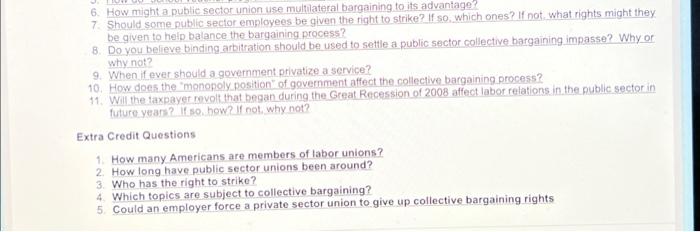
6. How might a public sector union use multilateral bargaining to its advantage? 7. Should some public sector employees be given the right to strike? If so, which ones? If not, what rights might they be given to help balance the bargaining process? 8. Do you believe binding arbitration should be used to settle a public sector collective bargaining impasse? Why or why not? 9. When if ever should a government privatize a service? 10. How does the "monopoly position" of government affect the collective bargaining process? 11. Will the taxpayer revolt that began during the Great Recession of 2008 affect labor relations in the public sector in future years? If so, how? If not, why not? 6. How might a public sector union use multilateral bargaining to its advantage? 7. Should some public sector employees be given the right to strike? If so, which ones? If not, what rights might they be qiven to help balance the bargaining process? 8. Do you believe binding arbitration should be used to settle a public sector collective bargaining impasse? Why of why not? 9. When if ever should a govemment privatize a service? 10. How does the "monopoly position' of government affect the collective bargaining process? 11. Will the taxpayer revolt that began during the Great Recession of 2008 affect labor retations in the public sector in future years? If so, bow? if not, why not? Extra Credit Questions 1. How many Americans are members of labor unions? 2. How long have public sector unions been around? 3. Who has the right to strike
Step by Step Solution
There are 3 Steps involved in it

Get step-by-step solutions from verified subject matter experts