



Question: 8. Using justifications are powerful in that they: Enable you to refuse the other's solution, not because you do not like it (although that may
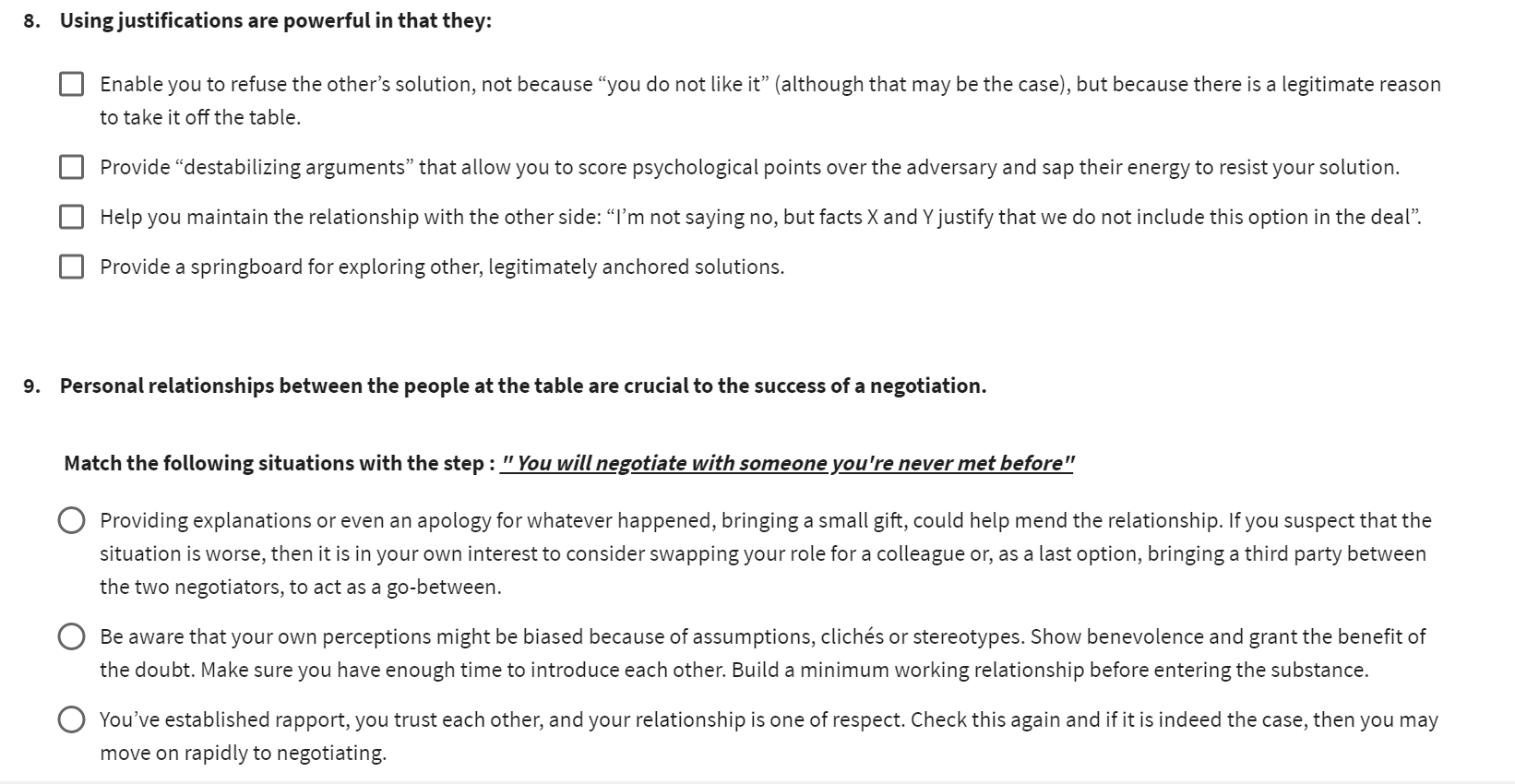
8. Using justifications are powerful in that they: Enable you to refuse the other's solution, not because "you do not like it" (although that may be the case), but because there is a legitimate reason to take it off the table. Provide "destabilizing arguments" that allow you to score psychological points over the adversary and sap their energy to resist your solution. Help you maintain the relationship with the other side: "I'm not saying no, but facts X and Y justify that we do not include this option in the deal". Provide a springboard for exploring other, legitimately anchored solutions. 9. Personal relationships between the people at the table are crucial to the success of a negotiation. Match the following situations with the step : "You will negotiate with someone you're never met before" Providing explanations or even an apology for whatever happened, bringing a small gift, could help mend the relationship. If you suspect that the situation is worse, then it is in your own interest to consider swapping your role for a colleague or, as a last option, bringing a third party between the two negotiators, to act as a go-between. Be aware that your own perceptions might be biased because of assumptions, clichs or stereotypes. Show benevolence and grant the benefit of the doubt. Make sure you have enough time to introduce each other. Build a minimum working relationship before entering the substance. You've established rapport, you trust each other, and your relationship is one of respect. Check this again and if it is indeed the case, then you may move on rapidly to negotiating
Step by Step Solution
There are 3 Steps involved in it

Get step-by-step solutions from verified subject matter experts