







Question: 9 Dpt 10 DO 4 5 INPUTS USED IN THE MODEL 6 7 Po $50.00 8 Net Po $30.00 $3.30 $2.10 11 g 7% 12
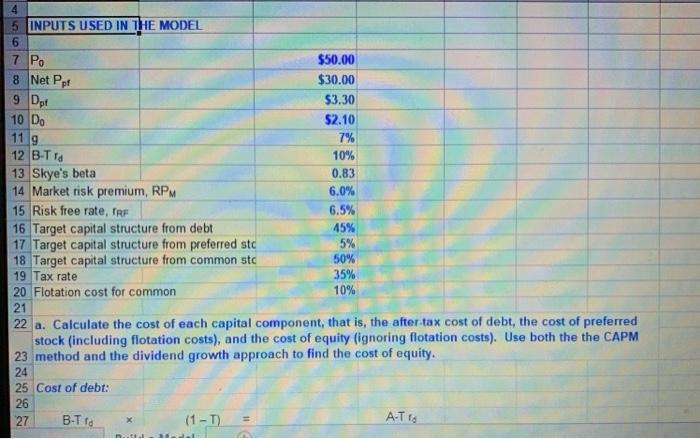
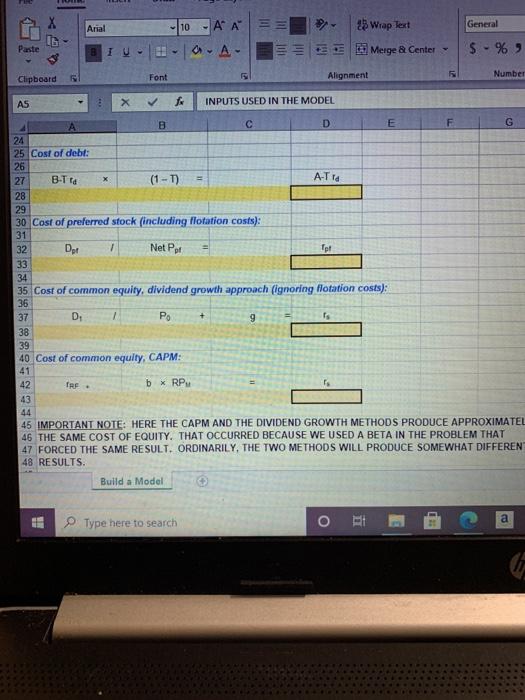
9 Dpt 10 DO 4 5 INPUTS USED IN THE MODEL 6 7 Po $50.00 8 Net Po $30.00 $3.30 $2.10 11 g 7% 12 B-T 10 10% 13 Skye's beta 0.83 14 Market risk premium, RPM 6.0% 15 Risk free rate, TRF 6.5% 16 Target capital structure from debt 45% 17 Target capital structure from preferred sto 5% 18 Target capital structure from common sta 50% 19 Tax rate 35% 20 Flotation cost for common 10% 21 22 a. Calculate the cost of each capital component, that is, the after tax cost of debt, the cost of preferred stock (including flotation costs), and the cost of equity (ignoring flotation costs). Use both the the CAPM 23 method and the dividend growth approach to find the cost of equity. 24 25 Cost of debt: 26 27 (1-T) B.Tro A- A-T TO Arial 10 General - A A a A- 23 Wrap Text Merge & Center Paste I U s%3 Clipboard Font Alignment Number AS X INPUTS USED IN THE MODEL G B-T X A ATTO Net Pot D E 24 25 Cost of debt: 26 27 28 29 30 Cost of preferred stock (including flotation costs): 31 32 Det 1 Tpl 33 34 35 Cost of common equity, dividend growth approach (ignoring flotation costs): 36 37 D Po 9 38 39 40 Cost of common equity, CAPM: 41 42 TRE b* RPM 43 44 45 IMPORTANT NOTE: HERE THE CAPM AND THE DIVIDEND GROWTH METHODS PRODUCE APPROXIMATEL 46 HE SAME COST OF EQUITY. THAT OCCURRED BECAUSE WE USED A BETA IN THE PROBLEM THAT 47 FORCED THE SAME RESULT. ORDINARILY, THE TWO METHODS WILL PRODUCE SOMEWHAT DIFFEREN 48 RESULTS + Build a Model a Type here to search
Step by Step Solution
There are 3 Steps involved in it

Get step-by-step solutions from verified subject matter experts
 Study Help