







Question: 9. Synchronization barriers are a common paradigm in many parallel applications. A barrier is supposed to block a calling thread until all N threads have
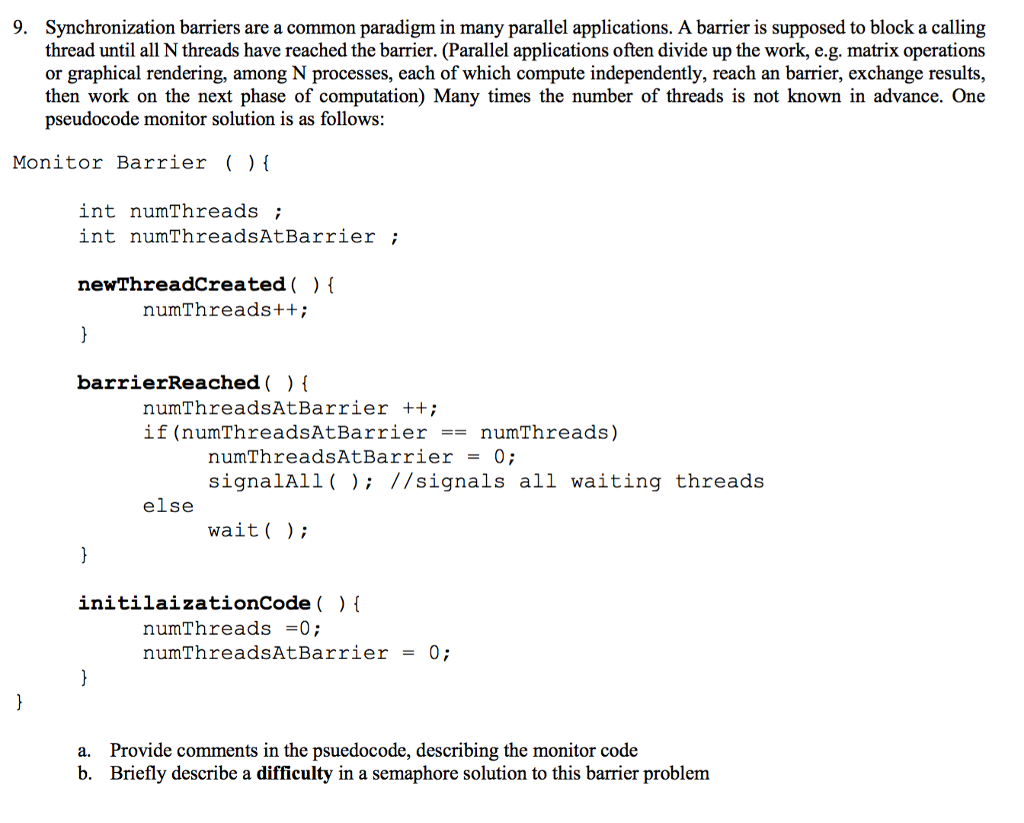
9. Synchronization barriers are a common paradigm in many parallel applications. A barrier is supposed to block a calling thread until all N threads have reached the barrier. (Parallel applications often divide up the work, e.g. matrix operations or graphical rendering, among N processes, each of which compute independently, reach an barrier, exchange results, then work on the next phase of computation) Many times the number of threads is not known in advance. One pseudocode monitor solution is as follows Monitor Barrier ( int numThreads; int numThreadsAtBarrier; newThreadCreated(I numThreads++ barrierReached( )( numThreadsAtBarrier ++ if (numThreadsAtBarrier -- numThreads) numThreadsAtBarrier = 0; signalAll; //signals al1 waiting threads else wait( initilaizationCode ) numThreads -0 numThreadsAtBarrier - 0 a. b. Provide comments in the psuedocode, describing the monitor code Briefly describe a difficulty in a semaphore solution to this barrier
Step by Step Solution
There are 3 Steps involved in it

Get step-by-step solutions from verified subject matter experts
 Study Help