







Question: 9d a. Is method to pass alid call? If so, what is returned from the method? b. Is exer (7) a valid call? If so,
9d
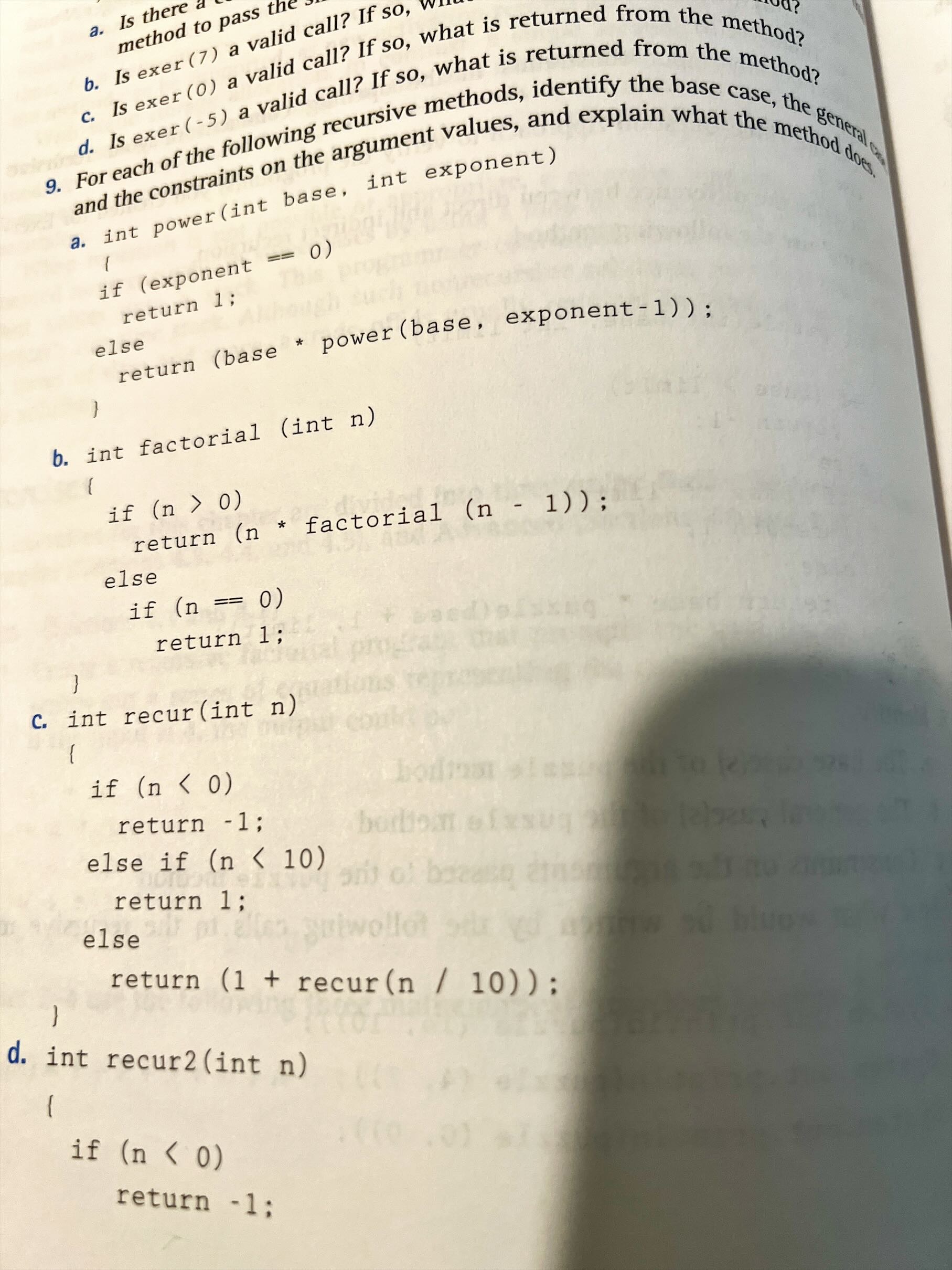
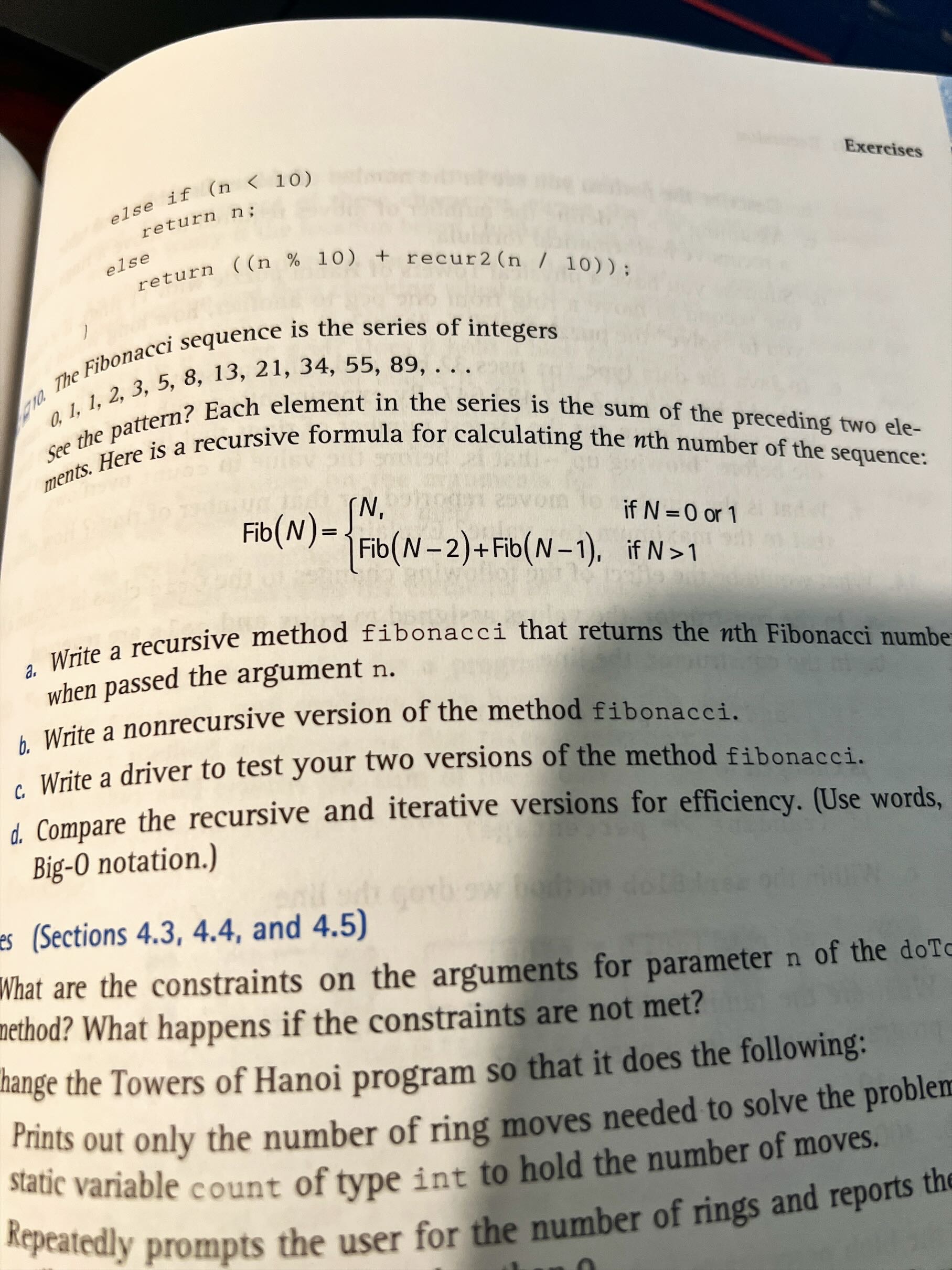
a. Is method to pass alid call? If so, what is returned from the method? b. Is exer (7) a valid call? If so, wh, what is returned from the method? c. Is exer d. Is exer ( - 5) a valid call? If for each of the following recursive methods, identify the base case, the gent values, and explain what the method orat and the constraints on the argume int exponent) a. int if (exponent =0 ) return 1 ; else return (base * power(base, exponent-1)); \} b. int factorial (int n ) l else if (n==0) return 1; \} c. int recur (int n ) i if (n1 a. Write a recursive method fibonacci that returns the nth Fibonacci numbe when passed the argument n. b. Write a nonrecursive version of the method fibonacci. c. Write a driver to test your two versions of the method fibonacci. d. Compare the recursive and iterative versions for efficiency. (Use words, Big-0 notation.) (Sections 4.3, 4.4, and 4.5) What are the constraints on the arguments for parameter n of the doTc nethod? What happens if the constraints are not met? hange the Towers of Hanoi program so that it does the following: Prints out only the number of ring moves needed to solve the problen static variable count of type int to hold the number of moves. Repeatedly prompts the user for the number of rings and reports the
Step by Step Solution
There are 3 Steps involved in it

Get step-by-step solutions from verified subject matter experts
 Study Help