







Question: a. a 3. Examine the graph to the right which includes the points (0, 0), (2. 10), and (4. 40). u a A. in which
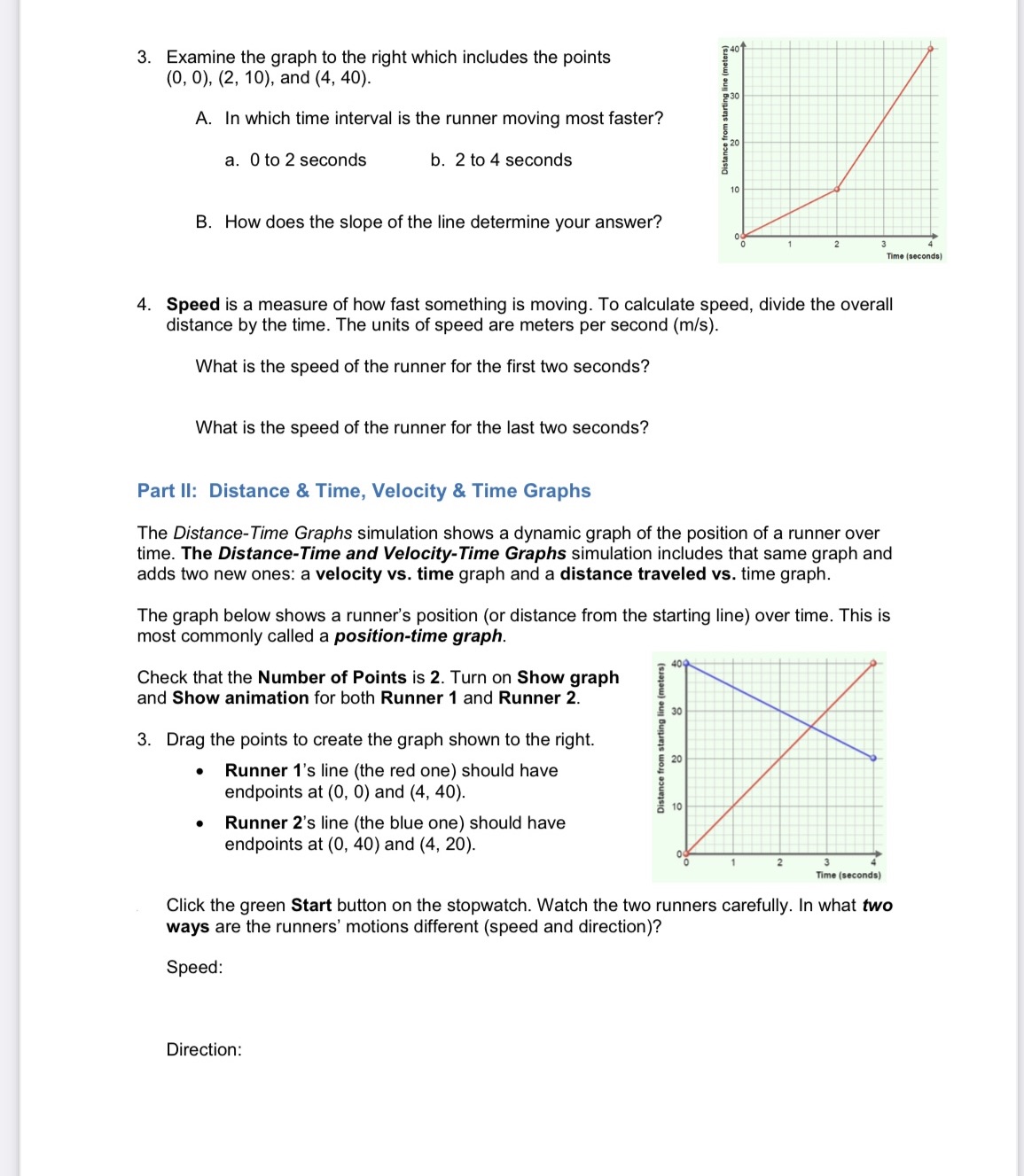
a. a 3. Examine the graph to the right which includes the points (0, 0), (2. 10), and (4. 40). u a A. in which time interval is the runner moving most faster? to o a. 0 to 2 seconds b. 2 to 4 seconds Dislcnu IN"! nun-n: lil'l [mun] 5 B. How does the slope of the line determine your answer? 0 i 2 3 11 TIMI Iloeenall 4. Speed is a measure of how fast something is moving. To calculate speed, divide the overall distance by the time. The units of speed are meters per second (mis). What is the speed of the runner for the first two seconds? What is the speed of the runner for the last two seconds? Part II: Distance & Time, Velocity & Time Graphs The Distance-Time Graphs simulation shows a dynamic graph of the position of a runner over time. The Distance-Time and Velocity-Time Graphs simulation includes that same graph and adds two new ones: a velocity vs. time graph and a distance traveled vs. time graph. The graph below shows a runner's position (or distance from the starting line) over time. This is most commonly called a position-time graph. Check that the Number of Points is 2. Turn on Show graph w and Show animation for both Runner 1 and Runner 2. 3. Drag the points to create the graph shown to the right. - Runner1's line (the red one) should have m endpoints at (0, 0) and (4, 40). - Runner 2's line (the blue one) should have endpoints at (0, 40) and (4, 20). 10 Balance from naming M0 (mural 0 O 1 2 3 4 Time [menu I] Click the green Start button on the stopwatch. Watch the two runners carefully. in what two ways are the runners' motions different (speed and direction)? Speed: Direction
Step by Step Solution
There are 3 Steps involved in it

Get step-by-step solutions from verified subject matter experts
 Study Help