







Question: a. A bond that has $1,000 par value (face value) and a contract or coupon interest rate of 7 percent. A new issue would have
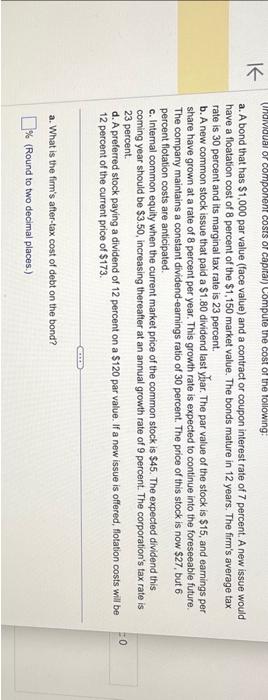
a. A bond that has $1,000 par value (face value) and a contract or coupon interest rate of 7 percent. A new issue would have a floatation cost of 8 percent of the $1,150 market value. The bonds mature in 12 years. The firm's average tax rate is 30 percent and its marginal tax rate is 23 percent. b. A new common stock issue that paid a $1.80 dividend last ylrar. The par value of the stock is $15, and earnings per share have grown at a rate of 8 percent per year. This growth rate is expected to continue into the foreseeable future. The company maintains a constant dividend-earnings ratio of 30 percent. The price of this stock is now $27, but 6 percent flotation costs are anticipated. c. Intemal common equity when the current market price of the common stock is $45. The expected dividend this coming year should be $3.50, increasing thereafter at an annual growth rate of 9 percent. The corporation's tax rate is 23 percent. d. A preferred stock paying a dividend of 12 percent on a $120 par value. If a new issue is offered, flotation costs will be 12 percent of the current price of $173. a. What is the firm's after-tax cost of debt on the bond? \% (Round to two decimal places.)
Step by Step Solution
There are 3 Steps involved in it

Get step-by-step solutions from verified subject matter experts
 Study Help