







Question: A B C D R1 is using both NAT and PAT. What is the purpose of the port numbers in the translation table? Client
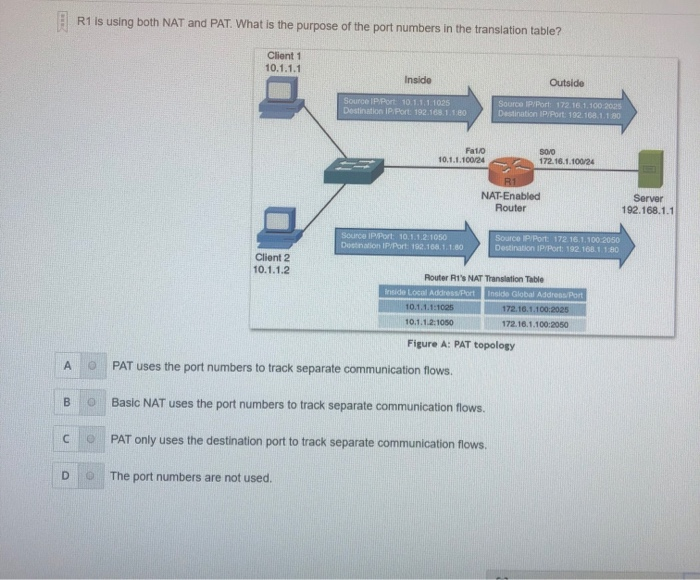
A B C D R1 is using both NAT and PAT. What is the purpose of the port numbers in the translation table? Client 1 10.1.1.1 10 Client 2 10.1.1.2 Inside Source IP/Port 10.1.1.1.1025 Destination IP Port: 192.168.1.1:80 Fa1/0 10.1.1.100/24 Source IP/Port: 10.1.1.2:1050 Destination IP/Port: 192.168.1.1.80 The port numbers are not used. Inside Local Address/Port 10.1.1.1:1025 10.1.1.2:1050 PAT uses the port numbers to track separate communication flows. Basic NAT uses the port numbers to track separate communication flows. Source IP/Port: 172.16.1.100: 2025 Destination IP/Port: 192.168.1.1:80 R1 NAT-Enabled Router Router R1's NAT Translation Table PAT only uses the destination port to track separate communication flows. Outside 50/0 Figure A: PAT topology 172.16.1.100/24 Source IP/Port: 172.16.1.100 2050 Destination IP/Port: 192.168.1.1:80 Inside Global Address/Port 172.16.1.100:2025 172.16.1.100:2050 Server 192.168.1.1
Step by Step Solution
3.47 Rating (160 Votes )
There are 3 Steps involved in it
The detailed answer for the above question is provided below 1PAT is an extension to netw... View full answer

Get step-by-step solutions from verified subject matter experts
 Study Help