







Question: a . Complete an amortization schedule for a $ 1 6 , 0 0 0 loan to be repaid in equal installments at the end
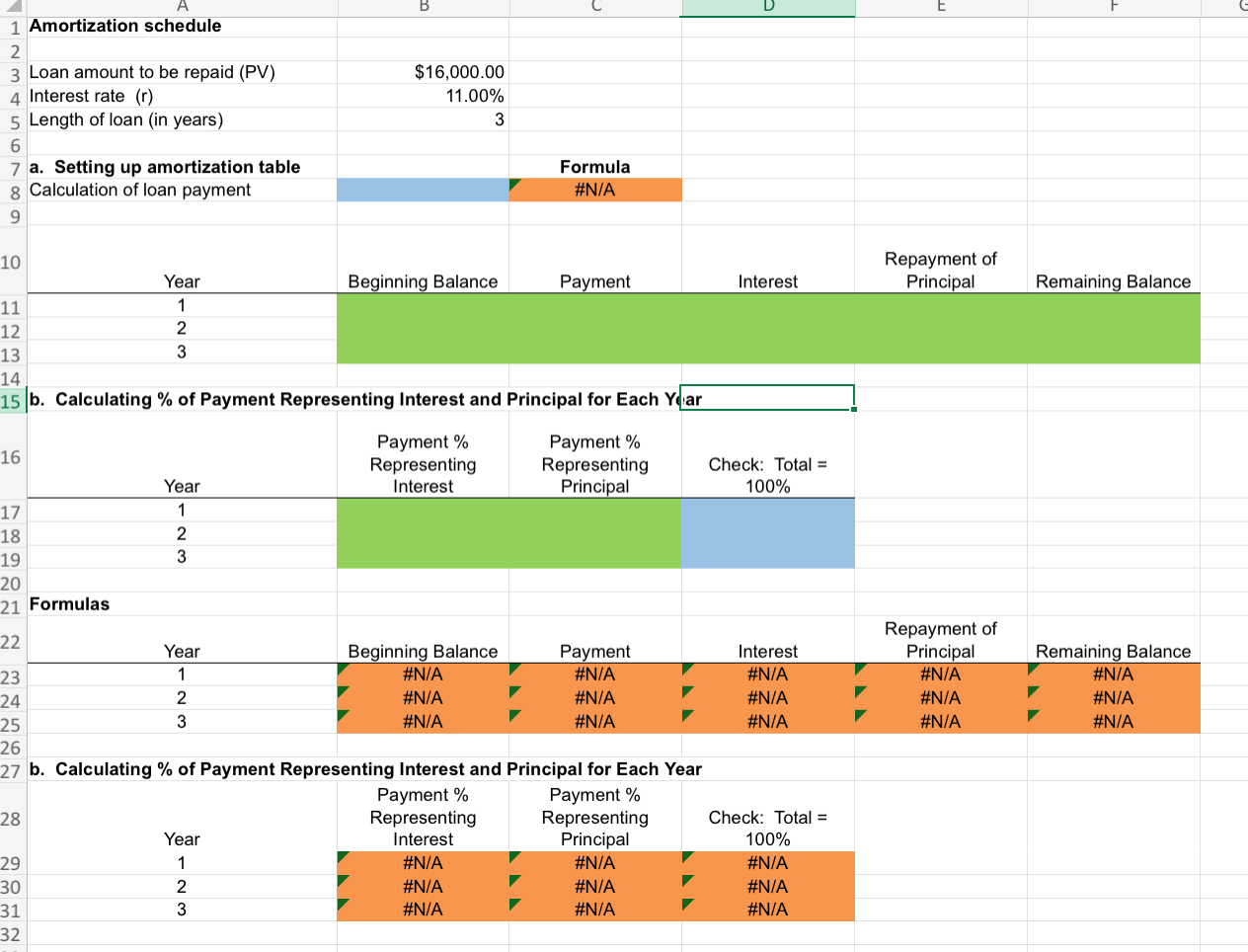
a Complete an amortization schedule for a $ loan to be repaid in equal installments at the end of each of the next three years. The interest rate is compounded annually. Round all answers to the nearest cent.Amortization schedule
Loan amount to be repaid PV
Interest rate
$
Length of loan in years
a Setting up amortization table
Calculation of loan payment
Formula
Repayment of Principal
Remaining Balance
b Calculating of Payment Representing Interest and Principal for Each Y ar
Formulas
Payment
Payment
Representing
Representing
Interest
Interest
Payment
Interest
Representing
Representing
Check: Total
Year
Interest
Principal
#NA
#NA
#NA
#NA
#NA
#NA
#NA
#NA
Beginning Repayment Ending
Year Balance Payment Interest of Principal Balance
$ fill in the blank $ fill in the blank $ fill in the blank $ fill in the blank $ fill in the blank
$ fill in the blank $ fill in the blank $ fill in the blank $ fill in the blank $ fill in the blank
$ fill in the blank $ fill in the blank $ fill in the blank $ fill in the blank $ fill in the blank
b What percentage of the payment represents interest and what percentage represents principal for each of the three years? Round all answers to two decimal places.
Interest Principal
Year : fill in the blank fill in the blank
Year : fill in the blank fill in the blank
Year : fill in the blank fill in the blank
c Why do these percentages change over time?
These percentages change over time because even though the total payment is constant the amount of interest paid each year is declining as the remaining or outstanding balance declines.
These percentages change over time because even though the total payment is constant the amount of interest paid each year is increasing as the remaining or outstanding balance declines.
These percentages change over time because even though the total payment is constant the amount of interest paid each year is declining as the remaining or outstanding balance increases.
These percentages change over time because even though the total payment is constant the amount of interest paid each year is increasing as the remaining or outstanding balance increases.
These percentages do not change over time; interest and principal are each a constant percentage of the total payment.
Step by Step Solution
There are 3 Steps involved in it
1 Expert Approved Answer
Step: 1 Unlock

Question Has Been Solved by an Expert!
Get step-by-step solutions from verified subject matter experts
Step: 2 Unlock
Step: 3 Unlock
 Study Help