







Question: A component of a subassembly is produced with a consistent 3% defective rate. An inspection manager is trying to decide whether that component should be
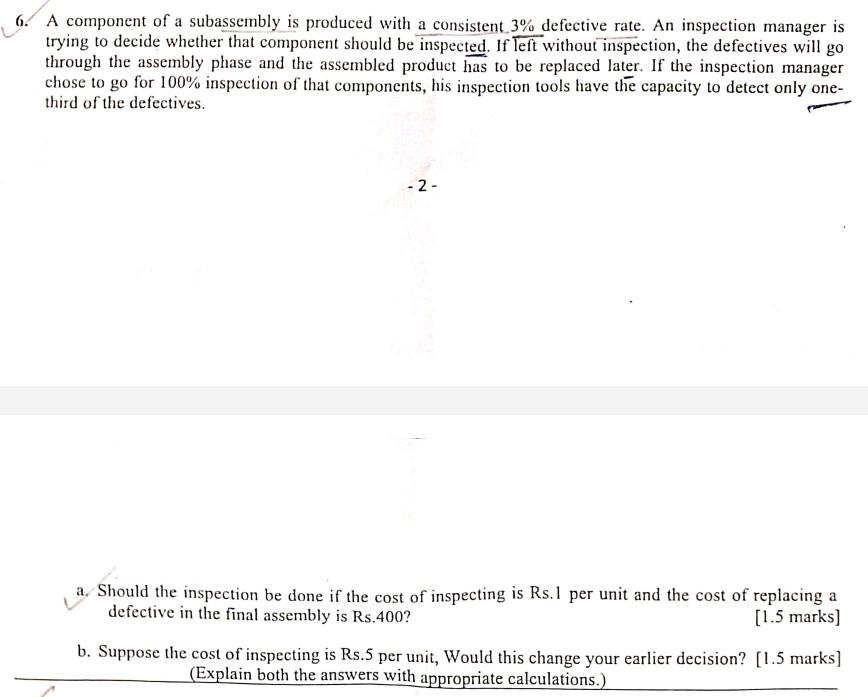
A component of a subassembly is produced with a consistent 3% defective rate. An inspection manager is trying to decide whether that component should be inspected. If left without inspection, the defectives will go through the assembly phase and the assembled product has to be replaced later. If the inspection manager chose to go for 100% inspection of that components, his inspection tools have the capacity to detect only onethird of the defectives. 2 a. Should the inspection be done if the cost of inspecting is Rs.l per unit and the cost of replacing a defective in the final assembly is Rs.400? [1.5 marks] b. Suppose the cost of inspecting is Rs.5 per unit, Would this change your earlier decision? [1.5 marks] (Explain both the answers with appropriate calculations.) A component of a subassembly is produced with a consistent 3% defective rate. An inspection manager is trying to decide whether that component should be inspected. If left without inspection, the defectives will go through the assembly phase and the assembled product has to be replaced later. If the inspection manager chose to go for 100% inspection of that components, his inspection tools have the capacity to detect only onethird of the defectives. 2 a. Should the inspection be done if the cost of inspecting is Rs.l per unit and the cost of replacing a defective in the final assembly is Rs.400? [1.5 marks] b. Suppose the cost of inspecting is Rs.5 per unit, Would this change your earlier decision? [1.5 marks] (Explain both the answers with appropriate calculations.)
Step by Step Solution
There are 3 Steps involved in it

Get step-by-step solutions from verified subject matter experts
 Study Help