







Question: a) Consider the following combinational circuit with 3 inputs a, b, c and two outputs F1 and Fo given by its truth table. a b
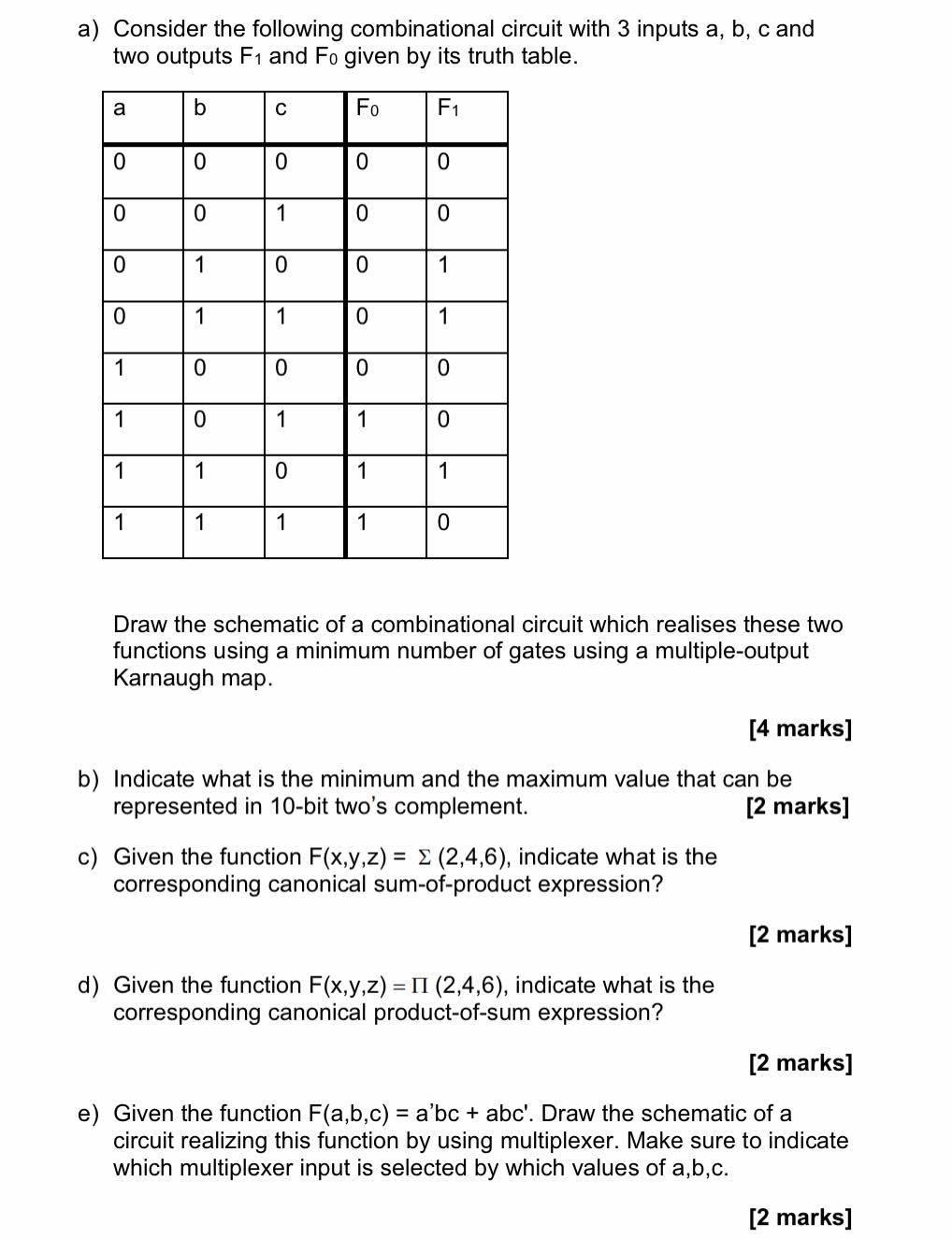
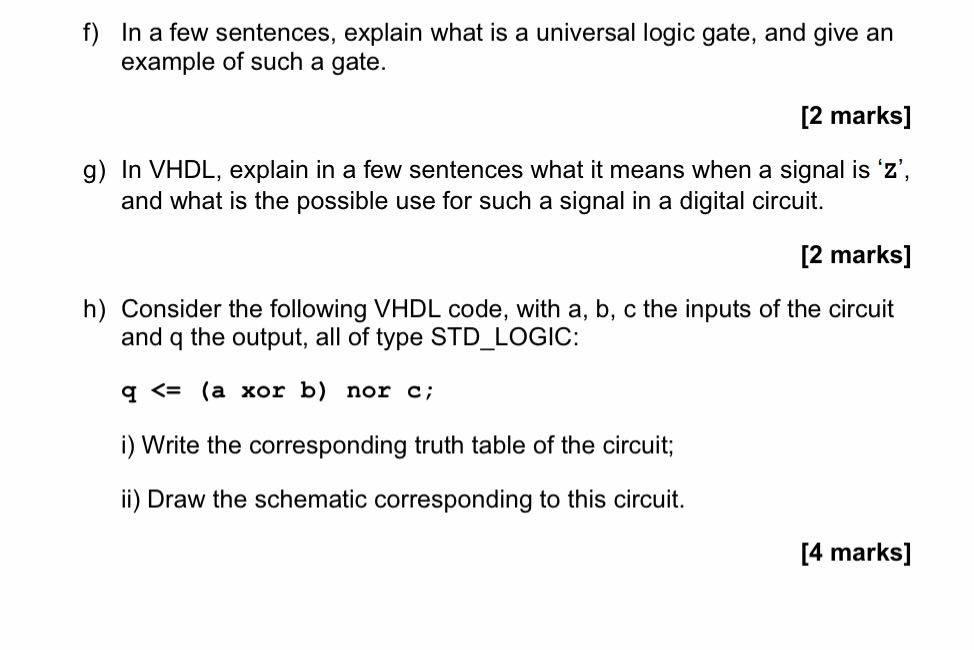
a) Consider the following combinational circuit with 3 inputs a, b, c and two outputs F1 and Fo given by its truth table. a b Fo F1 0 0 0 0 0 0 0 1 0 0 0 1 0 0 1 0 1 1 0 1 1 0 0 0 0 1 0 1 1 0 1 1 0 1 1 1 1 1 1 0 Draw the schematic of a combinational circuit which realises these two functions using a minimum number of gates using a multiple-output Karnaugh map. [4 marks] b) Indicate what is the minimum and the maximum value that can be represented in 10-bit two's complement. [2 marks] c) Given the function F(x,y,z) = 2 (2,4,6), indicate what is the corresponding canonical sum-of-product expression? [2 marks] d) Given the function F(x,y,z) = II (2,4,6), indicate what is the corresponding canonical product-of-sum expression? [2 marks] - e) Given the function F(a,b,c) = a'bc + abc'. Draw the schematic of a circuit realizing this function by using multiplexer. Make sure to indicate which multiplexer input is selected by which values of a,b,c. [2 marks] f) In a few sentences, explain what is a universal logic gate, and give an example of such a gate. [2 marks] g) In VHDL, explain in a few sentences what it means when a signal is 'z', and what is the possible use for such a signal in a digital circuit. [2 marks] h) Consider the following VHDL code, with a, b, c the inputs of the circuit and q the output, all of type STD_LOGIC: q
Step by Step Solution
There are 3 Steps involved in it

Get step-by-step solutions from verified subject matter experts
 Study Help