







Question: A data set has values ranging from a low of 10 to a high of 52. What's wrong with using the class limits 10-19, 20-29,
- A data set has values ranging from a low of 10 to a high of 52. What's wrong with using the class limits 10-19, 20-29, 30-39, 40-49 for a frequency table?
- The class widths are too wide and not evenly spread out over the data range of 10 to 52.
- There is nothing wrong with using these class limits for the data set.
- Each data value must fall into one class. The data values of 50 and above do not have a class.
- Each data value must fall into only one class. The classes have overlapping values.
(2) A data set has values ranging from a low of 10 to a high of 50. What's wrong with using the class limits 10-20, 20-30, 30-40, 40-50 for a frequency table?
- Each data value must fall into one class. Some data values do not have a class.
- The class widths are too wide for the data range of 10 to 50.
- There is nothing wrong with using these class limits for the data set.
- The classes overlap so that some data values, such as 20, fall within two classes.
(3) A data set has values ranging from a low of 10 to a high of 50. The class width is to be 10. What's wrong with using the class limits 10-20, 21-31, 32-42, 43-53 for a frequency table with a class width of 10?
- The classes listed have a class width of 11.
- There is nothing wrong with using these class limits for a frequency table with a class width of 10.
- Each data value must fall into one class. Some data values do not have a class.
- The classes overlap so that some data values fall within two classes.
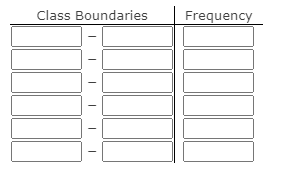
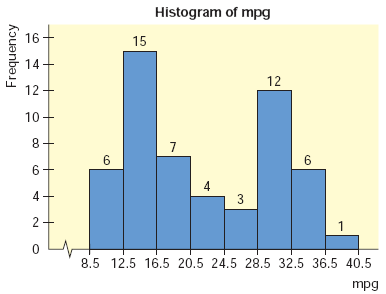
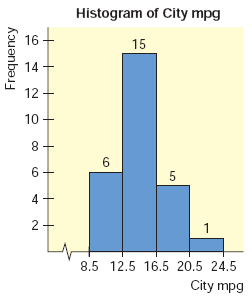
(4) Look at the histogram below, which shows mileage, in miles per gallon (mpg), for a random selection of passenger cars.?
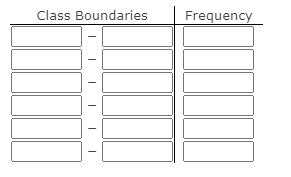
\fClass Boundaries Frequency
Step by Step Solution
There are 3 Steps involved in it
1 Expert Approved Answer
Step: 1 Unlock

Question Has Been Solved by an Expert!
Get step-by-step solutions from verified subject matter experts
Step: 2 Unlock
Step: 3 Unlock
 Study Help