







Question: a) For the function below, determine i) horizontal asymptotes ii) x-intercepts and y-intercepts iii) domain and range iv) intervals of increase and decrease b) Explain
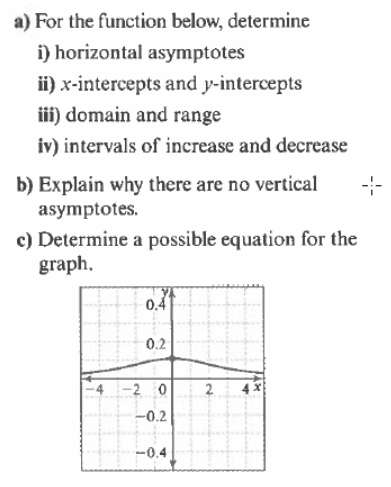
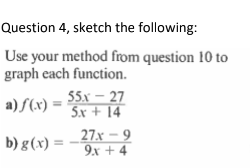

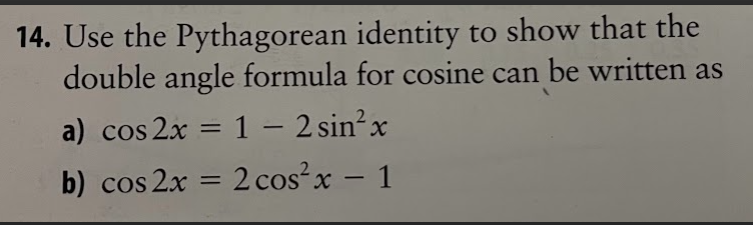
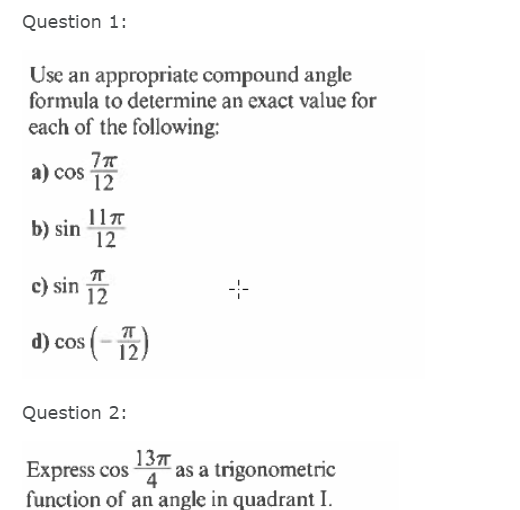
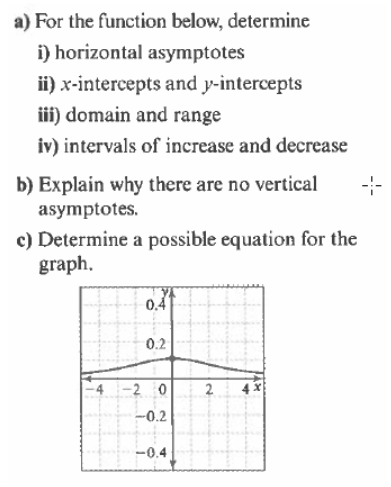
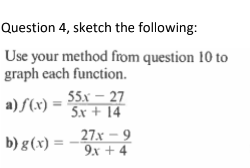

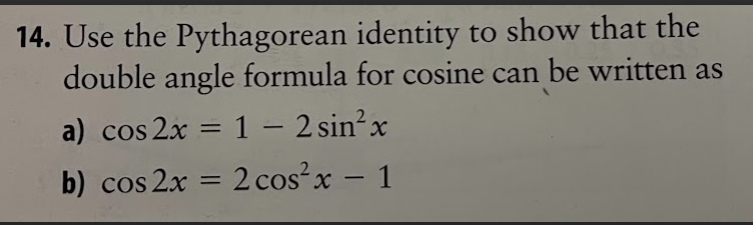
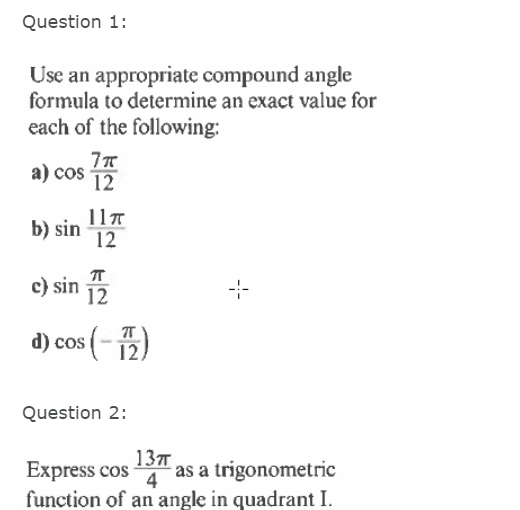
a) For the function below, determine i) horizontal asymptotes ii) x-intercepts and y-intercepts iii) domain and range iv) intervals of increase and decrease b) Explain why there are no vertical asymptotes. c) Determine a possible equation for the graph. 0.4 0.2 -4 -2 0 2 4 X -0.2 -0.4Question 4, sketch the following: Use your method from question 10 to graph each function. a) f(.x) 55x - 27 5.x + 14 b) g (x) = 27x - 9 9x + 412. Use a compound angle formula for sine to show that sin 20 = 2 sin 0 cos 0.14. Use the Pythagorean identity to show that the double angle formula for cosine can be written as a) cos 2x = 1 - 2 sinx b) cos 2x = 2cos- x - 1Question 1: Use an appropriate compound angle formula to determine an exact value for each of the fdlowing: d) cos ( '13-) Question 2: Express cos "T7 as a trigonometric function of an angle in quadrant
Step by Step Solution
There are 3 Steps involved in it

Get step-by-step solutions from verified subject matter experts
 Study Help