







Question: A multistage fixed bed catalytic reactor was to be designed for the dehydrogenation of ethylbenzene ( C 8 H 1 0 = A ) into
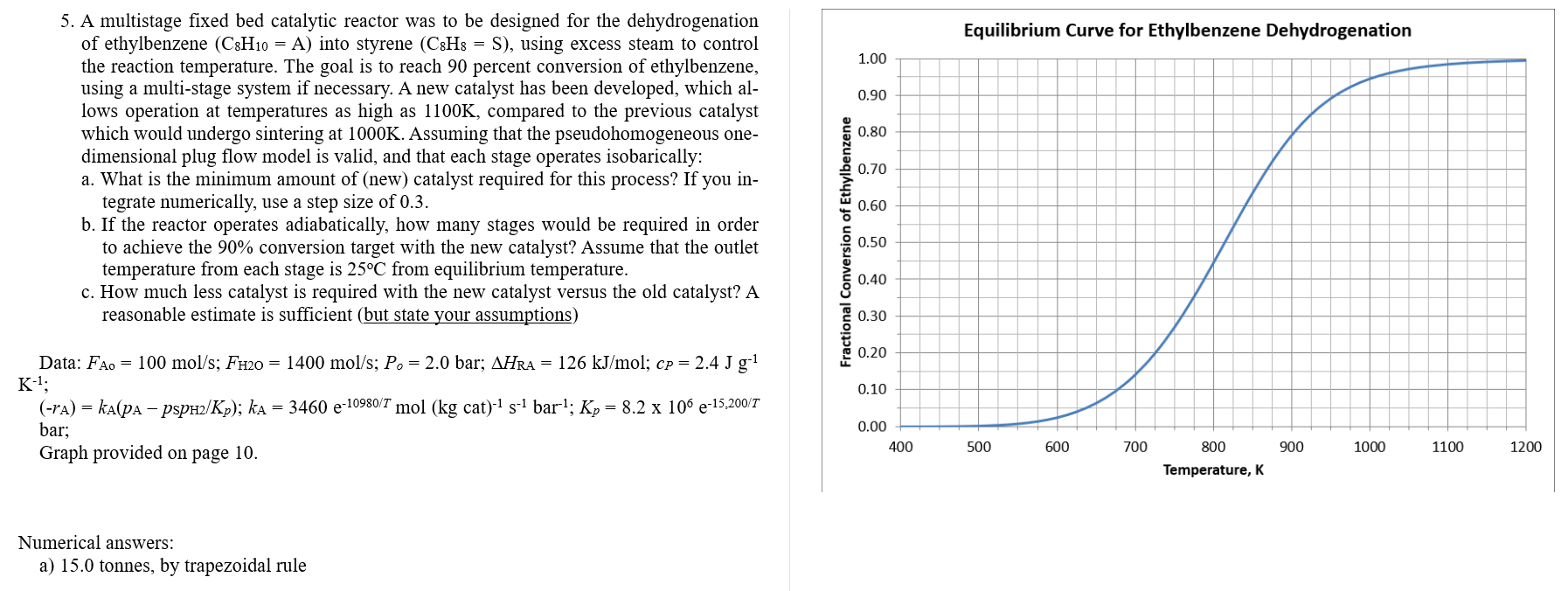
A multistage fixed bed catalytic reactor was to be designed for the dehydrogenation of ethylbenzene into styrene using excess steam to control the reaction temperature. The goal is to reach percent conversion of ethylbenzene, using a multistage system if necessary. A new catalyst has been developed, which allows operation at temperatures as high as compared to the previous catalyst which would undergo sintering at Assuming that the pseudohomogeneous onedimensional plug flow model is valid, and that each stage operates isobarically:
a What is the minimum amount of new catalyst required for this process? If you integrate numerically, use a step size of
b If the reactor operates adiabatically, how many stages would be required in order to achieve the conversion target with the new catalyst? Assume that the outlet temperature from each stage is from equilibrium temperature.
c How much less catalyst is required with the new catalyst versus the old catalyst? A reasonable estimate is sufficient but state your assumptions
Data: ;; ;;;
bar;
Graph provided on page
Numerical answers:
a tonnes, by trapezoidal rule
Step by Step Solution
There are 3 Steps involved in it
1 Expert Approved Answer
Step: 1 Unlock

Question Has Been Solved by an Expert!
Get step-by-step solutions from verified subject matter experts
Step: 2 Unlock
Step: 3 Unlock
 Study Help