



Question: A perishable dairy product is ordered daily at a particular supermarket. The product, which costs $1.17 per unit, sells for $1.67 per unit. If units
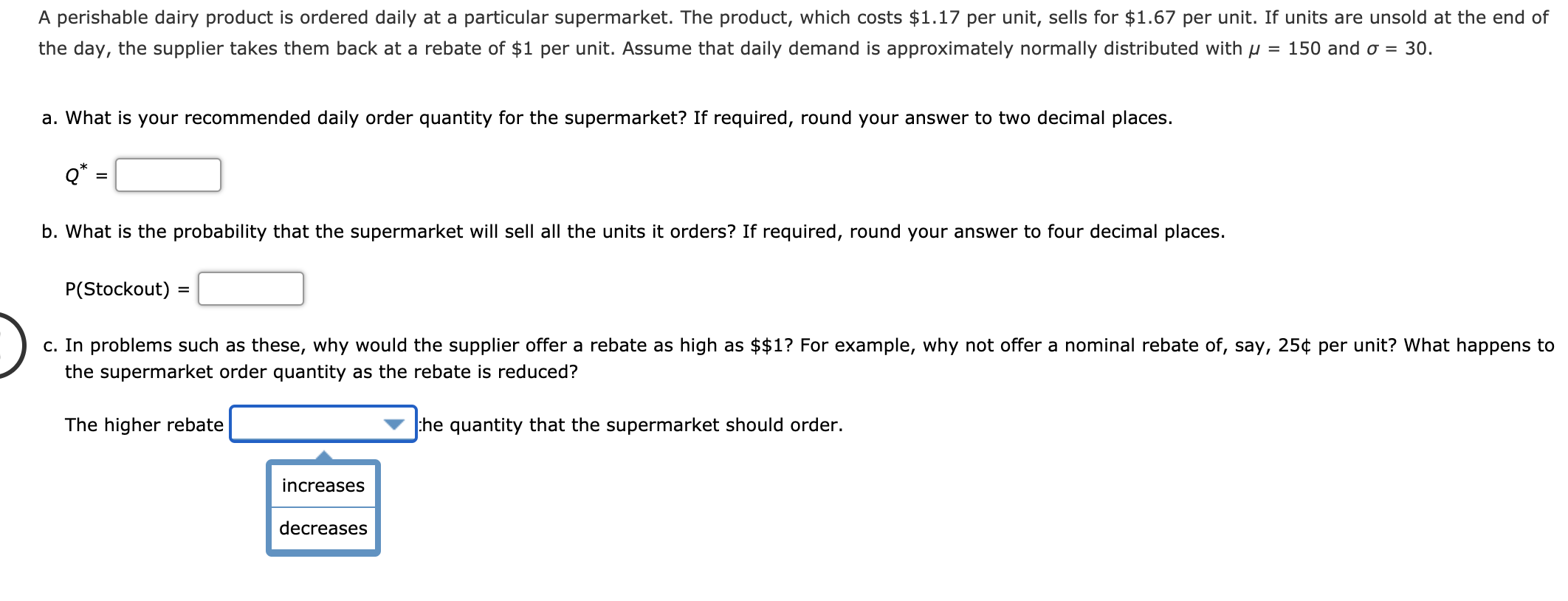
A perishable dairy product is ordered daily at a particular supermarket. The product, which costs $1.17 per unit, sells for $1.67 per unit. If units are unsold at the end of the day, the supplier takes them back at a rebate of $1 per unit. Assume that daily demand is approximately normally distributed with p = 150 and cr = 30. a. What is your recommended daily order quantity for the supermarket? If required, round your answer to two decimal places. b. What is the probability that the supermarket will sell all the units it orders? If required, round your answer to four decimal places. P(Stockout) = C] D c. In problems such as these, why would the supplier offer a rebate as high as $$1? For example, why not offer a nominal rebate of, say, 25 per unit? What happens to the supermarket order quantity as the rebate is reduced? The higher rebate Ehe quantity that the supermarket should order. decreases
Step by Step Solution
There are 3 Steps involved in it

Get step-by-step solutions from verified subject matter experts