







Question: A rectangle with sides parallel to the coordinate axes is shown in the figure. Vector vec ( A ) goes from the origin to the
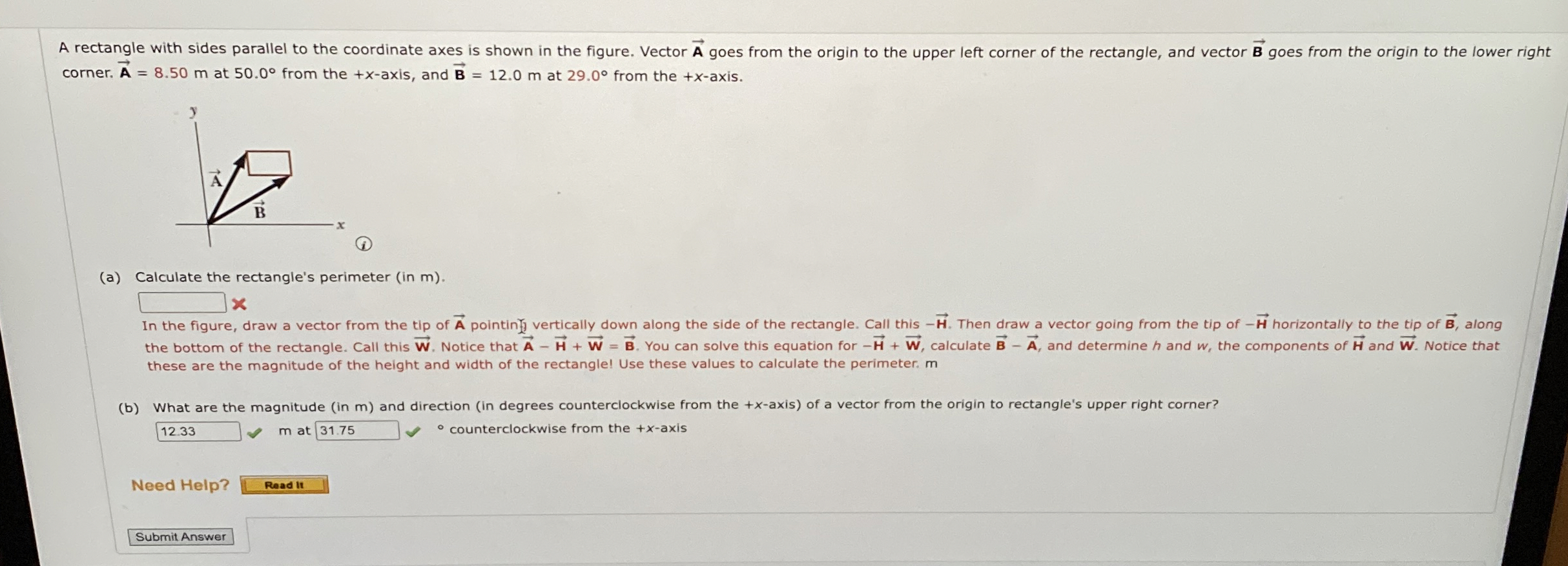
A rectangle with sides parallel to the coordinate axes is shown in the figure. Vector vec goes from the origin to the upper left corner of the rectangle, and vector vec goes from the origin to the lower right corner. vec at from the axis, and vec at from the axis.
a Calculate the rectangle's perimeter in m
In the figure, draw a vector from the tip of vec pointing vertically down along the side of the rectangle. Call this vec Then draw a vector going from the tip of vec horizontally to the tip of vec along the bottom of the rectangle. Call this vec Notice that vecvecvecvec You can solve this equation for vecvec calculate vecvec and determine and the components of vec and vec Notice that these are the magnitude of the height and width of the rectangle! Use these values to calculate the perimeter. m
b What are the magnitude in m and direction in degrees counterclockwise from the axis of a vector from the origin to rectangle's upper right corner?
m at counterclockwise from the axis
Need Help?
Step by Step Solution
There are 3 Steps involved in it
1 Expert Approved Answer
Step: 1 Unlock

Question Has Been Solved by an Expert!
Get step-by-step solutions from verified subject matter experts
Step: 2 Unlock
Step: 3 Unlock
 Study Help