







Question: A string, clamped at x = 0 and at x = L, is vibrating freely. Its motion is described by the wave equation u(x,
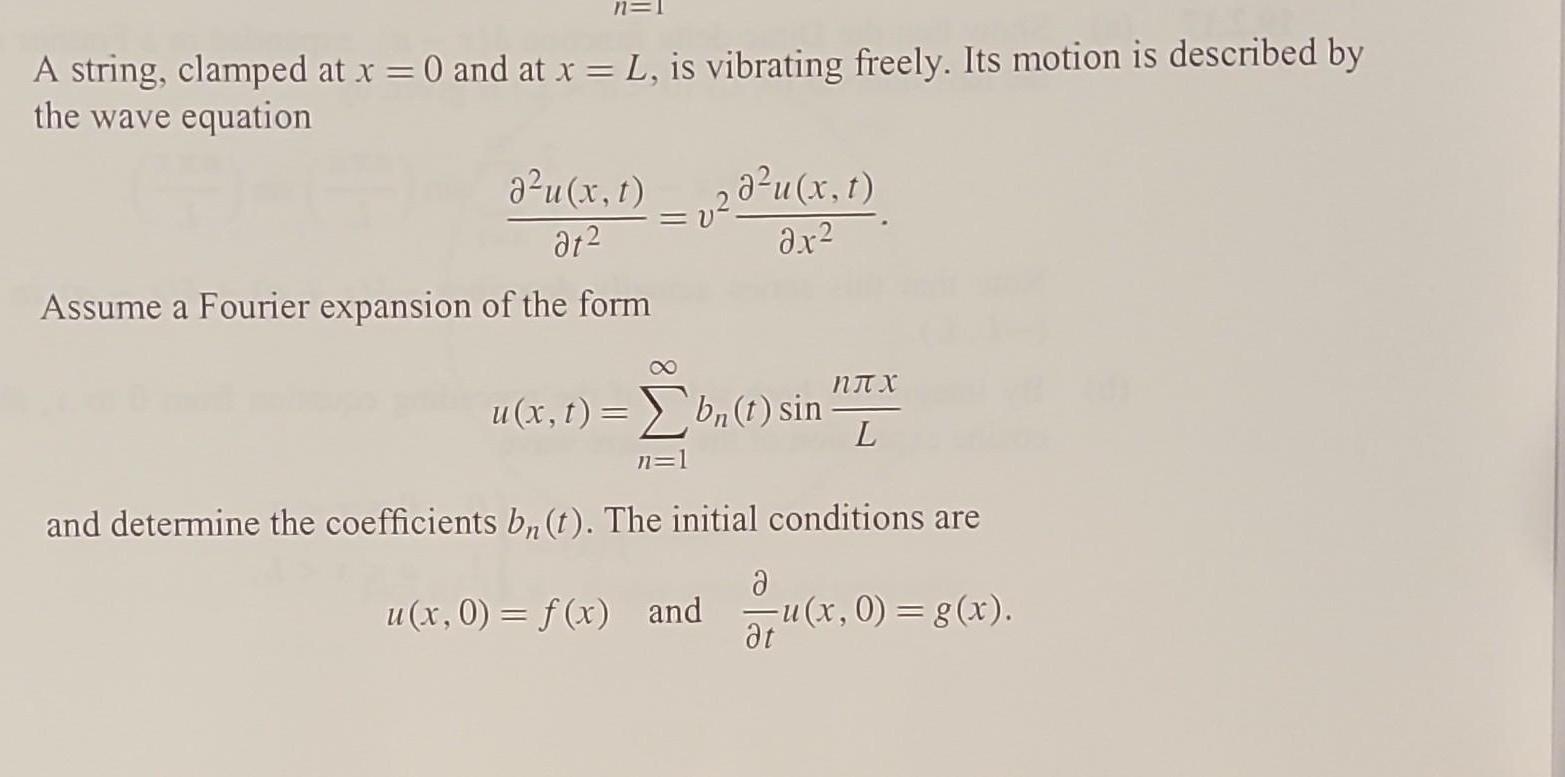
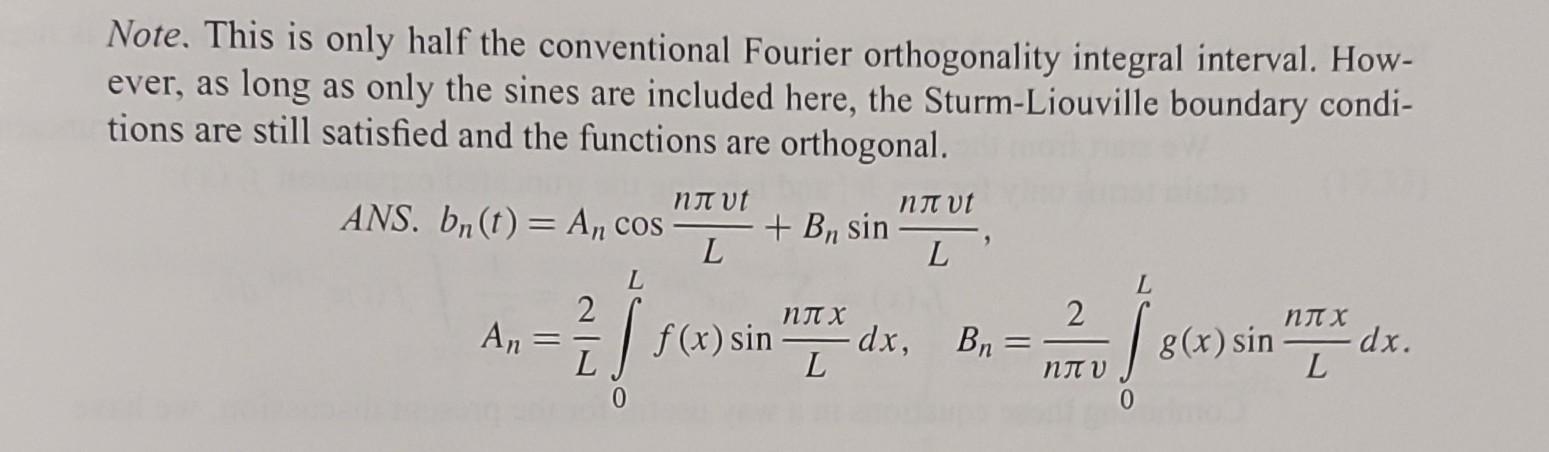
A string, clamped at x = 0 and at x = L, is vibrating freely. Its motion is described by the wave equation u(x, t) _ du(x, t) = a1 x Assume a Fourier expansion of the form u(x, t) = [bn(t) sin L n=1 and determine the coefficients bn (t). The initial conditions are u(x,0) = f(x) and at -u(x, 0) = g(x). ( Note. This is only half the conventional Fourier orthogonality integral interval. How- ever, as long as only the sines are included here, the Sturm-Liouville boundary condi- tions are still satisfied and the functions are orthogonal. ANS. bn(t) = A, cos j An = 2 L t L - + Bn sin - f(x) sin t L L - dx, Bn= = 2018 g(x) sin nX L dx.
Step by Step Solution
3.47 Rating (160 Votes )
There are 3 Steps involved in it

Get step-by-step solutions from verified subject matter experts
 Study Help