







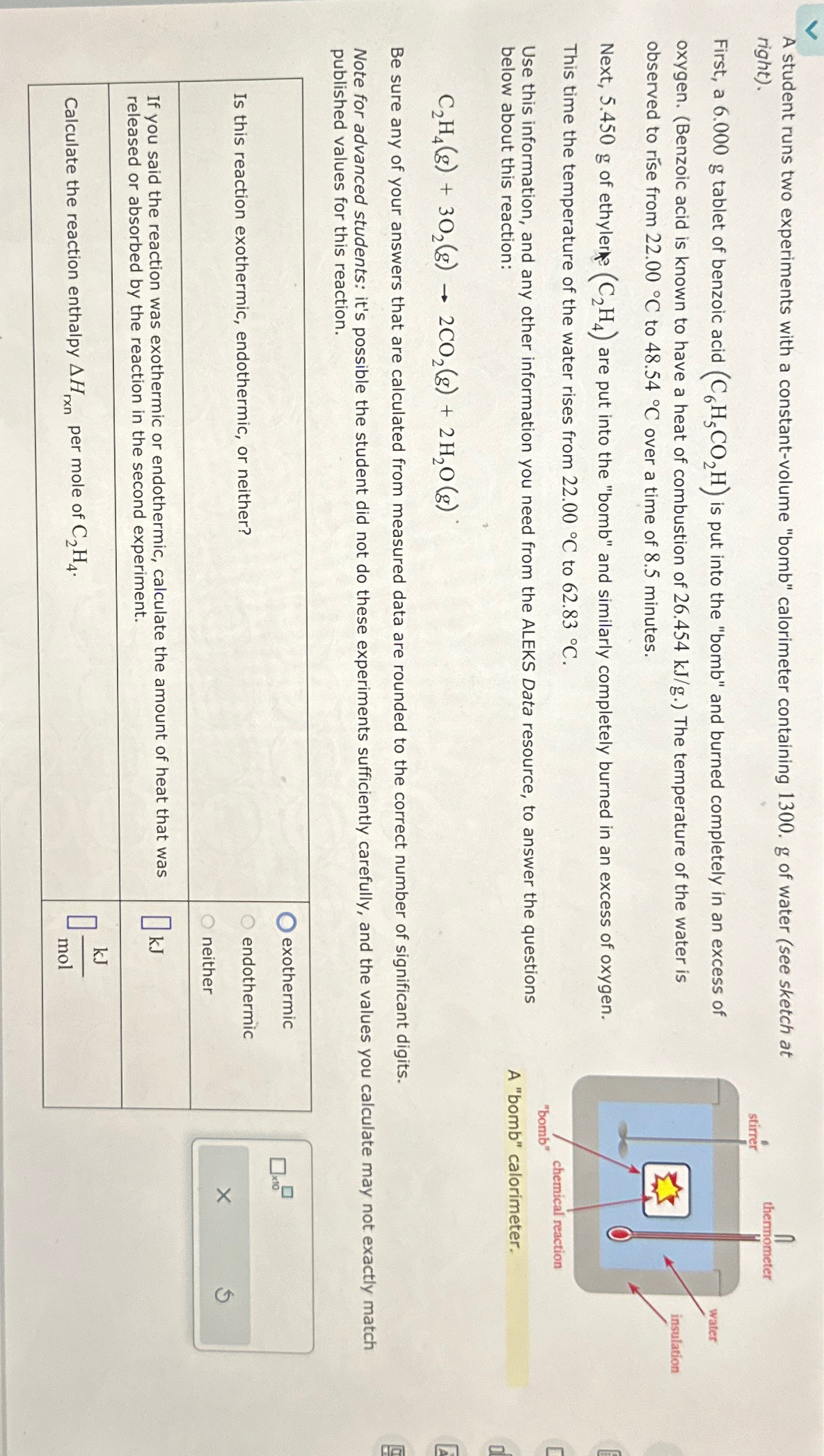
Question: A student runs two experiments with a constant - volume bomb calorimeter containing 1 3 0 0 . g of water ( see sketch at
A student runs two experiments with a constantvolume "bomb" calorimeter containing of water see sketch at right
First, a tablet of benzoic acid is put into the "bomb" and burned completely in an excess of oxygen. Benzoic acid is known to have a heat of combustion of The temperature of the water is observed to rise from to over a time of minutes.
Next, of ethyler are put into the "bomb" and similarly completely burned in an excess of oxygen. This time the temperature of the water rises from to
Use this information, and any other information you need from the ALEKS Data resource, to answer the questions below about this reaction:
Be sure any of your answers that are calculated from measured data are rounded to the correct number of significant digits.
Note for advanced students: it's possible the student did not do these experiments sufficiently carefully, and the values you calculate may not exactly match published values for this reaction.
tableexothermicIs this reaction exothermic, endothermic, or neither?,endothermicneithertableIf you said the reaction was exothermic or endothermic, calculate the amount of heat that wasreleased or absorbed by the reaction in the second experiment.
Step by Step Solution
There are 3 Steps involved in it
1 Expert Approved Answer
Step: 1 Unlock

Question Has Been Solved by an Expert!
Get step-by-step solutions from verified subject matter experts
Step: 2 Unlock
Step: 3 Unlock
 Study Help