







Question: ** a table for each structure , structure A and Structure B EBIT EPS and capital structure Data-Check is considering two capital structures. The key
** a table for each structure , structure A and Structure B
EBITEPSand capital structureData-Check is considering two capital structures. The key information is shown in the following table. Assume a 21% tax rate.
| Source of capital | Structure A | Structure B |
| Long-term debt | $97,000 at15.7% coupon rate | $194,000 at16.7% coupon rate |
| Common stock | 4,600 shares | 2,300 shares |
a. Calculate two EBIT-EPS coordinates for each of the structures by selecting any two EBIT values and finding their associated EPS values.
b. Plot the two capital structures on a set of EBIT-EPS axes.
c. Indicate over what EBIT range, if any, each structure is preferred.
d. Discuss the leverage and risk aspects of each structure.
e. If the firm is fairly certain that its EBIT will exceed $78,000,which structure would you recommend? Why? What if the tax rate was higher, say 40%? 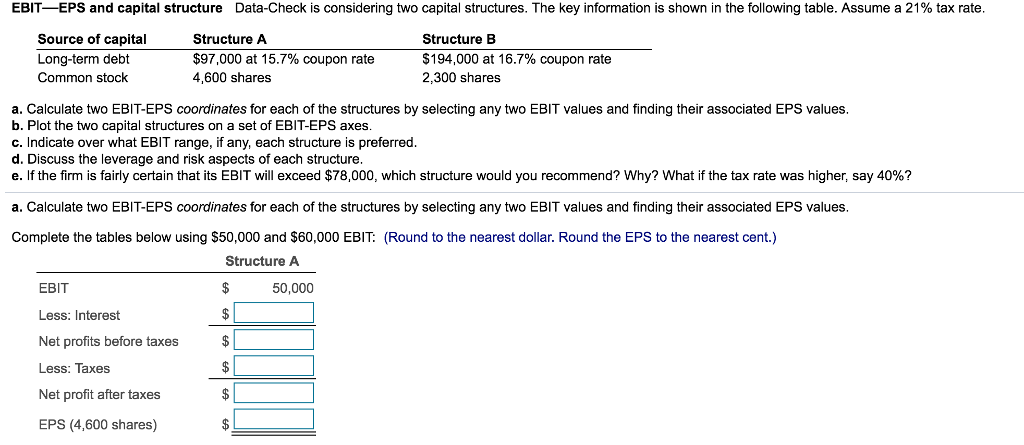
EBIT EPS and capital structure Data Check s considering two capita structures. The e information is shown n he follow ing table. Assume a 2 %, a rate Source of capia Structure A Structure A Long-term debt Common stock $97,000 at 15.7% coupon rate 4,600 shares Structure B $194,000 at 16.7% coupon rate 2,300 shares a. Calculate two EBIT-EPS coordinates for each of the structures by selecting any two EBIT values and finding their associated EPS values. b. Plot the two capital structures on a set of EBIT-EPS axes. c. Indicate over what EBIT range, if any, each structure is preferred. d. Discuss the leverage and risk aspects of each structure e. If the firm is fairly certain that its EBIT will exceed $78,000, which structure would you recommend? why? What if the tax rate was higher, say 40%? a. Calculate two EBIT-EPS coordinates for each of the structures by selecting any two EBIT values and finding their associated EPS values. Complete the tables below using $50,000 and $60,000 EBIT (Round to the nearest dollar. Round the EPS to the nearest cent.) Structure A $50,000 EBIT Less: Interest Net profits before taxes Less: Taxes Net profit after taxes $ EPS (4,600 shares)
Step by Step Solution
There are 3 Steps involved in it

Get step-by-step solutions from verified subject matter experts
 Study Help