







Question: a) The following data are pulled from a recent Walsh Manufacturing annual report. Assets Raw material inventory $120,000 Work-in-process inventory $50,000 Finished goods inventory $300,000
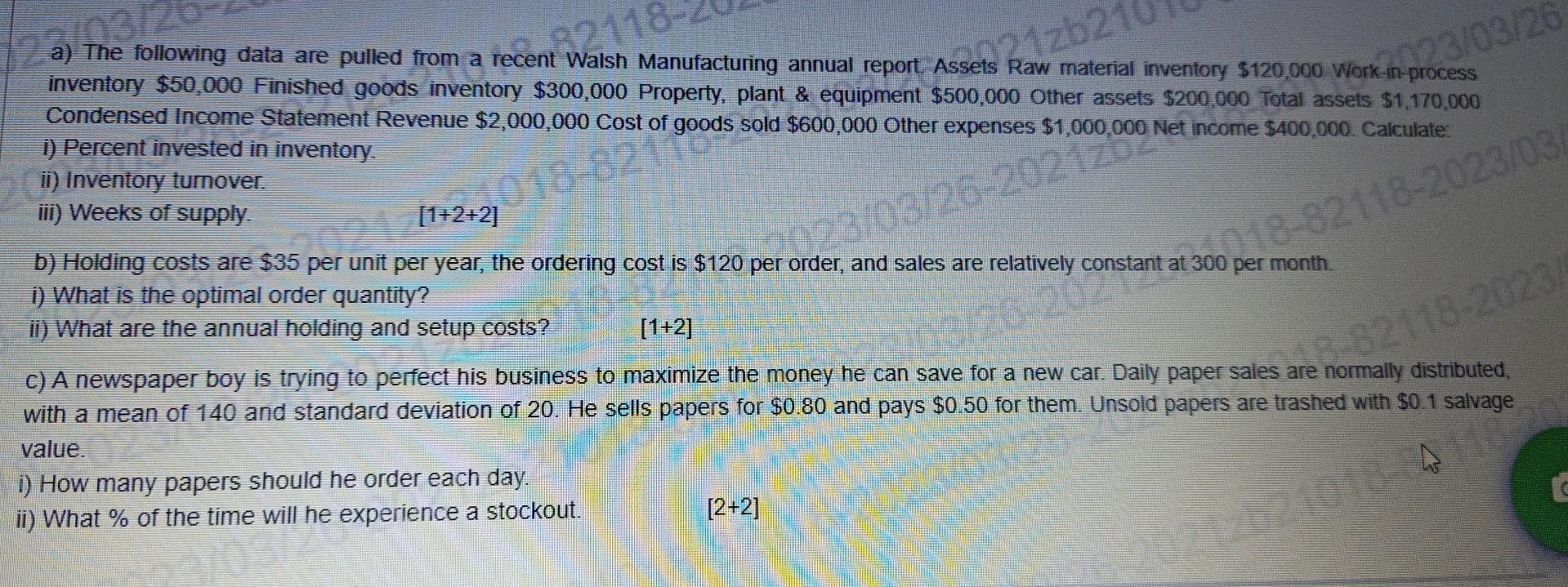
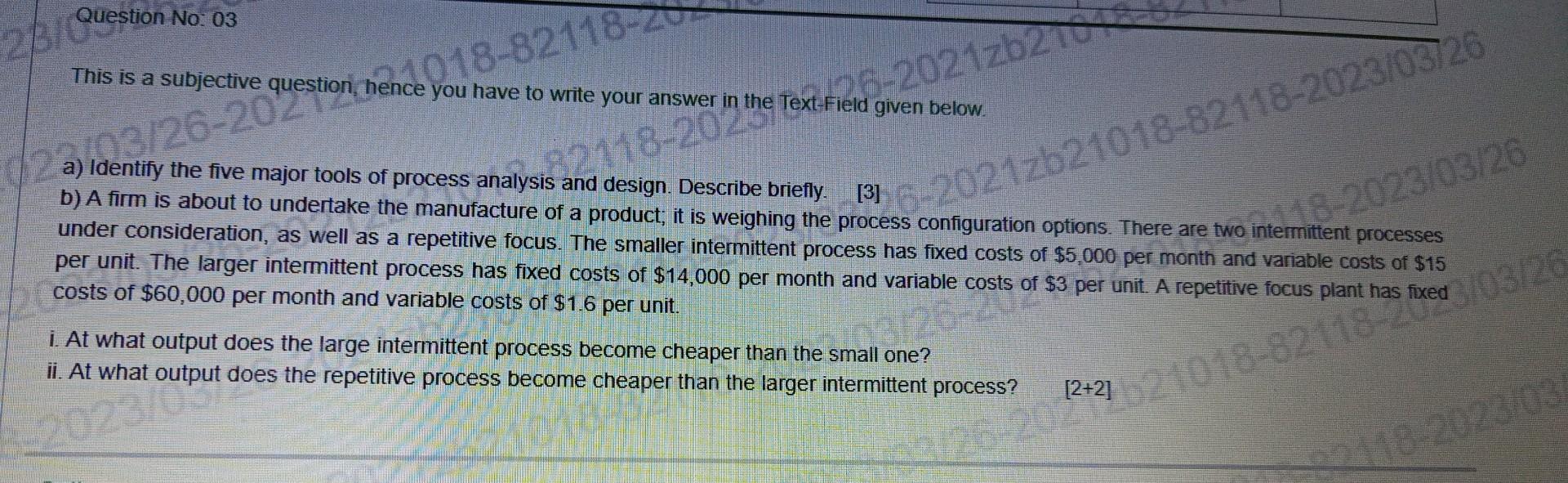
a) The following data are pulled from a recent Walsh Manufacturing annual report. Assets Raw material inventory $120,000 Work-in-process inventory $50,000 Finished goods inventory $300,000 Property, plant \& equipment $500,000 Other assets $200,000 Total assets $1,170,000 Condensed Income Statement Revenue $2,000,000 Cost of goods sold $600,000 Other expenses $1,000,000 Net income $400,000. Calculate: i) Percent invested in inventory. ii) Inventory turnover. iii) Weeks of supply. [1+2+2] b) Holding costs are $35 per unit per year, the ordering cost is $120 per order, and sales are relatively constant at 300 per month. i) What is the optimal order quantity? ii) What are the annual holding and setup costs? [1+2] c) A newspaper boy is trying to perfect his business to maximize the money he can save for a new car. Daily paper sales are normally distributed, with a mean of 140 and standard deviation of 20 . He sells papers for $0.80 and pays $0.50 for them. Unsold papers are trashed with $0.1 salvage value. i) How many papers should he order each day. ii) What % of the time will he experience a stockout. [2+2] This is a subjective question, hence you have to write your answer in the Text-Field given below. a) Identify the five major tools of process analysis and design. Describe briefly. [3] b) A firm is about to undertake the manufacture of a product, it is weighing the process configuration options. There are two intermittent processes under consideration, as well as a repetitive focus. The smaller intermittent process has fixed costs of $5,000 per month and variable costs of $15 per unit. The larger intermittent process has fixed costs of $14,000 per month and variable costs of $3 per unit. A repetitive focus plant has fixed costs of $60,000 per month and variable costs of $1.6 per unit. i. At what output does the large intermittent process become cheaper than the small one? ii. At what output does the repetitive process become cheaper than the larger intermittent process? [2+2]
Step by Step Solution
There are 3 Steps involved in it

Get step-by-step solutions from verified subject matter experts
 Study Help