







Question: A. Using the FCFS (first come, first served) decision rule for sequencing the jobs, the order is: Sequence Job 1 2 3 4 5 1.
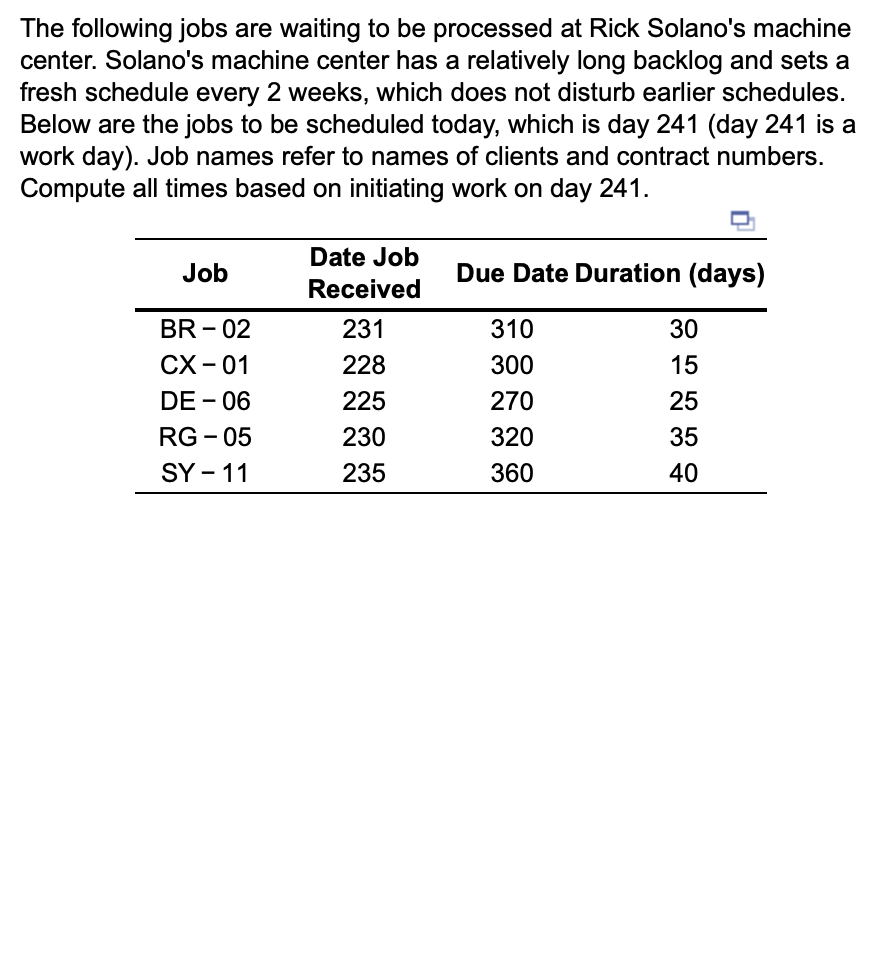
A. Using the FCFS (first come, first served) decision rule for sequencing the jobs, the order is:
Sequence Job
1
2
3
4
5
1. The total flow time for the sequence developed using the FCFS rule =
2. The percentage utilization for the sequence developed using the FCFS rule =
3. The average number of jobs in the system for the sequence developed using the FCFS rule =
- The average tardiness (job lateness) for the sequence developed using the FCFS rule =
B. Using the EDD (earliest due date) decision rule for sequencing the jobs, the order is (to resolve a tie, use the order in which the jobs were received):
Sequence Job
1
2
3
4
5
- The total flow time for the sequence developed using the EDD rule =
2. The percentage utilization for the sequence developed using the EDD rule =
3. The average number of jobs in the system for the sequence developed using the EDD rule =
- The average tardiness (job lateness) for the sequence developed using the EDD rule =
C. Using the SPT (shortest processing time) decision rule for sequencing the jobs, the order is (to resolve a tie, use the order in which the jobs were received):
Sequence Job
1
2
3
4
5
- The total flow time for the sequence developed using the SPT rule =
2. The percentage utilization for the sequence developed using the SPT rule =
3. The average number of jobs in the system for the sequence developed using the SPT rule =
- The average tardiness (job lateness) for the sequence developed using the SPT rule =
D. Using the LPT (longest processing time) decision rule for sequencing the jobs, the order is (to resolve a tie, use the order in which the jobs were received):
Sequence Job
1
2
3
4
5
- The total flow time for the sequence developed using the LPT rule =
2. The percentage utilization for the sequence developed using the LPT rule =
3. The average number of jobs in the system for the sequence developed using the LPT rule =
- The average tardiness (job lateness) for the sequence developed using the LPT rule =
Step by Step Solution
There are 3 Steps involved in it

Get step-by-step solutions from verified subject matter experts
 Study Help