







Question: A. Why do we sample? B. What is inference? C. Because the sample is just a portion of the population, the sample (will or won't
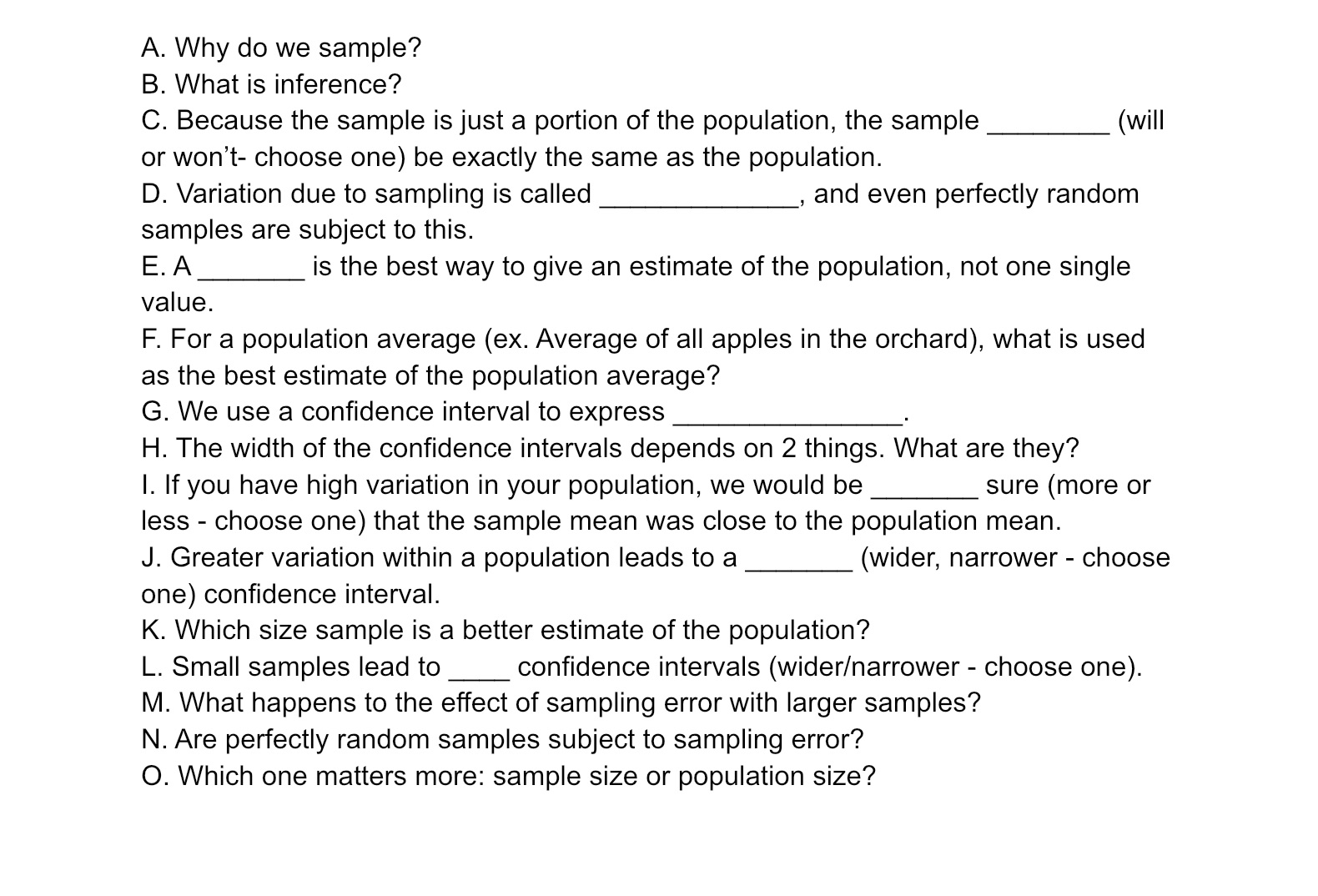
A. Why do we sample? B. What is inference? C. Because the sample is just a portion of the population, the sample (will or won't choose one) be exactly the same as the population. D. Variation due to sampling is called , and even perfectly random samples are subject to this. E. A is the best way to give an estimate of the population, not one single value. F. For a population average (ex. Average of all apples in the orchard), what is used as the best estimate of the population average? G. We use a condence interval to express H. The width of the confidence intervals depends on 2 things. What are they? I. If you have high variation in your population, we would be sure (more or less - choose one) that the sample mean was close to the population mean. J. Greater variation within a population leads to a (wider, narrower - choose one) confidence interval. K. Which size sample is a better estimate of the population? L. Small samples lead to _ confidence intervals (widerarrower - choose one). M. What happens to the effect of sampling error with larger samples? N. Are perfectly random samples subject to sampling error? 0. Which one matters more: sample size or population size
Step by Step Solution
There are 3 Steps involved in it

Get step-by-step solutions from verified subject matter experts
 Study Help