





Question: Abstract Factory Pattern The Abstract Factory pattern provides a way to encapsulate a group of individual factories that have a common theme without specifying their
Abstract Factory Pattern The Abstract Factory

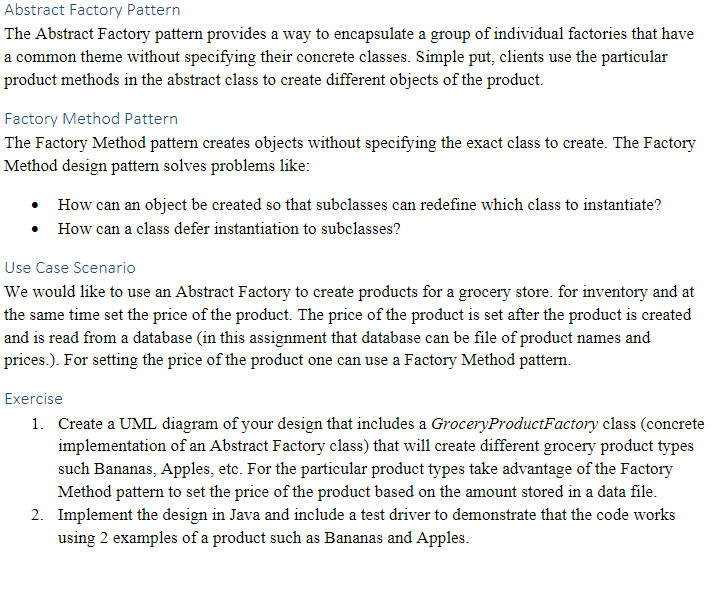
Abstract Factory Pattern The Abstract Factory pattern provides a way to encapsulate a group of individual factories that have a common theme without specifying their concrete classes. Simple put, clients use the particular product methods in the abstract class to create different objects of the product. Factory Method Pattern The Factory Method pattern creates objects without specifying the exact class to create. The Factory Method design pattern solves problems like: - How can an object be created so that subclasses can redefine which class to instantiate? - How can a class defer instantiation to subclasses? Use Case Scenario We would like to use an Abstract Factory to create products for a grocery store. for inventory and at the same time set the price of the product. The price of the product is set after the product is created and is read from a database (in this assignment that database can be file of product names and prices.). For setting the price of the product one can use a Factory Method pattern. Exercise 1. Create a UML diagram of your design that includes a GroceryProductFactory class (concrete implementation of an Abstract Factory class) that will create different grocery product types such Bananas, Apples, etc. For the particular product types take advantage of the Factory Method pattern to set the price of the product based on the amount stored in a data file. 2. Implement the design in Java and include a test driver to demonstrate that the code works using 2 examples of a product such as Bananas and Apples

Step by Step Solution

There are 3 Steps involved in it

1 Expert Approved Answer
Step: 1 Unlock blur-text-image

Question Has Been Solved by an Expert!

Get step-by-step solutions from verified subject matter experts

Step: 2 Unlock
Step: 3 Unlock

Students Have Also Explored These Related General Management Questions!