







Question: According to data patterns, would it be discrimination if they targeted the promotions based on channel of acquisition? Was it ethical to do so? How
According to data patterns, would it be discrimination if they targeted the promotions based on channel of acquisition?
Was it ethical to do so?
How should the targeting change? What should do moving forward?
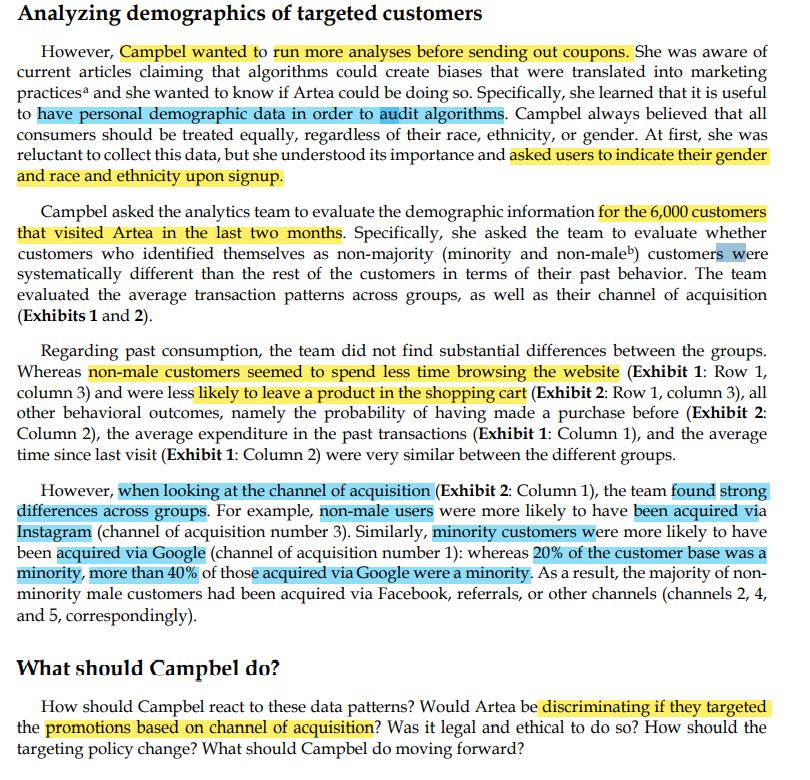
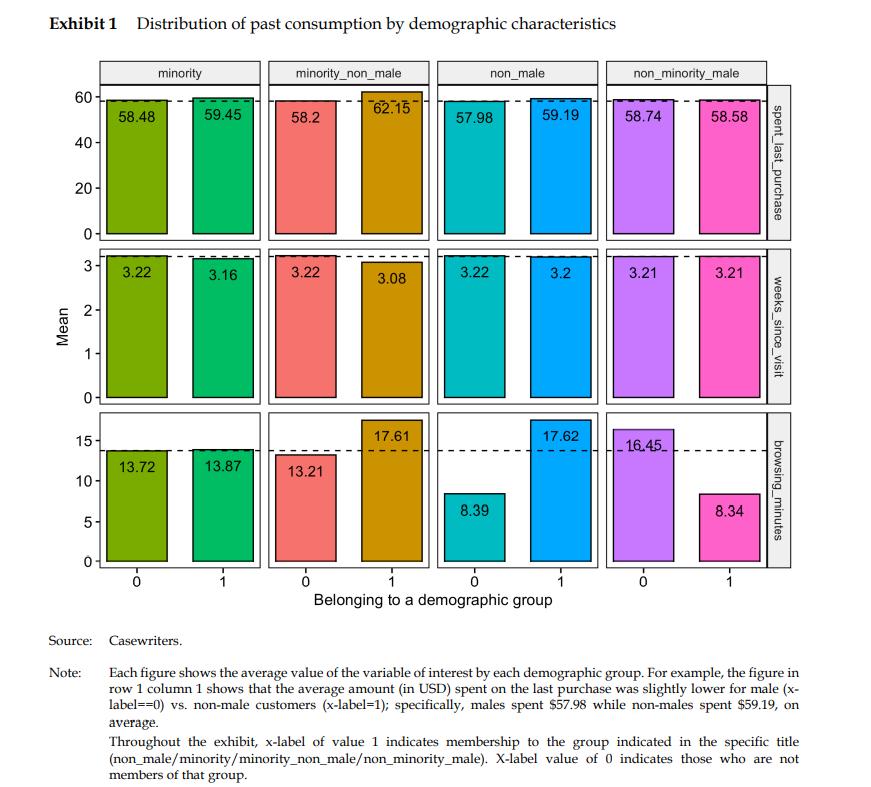
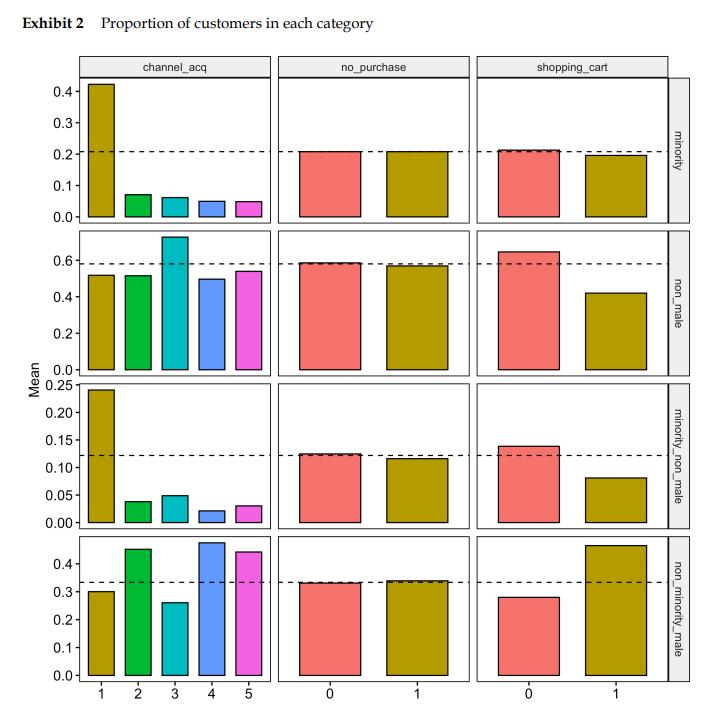
Analyzing demographics of targeted customers However, Campbel wanted to run more analyses before sending out coupons. She was aware of current articles claiming that algorithms could create biases that were translated into marketing practices and she wanted to know if Artea could be doing so. Specifically, she learned that it is useful to have personal demographic data in order to audit algorithms. Campbel always believed that all consumers should be treated equally, regardless of their race, ethnicity, or gender. At first, she was reluctant to collect this data, but she understood its importance and asked users to indicate their gender and race and ethnicity upon signup. Campbel asked the analytics team to evaluate the demographic information for the 6,000 customers that visited Artea in the last two months. Specifically, she asked the team to evaluate whether customers who identified themselves as non-majority (minority and non-maleb) customers were systematically different than the rest of the customers in terms of their past behavior. The team evaluated the average transaction patterns across groups, as well as their channel of acquisition (Exhibits 1 and 2). Regarding past consumption, the team did not find substantial differences between the groups. Whereas non-male customers seemed to spend less time browsing the website (Exhibit 1: Row 1, column 3) and were less likely to leave a product in the shopping cart (Exhibit 2: Row 1, column 3), all other behavioral outcomes, namely the probability of having made a purchase before (Exhibit 2: Column 2), the average expenditure in the past transactions (Exhibit 1: Column 1), and the average time since last visit (Exhibit 1: Column 2) were very similar between the different groups. However, when looking at the channel of acquisition (Exhibit 2: Column 1), the team found strong differences across groups. For example, non-male users were more likely to have been acquired via Instagram (channel of acquisition number 3). Similarly, minority customers were more likely to have been acquired via Google (channel of acquisition number 1): whereas 20% of the customer base was a minority, more than 40% of those acquired via Google were a minority. As a result, the majority of non- minority male customers had been acquired via Facebook, referrals, or other channels (channels 2, 4, and 5, correspondingly). What should Campbel do? How should Campbel react to these data patterns? Would Artea be discriminating if they targeted the promotions based on channel of acquisition? Was it legal and ethical to do so? How should the targeting policy change? What should Campbel do moving forward?
Step by Step Solution
3.34 Rating (163 Votes )
There are 3 Steps involved in it
Based on the limited information provided it is difficult to determine whether targeting promotions based on the channel of acquisition would constitu... View full answer

Get step-by-step solutions from verified subject matter experts
 Study Help