Question: According to the article How to Navigate Yet Another Office Shakeup provided below: a. Identify the most important issue in the article. b.
According to the article "How to Navigate Yet Another Office Shakeup" provided below: a. Identify the most important issue in the article. b. Identify all Stakeholders involved in that issue. c. Apply 4 related Organizational Behavior concepts.
Note: Since the article is provided below, answers all three parts of the questions. The answers must be in detail and complete. Thanks.

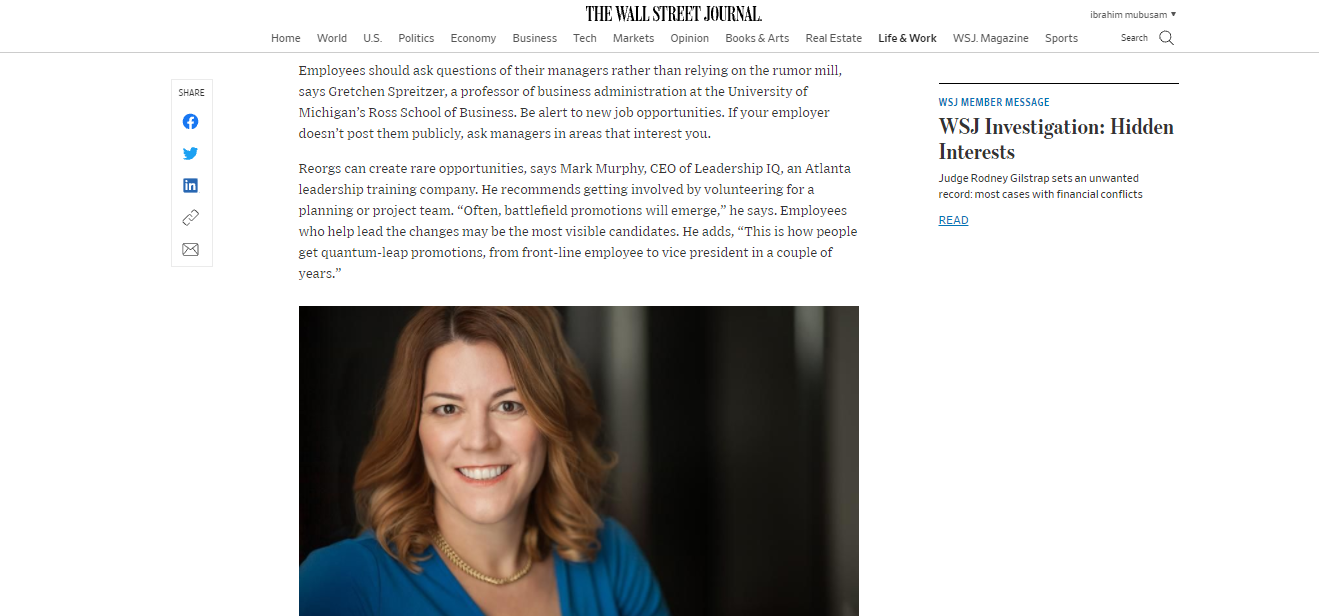
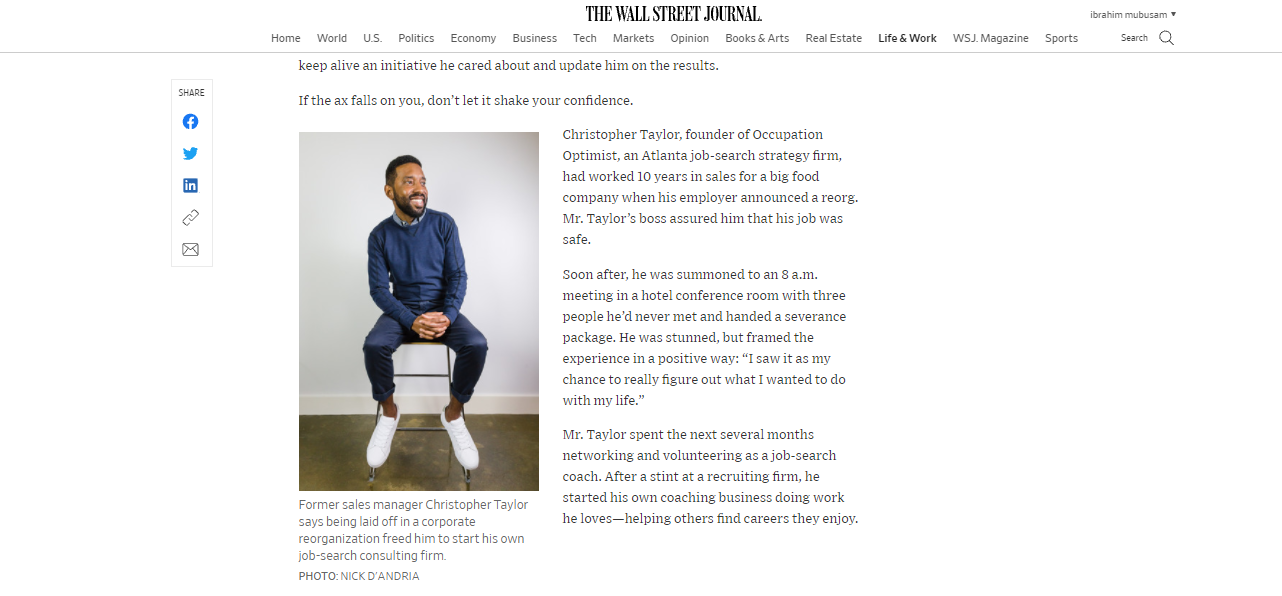
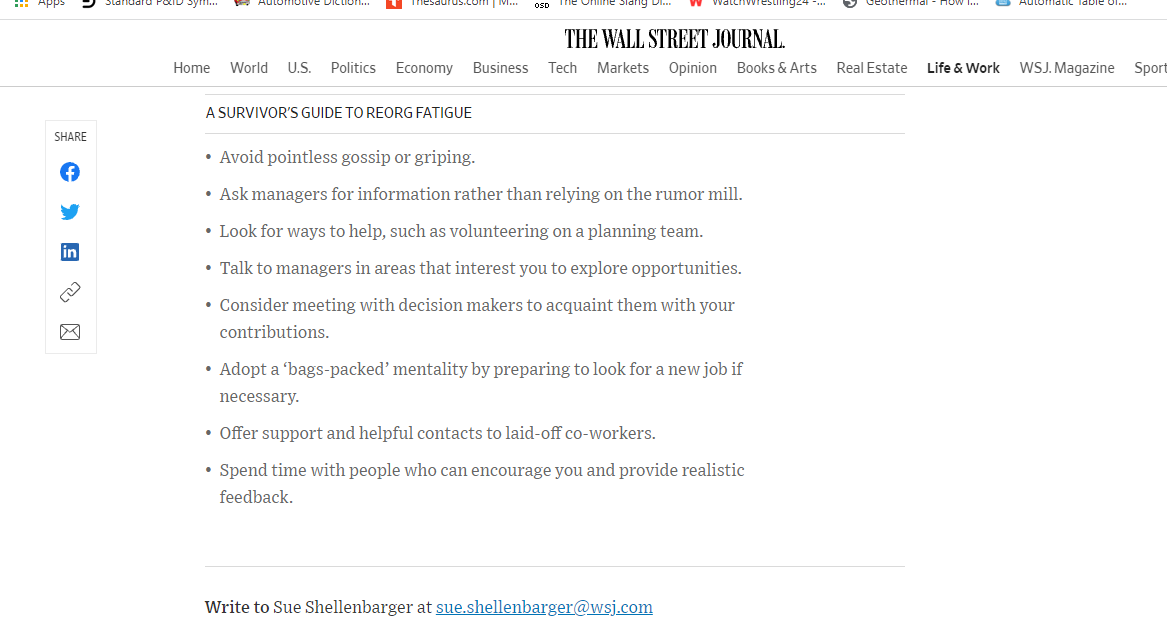
VPLAY WSJ PUZZLE IIIL DU VIILUT OVUIU L. English Edition Print Edition | Video | Podcasts Latest Headlines Politics Economy Business Tech Markets Opinion Books & Arts Real Estate Life & Work WSJ. Magazine Sports Home World U.S. Search Q LIFE & WORK CAREERS WORK & FAMILY SHARE 6 How to Navigate Yet Another Office Shakeup Some companies like to reorganize way too much-here's how to keep your head through all that change UPCOMING EVENTS > in 9:00 AM - 5:00 PM EDT Oct WSJ Tech Live 18 2021 11:00 AM - 3:30 PM EDT Nov 1 WSJ Experience Management Forum 2021 11:00 AM - 3:00 PM EDT Nov 17 2021 WSJ Pro Sustainable Business Forum ADD TO CALENDAR ibrahim mubusam THE WALL STREET JOURNAL Tech Markets Opinion Books & Arts Real Estate Home World U.S. Politics Economy Business Life & Work WSJ. Magazine Sports Search a MOST POPULAR NEWS SHARE ILLUSTRATION:DAN PAGE f Rodents the Size of St. Bernards Swarm an Exclusive Gated Community By Sue Shellenbarger Jan 14, 2019 10:25 am ET in SAVE 3 PRINT A TEXT 15 2 Ship Crews Abandoned in Record Numbers If you like your job and your work team, don't get too comfortable. Your employer may be planning a reorganization. 3. Southwest Pilots Warn Fatigue, Frustration Could Fuel Further Outages Corporate reorgs are accelerating, and they're not just for cutting costs anymore. More employers are reshuffling the org chart to respond to market changes or allow for growth, and 80% see restructurings continuing at an equal or faster pace in the next five years, according to a recent survey of 2,400 employers by Harvard Business Review and Quartz Associates, a London consulting firm. Here's Why Leaf Blowers Are Evil Incarnate Hasbro CEO Brian Goldner Dies at 58 Some companies go so far as to shake things up every 18 months, causing reorg fatigue among employees. "This produces an atmosphere of constant disruption and uncertainty for staff," says Stephen Heidari-Robinson, managing director of Quartz Associates. MOST POPULAR OPINION It's possible to emerge from a reorg with a similar or better job, but it requires staying calm amid chaos, networking and prospecting for hidden opportunities. Opinion: Merrick Garland Has a List, and You're Probably on It Laura Mael worked at a company that restructured its operations every 18 to 24 months. NEWSLETTER SIGN-UP 2. Opinion: Virginia Dad Takes On the School Board ibrahim mubusam THE WALL STREET JOURNAL Tech Markets Opinion Books & Arts Real Estate Home World US Politics Economy Business Life & Work WSJ. Magazine Sports Search 0 DO SHARE Grapevine A weekly look at our most colorful, thought- provoking and original feature stories on the business of life. 3. Opinion: Partisan Science in America f "You could feel the tension in the air," says the Windsor, Wis., public-relations manager. "It's extremely stressful to keep being told you must reapply for your position. In your head, you start doubting your value." CIRCLE Opinion: Oil Prices and Bad Policy 7057 in Opinion: Vaccine Mandate Madness PREVIEW SUBSCRIBE Her colleagues became irritable, spreading gossip about the company's next move. But she tried to avoid gripe sessions. If co-workers complained over lunch, she told them that while she felt for everyone, she didn't want to hear it. "You can't associate with negativity. Not only will it drag you down, but it will spread like wildfire and you'll get caught up in it," she says. MOST POPULAR VIDEOS How Cargo Piled Up at California Ports Threatens Holiday Season Ms. Mael survived all three reorgs, but she was disappointed when she was given a new role in the third go-round that wasn't a good fit. She reached out to contacts outside the company to help her stay optimistic. Six months later, her network helped her land a new position she loved at a different employer. China's Pop-Culture Crackdown Widens After It Hits Its Biggest Movie Star Reorgs of any kind tend to spark job-loss fears among employees, regardless of the company's stated purpose. Many employers prolong the misery by letting reorgs drag on too long. Only 12% reach all their goals by the intended deadline, says Mr. Heidari- Robinson, co-author of "ReOrg: How to Get It Right." 3. Your Coffee Is Getting More Expensive Due to Bad Weather in Brazil 4. Covid Vaccine Efficacy Numbers, Explained Many executives also communicate poorly, sugarcoating announcements about their plans or withholding crucial details about how individuals will be affected. They might say they have no current plans for layoffs when there's little doubt heads will roll. This undermines the trust needed to make a reorg go well. Two out of three restructurings hurt productivity while they're under way, Mr. Heidari-Robinson says. 5. Elon Musk Welcomes Visitors to Tesla's First Gigafactory in Europe ibrahim mubusam THE WALL STREET JOURNAL Tech Markets Opinion Books & Arts Home World US Politics Economy Business Real Estate Life & Work WSJ. Magazine Sports Search a SHARE Employees should ask questions of their managers rather than relying on the rumor mill, says Gretchen Spreitzer, a professor of business administration at the University of Michigan's Ross School of Business. Be alert to new job opportunities. If your employer doesn't post them publicly, ask managers in areas that interest you. f y WSJ MEMBER MESSAGE WSJ Investigation: Hidden Interests Judge Rodney Gilstrap sets an unwanted record: most cases with financial conflicts in Reorgs can create rare opportunities, says Mark Murphy, CEO of Leadership IQ, an Atlanta leadership training company. He recommends getting involved by volunteering for a planning or project team. "Often, battlefield promotions will emerge," he says. Employees who help lead the changes may be the most visible candidates. He adds, This is how people get quantum-leap promotions, from front-line employee to vice president in a couple of READ years." ibrahim mubusam THE WALL STREET JOURNAL Tech Markets Opinion Books & Arts Home World US Politics Economy Business Real Estate Life & Work WSJ. Magazine Sports Search a SHARE Karin Hurt was taken aback when her bosses at a previous employer offered her a major increase in responsibility, to head human resources for a $6 billion unit, with a modest raise during a merger. She was denied the new title that should have accompanied the job, however, because she wasn't able to relocate to the company's New York headquarters. f in "At first I was completely frustrated," says Ms. Hurt, who was a human-resources director at the time. She decided to accept the position because she knew it would help her learn and grow, and she's glad she did. "That job gave me a perspective and understanding of the business that became foundational to my career," Ms. Hurt says. One of the executives she worked with offered her a new position 12 years later managing a large call center, and she later moved up to managing a 2,200-employee sales division. Ms. Hurt also took advantage of the disarray. She saw a need for a new leadership-training program and laid plans before her bosses even asked for it. She credits good advice from a former boss: "Where there is chaos, seize control," says Ms. Hurt, CEO of Let's Grow Leaders, a Laurel, Md., training firm, and co-author of "Winning Well." Keeping your rsum up-to-date and maintaining an active network of contacts outside work can lend confidence during a reorg, Dr. Spreitzer says. Ms. Hurt recommends adopting what she calls a bags-packed attitude: "If this doesn't work well, I can always leave," she says. There is huge confidence and creativity that comes from not feeling trapped." If colleagues get laid off, be as helpful as you can and consider sharing access to your network, Dr. Spreitzer says. Ms. Mael once comforted a laid-off co-worker by offering to keep alive an initiative he cared about and update him on the results. If the ax falls on you, don't let it shake your confidence. THE WALL STREET JOURNAL ibrahim mubusam Home World US Politics Economy Business Tech Markets Opinion Books & Arts Real Estate Life & Work WSJ. Magazine Sports Search a keep alive an initiative he cared about and update him on the results. SHARE If the ax falls on you, don't let it shake your confidence. f y in Christopher Taylor, founder of Occupation Optimist, an Atlanta job-search strategy firm, had worked 10 years in sales for a big food company when his employer announced a reorg. Mr. Taylor's boss assured him that his job was safe. Soon after, he was summoned to an 8 a.m. meeting in a hotel conference room with three people he'd never met and handed a severance package. He was stunned, but framed the experience in a positive way: "I saw it as my chance to really figure out what I wanted to do with my life." Mr. Taylor spent the next several months networking and volunteering as a job-search coach. After a stint at a recruiting firm, he started his own coaching business doing work he loves-helping others find careers they enjoy. Former sales manager Christopher Taylor says being laid off in a corporate reorganization freed him to start his own job-search consulting firm. PHOTO: NICK D'ANDRIA ** APPS Sym Us.com OSD mai labie Ol THE WALL STREET JOURNAL. Tech Markets Opinion Books & Arts Home World U.S. Politics Economy Business Real Estate Life & Work WSJ. Magazine Sport A SURVIVOR'S GUIDE TO REORG FATIGUE SHARE f Avoid pointless gossip or griping. Ask managers for information rather than relying on the rumor mill. in Look for ways to help, such as volunteering on a planning team. Talk to managers in areas that interest you to explore opportunities. . Consider meeting with decision makers to acquaint them with your contributions. Adopt a 'bags-packed' mentality by preparing to look for a new job if necessary. Offer support and helpful contacts to laid-off co-workers. Spend time with people who can encourage you and provide realistic feedback. Write to Sue Shellenbarger at sue.shellenbarger@wsj.com









 Study Help