







Question: A bread factory has output function q= f(M, K, L) = min[M, K2L7] The factory faces a wage of w = $18 per unit
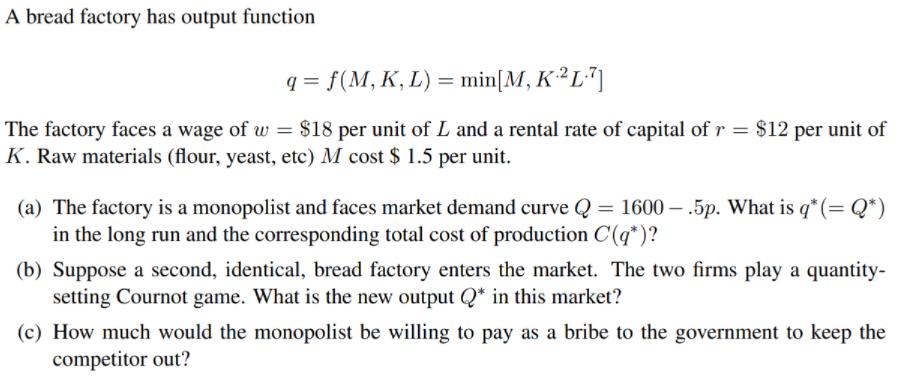
A bread factory has output function q= f(M, K, L) = min[M, K2L7] The factory faces a wage of w = $18 per unit of L and a rental rate of capital of r = $12 per unit of K. Raw materials (flour, yeast, etc) M cost $ 1.5 per unit. (a) The factory is a monopolist and faces market demand curve Q=1600-.5p. What is q* (=Q*) in the long run and the corresponding total cost of production C(q*)? (b) Suppose a second, identical, bread factory enters the market. The two firms play a quantity- setting Cournot game. What is the new output Q* in this market? (c) How much would the monopolist be willing to pay as a bribe to the government to keep the competitor out?
Step by Step Solution
3.46 Rating (178 Votes )
There are 3 Steps involved in it
a In the long run the monopolists output will be q 1600 5p The corresponding total cost of prod... View full answer

Get step-by-step solutions from verified subject matter experts
 Study Help