







Question: Activity 1: Newton's Second Law Data Table 1 Suspended Weight of Time Average Average d (m) 2d. Time2 Mass (kg) Suspended (sec) Time Mass
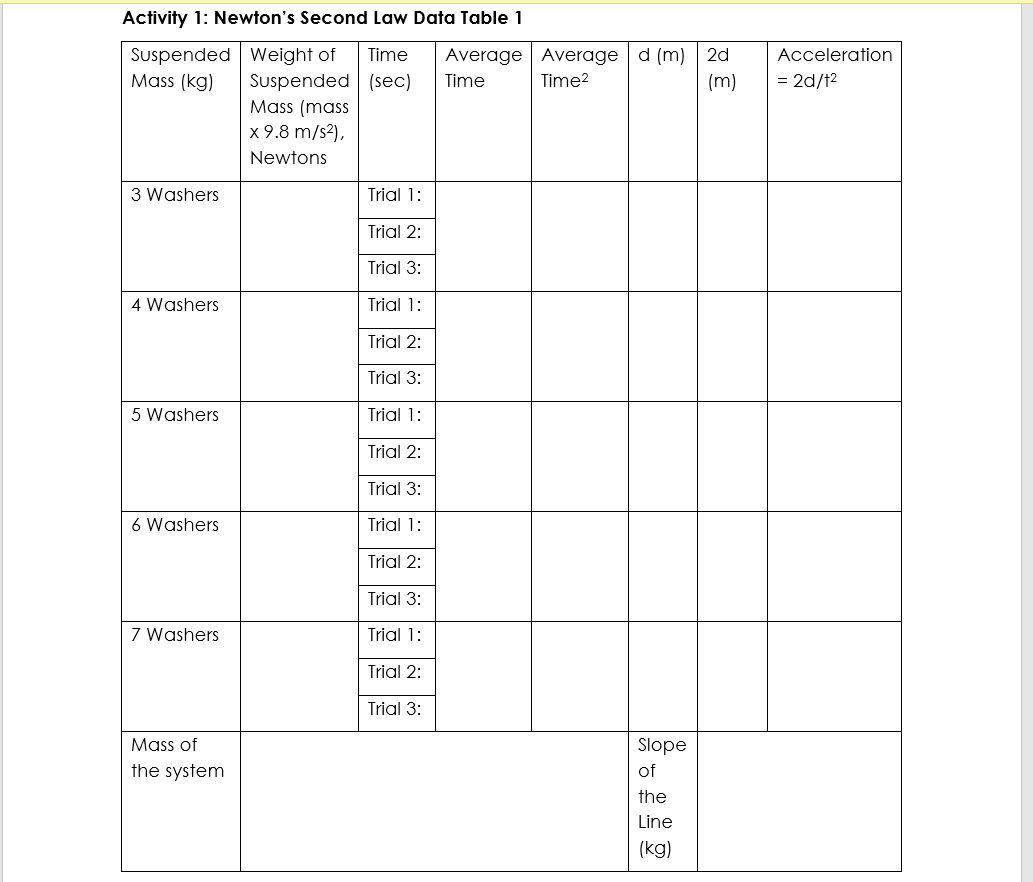
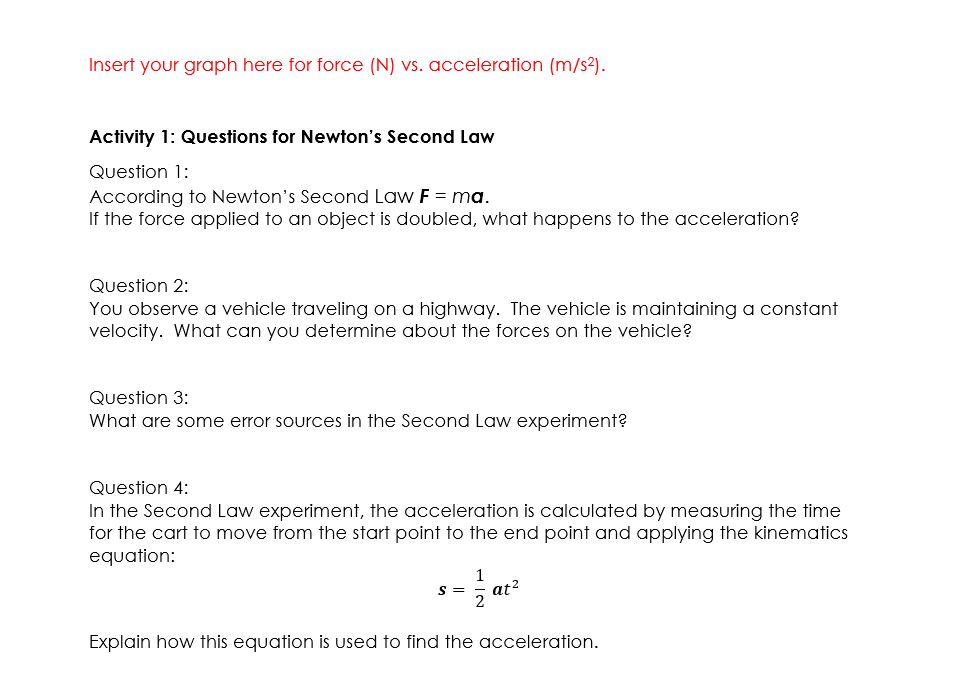
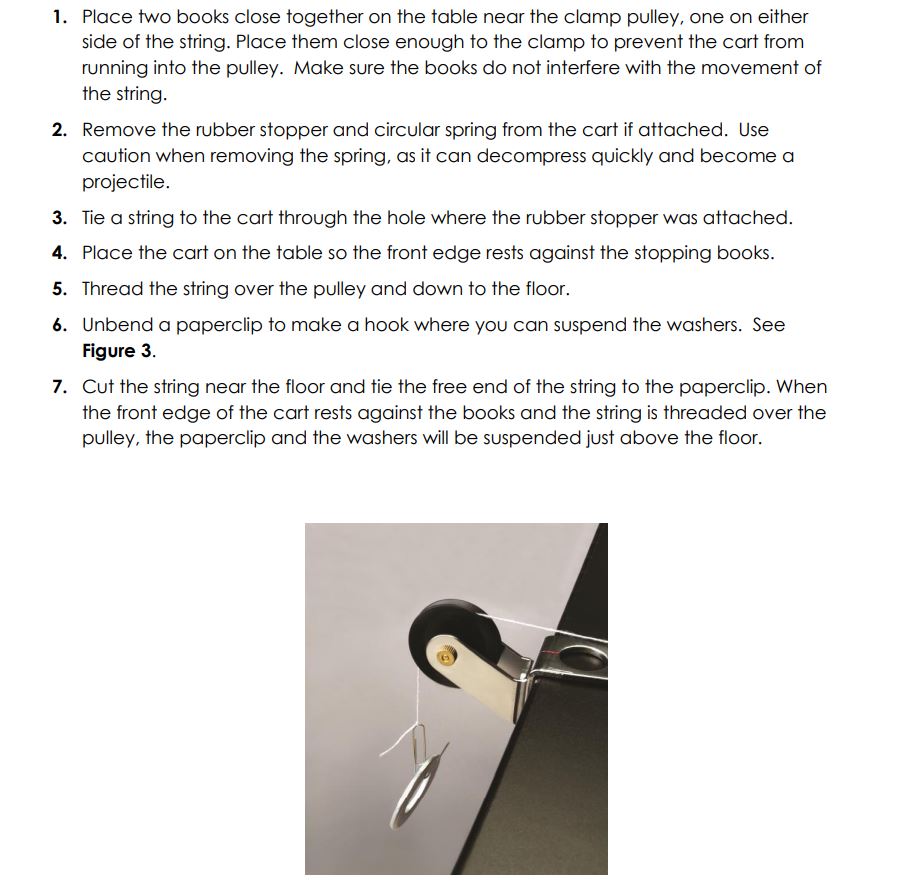
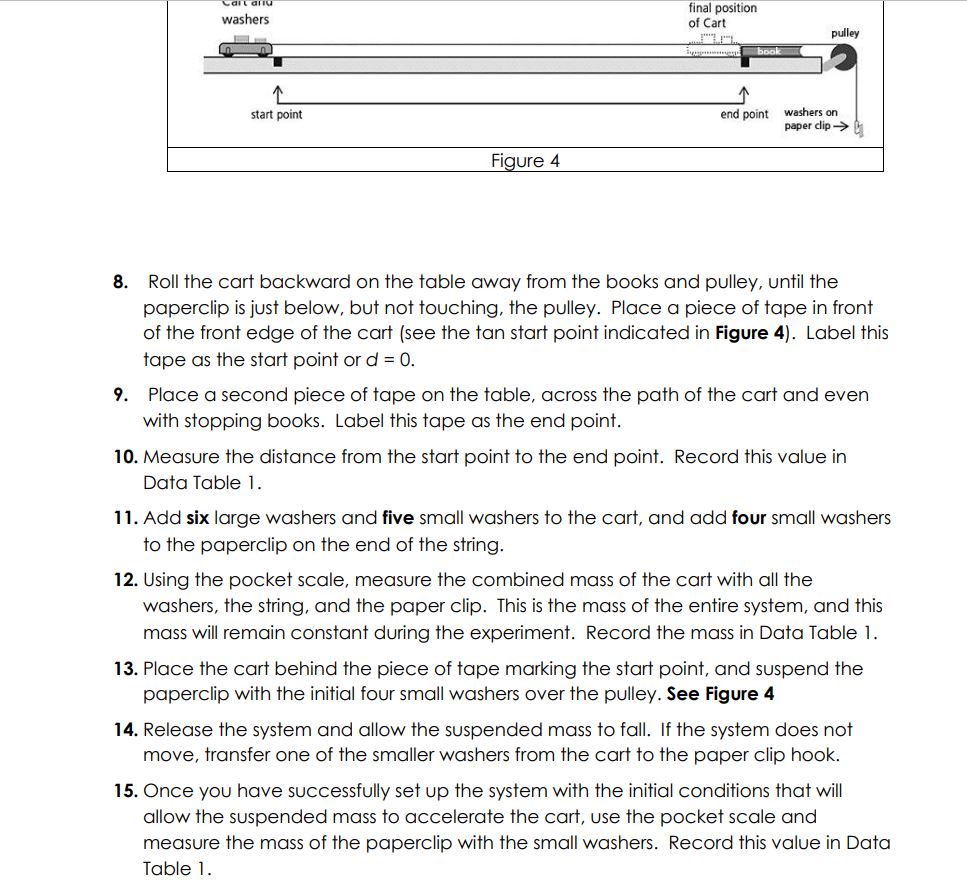
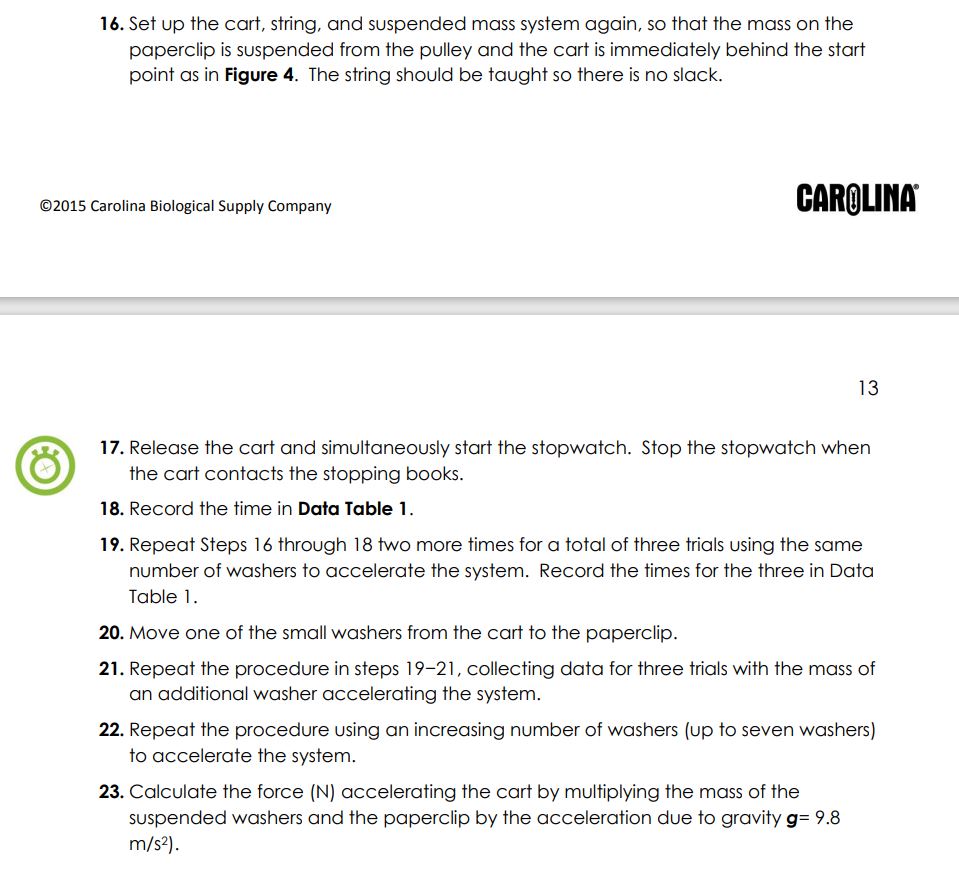
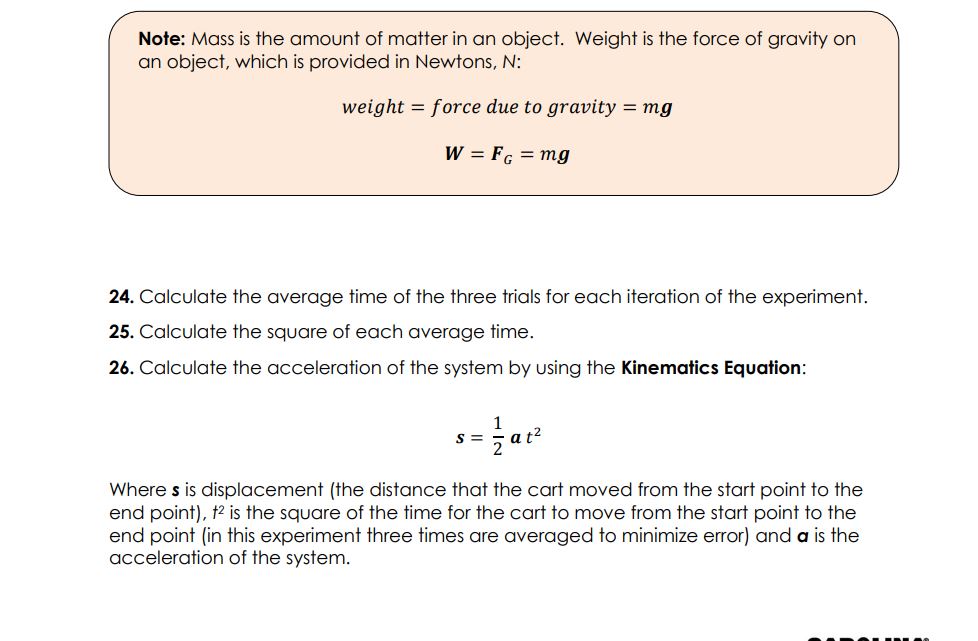
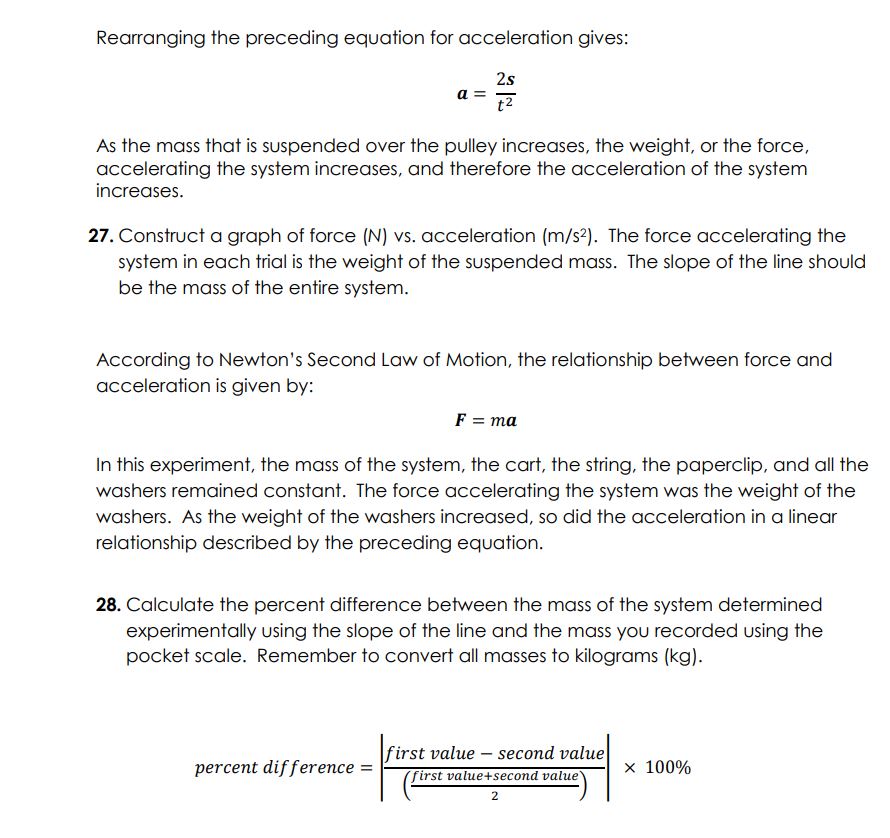
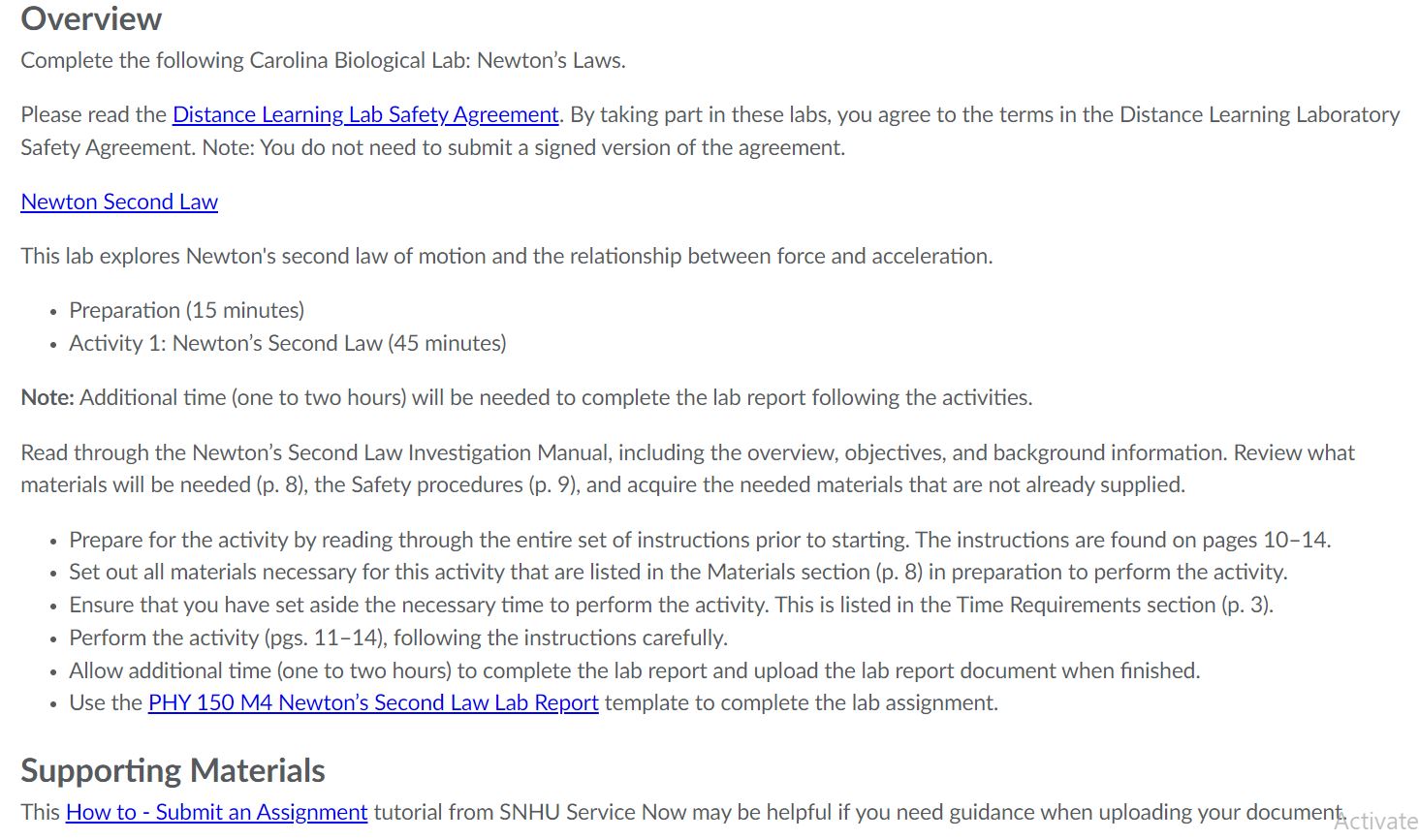
Activity 1: Newton's Second Law Data Table 1 Suspended Weight of Time Average Average d (m) 2d. Time2 Mass (kg) Suspended (sec) Time Mass (mass x 9.8 m/s), Newtons 3 Washers Trial 1: Trial 2: Trial 3: 4 Washers Trial 1: Trial 2: Trial 3: 5 Washers Trial 1: Trial 2: Trial 3: 6 Washers Trial 1: Trial 2: Trial 3: 7 Washers Trial 1: Trial 2: Trial 3: Mass of the system Slope of the Line (kg) Acceleration (m) = 2d/t2 Insert your graph here for force (N) vs. acceleration (m/s). Activity 1: Questions for Newton's Second Law Question 1: According to Newton's Second Law F = ma. If the force applied to an object is doubled, what happens to the acceleration? Question 2: You observe a vehicle traveling on a highway. The vehicle is maintaining a constant velocity. What can you determine about the forces on the vehicle? Question 3: What are some error sources in the Second Law experiment? Question 4: In the Second Law experiment, the acceleration is calculated by measuring the time for the cart to move from the start point to the end point and applying the kinematics equation: 1 S= at Explain how this equation is used to find the acceleration. Another option is to upload the video to your computer. Different video playback programs may come with your operating system or software suite or may be available for download. Some apps for mobile devices and computer programs available for download are listed below, with notes about their features. Hudl Technique: http://get.hudl.com/products/technique/ iPhone/iPad and Android FREE Measures times to the hundredth-second with slow motion features QuickTime http://www.apple.com/quicktime/download/ Free Install on computer 30 frames per second Has auto scrubbing capability Preparation 1. Gather items listed in the Materials section. 2. Find a table at least 60 cm high. 3. Clear a space on the table top approximately 1-2 meters in length and at least 10 centimeters wide. The area should be level and smooth. 4. The clamp pulley should attach to the end of the table with enough space for a suspended mass to fall unobstructed to the floor. See Figure 3 for an example of the clamp pulley secured to a table top. You may place a piece of cardboard between the clamp and the table to prevent damaging the table surface. 1. Place two books close together on the table near the clamp pulley, one on either side of the string. Place them close enough to the clamp to prevent the cart from running into the pulley. Make sure the books do not interfere with the movement of the string. 2. Remove the rubber stopper and circular spring from the cart if attached. Use caution when removing the spring, as it can decompress quickly and become a projectile. 3. Tie a string to the cart through the hole where the rubber stopper was attached. 4. Place the cart on the table so the front edge rests against the stopping books. 5. Thread the string over the pulley and down to the floor. 6. Unbend a paperclip to make a hook where you can suspend the washers. See Figure 3. 7. Cut the string near the floor and tie the free end of the string to the paperclip. When the front edge of the cart rests against the books and the string is threaded over the pulley, the paperclip and the washers will be suspended just above the floor. washers start point Figure 4 final position of Cart book pulley end point washers on paper clip 8. Roll the cart backward on the table away from the books and pulley, until the paperclip is just below, but not touching, the pulley. Place a piece of tape in front of the front edge of the cart (see the tan start point indicated in Figure 4). Label this tape as the start point or d = 0. 9. Place a second piece of tape on the table, across the path of the cart and even with stopping books. Label this tape as the end point. 10. Measure the distance from the start point to the end point. Record this value in Data Table 1. 11. Add six large washers and five small washers to the cart, and add four small washers to the paperclip on the end of the string. 12. Using the pocket scale, measure the combined mass of the cart with all the washers, the string, and the paper clip. This is the mass of the entire system, and this mass will remain constant during the experiment. Record the mass in Data Table 1. 13. Place the cart behind the piece of tape marking the start point, and suspend the paperclip with the initial four small washers over the pulley. See Figure 4 14. Release the system and allow the suspended mass to fall. If the system does not move, transfer one of the smaller washers from the cart to the paper clip hook. 15. Once you have successfully set up the system with the initial conditions that will allow the suspended mass to accelerate the cart, use the pocket scale and measure the mass of the paperclip with the small washers. Record this value in Data Table 1. 16. Set up the cart, string, and suspended mass system again, so that the mass on the paperclip is suspended from the pulley and the cart is immediately behind the start point as in Figure 4. The string should be taught so there is no slack. 2015 Carolina Biological Supply Company CAROLINA 13 17. Release the cart and simultaneously start the stopwatch. Stop the stopwatch when the cart contacts the stopping books. 18. Record the time in Data Table 1. 19. Repeat Steps 16 through 18 two more times for a total of three trials using the same number of washers to accelerate the system. Record the times for the three in Data Table 1. 20. Move one of the small washers from the cart to the paperclip. 21. Repeat the procedure in steps 19-21, collecting data for three trials with the mass of an additional washer accelerating the system. 22. Repeat the procedure using an increasing number of washers (up to seven washers) to accelerate the system. 23. Calculate the force (N) accelerating the cart by multiplying the mass of the suspended washers and the paperclip by the acceleration due to gravity g= 9.8 m/s). Note: Mass is the amount of matter in an object. Weight is the force of gravity on an object, which is provided in Newtons, N: weight force due to gravity = mg W = FG = mg 24. Calculate the average time of the three trials for each iteration of the experiment. 25. Calculate the square of each average time. 26. Calculate the acceleration of the system by using the Kinematics Equation: S = 1 a t Where s is displacement (the distance that the cart moved from the start point to the end point), t2 is the square of the time for the cart to move from the start point to the end point (in this experiment three times are averaged to minimize error) and a is the acceleration of the system. Rearranging the preceding equation for acceleration gives: 2s a t2 As the mass that is suspended over the pulley increases, the weight, or the force, accelerating the system increases, and therefore the acceleration of the system increases. 27. Construct a graph of force (N) vs. acceleration (m/s). The force accelerating the system in each trial is the weight of the suspended mass. The slope of the line should be the mass of the entire system. According to Newton's Second Law of Motion, the relationship between force and acceleration is given by: F = ma In this experiment, the mass of the system, the cart, the string, the paperclip, and all the washers remained constant. The force accelerating the system was the weight of the washers. As the weight of the washers increased, so did the acceleration in a linear relationship described by the preceding equation. 28. Calculate the percent difference between the mass of the system determined experimentally using the slope of the line and the mass you recorded using the pocket scale. Remember to convert all masses to kilograms (kg). first value-second value percent difference = 100% first value+second value 2 Overview Complete the following Carolina Biological Lab: Newton's Laws. Please read the Distance Learning Lab Safety Agreement. By taking part in these labs, you agree to the terms in the Distance Learning Laboratory Safety Agreement. Note: You do not need to submit a signed version of the agreement. Newton Second Law This lab explores Newton's second law of motion and the relationship between force and acceleration. Preparation (15 minutes) Activity 1: Newton's Second Law (45 minutes) Note: Additional time (one to two hours) will be needed to complete the lab report following the activities. Read through the Newton's Second Law Investigation Manual, including the overview, objectives, and background information. Review what materials will be needed (p. 8), the Safety procedures (p. 9), and acquire the needed materials that are not already supplied. Prepare for the activity by reading through the entire set of instructions prior to starting. The instructions are found on pages 10-14. Set out all materials necessary for this activity that are listed in the Materials section (p. 8) in preparation to perform the activity. Ensure that you have set aside the necessary time to perform the activity. This is listed in the Time Requirements section (p. 3). Perform the activity (pgs. 11-14), following the instructions carefully. Allow additional time (one to two hours) to complete the lab report and upload the lab report document when finished. Use the PHY 150 M4 Newton's Second Law Lab Report template to complete the lab assignment. Supporting Materials This How to - Submit an Assignment tutorial from SNHU Service Now may be helpful if you need guidance when uploading your document Activate
Step by Step Solution
There are 3 Steps involved in it
Data Table Calculate the Weight of the Suspended Mass Weight Mass 98 ms 2 textWeight textMass times 98 textms2 WeightMass98ms2 Calculate the Average Time for Each Set of Washers AverageTime Trial1 Tri... View full answer

Get step-by-step solutions from verified subject matter experts
 Study Help