



Question: ADEA cases use the but for standard when deciding if age discrimination occurred; whereas Civil Rights cases use a mixed motives standard when deciding if
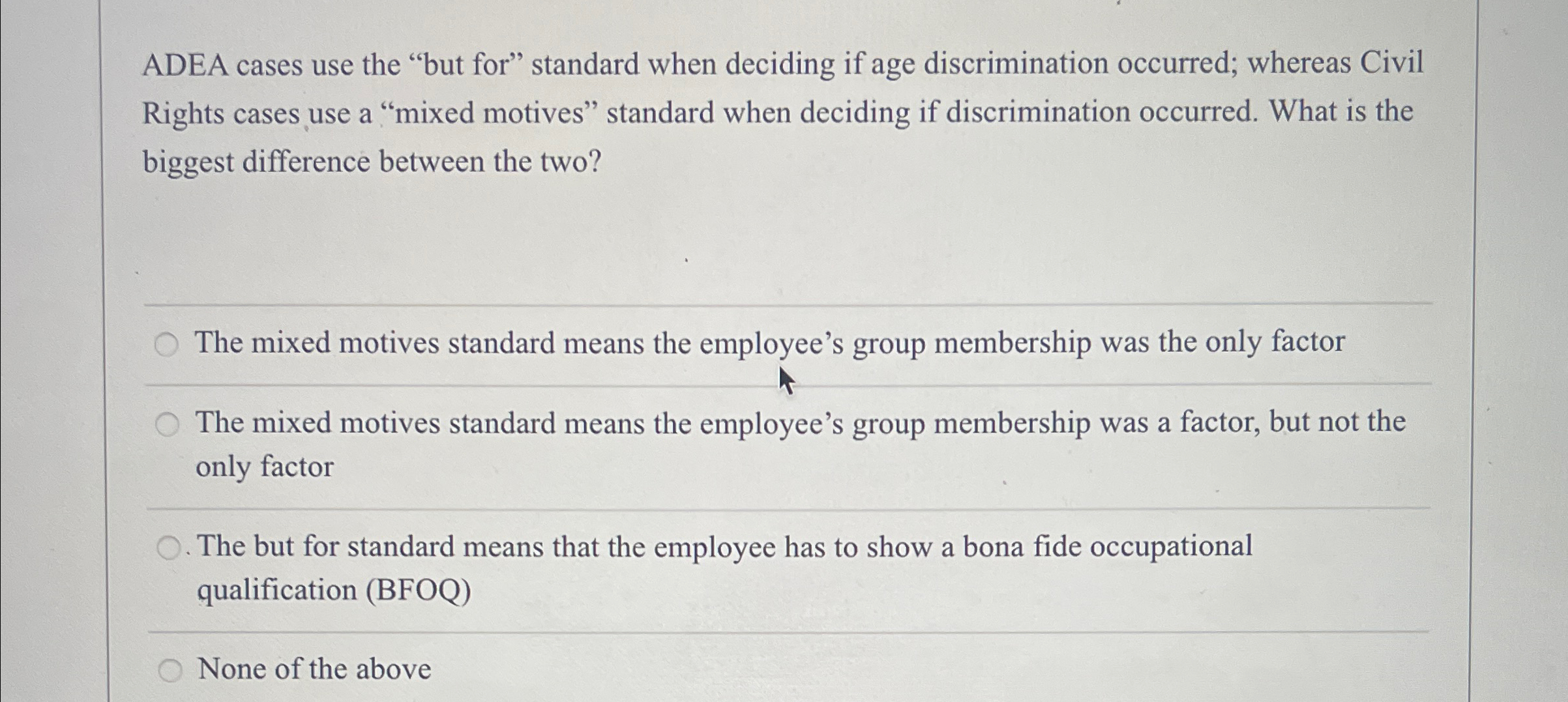
ADEA cases use the "but for" standard when deciding if age discrimination occurred; whereas Civil Rights cases use a "mixed motives" standard when deciding if discrimination occurred. What is the biggest difference between the two?
The mixed motives standard means the employee's group membership was the only factor
The mixed motives standard means the employee's group membership was a factor, but not the only factor
The but for standard means that the employee has to show a bona fide occupational qualification BFOQ
None of the above
Step by Step Solution
There are 3 Steps involved in it
1 Expert Approved Answer
Step: 1 Unlock

Question Has Been Solved by an Expert!
Get step-by-step solutions from verified subject matter experts
Step: 2 Unlock
Step: 3 Unlock