







Question: After doing a complex amortization calculation to find the payment, we often will calculate how much interest a borrower pays over the life of
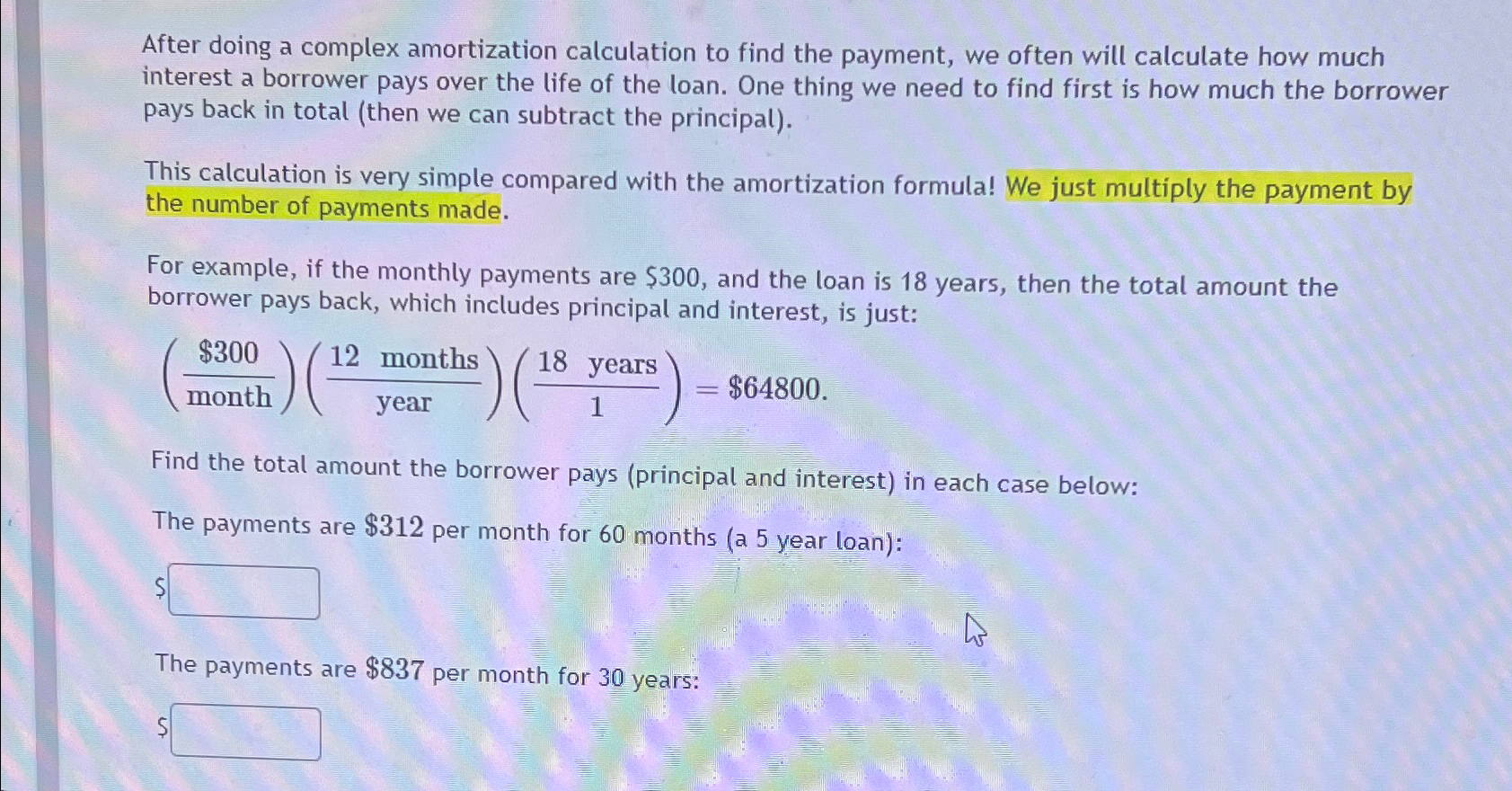
After doing a complex amortization calculation to find the payment, we often will calculate how much interest a borrower pays over the life of the loan. One thing we need to find first is how much the borrower pays back in total (then we can subtract the principal). This calculation is very simple compared with the amortization formula! We just multiply the payment by the number of payments made. For example, if the monthly payments are $300, and the loan is 18 years, then the total amount the borrower pays back, which includes principal and interest, is just: $300 month i) ( 12 12 months year ) (18 18 years 1 = $64800. Find the total amount the borrower pays (principal and interest) in each case below: The payments are $312 per month for 60 months (a 5 year loan): The payments are $837 per month for 30 years:
Step by Step Solution
There are 3 Steps involved in it

Get step-by-step solutions from verified subject matter experts
 Study Help