



Question: After reading the scenario found in Joe Chaney, (Below) review the integrated model of motivation in Figure 6.10 and the decision tree in the Performance
After reading the scenario found in Joe Chaney, (Below) review the integrated model of motivation in Figure 6.10 and the decision tree in the Performance Diagnosis Model (found in the lecture notes) for information that will be helpful in answering the questions below. Remember that the firm had "been pleasantly surprised by Joe's performance. Until recently, he worked hard and consistently produced high-quality work. Furthermore, he frequently volunteered for special projects, made lots of suggestions for improving the work environment, and has demonstrated an in-depth practical knowledge of architecture and the construction business." Answer the questions as thoroughly as possible. 1. Joe's effort has decreased lately, and he is not as excited about his work and has had some arguments with architects. What are some factors that might have contributed to Joe's effort "slacking off?" 2. Using the Performance Diagnosis Model in the lecture notes, discuss which element(s) of the model seem(s) to be the source Joe's poor performance lately. (When you make your analysis below, support it with information from the text (e.g., Joe's performance relates to a resource problem because . . . .). a. Are there ability issues? If so, in what areas do the ability deficiencies lie (resources, training, or aptitude)? b. Are there motivational issues? If so, in what areas do the ability deficiencies lie (expectations, incentives, or salience)? 3. What effect do you think equity plays in Joe's dissatisfaction?a. If equity is a problem from Joe's perspective, in which part of the model does equity fall (Box A, B, C, D, E, F, or G)? 4. Joe's coworker asked him about pursuing an architecture degree. As a manager, when you are trying to determine the causes of Joe's slipping performance, does his lack of an architecture degree factor into your diagnosis based on the Performance Diagnosis Model? 5. Based on the areas of the Performance Diagnosis Model that you believe are the cause of Joe's performance problems, what solutions do you propose for Joe?
After reading the scenario found in Joe Chaney, review the integrated model of motivation in Figure 6.10 and the decision tree in the Performance Diagnosis Model (found in the lecture notes) for information that will be helpful in answering the questions below. Remember that the firm had "been pleasantly surprised by Joe's performance. Until recently, he worked hard and consistently produced high-quality work. Furthermore, he frequently volunteered for special projects, made lots of suggestions for improving the work environment, and has demonstrated an in-depth practical knowledge of architecture and the construction business." Answer the questions as thoroughly as possible. 1. Joe's effort has decreased lately, and he is not as excited about his work and has had some arguments with architects. What are some factors that might have contributed to Joe's effort "slacking off?" 2. Using the Performance Diagnosis Model in the lecture notes, discuss which element(s) of the model seem(s) to be the source Joe's poor performance lately. (When you make your analysis below, support it with information from the text (e.g., Joe's performance relates to a resource problem because . . . .). a. Are there ability issues? If so, in what areas do the ability deficiencies lie (resources, training, or aptitude)? b. Are there motivational issues? If so, in what areas do the ability deficiencies lie (expectations, incentives, or salience)? 3. What effect do you think equity plays in Joe's dissatisfaction?a. If equity is a problem from Joe's perspective, in which part of the model does equity fall (Box A, B, C, D, E, F, or G)? 4. Joe's coworker asked him about pursuing an architecture degree. As a manager, when you are trying to determine the causes of Joe's slipping performance, does his lack of an architecture degree factor into your diagnosis based on the Performance Diagnosis Model? 5. Based on the areas of the Performance Diagnosis Model that you believe are the cause of Joe's performance problems, what solutions do you propose for Joe?
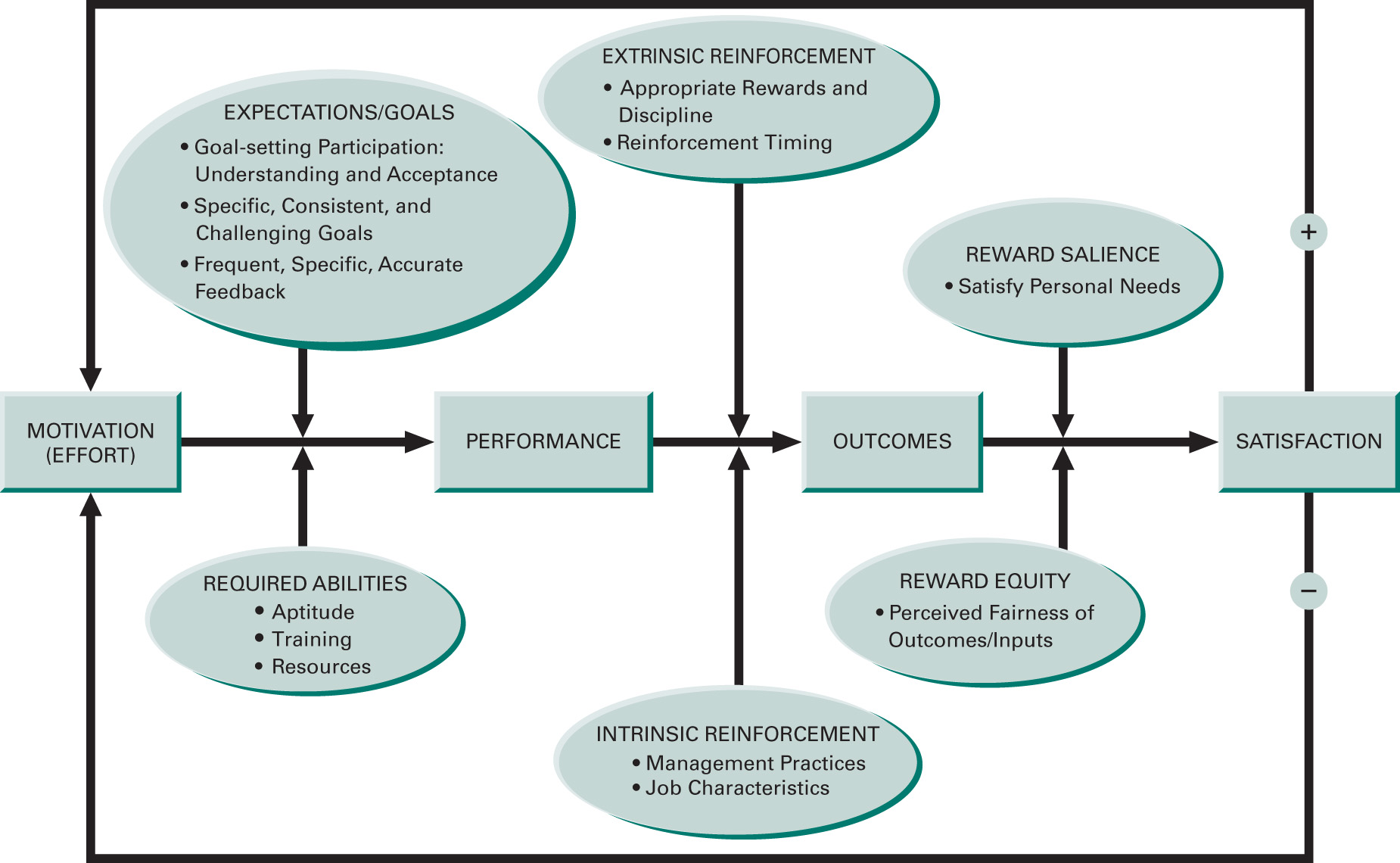
EXTRINSIC REINFORCEMENT - Appropriate Rewards and Discipline 0 Reinforcement Timing EXPECTATIONS/GOALS - Goalsetting Participation: Understanding and Acceptance 0 Specific, Consistent, and Challenging Goals + - Frequent, Specific, Accurate REWARD SALIENCE Feedback ' Satisfy Personal Needs MOTIVATION (EFFORT) PERFORMANCE OUTCOMES SATISFACTION REWARD EQUITY 0 Perceived Fairness of Outcomes/Inputs REQUIRED ABILITIES Aptitude 0 Training - Resources INTRINSIC REINFORCEMENT - Management Practices 0 Job Characteristics
Step by Step Solution
There are 3 Steps involved in it

Get step-by-step solutions from verified subject matter experts