







Question: After you have reviewed the E-R model, create a relational database design for the model. 1. For each entity in the E-R model, specify a
After you have reviewed the E-R model, create a relational database design for the model.
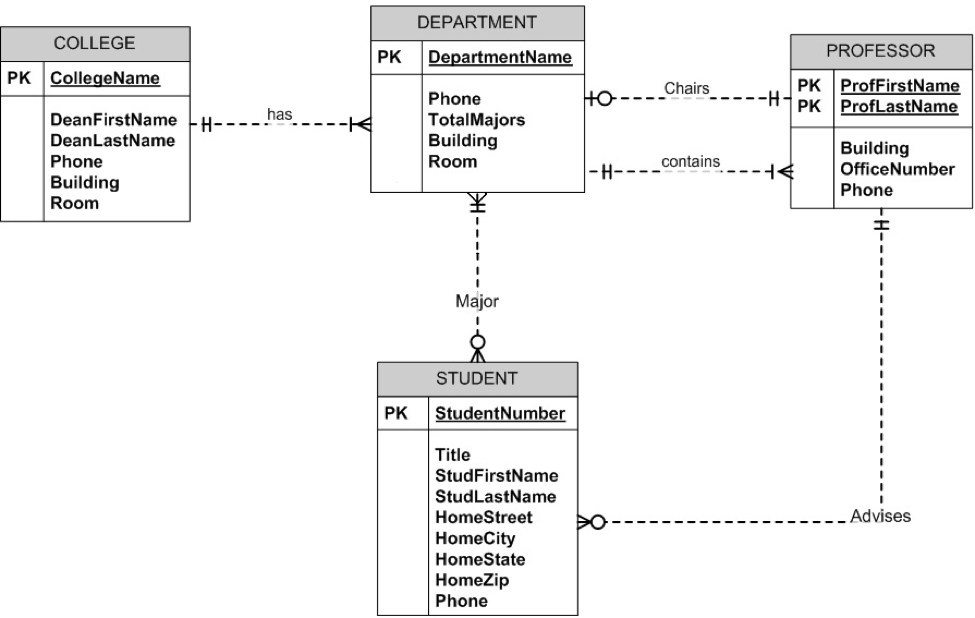
1. For each entity in the E-R model, specify a table structure, determine the data types and additional column properties, identify primary keys and foreign keys, and verify normalization on the resulting tables. Refer to the metadata table of Figure 5-26 on page 312, Chapter 5 in the textbook as a guide for format to document detailed column properties.
| Column Name | Data Type | Key | Required | Default Value | Remarks |
|
| |||||
|
| |||||
|
|
| ||||
|
|
|
|
|
2. Document referential integrity constraint enforcement actions and any business rules that you think are important. Use the provided RI table template below to fill in as appropriate (similar to part of your team project D3 requirements). You can also refer to Figure 5-29 on page 317, Chapter 5 in the textbook for an example.
Note: Use the following referential integrity table template for question 2 of the assignment.
| Relationship | Referential Integrity Constraint | Cascading Behavior | ||
| PARENT | CHILD |
| ON UPDATE | ON DELETE |
|
| ||||
|
| ||||
|
| ||||
|
| ||||
|
| ||||
|
|
| |||
|
| ||||
|
|
|
| ||
DEPARTMENT PROFESSOR COLLEGE PK DepartmentName Chairs----H1PK PK ProfFirstName PK ProfLastName PK CollegeName Phone TotalMajors Building Room has DeanFirstName LH DeanLastName Phone Building Room Building OfficeNumber Phone contains Major STUDENT PK StudentNumber Title StudFirstName StudLastName HomeStreet HomeCity HomeState HomeZip Phone Advises
Step by Step Solution
There are 3 Steps involved in it

Get step-by-step solutions from verified subject matter experts
 Study Help