



Question: Logical and Physical Modeling Given the E-R diagram and sets of attributes for each entity, the next step is to convert the E-R model into
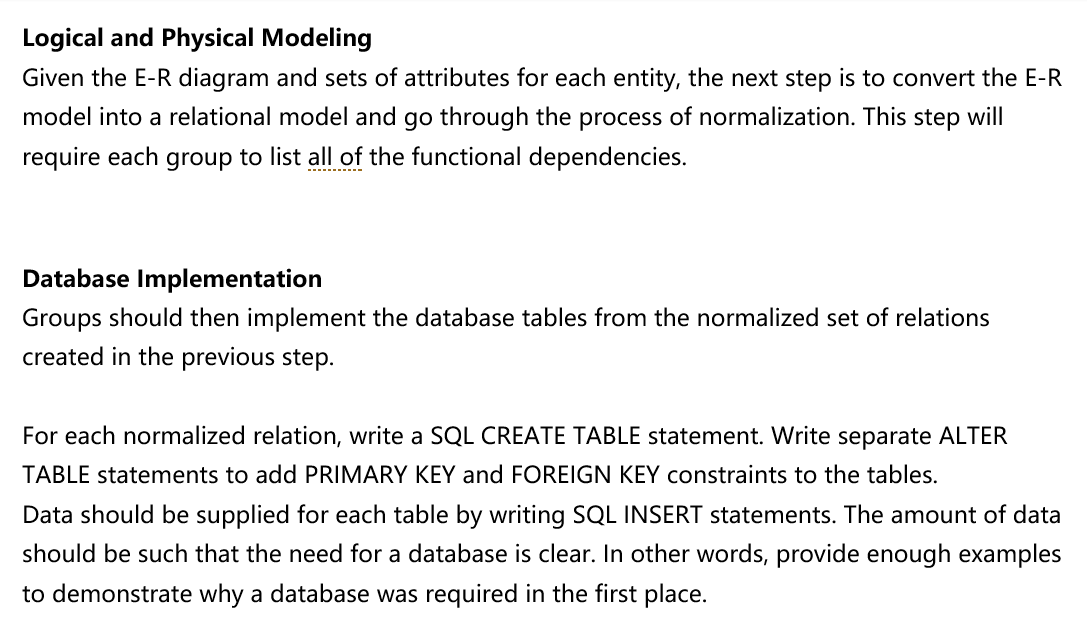
Logical and Physical Modeling Given the E-R diagram and sets of attributes for each entity, the next step is to convert the E-R model into a relational model and go through the process of normalization. This step will require each group to list all of the functional dependencies. Database Implementation Groups should then implement the database tables from the normalized set of relations created in the previous step. For each normalized relation, write a SQL CREATE TABLE statement. Write separate ALTER TABLE statements to add PRIMARY KEY and FOREIGN KEY constraints to the tables. Data should be supplied for each table by writing SQL INSERT statements. The amount of data should be such that the need for a database is clear. In other words, provide enough examples to demonstrate why a database was required in the first place. Logical and Physical Modeling Given the E-R diagram and sets of attributes for each entity, the next step is to convert the E-R model into a relational model and go through the process of normalization. This step will require each group to list all of the functional dependencies. Database Implementation Groups should then implement the database tables from the normalized set of relations created in the previous step. For each normalized relation, write a SQL CREATE TABLE statement. Write separate ALTER TABLE statements to add PRIMARY KEY and FOREIGN KEY constraints to the tables. Data should be supplied for each table by writing SQL INSERT statements. The amount of data should be such that the need for a database is clear. In other words, provide enough examples to demonstrate why a database was required in the first place
Step by Step Solution
There are 3 Steps involved in it

Get step-by-step solutions from verified subject matter experts