







Question: All surfaces, however flat and smooth they appear, are really very rough on a microscopic level. Thus, two surfaces in contact are really in contact
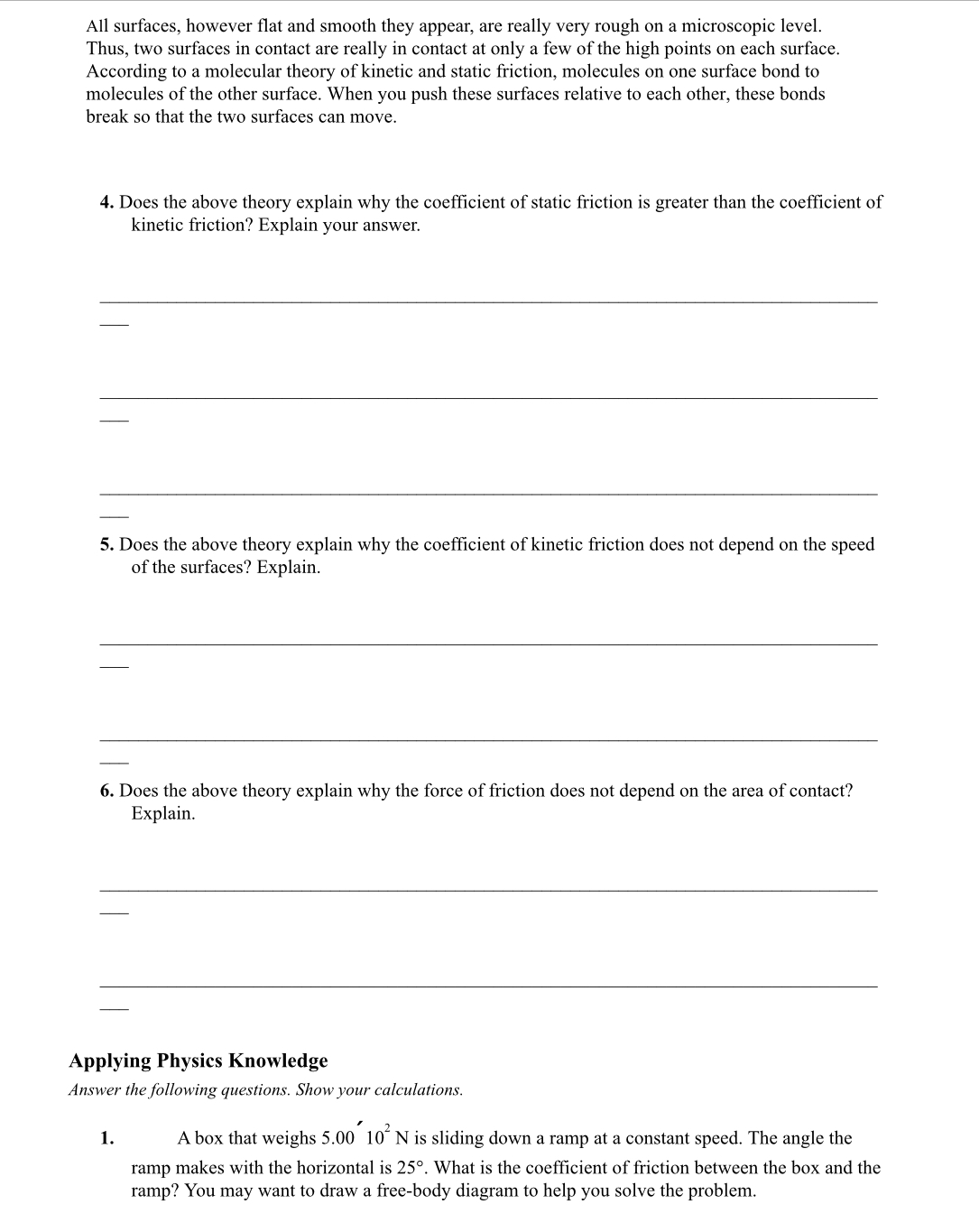
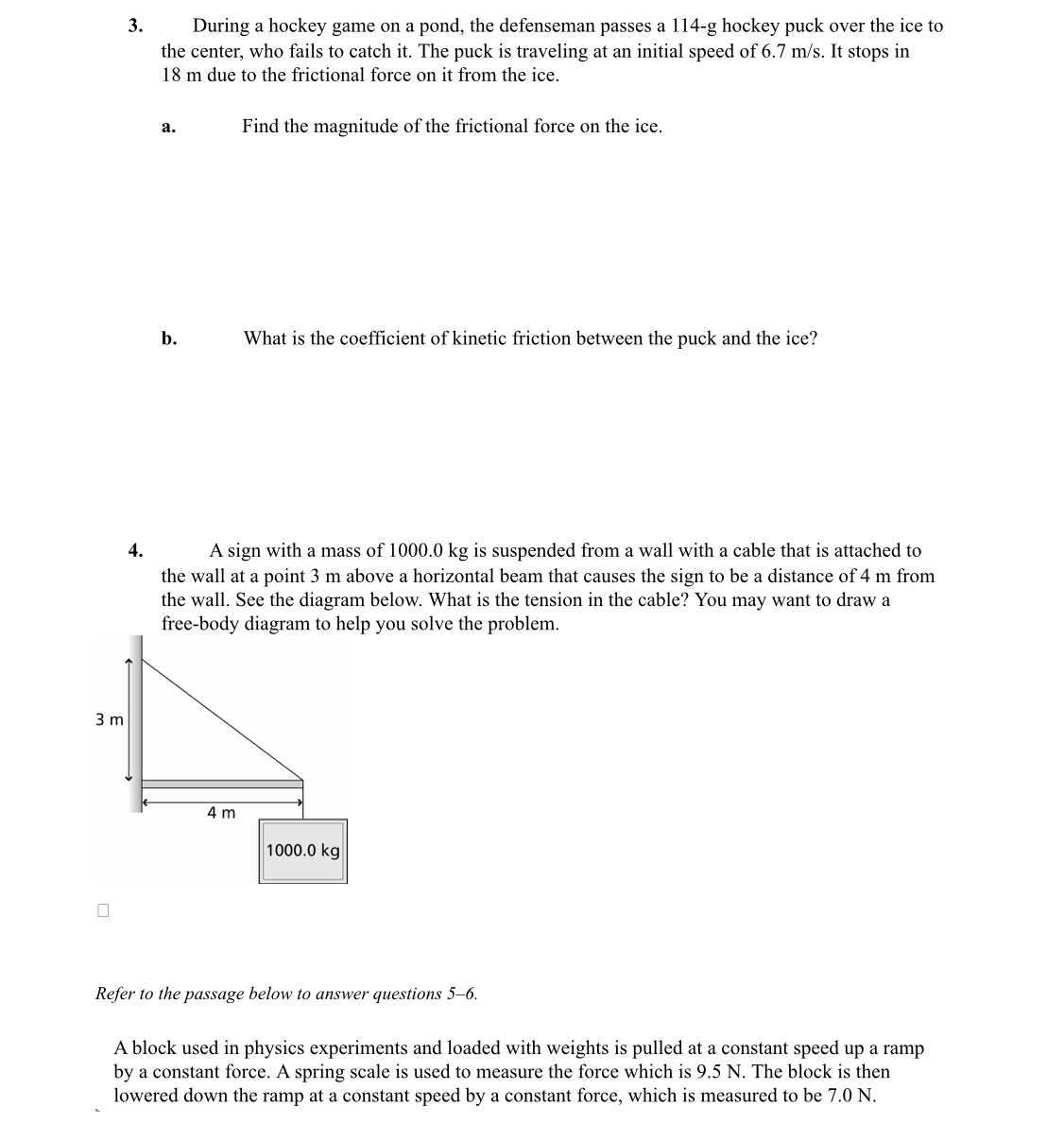
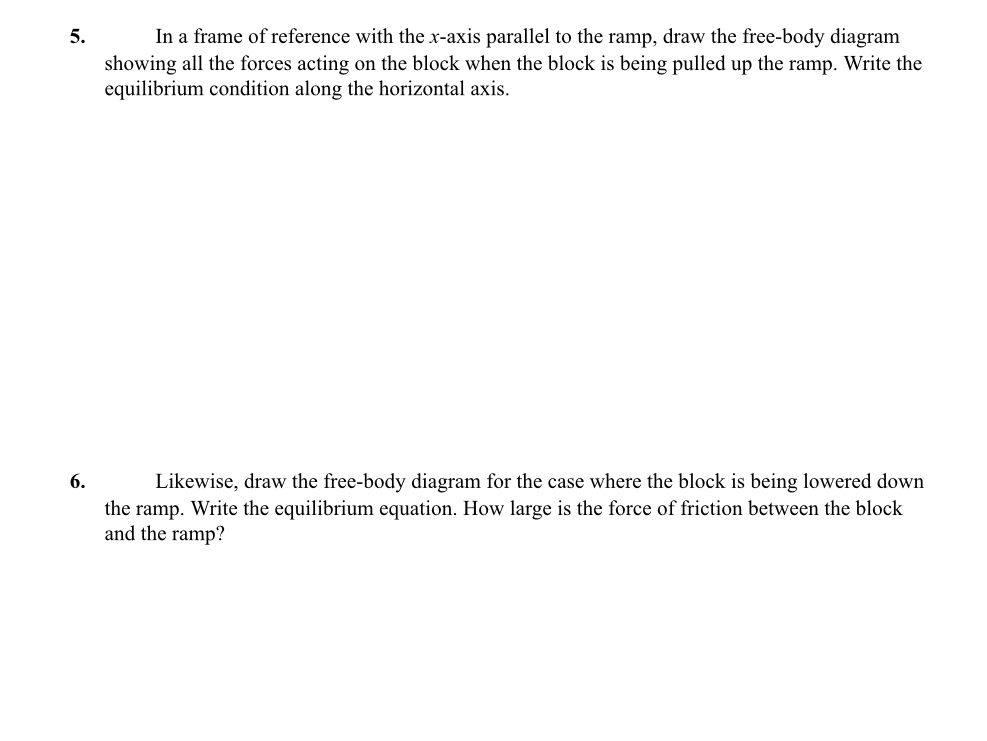
All surfaces, however flat and smooth they appear, are really very rough on a microscopic level. Thus, two surfaces in contact are really in contact at only a few of the high points on each surface. According to a molecular theory of kinetic and static friction, molecules on one surface bond to molecules of the other surface. When you push these surfaces relative to each other, these bonds break so that the two surfaces can move. 4. Does the above theory explain why the coefficient of static friction is greater than the coefficient of kinetic friction? Explain your answer. 5. Does the above theory explain why the coefficient of kinetic friction does not depend on the speed of the surfaces? Explain. 6. Does the above theory explain why the force of friction does not depend on the area of contact? Explain. Applying Physics Knowledge Answer the following questions. Show your calculations. 1. A box that weighs 5.00 10" N is sliding down a ramp at a constant speed. The angle the ramp makes with the horizontal is 25. What is the coefficient of friction between the box and the ramp? You may want to draw a free-body diagram to help you solve the problem.3. During a hockey game on a pond, the defenseman passes a l l4-g hockey puck over the ice to the center, who fails to catch it. The puck is traveling at an initial speed of 6.? mfs. It stops in 18 In due to the frictional force on it from the ice. a. Find the magnitude of the frictional force on the ice. I]. What is the coefcient of kinetic friction between the puck and the ice? 4. A sign with a mass of 1000.0 kg is suspended from a wall with a cable that is attached to the wall at a point 3 m above a horizontal beam that causes the sign to be a distance of 4 m from the wall. See the diagram below. What is the tension in the cable'il You may want to draw a freebody diagram to help you solve the problem. 3m 1000.0 kg Refer to the passage below to answer questions 56. A block used in physics experiments and loaded with weights is pulled at a constant speed up a ramp by a constant force. A spring scale is used to measure the force which is 9.5 N. The block is then lowered down the ramp at a constant speed by a constant force, which is measured to be 10 N. p. 6. In a frame of reference with the x-axis parallel to the ramp, draw the free-body diagram showing all the forces acting on the block when the block is being pulled up the ramp. Write the equilibrium condition along the horizontal axis. Likewise, draw the free-body diagram for the case where the block is being lowered down the ramp. Write the equilibrium equation. How large is the force of friction between the block and the ramp
Step by Step Solution
There are 3 Steps involved in it

Get step-by-step solutions from verified subject matter experts
 Study Help