







Question: Amortize discount by interest method method. a . Journalize the entries to record the following: 1 . Sale of the bonds. Round to the nearest
Amortize discount by interest method method.
a Journalize the entries to record the following:
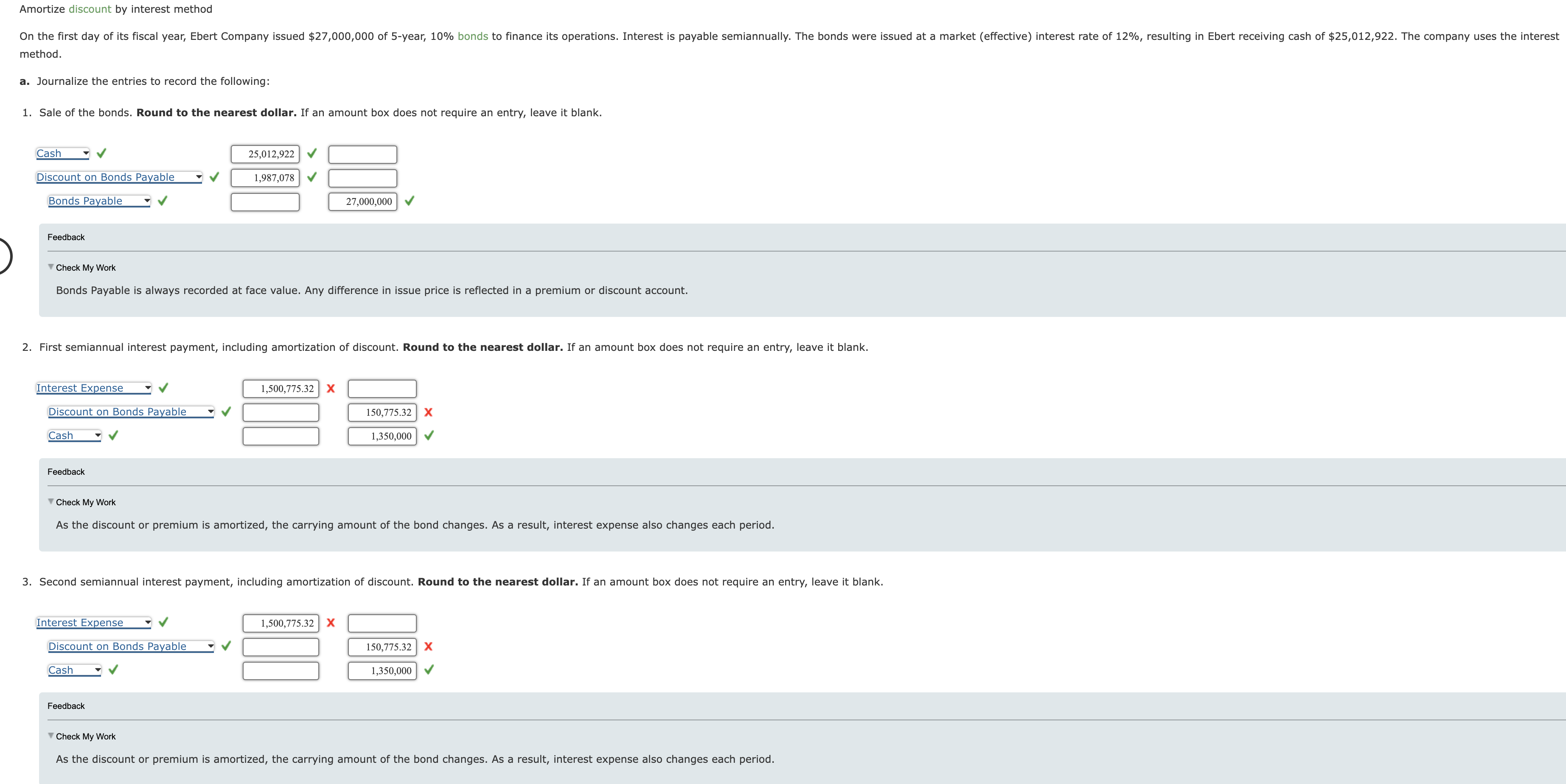
Sale of the bonds. Round to the nearest dollar. If an amount box does not require an entry, leave it blank.
checkmark
Feedback
Check My Work
Bonds Payable is always recorded at face value. Any difference in issue price is reflected in a premium or discount account.
First semiannual interest payment, including amortization of discount. Round to the nearest dollar. If an amount box does not require an entry, leave it blank.
Feedback
checkmark Check My Work
As the discount or premium is amortized, the carrying amount of the bond changes. As a result, interest expense also changes each period.
Second semiannual interest payment, including amortization of discount. Round to the nearest dollar. If an amount box does not require an entry, leave it blank.
As the discount or premium is amortized, the carrying amount of the bond changes. As a result, interest expense also changes each period. Second semiannual interest payment, including amortization of discount. Round to the nearest dollar. If an amount box does not require an entry, leave it blank.
Feedback
checkmark Check My Work
As the discount or premium is amortized, the carrying amount of the bond changes. As a result, interest expense also changes each period.
b Compute the amount of the bond interest expense for the first year. Round to the nearest dollar.
Annual interest paid
Discount amortized
Interest expense for first year
Feedback
checkmark Check My Work
To find the interest expense either add any discount amortized or subtract any premium amortized to cash paid to the bondholders.
c Explain why the company was able to issue the bonds for only $ rather than for the face amount of $
The bonds sell for less than their face amount because the market rate of interest is
the contract rate of interest. Investors
willing to pay the full face amount for bonds that pay a lower contract rate of interest than the rate they could earn on similar bonds market rate
Feedback
checkmark Check My Work
Bonds will be issued for either a higher or lower amount than the face value when the market and contract rates of interest are different.
Step by Step Solution
There are 3 Steps involved in it
1 Expert Approved Answer
Step: 1 Unlock

Question Has Been Solved by an Expert!
Get step-by-step solutions from verified subject matter experts
Step: 2 Unlock
Step: 3 Unlock
 Study Help