







Question: An engineer is working on determining the speed limit for a curved stretch of road. She knows the coefficient of friction between the wheels
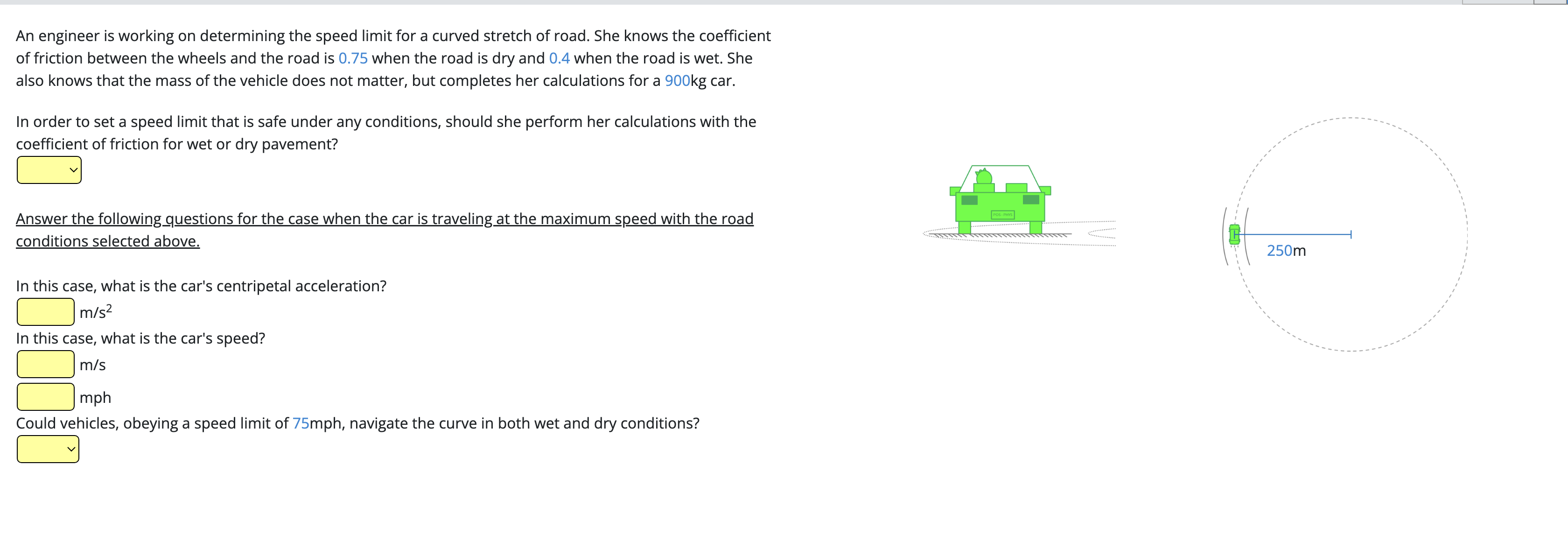
An engineer is working on determining the speed limit for a curved stretch of road. She knows the coefficient of friction between the wheels and the road is 0.75 when the road is dry and 0.4 when the road is wet. She also knows that the mass of the vehicle does not matter, but completes her calculations for a 900kg car. In order to set a speed limit that is safe under any conditions, should she perform her calculations with the coefficient of friction for wet or dry pavement? Answer the following questions for the case when the car is traveling at the maximum speed with the road conditions selected above. In this case, what is the car's centripetal acceleration? m/s In this case, what is the car's speed? m/s mph Could vehicles, obeying a speed limit of 75mph, navigate the curve in both wet and dry conditions? POS-PHYS 250m
Step by Step Solution
There are 3 Steps involved in it
To determine which coefficient of friction to use for setting a safe speed limit we need to consider the worstcase scenario which is when the road is wet and the coefficient of friction is 04 Using th... View full answer

Get step-by-step solutions from verified subject matter experts
 Study Help