







Question: An intersection has a 3 - phase signal with the movements allowed in each phase and corresponding analysis and saturation flow rates shown in the
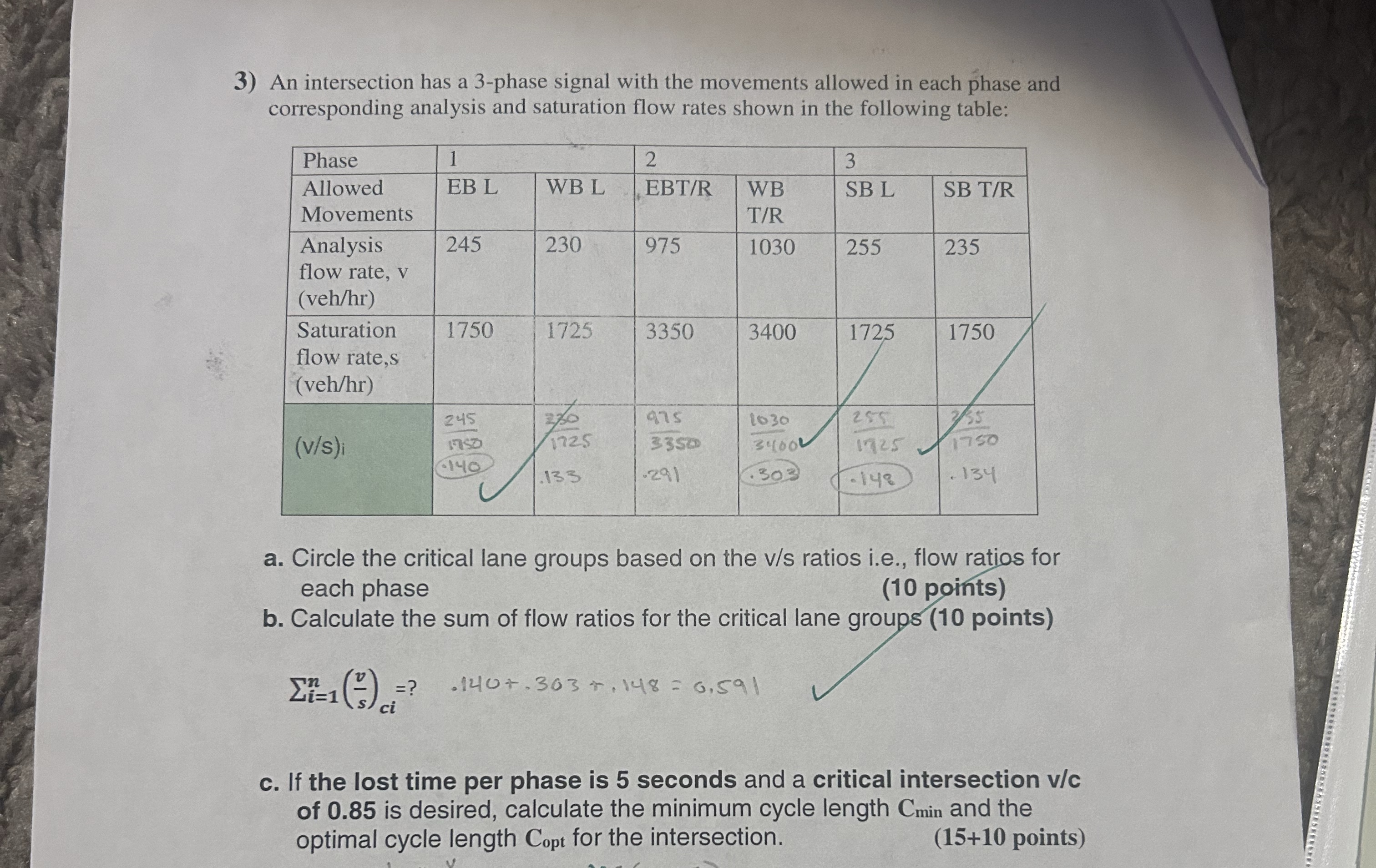
An intersection has a phase signal with the movements allowed in each phase and corresponding analysis and saturation flow rates shown in the following table:
tablePhasetableAllowedMovementsEB LWB LEBTRtableWBTRSB LSB TRtableAnalysisflow rate, vvehhrtableSaturationflow rate,svehhr
a Circle the critical lane groups based on the vs ratios ie flow ratios for each phase
points
b Calculate the sum of flow ratios for the critical lane groups points
c If the lost time per phase is seconds and a critical intersection vc of is desired, calculate the minimum cycle length and the optimal cycle length Copt for the intersection.
points
Step by Step Solution
There are 3 Steps involved in it
1 Expert Approved Answer
Step: 1 Unlock

Question Has Been Solved by an Expert!
Get step-by-step solutions from verified subject matter experts
Step: 2 Unlock
Step: 3 Unlock
 Study Help