







Question: An object moves along a coordinate line with acceleration 51(1) 2 (t + 3)3 units per second per second. The initial velocity is 6 units
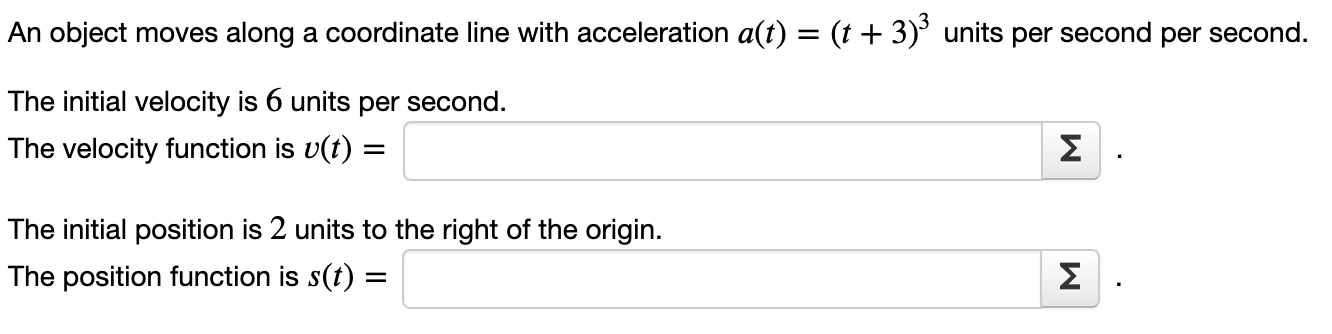
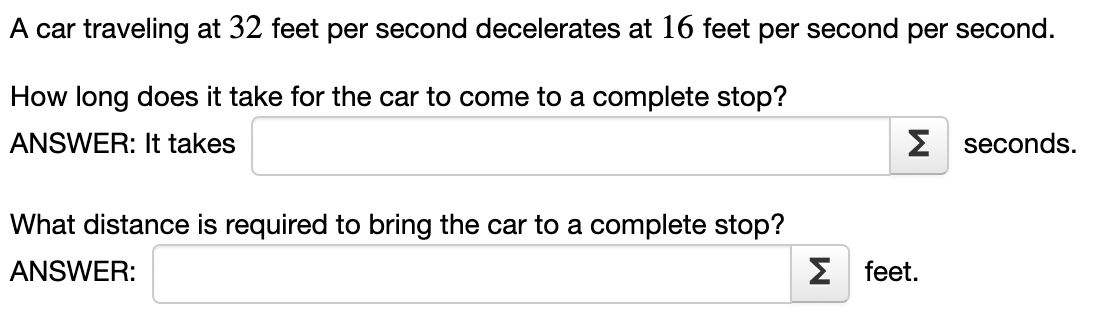


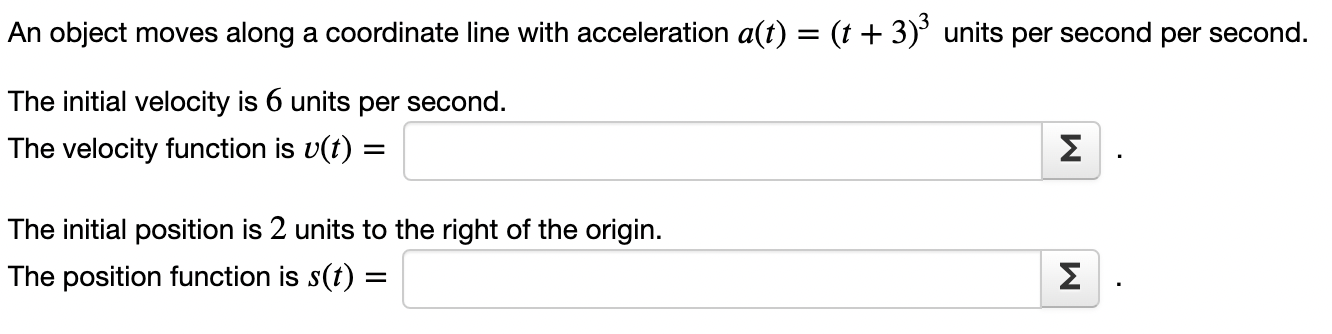
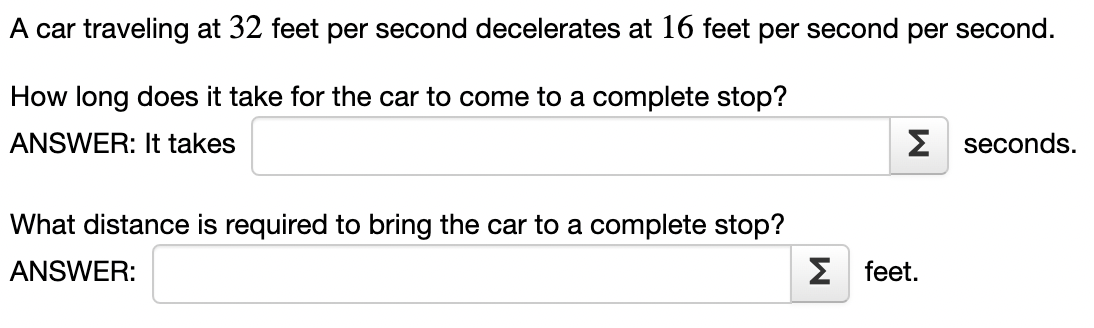


An object moves along a coordinate line with acceleration 51(1) 2 (t + 3)3 units per second per second. The initial velocity is 6 units per second. The velocity function is v(t) = Z The initial position is 2 units to the right of the origin. The position function is 3(3) = 2 A car traveling at 32 feet per second decelerates at 16 feet per second per second. How long does it take for the car to come to a compiete stop? ANSWER: It takes 2 seconds. What distance is required to bring the car to a complete stop? ANSWER: 2 feet. Solve the following initial value problem . By this we mean that you should find y = y(x) which satises both equations below. (See the linked example.) d 4 d: = F +5x9, y(1) = 14 ANSWER: y(x) = )2 Solve the following initial value problem. By this we mean that you should find r = r(t) which satisfies both equations below. (See the linked example.) % = 3cos(t), r() =19. ANSWER: r(t) = 2
Step by Step Solution
There are 3 Steps involved in it

Get step-by-step solutions from verified subject matter experts
 Study Help