



Question: An ordinary share is expected to pay its first dividend of $3 in 2 years. The dividend will then be paid each year-end at a
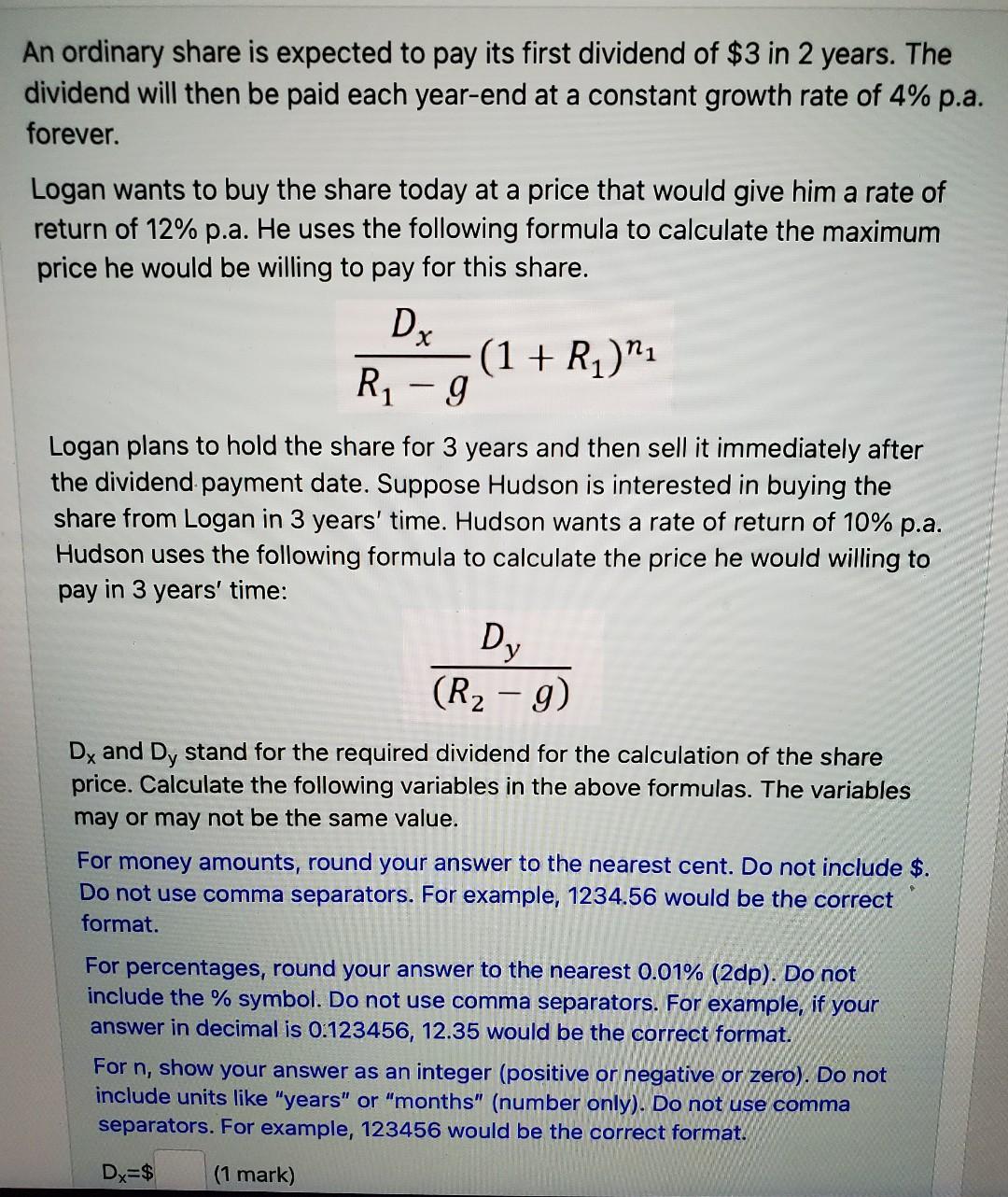
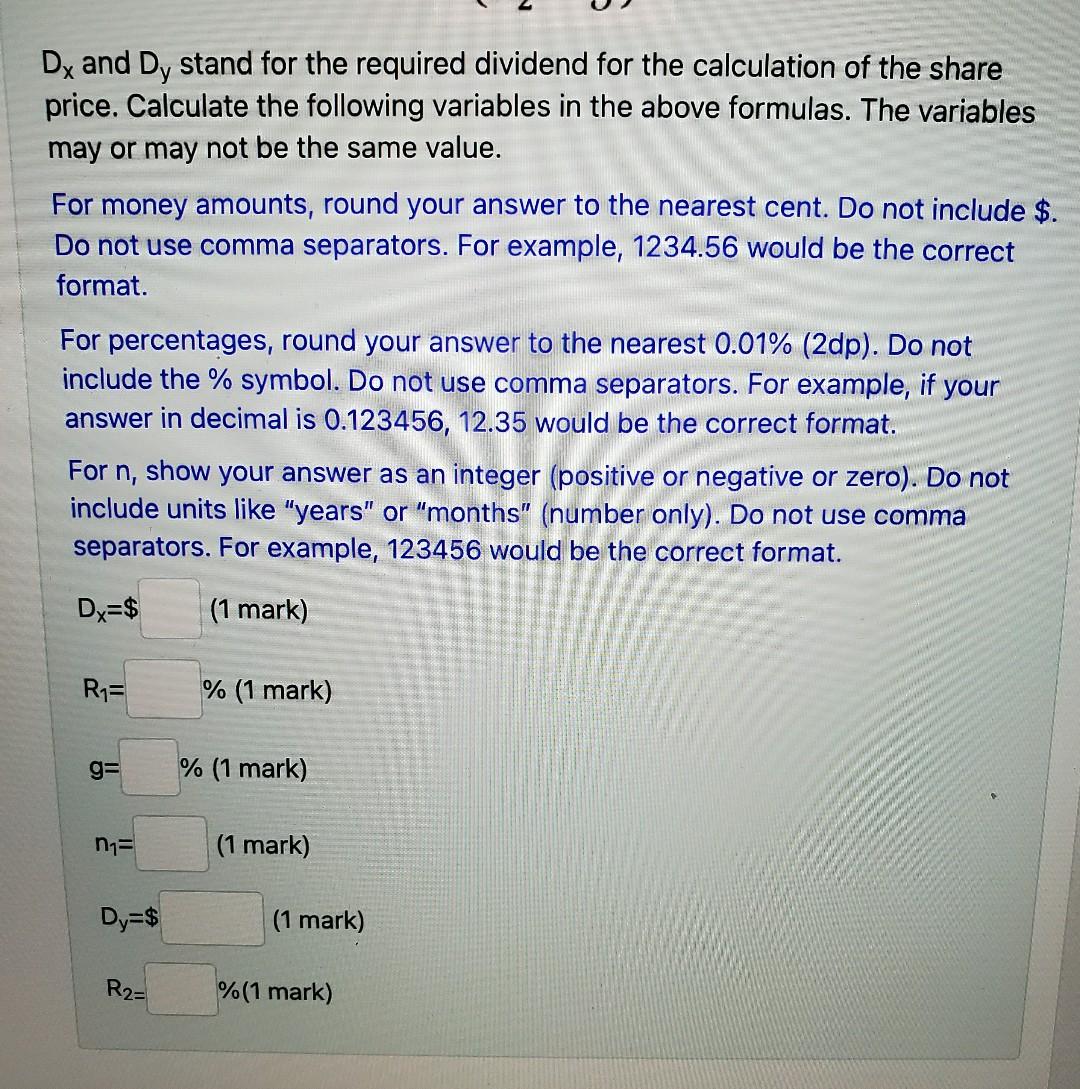
An ordinary share is expected to pay its first dividend of $3 in 2 years. The dividend will then be paid each year-end at a constant growth rate of 4% p.a. forever. Logan wants to buy the share today at a price that would give him a rate of return of 12% p.a. He uses the following formula to calculate the maximum price he would be willing to pay for this share. Dx (1 + R)" R1 - 9 Logan plans to hold the share for 3 years and then sell it immediately after the dividend payment date. Suppose Hudson is interested in buying the share from Logan in 3 years' time. Hudson wants a rate of return of 10% p.a. Hudson uses the following formula to calculate the price he would willing to pay in 3 years' time: Dy (R2 - 9 Dx and Dy stand for the required dividend for the calculation of the share price. Calculate the following variables in the above formulas. The variables may or may not be the same value. For money amounts, round your answer to the nearest cent. Do not include $. Do not use comma separators. For example, 1234.56 would be the correct format. For percentages, round your answer to the nearest 0.01% (2dp). Do not include the % symbol. Do not use comma separators. For example, if your answer in decimal is 0.123456, 12.35 would be the correct format. For n, show your answer as an integer (positive or negative or zero). Do not include units like "years" or "months" (number only). Do not use comma separators. For example, 123456 would be the correct format. Dx=$ (1 mark) Dx and Dy stand for the required dividend for the calculation of the share price. Calculate the following variables in the above formulas. The variables may or may not be the same value. For money amounts, round your answer to the nearest cent. Do not include $. Do not use comma separators. For example, 1234.56 would be the correct format. For percentages, round your answer to the nearest 0.01% (2dp). Do not include the % symbol. Do not use comma separators. For example, if your answer in decimal is 0.123456, 12.35 would be the correct format. For n, show your answer as an integer (positive or negative or zero). Do not include units like "years" or "months" (number only). Do not use comma separators. For example, 123456 would be the correct format. Dx=$ (1 mark) R15 % (1 mark) g= % (1 mark) n1= (1 mark) Dy=$ (1 mark) R2= %(1 mark)
Step by Step Solution
There are 3 Steps involved in it

Get step-by-step solutions from verified subject matter experts