



Question: Analysis, formulation, and implementation are the pillars of research and knowledge about strategic management. This activity is important because a successful strategy results when managers
Analysis, formulation, and implementation are the pillars of research and knowledge about strategic management. This activity is important because a successful strategy results when managers perform these actions interdependently. For example, effective managers do not formulate strategy without thinking about how to implement it. Likewise, while implementing strategy, they are simultaneously analyzing the need to adjust to changing circumstances.
In order to craft and execute a strategy that enhances a firms chances of achieving superior performance, managers must focus on specific questions for each broad task. The goal of this exercise is to identify those questions. Read each question below and then categorize it according to each broad task. (Analysis, Formulation, Implementation)
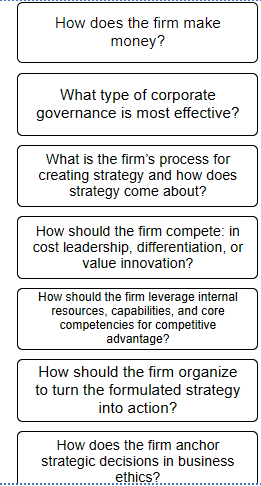
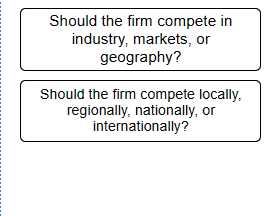
How does the firm make money? What type of corporate governance is most effective? What is the firm's process for creating strategy and how does strategy come about? How should the firm compete: in cost leadership, differentiation, or value innovation? How should the firm leverage internal resources, capabilities, and core competencies for competitive advantage? How should the firm organize to turn the formulated strategy into action? How does the firm anchor strategic decisions in business ethics? Should the firm compete in industry, markets, or geography? Should the firm compete locally, regionally, nationally, or internationally
Step by Step Solution
There are 3 Steps involved in it

Get step-by-step solutions from verified subject matter experts