







Question: * * * analyze this case and each leader using the behavioral model of leadership , and alsoplace each in the black and mouton managerial
analyze this case and each leader using the behavioral model of leadership and alsoplace each in the black and mouton managerial Grid DO NOT USE AI COMPLETELYFocuses on what leaders actually do and how they do it
Consideration: Extent to which the leader has
relationships with subordinates that are characterized by
mutual trust, twoway communication, respect for
employees ideas, and empathy
Initiating structure: Extent to which a leader defines and
prescribes the roles of subordinates in order to set and
accomplish goals
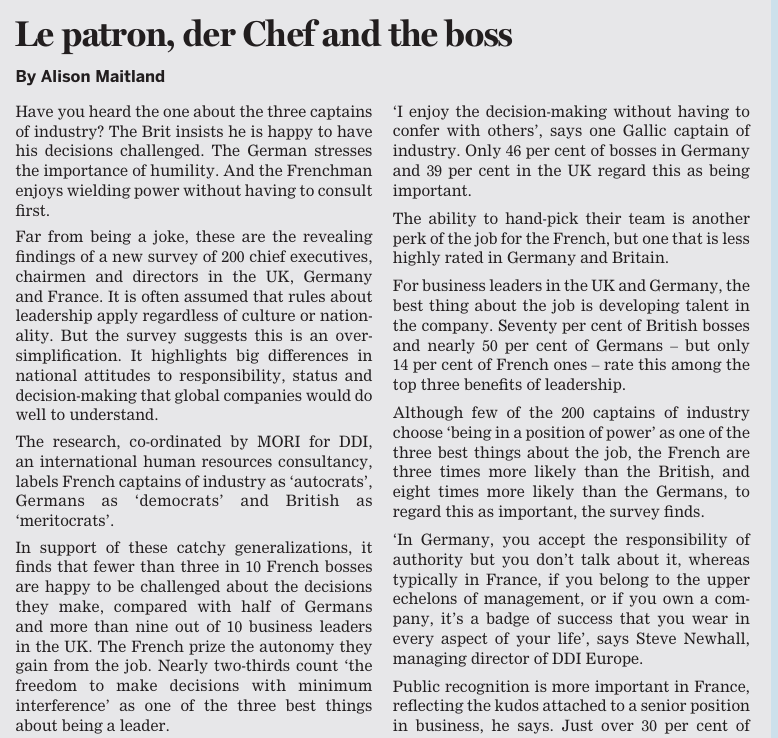
French chief executives and directors rate this as one of the three best things about being a leader, compared with per cent in Germany and just two per cent in the UK Is it possible that these diff erences simply refl ect greater honesty from the French about enjoying the exercise of power, while the British and Germans consider this would be politically incorrect? Mr Newhall admits it is hard to be sure, but he says the anonymity of the interviews makes it likely these are genuine diff erences. The intention was to get as honest an answer as possible and to probe behind the PR he says. The French are more likely to respond in that way because its something thats acceptable within their cultural norms. We know about the grandes coles system where the elite are prized. In the UKthe establishment is used more as a derogatory than a positive term. He says he is not suggesting that one leadership style is better than another. But executives of international companies need to be like chamele ons, able to adapt to the corporate and national culture in which they are working, while not abandoning their individualism. The danger for any leader is only being able to operate within one of these styles. If you take an autocratic style into a culture that expects a more democratic or meritocratic style, the chances are that you will trip up German leaders stand out in the survey for their social conscience and their concern about the responsibility that goes with power. Nearly half say that one of their top three concerns is having to make tough decisions that aff ect peoples futures compared with only per cent of lead ers in the UK and per cent in France. Sometimes the amount of infl uence I have frightens me says one German boss. I have to be very cautious and thoroughly weigh up the pros and cons of any decision. Another comment: You have to remain humble: personal vanity and overestimating your ability will lead to the downfall of the enterprise. Given such modest responses, it is perhaps para doxical that deference is strongest in Germany, with nearly per cent of business leaders say ing their decisions are likely to go unchallenged. Four in German bosses cite fear of failure as a top concern, compared with just over two in in Britain. Mr Newhall believes this refl ects the lingering stigma of failure in Germany, which contrasts with the AngloAmerican preference to see failure as an opportunity to learn and move on Leaders in the UK appear the most upbeat, perhaps because of the more stable economic environment, the research fi nds What keeps them awake at night are external pressures, such as new legislation and corporate governance issues. For French leaders, warring egos in the manage ment team are a big concern. While this may simply refl ect Gallic style, the DDI report sug gests that French chief executives fondness for independent decisionmaking may lead to friction. Despite the many diff erences, some worries and beliefs are shared across all three countries. Lack of personal time is a common concern. The importance of the team is widely appreciated. Again and again, in private onetoone interviews, whether facetoface or on the phone, captains of industry stated their focus to be on responsibility rather than power, and on their teams success rather than their own says Mr Newhall. This emphasis on collaboration is epitomized by a German boss who says: I see myself as a ser vice provider in a company run as a democracy, where everyone pulls together to achieve the strategies we have worked out together. A French respondent concurs: We are working in an ever more complex environment, and working effi ciently within a team is the best way. A fi nal common theme is that the risks increase the higher you get, and that nothing can fully prepare you for the challenge of running a company. Enjoy it while it lasts. As a German respondent puts it: It is a long hard climb to the top of the mountain. There is a nice view, but it is quite windy.
Step by Step Solution
There are 3 Steps involved in it
1 Expert Approved Answer
Step: 1 Unlock

Question Has Been Solved by an Expert!
Get step-by-step solutions from verified subject matter experts
Step: 2 Unlock
Step: 3 Unlock
 Study Help