







Question: Answer by True OR False * True False The count() function returns the number of columns in a relation O O If a relation is
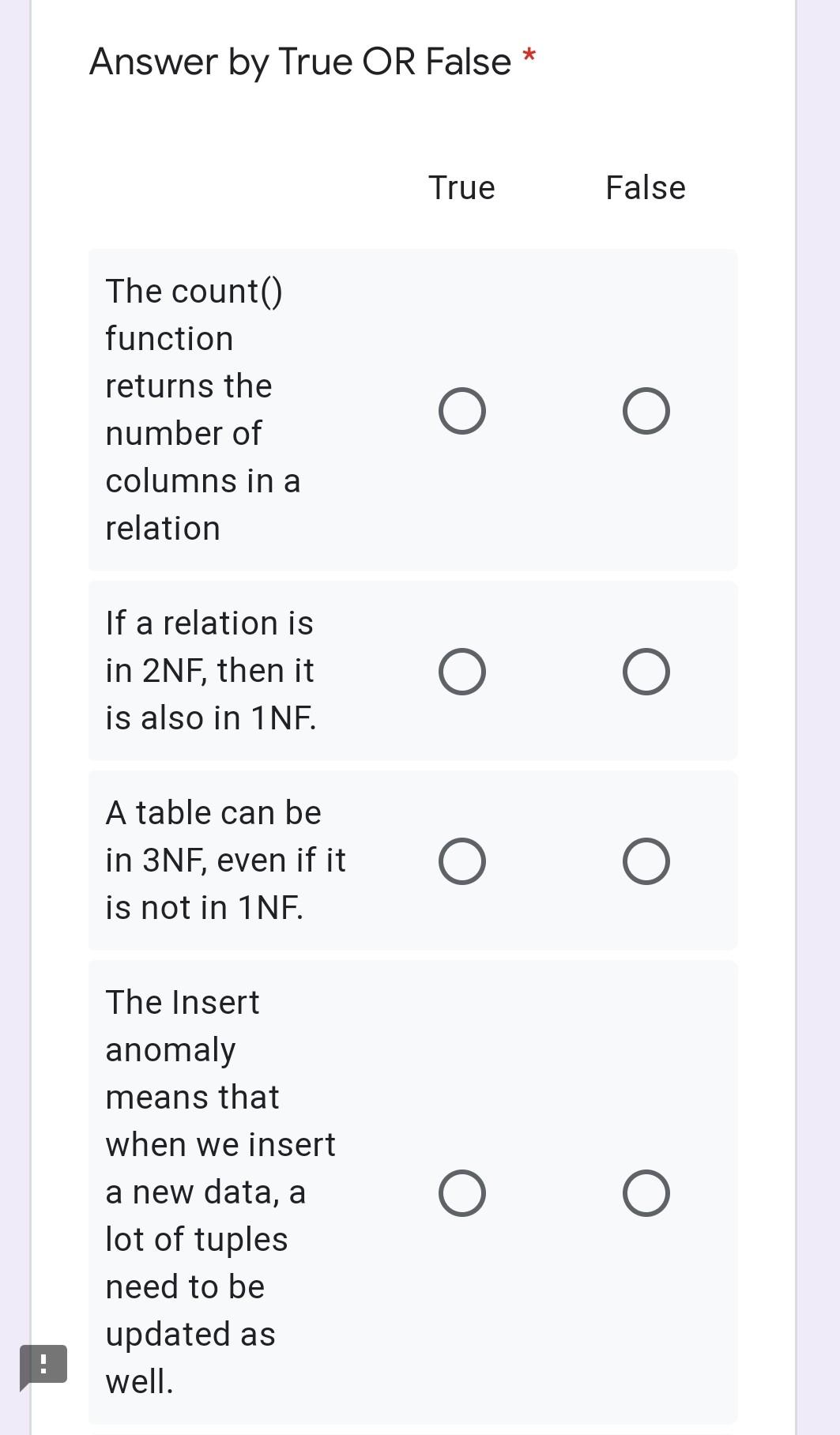
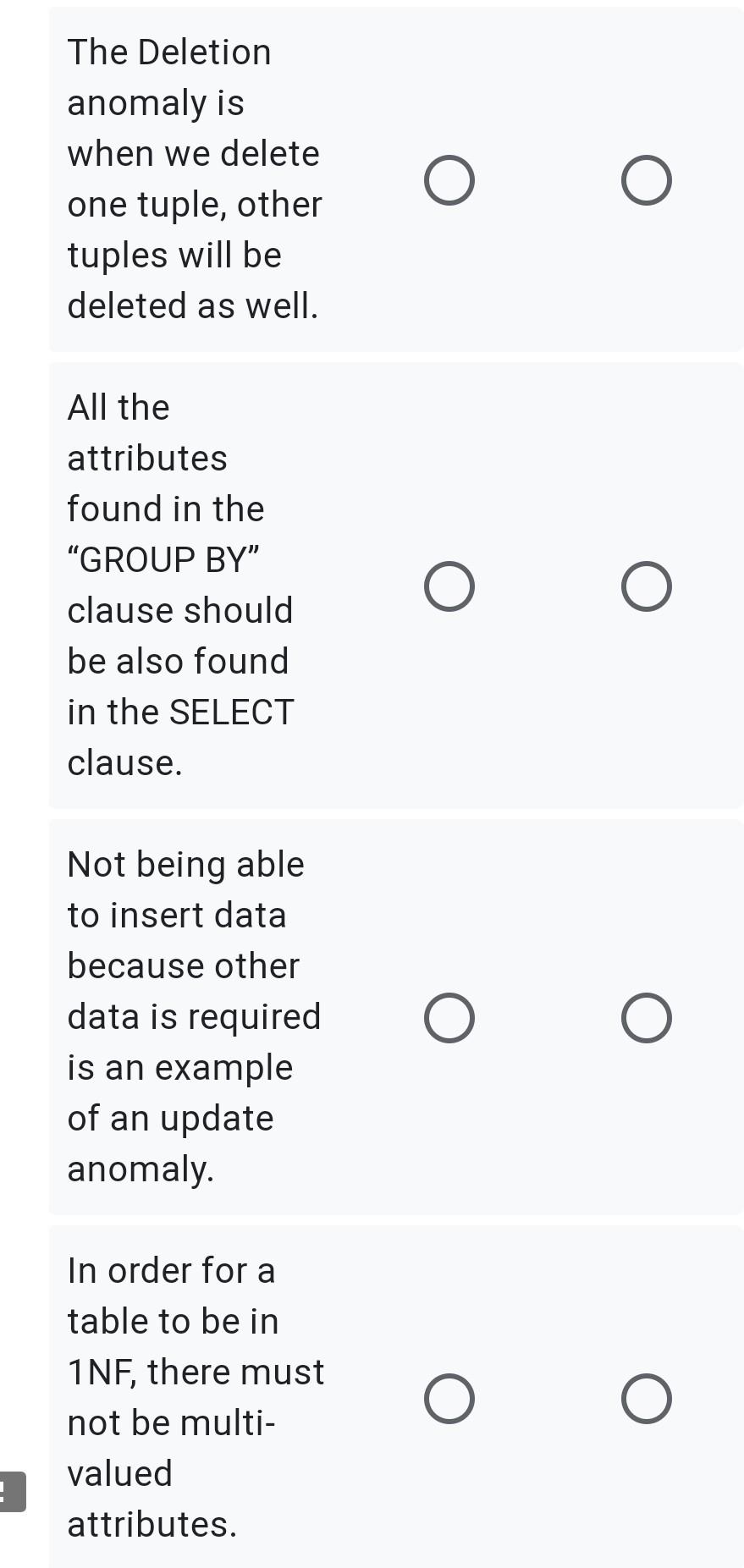
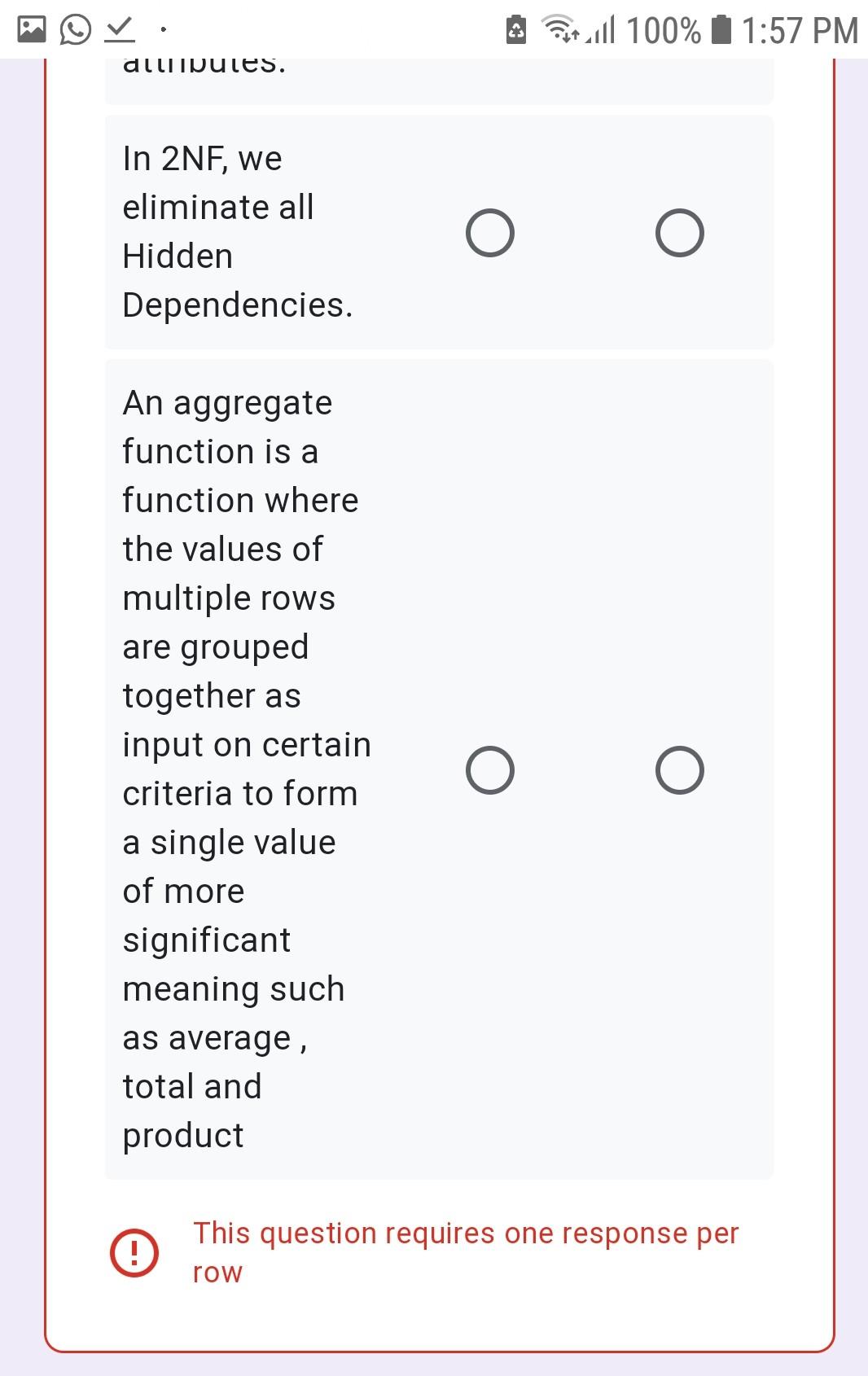
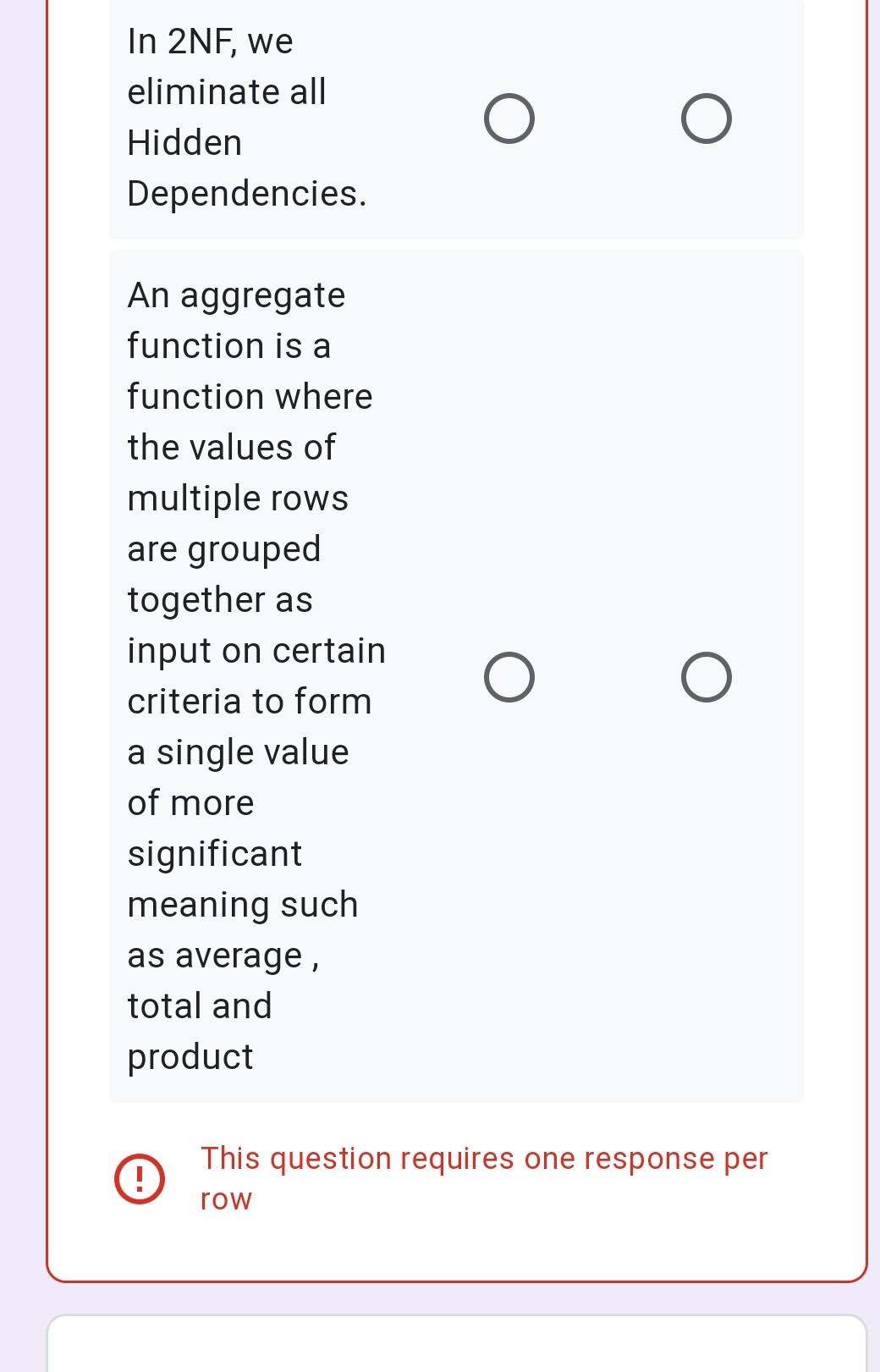
Answer by True OR False * True False The count() function returns the number of columns in a relation O O If a relation is in 2NF, then it is also in 1NF. O A table can be in 3NF, even if it is not in 1NF. The Insert anomaly means that when we insert a new data, a lot of tuples need to be updated as well. O ! The Deletion anomaly is when we delete one tuple, other tuples will be deleted as well. O All the attributes found in the "GROUP BY" clause should be also found in the SELECT clause. O Not being able to insert data because other data is required is an example of an update anomaly. O O In order for a table to be in 1 NF, there must not be multi- valued attributes. O Situal 100% 1:57 PM dllvules. In 2NF, we eliminate all Hidden Dependencies. O O An aggregate function is a function where the values of multiple rows are grouped together as input on certain criteria to form a single value of more significant meaning such as average, total and product O O ! This question requires one response per row In 2NF, we eliminate all Hidden Dependencies. O O An aggregate function is a function where the values of multiple rows are grouped together as input on certain criteria to form a single value of more significant meaning such as average, total and product ! This question requires one response per row
Step by Step Solution
There are 3 Steps involved in it

Get step-by-step solutions from verified subject matter experts
 Study Help