



Question: answer question 2-3 Analyze the Situation 12.1 Harry Dolinski was the executive chef at the Regal House Hotel. One of his specialties was a hearty
answer question 2-3
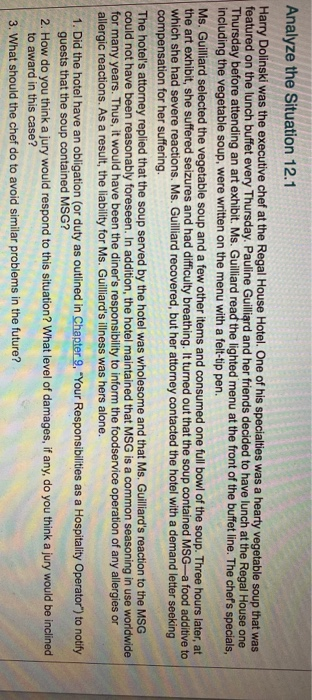
Analyze the Situation 12.1 Harry Dolinski was the executive chef at the Regal House Hotel. One of his specialties was a hearty vegetable soup that was featured on the lunch buffet every Thursday. Pauline Guilliard and her friends decided to have lunch at the Regal House one Thursday before attending an art exhibit. Ms. Guilliard read the lighted menu at the front of the buffet line. The chef's specials, including the vegetable soup, were written on the menu with a felt-tip pen. Ms. Guilliard selected the vegetable soup and a few other items and consumed one full bowl of the soup. Three hours later, at the art exhibit, she suffered seizures and had difficulty breathing. It turned out that the soup contained MSG-a food additive to which she had severe reactions. Ms. Guilliard recovered, but her attorney contacted the hotel with a demand letter seeking compensation for her suffering. The hotel's attorney replied that the soup served by the hotel was wholesome and that Ms. Guilliard's reaction to the MSG could not have been reasonably foreseen. In addition, the hotel maintained that MSG is a common seasoning in use worldwide for many years. Thus, it would have been the diner's responsibility to inform the foodservice operation of any allergies or allergic reactions. As a result, the liability for Ms. Guilliard's illness was hers alone. 1. Did the hotel have an obligation (or duty as outlined in Chapter 9. "Your Responsibilities as a Hospitality Operator") to notify guests that the soup contained MSG? 2. How do you think a jury would respond to this situation? What level of damages, if any, do you think a jury would be inclined to award in this case? 3. What should the chef do to avoid similar problems in the future? Analyze the Situation 12.1 Harry Dolinski was the executive chef at the Regal House Hotel. One of his specialties was a hearty vegetable soup that was featured on the lunch buffet every Thursday. Pauline Guilliard and her friends decided to have lunch at the Regal House one Thursday before attending an art exhibit. Ms. Guilliard read the lighted menu at the front of the buffet line. The chef's specials, including the vegetable soup, were written on the menu with a felt-tip pen. Ms. Guilliard selected the vegetable soup and a few other items and consumed one full bowl of the soup. Three hours later, at the art exhibit, she suffered seizures and had difficulty breathing. It turned out that the soup contained MSG-a food additive to which she had severe reactions. Ms. Guilliard recovered, but her attorney contacted the hotel with a demand letter seeking compensation for her suffering. The hotel's attorney replied that the soup served by the hotel was wholesome and that Ms. Guilliard's reaction to the MSG could not have been reasonably foreseen. In addition, the hotel maintained that MSG is a common seasoning in use worldwide for many years. Thus, it would have been the diner's responsibility to inform the foodservice operation of any allergies or allergic reactions. As a result, the liability for Ms. Guilliard's illness was hers alone. 1. Did the hotel have an obligation (or duty as outlined in Chapter 9. "Your Responsibilities as a Hospitality Operator") to notify guests that the soup contained MSG? 2. How do you think a jury would respond to this situation? What level of damages, if any, do you think a jury would be inclined to award in this case? 3. What should the chef do to avoid similar problems in the future
Step by Step Solution
There are 3 Steps involved in it
1 Expert Approved Answer
Step: 1 Unlock

Question Has Been Solved by an Expert!
Get step-by-step solutions from verified subject matter experts
Step: 2 Unlock
Step: 3 Unlock