







Question: answer question A and B = Homework: HW8 Question 6, P8-23 (simila... Part 1 of 2 HW Score: 20.83%, 125 of 600 points O Points:
answer question A and B
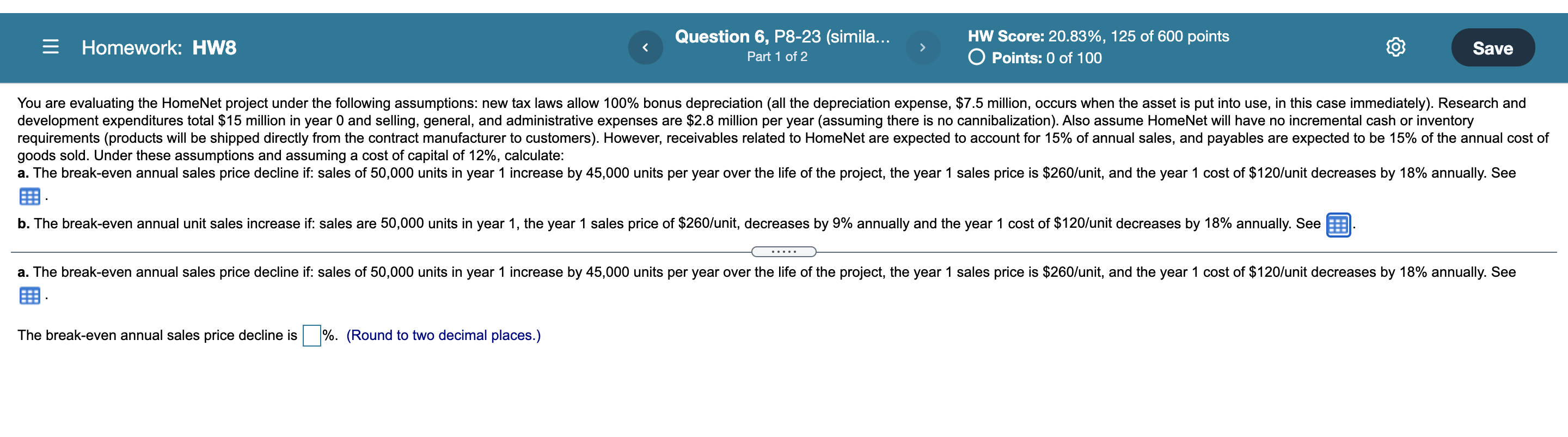
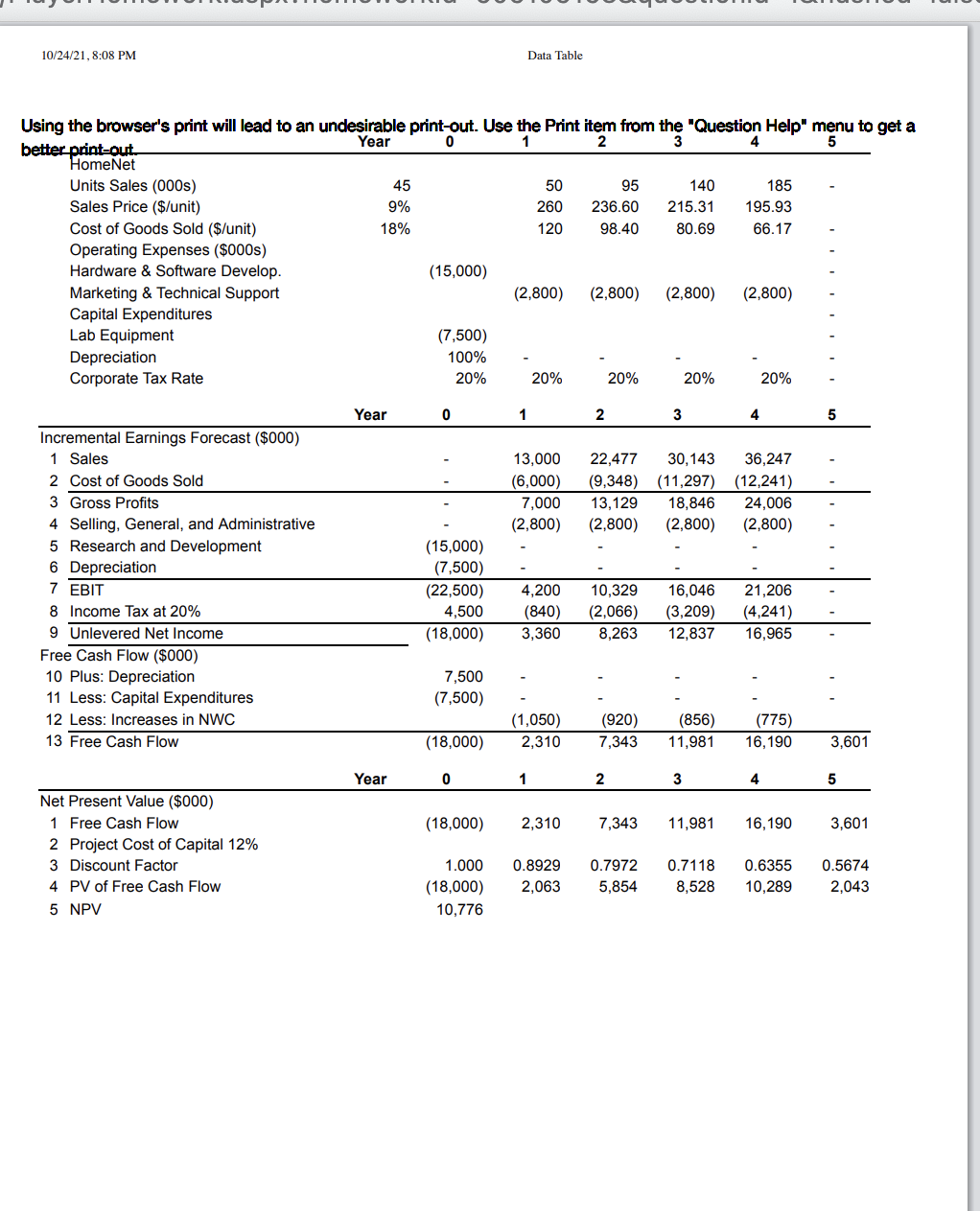
= Homework: HW8 Question 6, P8-23 (simila... Part 1 of 2 HW Score: 20.83%, 125 of 600 points O Points: 0 of 100 Save You are evaluating the HomeNet project under the following assumptions: new tax laws allow 100% bonus depreciation (all the depreciation expense, $7.5 million, occurs when the asset is put into use, in this case immediately). Research and development expenditures total $15 million in year 0 and selling, general, and administrative expenses are $2.8 million per year (assuming there is no cannibalization). Also assume HomeNet will have no incremental cash or inventory requirements (products will be shipped directly from the contract manufacturer to customers). However, receivables related to HomeNet are expected to account for 15% of annual sales, and payables are expected to be 15% of the annual cost of goods sold. Under these assumptions and assuming a cost of capital of 12%, calculate: a. The break-even annual sales price decline if: sales of 50,000 units in year 1 increase by 45,000 units per year over the life of the project, the year 1 sales price is $260/unit, and the year 1 cost of $120/unit decreases by 18% annually. See . b. The break-even annual unit sales increase if: sales are 50,000 units in year 1, the year 1 sales price of $260/unit, decreases by 9% annually and the year 1 cost of $120/unit decreases by 18% annually. See a. The break-even annual sales price decline if: sales of 50,000 units in year 1 increase by 45,000 units per year over the life of the project, the year 1 sales price is $260/unit, and the year 1 cost of $120/unit decreases by 18% annually. See The break-even annual sales price decline is %. (Round to two decimal places.) 10/24/21, 8:08 PM Data Table 4 Using the browser's print will lead to an undesirable print-out. Use the Print item from the "Question Help" menu to get a Year 0 1 2 3 5 better print-out. HomeNet Units Sales (000s) 45 50 95 140 185 Sales Price ($/unit) 9% 260 236.60 215.31 195.93 Cost of Goods Sold ($/unit) 18% 120 98.40 80.69 66.17 Operating Expenses ($000s) Hardware & Software Develop. (15,000) Marketing & Technical Support (2,800) (2,800) (2,800) (2,800) Capital Expenditures Lab Equipment (7,500) Depreciation 100% Corporate Tax Rate 20% 20% 20% 20% 20% Year 0 1 2 3 4 13,000 (6,000) 7,000 (2,800) 22,477 (9,348) 13,129 (2,800) 30,143 (11,297) 18,846 (2,800) 36,247 (12,241) 24,006 (2,800) Incremental Earnings Forecast ($000) 1 Sales 2 Cost of Goods Sold 3 Gross Profits 4 Selling, General, and Administrative 5 Research and Development 6 Depreciation 7 EBIT 8 Income Tax at 20% 9 Unlevered Net Income Free Cash Flow ($000) 10 Plus: Depreciation 11 Less: Capital Expenditures 12 Less: Increases in NWC 13 Free Cash Flow (15,000) (7,500) (22,500) 4,500 (18,000) 4,200 (840) 3,360 10,329 (2,066) 8,263 16,046 (3,209) 12,837 21,206 (4,241) 16,965 7,500 (7,500) (1,050) 2,310 (920) 7,343 (856) 11,981 (775) 16,190 (18,000) 3,601 Year 0 1 2 3 4 5 (18,000) 2,310 7,343 11,981 16,190 3,601 Net Present Value ($000) 1 Free Cash Flow 2 Project Cost of Capital 12% 3 Discount Factor 4 PV of Free Cash Flow 5 NPV 1.000 (18,000) 10,776 0.8929 2,063 0.7972 5,854 0.7118 8,528 0.6355 10,289 0.5674 2,043 = Homework: HW8 Question 6, P8-23 (simila... Part 1 of 2 HW Score: 20.83%, 125 of 600 points O Points: 0 of 100 Save You are evaluating the HomeNet project under the following assumptions: new tax laws allow 100% bonus depreciation (all the depreciation expense, $7.5 million, occurs when the asset is put into use, in this case immediately). Research and development expenditures total $15 million in year 0 and selling, general, and administrative expenses are $2.8 million per year (assuming there is no cannibalization). Also assume HomeNet will have no incremental cash or inventory requirements (products will be shipped directly from the contract manufacturer to customers). However, receivables related to HomeNet are expected to account for 15% of annual sales, and payables are expected to be 15% of the annual cost of goods sold. Under these assumptions and assuming a cost of capital of 12%, calculate: a. The break-even annual sales price decline if: sales of 50,000 units in year 1 increase by 45,000 units per year over the life of the project, the year 1 sales price is $260/unit, and the year 1 cost of $120/unit decreases by 18% annually. See . b. The break-even annual unit sales increase if: sales are 50,000 units in year 1, the year 1 sales price of $260/unit, decreases by 9% annually and the year 1 cost of $120/unit decreases by 18% annually. See a. The break-even annual sales price decline if: sales of 50,000 units in year 1 increase by 45,000 units per year over the life of the project, the year 1 sales price is $260/unit, and the year 1 cost of $120/unit decreases by 18% annually. See The break-even annual sales price decline is %. (Round to two decimal places.) 10/24/21, 8:08 PM Data Table 4 Using the browser's print will lead to an undesirable print-out. Use the Print item from the "Question Help" menu to get a Year 0 1 2 3 5 better print-out. HomeNet Units Sales (000s) 45 50 95 140 185 Sales Price ($/unit) 9% 260 236.60 215.31 195.93 Cost of Goods Sold ($/unit) 18% 120 98.40 80.69 66.17 Operating Expenses ($000s) Hardware & Software Develop. (15,000) Marketing & Technical Support (2,800) (2,800) (2,800) (2,800) Capital Expenditures Lab Equipment (7,500) Depreciation 100% Corporate Tax Rate 20% 20% 20% 20% 20% Year 0 1 2 3 4 13,000 (6,000) 7,000 (2,800) 22,477 (9,348) 13,129 (2,800) 30,143 (11,297) 18,846 (2,800) 36,247 (12,241) 24,006 (2,800) Incremental Earnings Forecast ($000) 1 Sales 2 Cost of Goods Sold 3 Gross Profits 4 Selling, General, and Administrative 5 Research and Development 6 Depreciation 7 EBIT 8 Income Tax at 20% 9 Unlevered Net Income Free Cash Flow ($000) 10 Plus: Depreciation 11 Less: Capital Expenditures 12 Less: Increases in NWC 13 Free Cash Flow (15,000) (7,500) (22,500) 4,500 (18,000) 4,200 (840) 3,360 10,329 (2,066) 8,263 16,046 (3,209) 12,837 21,206 (4,241) 16,965 7,500 (7,500) (1,050) 2,310 (920) 7,343 (856) 11,981 (775) 16,190 (18,000) 3,601 Year 0 1 2 3 4 5 (18,000) 2,310 7,343 11,981 16,190 3,601 Net Present Value ($000) 1 Free Cash Flow 2 Project Cost of Capital 12% 3 Discount Factor 4 PV of Free Cash Flow 5 NPV 1.000 (18,000) 10,776 0.8929 2,063 0.7972 5,854 0.7118 8,528 0.6355 10,289 0.5674 2,043
Step by Step Solution
There are 3 Steps involved in it

Get step-by-step solutions from verified subject matter experts
 Study Help