







Question: Answer questions 3-7 PART 7 Comprehensive Case Inside the Mind of Shake Shack's Founder Introduction Danay Meyer is an extremely creative and proactive business thinker
Answer questions 3-7
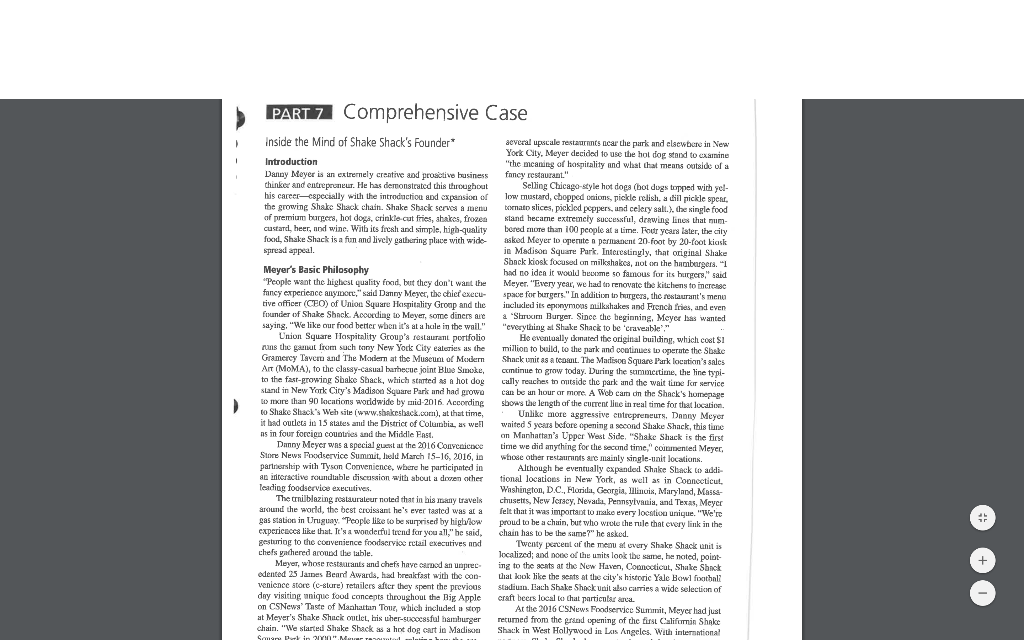
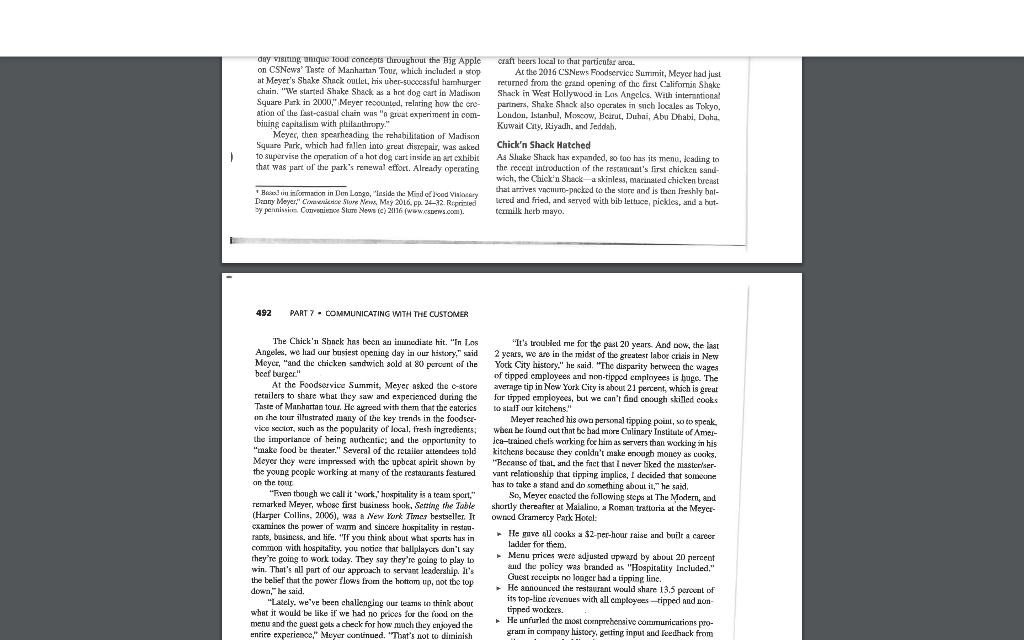
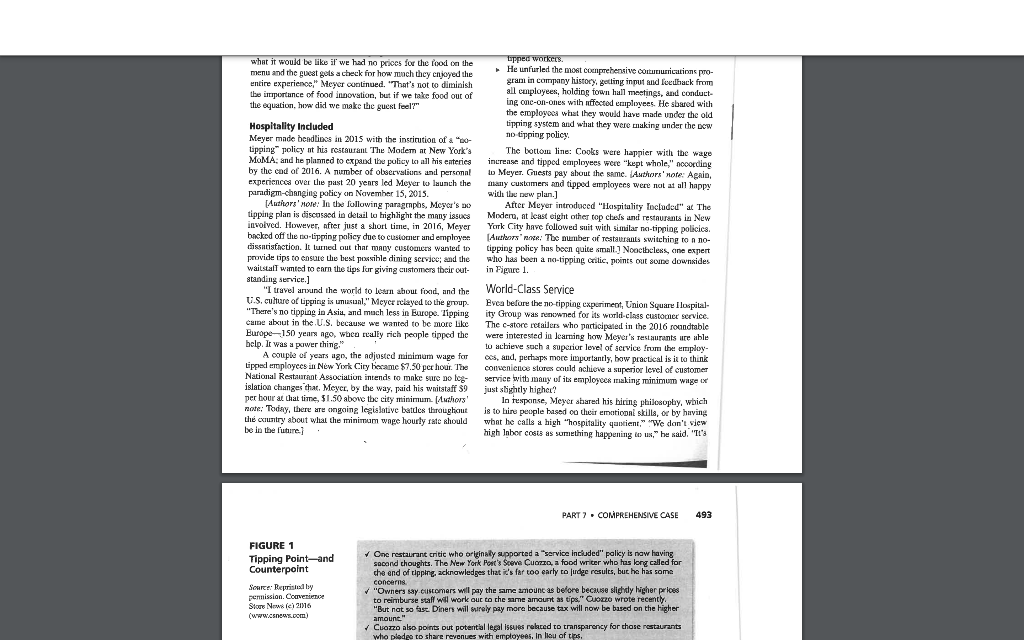
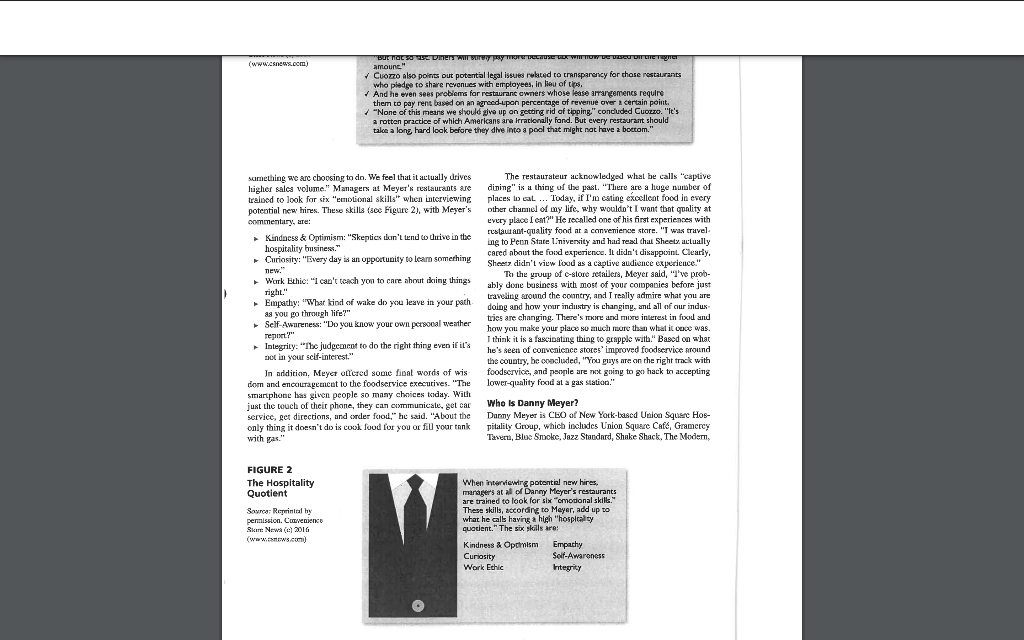
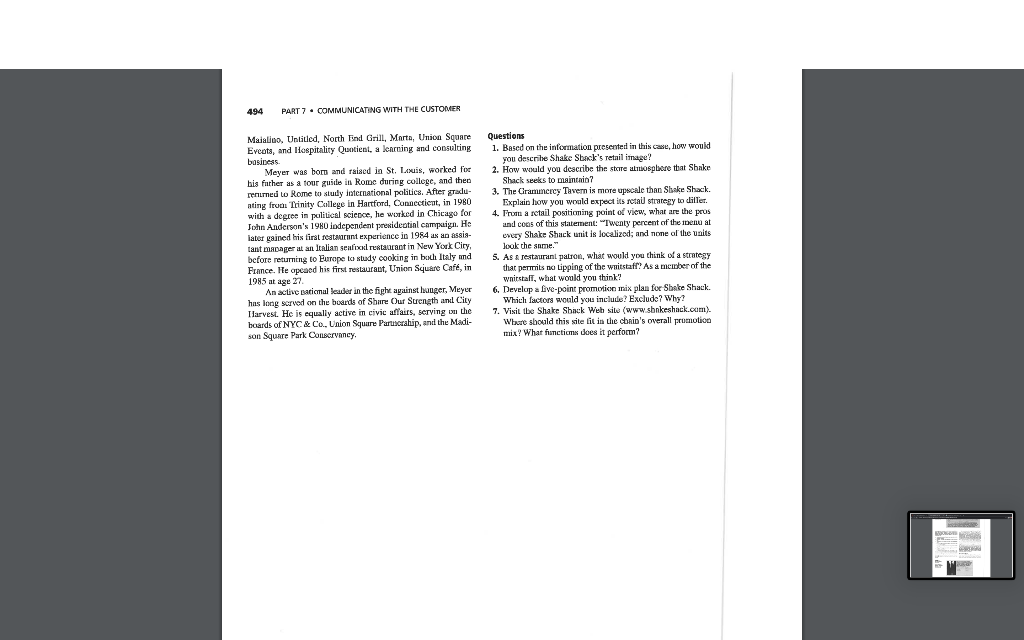
PART 7 Comprehensive Case Inside the Mind of Shake Shack's Founder" Introduction Danay Meyer is an extremely creative and proactive business thinker and entreproneur. He has demonstrated this throughout his career-cspecially with the introduction and expansion of the growing Shake Shack chain. Shake Shack serves a menu of premium burpees, hot dogs, crinkle-cat fries, shakes, frozen custard, heer, and wine. With its fresh and simple, high-quality food, Shake Shack is a fun and lively gathering place with wide- spread appeal Meyer's Basic Philosophy "People want the highest quality food, but they don't want the fincy experience anymore," said Danny Meyer, the chief execu tive officer (CEO) of Union Square Hospitality Group and the founder of Shake Shack According to Meyer, some diners are saying, "We like our food better when it's at a hole in the wall." Union Square Traspitality Group's restaurant portfolio runs the gant from such tony New York City ealories as the Gramercy Taver and The Modern at the Museum of Modern Art (MoMA), to the classy-casual barbecue joint Blue Smoke, to the fast-growing Shake Shack, which started as a hot dog stand in New York City's Madison Square Park and had growa Lore than 90 locations worldwide by mid-2016. According to Shake Shack's Web site www.sbakeslack.com), at that time, it had outlet in 15 states and the District of Columbia, as well ns in four forcign countries and the Middle East. Danny Meyer was a special guest at the 2016 Convcaicoce Store News Podservice Summit, led March 15-16, 2016, in partnership with Tyson Convenience, wbere he participated in an interactive roundable discussion with about a desen other leading foodservice executives. The trnilblazing posturaleur noted that in his many travel around the world, the best croissant he's ever tasted was at a gas station in Uruguay "People like to be surprised by highlow expericacea like that. It's a wonderful trend for you all," he said, gesturing to the convenience foodservice retail executives and chefs yathered around the table. Meyer, whose restaurants and chefs have carnod an unprec edented 25 James Beard Awards, had breakfast with the con venience Store (c-sure) retnilers after they spent the previous day visiting unique food concepts throughout the Big Apple on CSNews Taste of Manhattan Tour, which included a stop at Meyer's Shake Shack outlet, bis wher-stocssful hamburger chain. "We started Shake Shack as a hot dog cart in Madison Per in 2010" Martat several upacale restaurants near the park and elsewbore in New York City, Meyer decided to use the hot dog stand to examine "the meaning of hospitality and what that means outside of a foney restaurant." Selling Chicago-style hot dogs (hot dirgstopped with yel- low mustard, chopped onions, pickle colish, a dill pickle spent, tomato slices, pickled peppers, and celery sall.), the single food stand became extremely successful drawing lines that num bored more than 100 people at a time. Four years later, the city asked Meyer to peruten permissent 20-foot by 20-foot kiosk in Madison Square Park. Interestingly, that original Shake Sback kiosk focused on milkshakoa, not on the humbergers. "I had no idea it would become so famous for its hurgers," said Meyer. "Every year, we had to renovate the kitchens to increde space for burgers." In addition to burgers, the restaurant's mena included its eponymous sulkshakes and French fries, and even a 'Struxim Buryer. Since the beginning, Meyce las wanted "everything at Shake Shack to be 'craveable." He eventually kated the original building, which cost $1 million to bulld, to the park and continues to perute the Sbake Shack unit as a coat. The Madison Square Park locution's sales continue to grow today. During the same time, the line typi- cally reaches to outside the park and the wait une for service can be an hour or more A Webcam in the Shack's homepage sbows the length of the current line in real time for that location Unlike more aggressive entrepreneurs, Danny Meyer waited 5 years before opening a second Shake Shack, this time on Manhattan's Upper West Side, "Shake Shack is the first time we did anything for the second time,"commented Meyer, whose other restaurants are mainly single-unit locations. Although he eventually expanded Shake Shack to add tional locations in New York, as well as in Connecticut Washington, D.C., Florida, Georgia, Illinois, Maryland, Massa chusetts, New Jersey, Nevala, Pennsylvania, and Texas, Meyer felt that it was important to make every loontica unique. "We're proud to be a chain, but who wrote the nile that every link in the chain has to be the same?" he asked. Twenty percent of the menu at every Shake Shack unit is localized and none of the units look ibu same, he noted, point ing to the goats at the New Haven, Connecticut, Shake Shack that kiok like the sents at the city's historic Yale Bowl football stadium. Blach ShakeShack unit also curries a wide selection of craft beers local to that particular arca. At the 2016 CSNews Foodservice Summit, Meyer had just returned from the grand opening of the first Califumin Shake Shack in West Hollywood in Luis Angeles. With international dey visiting unique food concepts throughout the Big Apple on CSNews Taste of Manhattan Tous, which included stop at Meyer's Shake Shack outlet, his cher successful hamburger chain. "We started Shake Shack as a hot dog cart in Madini Square Park in 2000." Meyer recounted, relating how the cro- ation of the last-casual chain was 'n great experiment in com- bining capitalism with pluilanthropy." Meyer, then spearheading the rehabilitation of Madison Square Park, which had fallen into great disrepair, was asked to supervise the operation of a hot dog cart inside an art exhibit that was part of the park's renewal effort. Already operating craft beers local to that particular ara At the 2016 CSNews Foodservice Summit, Mayer liad just netured from the grand opening of the first Californin Shake Shack in West Hollywood in Las Angeles. With interntional partners, Shake Shack also operates in such locales as Tokyo, Londou, Istanbul, Moscow, Beirut, Dubai, Abu Dhabi. Daha Kuwait City, Riyadh, and Jeddah Chick'n Shack Hatched As Shake Shack has expanded, so too has its menu, leading to the receat introduction of the restaurants first chicken sand- wich, the Chicken Sbacka skinless, macinated chicken brot that arrives VACHUTC-packed to the store and is then freshly bnt- tered and fried, and served with bib lettuce, pickles, and a but termilk herb mayo Hii informacion in Den Longo, "laside the Mind of lood Vile Danny Meyer, Coco Store New, May 2016, pp. 24212. Ripriste by penniles Curve Slure News (c) 2016 (www.coa). 492 PART 7. COMMUNICATING WITH THE CUSTOMER The Chick'n Sonck has been an immediate hit. "In Los Angeles, wo liad our busiest opening day in our history," said Meyer, "and the chicken sandwich sold at 80) perount of the beef barger" At the Foodservice Summit, Meyer asked the c-store rernilers to share what they saw and experienced during the Taste of Manhattan tour. He agreed with them that the eateries on the bar illustrated many of the key trends in the foodser- vice sector, such as the popularity of local, fresh ingredients: the importance of heine authentic, and the opportunity to "make food bu theater." Several of the retailer attendees told Meyer they were impressed with the upbcat spirit shown by the young people working at many of the restaurants featured on the tour "Even though we call it work, hospitality is a team sport," remarked Meyer, wbose first business book, Secting the Table (Harper Collins, 2006), was a New York Times bestseller. It cxamine the prywer of warm and sincere hospitality in resto rants, business, and life. "If you think about what sports has in common with hospitality, you notice that ballplayers don't say they're poing to work today. They say they're going to play to win. That's all part of our approach to servant leadership. It's the belief that the power flows from the bottom up, got the top down," he said. "Lately, we've been challenging our leams to think about what it would be like if we had no prices for the exlin the menu and the guest gols a check for how much they enjoyed the entire experience," Meyer cuntinued. "That's not to diminish "It's troubled me for the past 20 years. And now, the last 2 years, we are in the midst of the greatest labor crials in New York City history." he said. "The disparity between the wayes of tipped employees and non-tipped employees is buge. The average tip in New York City is about 21 percent, which is great for tipped employees, but we can't find cocugh skilled cooks totalt cur kitchens." Meyet reached his owo personal tipping point, so to speak wben be found out that be bad more Culinary Institute of Amer- ica-trained chels working for him as servers than working in his kitchens because they conldn't make enough money as cocks. "Because of tbal and the fact that i never liked the masteriser- vant renticeship that tipping implica, I decided that som has to take a stand and do something about it," he said. So, Meyer enacted the following steps at The Modern, and shortly thereafter at Malali, a Roman trattoria at the Meyer- owned Gramercy Park Hotel: He gave all cooks a $2 per hour raise and built a career ladder for them. Menu prices were adjusted upward by about 20 percent and the policy was branded as "Hospitality Included." Guest receipts no longer badu tipping line. He announced the restaurant would share 13.5 percent of its top-toe sevenues with all employees-tipped and non tipped workers. He unfurled the most comprehensive concurrunications pro- gran in company history, getting input and leedhack from what it would be like if we had no prioes for the food on the menu and the guest gols a check for how much they enjoyed the entire experience." Meyer continued. "That's not to diminish the importance of food innovation, but if we take food out of the equation, how did we make the guest feel'" Hospitality Induded Meyer made bendios int 2015 with the institution of a Lipping policy nt his restaurant The Modem nt New York's MoMA, and he planned to expand the policy to all his eateries by the cod of 2016. A number of observations and personal Experiences over the past 20 years led Meyer to launch the pandigm-changing policy in November 15, 2015 (Authors' on: In the following paragmphs, Meyer's tipping plan is discussed in detail to highlight the many issues involved. However, after just a short time, in 2016, Meyer backed off the so-lipping policy due to customer and employee tissatisfnotion. It turned out that many customers wanted to provide tips to ensure the best possible dining scevico; and the waitstall womied to earn the tips for giving customers their out- standing service.] "I travel arund the world to learn about foxid, and the U.S.culture of Lipping is unusual," Meyer relayed to the group "There's no tipplag in Asia, and much less in Bope. Tipping came about in the US, because we wanted to be more like Europe-150 years ago, whaea really rich people tipped the help. It was a power thing." A couple of years ago, the ndjusted minimum wage for Lipped employees in New York City became $7.50 per hour. The National Restaurant Association intends to make sure no log islation changes that. Meyer, by the way, paid his wnitstaff 89 per hour at that time, 51.50 above the city minimum. [Authors' nate: Today, there are ongoing legislative battles throughout the cuitry about what the minimum wage hourly rate should be in the future Lopped workers. He unfurled the most comprehensive courrications pro- gram in company history, getting input and loedback from all cmployees, holding town hall meetings, and conduct ing one-on-ones with affected employees. He sbarod with the employee what they would have made under the old tipping system and what they were making under the new no tipping policy The bottom line: Cooks were happier with the waye increase and tipped employees were kept whole" According to Meyer. Guests pay about the same. Authors' note: Again, many customers and tipped employecs were not at all happy with the new plan.) Aftce Meyer introduced "Hospitality Tecluded" at The Moderu, at least eight other top chels and restaurants in New York City have followed suit with similar nai-tipping policies. Aut'nner: The number of restaurants switching to n no- tipping policy has been quite small) Nootbeless, cine expert who has been a no-tipping critic, peints out soune downsides in Figure 1. World-Class Service Evca before the no-tipping experiment, Union Square Ilospital ity Group was renowned for its world-class customer service. The c-store retailers who participated in the 2016 roundtable were interested in learning how Meyer's restaurants are able to achieve such a superior level of service From the employ. ocs, and, perhaps more importantly, how practical is it to think convenience stores could achieve a superior level of customer service with many of its employees making minimum wageix just slightly higher? In response, Meyer shared his biens philosophy, wbich is to hiru peuple based on their emoticon skills, or by having what he calls a high "hospitality antient," "We don't view high Inbor costs as something happening to us," he said. "Tt's PART 7 - COMPREHENSIVE CASE 493 FIGURE 1 Tipping Point-and Counterpoint Source: Reprised by pernission. Conveniente Stone New 2016 (www.cnews.com) One restaurant critic who orldnaly supported a "service included" palicy is now having second thoughts, The New York Port's Sceve Cuozas a food writer who has long called for che end of tipping acknowledges that it's far too early to judge results, but he has soma concerns "Owners say customers will pay the same amount as before because slightly Igher priood to reimburse stall will work out to the same amount as tips." Cuoxzo wrote recently "But not so fasc. Diners will wirely pay mora because tax will now be based on the higher amount" Cuazzo also points out potential legal issues related to transparency for those restaurants who pledge to share revenues with employees. In ou of tips, (www.csness.com) "BUT NOC 09 Der Albrey pay mor US DS WOW LE DIFC Tyres amoun Cuozzo also points out potential legal issues related to transparency for those restaurants who pledge to share revenues with employees, in lieu of tips And he even sees problems for restaurant owners whose lease arrangements require them to pay rent based on an agreed-upon percentage of revenue over 1 certain point. "None of this means we should go up on getting rid of tipping" concluded Curzo. "It's a rotten practice of which Americans are Irrationally fond. But every restaurant should take a long hard look before they dive into a pool that might not have a boctom. something we are cboosing to do. We feel that it actually drives higher salca volume." Managers at Meyer's restaurants are trained to look for six "emotional skills" when interviewing potentin new hires. These skills (sce Figure 2), with Meyer's commentary, are: Kindness & Optimism: "Skepties in't tend to drive in the hospitality business." Curiosity: "Every day is an opportunity to learn somerhing new. ." Werk Ethic: "I can't teach you to care about kring things right." Empathy: "What kind of wake do you leave in your path as you go through life?" Self-Awareness: "Do you know your own personal weather report?" Integrity: "The judgement to do the right thing even if it's not in your sclf-interest." In addition, Meyer oll'ered some final words of wis dom and encourageancat to the foodservice executives. "The Smartphone has given people so many choices today. With just the touch of their phone, they can cummunicate, get car service, get directions, and crder food." he said, "About the only thing it doesn't do is cook food for you or fill your tank with par." The restaurateur acknowledged what be calls "captive dining" is a thing of the past. "There are a luge number of places to cal ... Today, if I'm eating excelleat food in every other channel of my life, why wouldo't I want tbat qonlity at every place I cat?" He recalled one of his first experiences with restaurant-quality food at a convenience store. "I was travel ing to Peon State Liniverxity and had read that Sheetz actually cared about the food experience. It didn't disappoint. Clearly, Sheetz didn't view food as a captive audience experience." To the yruup of c-store retailers, Meyer sald, T've prob- ably done business with most of your companies before just traveling around the country, and I really admire what you are doing and how your industry is changing, and all of our indus tries are changing. There's terre and more interest in food and how you make your place so much more than what it cace was. I think it is a fascinating thing to geapple wita." Based on what he's seen of convenience stores improved foodservice around the country, be concluded, "You guys are on the right track with foodservice, and people are not going to go back to accepting lower-quality food at a gas station." Who Is Danny Meyer? Danmy Meyer is CEO of New York-based Union Square Hos- pitality Group, which includes Union Square Cafe, Gramercy Tavern, Blue Smoke, Jazz Standard, Shake Shack, The Modern, FIGURE 2 The Hospitality Quotient Sourcar Reinical by permission. Convenience See New 2016 (www.news.com) M When interviewing potential new hires, managers at all of Danny Meyer's restaurants are trained to look for six emotional skills." These skills, according to Meyer, add up to what he calls having a high "hospically quatient." The six skills are: Kindness & Optimism Empachy Curiosity Self-Awareness Work Ethic Integrity 494 PART 7. COMMUNICATING WITH THE CUSTOMER Questions Malallao, Untitled, North Find Grill, Marta, Union Square Eroots, and Hospitality Quotient, a learning and consulting business Meyer was born and raised in St. Louis, worked for his father as a tour guide in Rome during college, and then renurned w Rome to study international politics. After gradu- ating fra Trinity College in Hartford, Connecticut, in 1980 with a degree in political science, he worked in Chicago for John Anderson's 1980 independent residectin campaign. He later gained his first restaurant experience in 1984 as an assis tant mager at an Italian seafocal restaurant in New York Ci before returning to Europe to study cooking in both Italy and France. He speaed his first restaurant, Union Square Caf, in 1985 at age 27 An active maticmal leader in the fight against hunger, Meyer has long served on the boards of Share Our Surength and City Ilarvest. He is equally active in civic affairs, serving in the boards of NYC&Co, Union Square Parusorahip, and the Madi- son Square Park Conservancy, 1. Based on the information presented in this case, how would you describe Shake Sback's retail image? 2. How would you describe the store aliiospere that Shake Shack seeks to maintain? 3. The Cranncrey Tavern is more upscale than Shake Shack Explain how you would expect its rotal strategy to diller 4. From a retail positioning point of view, what are the pros and coos of this statement: "Twenty percent of the ben at every Shake Shack unit is localizod, and none of the valts look the same." 5. As a restaurant patron, what would you think of a strategy that permits no Lipping of the waitstaff! As a member of the wnirstall, what would you think? 6. Develop a Live-point promotion mix plan for Shake Shack. Which factors would you include? Exclude? Why? 7. Visit the Shake Shack Web site (www.sbnkeshack.com) Where should this site it in the brid's overall promotion x? What function does it perform? PART 7 Comprehensive Case Inside the Mind of Shake Shack's Founder" Introduction Danay Meyer is an extremely creative and proactive business thinker and entreproneur. He has demonstrated this throughout his career-cspecially with the introduction and expansion of the growing Shake Shack chain. Shake Shack serves a menu of premium burpees, hot dogs, crinkle-cat fries, shakes, frozen custard, heer, and wine. With its fresh and simple, high-quality food, Shake Shack is a fun and lively gathering place with wide- spread appeal Meyer's Basic Philosophy "People want the highest quality food, but they don't want the fincy experience anymore," said Danny Meyer, the chief execu tive officer (CEO) of Union Square Hospitality Group and the founder of Shake Shack According to Meyer, some diners are saying, "We like our food better when it's at a hole in the wall." Union Square Traspitality Group's restaurant portfolio runs the gant from such tony New York City ealories as the Gramercy Taver and The Modern at the Museum of Modern Art (MoMA), to the classy-casual barbecue joint Blue Smoke, to the fast-growing Shake Shack, which started as a hot dog stand in New York City's Madison Square Park and had growa Lore than 90 locations worldwide by mid-2016. According to Shake Shack's Web site www.sbakeslack.com), at that time, it had outlet in 15 states and the District of Columbia, as well ns in four forcign countries and the Middle East. Danny Meyer was a special guest at the 2016 Convcaicoce Store News Podservice Summit, led March 15-16, 2016, in partnership with Tyson Convenience, wbere he participated in an interactive roundable discussion with about a desen other leading foodservice executives. The trnilblazing posturaleur noted that in his many travel around the world, the best croissant he's ever tasted was at a gas station in Uruguay "People like to be surprised by highlow expericacea like that. It's a wonderful trend for you all," he said, gesturing to the convenience foodservice retail executives and chefs yathered around the table. Meyer, whose restaurants and chefs have carnod an unprec edented 25 James Beard Awards, had breakfast with the con venience Store (c-sure) retnilers after they spent the previous day visiting unique food concepts throughout the Big Apple on CSNews Taste of Manhattan Tour, which included a stop at Meyer's Shake Shack outlet, bis wher-stocssful hamburger chain. "We started Shake Shack as a hot dog cart in Madison Per in 2010" Martat several upacale restaurants near the park and elsewbore in New York City, Meyer decided to use the hot dog stand to examine "the meaning of hospitality and what that means outside of a foney restaurant." Selling Chicago-style hot dogs (hot dirgstopped with yel- low mustard, chopped onions, pickle colish, a dill pickle spent, tomato slices, pickled peppers, and celery sall.), the single food stand became extremely successful drawing lines that num bored more than 100 people at a time. Four years later, the city asked Meyer to peruten permissent 20-foot by 20-foot kiosk in Madison Square Park. Interestingly, that original Shake Sback kiosk focused on milkshakoa, not on the humbergers. "I had no idea it would become so famous for its hurgers," said Meyer. "Every year, we had to renovate the kitchens to increde space for burgers." In addition to burgers, the restaurant's mena included its eponymous sulkshakes and French fries, and even a 'Struxim Buryer. Since the beginning, Meyce las wanted "everything at Shake Shack to be 'craveable." He eventually kated the original building, which cost $1 million to bulld, to the park and continues to perute the Sbake Shack unit as a coat. The Madison Square Park locution's sales continue to grow today. During the same time, the line typi- cally reaches to outside the park and the wait une for service can be an hour or more A Webcam in the Shack's homepage sbows the length of the current line in real time for that location Unlike more aggressive entrepreneurs, Danny Meyer waited 5 years before opening a second Shake Shack, this time on Manhattan's Upper West Side, "Shake Shack is the first time we did anything for the second time,"commented Meyer, whose other restaurants are mainly single-unit locations. Although he eventually expanded Shake Shack to add tional locations in New York, as well as in Connecticut Washington, D.C., Florida, Georgia, Illinois, Maryland, Massa chusetts, New Jersey, Nevala, Pennsylvania, and Texas, Meyer felt that it was important to make every loontica unique. "We're proud to be a chain, but who wrote the nile that every link in the chain has to be the same?" he asked. Twenty percent of the menu at every Shake Shack unit is localized and none of the units look ibu same, he noted, point ing to the goats at the New Haven, Connecticut, Shake Shack that kiok like the sents at the city's historic Yale Bowl football stadium. Blach ShakeShack unit also curries a wide selection of craft beers local to that particular arca. At the 2016 CSNews Foodservice Summit, Meyer had just returned from the grand opening of the first Califumin Shake Shack in West Hollywood in Luis Angeles. With international dey visiting unique food concepts throughout the Big Apple on CSNews Taste of Manhattan Tous, which included stop at Meyer's Shake Shack outlet, his cher successful hamburger chain. "We started Shake Shack as a hot dog cart in Madini Square Park in 2000." Meyer recounted, relating how the cro- ation of the last-casual chain was 'n great experiment in com- bining capitalism with pluilanthropy." Meyer, then spearheading the rehabilitation of Madison Square Park, which had fallen into great disrepair, was asked to supervise the operation of a hot dog cart inside an art exhibit that was part of the park's renewal effort. Already operating craft beers local to that particular ara At the 2016 CSNews Foodservice Summit, Mayer liad just netured from the grand opening of the first Californin Shake Shack in West Hollywood in Las Angeles. With interntional partners, Shake Shack also operates in such locales as Tokyo, Londou, Istanbul, Moscow, Beirut, Dubai, Abu Dhabi. Daha Kuwait City, Riyadh, and Jeddah Chick'n Shack Hatched As Shake Shack has expanded, so too has its menu, leading to the receat introduction of the restaurants first chicken sand- wich, the Chicken Sbacka skinless, macinated chicken brot that arrives VACHUTC-packed to the store and is then freshly bnt- tered and fried, and served with bib lettuce, pickles, and a but termilk herb mayo Hii informacion in Den Longo, "laside the Mind of lood Vile Danny Meyer, Coco Store New, May 2016, pp. 24212. Ripriste by penniles Curve Slure News (c) 2016 (www.coa). 492 PART 7. COMMUNICATING WITH THE CUSTOMER The Chick'n Sonck has been an immediate hit. "In Los Angeles, wo liad our busiest opening day in our history," said Meyer, "and the chicken sandwich sold at 80) perount of the beef barger" At the Foodservice Summit, Meyer asked the c-store rernilers to share what they saw and experienced during the Taste of Manhattan tour. He agreed with them that the eateries on the bar illustrated many of the key trends in the foodser- vice sector, such as the popularity of local, fresh ingredients: the importance of heine authentic, and the opportunity to "make food bu theater." Several of the retailer attendees told Meyer they were impressed with the upbcat spirit shown by the young people working at many of the restaurants featured on the tour "Even though we call it work, hospitality is a team sport," remarked Meyer, wbose first business book, Secting the Table (Harper Collins, 2006), was a New York Times bestseller. It cxamine the prywer of warm and sincere hospitality in resto rants, business, and life. "If you think about what sports has in common with hospitality, you notice that ballplayers don't say they're poing to work today. They say they're going to play to win. That's all part of our approach to servant leadership. It's the belief that the power flows from the bottom up, got the top down," he said. "Lately, we've been challenging our leams to think about what it would be like if we had no prices for the exlin the menu and the guest gols a check for how much they enjoyed the entire experience," Meyer cuntinued. "That's not to diminish "It's troubled me for the past 20 years. And now, the last 2 years, we are in the midst of the greatest labor crials in New York City history." he said. "The disparity between the wayes of tipped employees and non-tipped employees is buge. The average tip in New York City is about 21 percent, which is great for tipped employees, but we can't find cocugh skilled cooks totalt cur kitchens." Meyet reached his owo personal tipping point, so to speak wben be found out that be bad more Culinary Institute of Amer- ica-trained chels working for him as servers than working in his kitchens because they conldn't make enough money as cocks. "Because of tbal and the fact that i never liked the masteriser- vant renticeship that tipping implica, I decided that som has to take a stand and do something about it," he said. So, Meyer enacted the following steps at The Modern, and shortly thereafter at Malali, a Roman trattoria at the Meyer- owned Gramercy Park Hotel: He gave all cooks a $2 per hour raise and built a career ladder for them. Menu prices were adjusted upward by about 20 percent and the policy was branded as "Hospitality Included." Guest receipts no longer badu tipping line. He announced the restaurant would share 13.5 percent of its top-toe sevenues with all employees-tipped and non tipped workers. He unfurled the most comprehensive concurrunications pro- gran in company history, getting input and leedhack from what it would be like if we had no prioes for the food on the menu and the guest gols a check for how much they enjoyed the entire experience." Meyer continued. "That's not to diminish the importance of food innovation, but if we take food out of the equation, how did we make the guest feel'" Hospitality Induded Meyer made bendios int 2015 with the institution of a Lipping policy nt his restaurant The Modem nt New York's MoMA, and he planned to expand the policy to all his eateries by the cod of 2016. A number of observations and personal Experiences over the past 20 years led Meyer to launch the pandigm-changing policy in November 15, 2015 (Authors' on: In the following paragmphs, Meyer's tipping plan is discussed in detail to highlight the many issues involved. However, after just a short time, in 2016, Meyer backed off the so-lipping policy due to customer and employee tissatisfnotion. It turned out that many customers wanted to provide tips to ensure the best possible dining scevico; and the waitstall womied to earn the tips for giving customers their out- standing service.] "I travel arund the world to learn about foxid, and the U.S.culture of Lipping is unusual," Meyer relayed to the group "There's no tipplag in Asia, and much less in Bope. Tipping came about in the US, because we wanted to be more like Europe-150 years ago, whaea really rich people tipped the help. It was a power thing." A couple of years ago, the ndjusted minimum wage for Lipped employees in New York City became $7.50 per hour. The National Restaurant Association intends to make sure no log islation changes that. Meyer, by the way, paid his wnitstaff 89 per hour at that time, 51.50 above the city minimum. [Authors' nate: Today, there are ongoing legislative battles throughout the cuitry about what the minimum wage hourly rate should be in the future Lopped workers. He unfurled the most comprehensive courrications pro- gram in company history, getting input and loedback from all cmployees, holding town hall meetings, and conduct ing one-on-ones with affected employees. He sbarod with the employee what they would have made under the old tipping system and what they were making under the new no tipping policy The bottom line: Cooks were happier with the waye increase and tipped employees were kept whole" According to Meyer. Guests pay about the same. Authors' note: Again, many customers and tipped employecs were not at all happy with the new plan.) Aftce Meyer introduced "Hospitality Tecluded" at The Moderu, at least eight other top chels and restaurants in New York City have followed suit with similar nai-tipping policies. Aut'nner: The number of restaurants switching to n no- tipping policy has been quite small) Nootbeless, cine expert who has been a no-tipping critic, peints out soune downsides in Figure 1. World-Class Service Evca before the no-tipping experiment, Union Square Ilospital ity Group was renowned for its world-class customer service. The c-store retailers who participated in the 2016 roundtable were interested in learning how Meyer's restaurants are able to achieve such a superior level of service From the employ. ocs, and, perhaps more importantly, how practical is it to think convenience stores could achieve a superior level of customer service with many of its employees making minimum wageix just slightly higher? In response, Meyer shared his biens philosophy, wbich is to hiru peuple based on their emoticon skills, or by having what he calls a high "hospitality antient," "We don't view high Inbor costs as something happening to us," he said. "Tt's PART 7 - COMPREHENSIVE CASE 493 FIGURE 1 Tipping Point-and Counterpoint Source: Reprised by pernission. Conveniente Stone New 2016 (www.cnews.com) One restaurant critic who orldnaly supported a "service included" palicy is now having second thoughts, The New York Port's Sceve Cuozas a food writer who has long called for che end of tipping acknowledges that it's far too early to judge results, but he has soma concerns "Owners say customers will pay the same amount as before because slightly Igher priood to reimburse stall will work out to the same amount as tips." Cuoxzo wrote recently "But not so fasc. Diners will wirely pay mora because tax will now be based on the higher amount" Cuazzo also points out potential legal issues related to transparency for those restaurants who pledge to share revenues with employees. In ou of tips, (www.csness.com) "BUT NOC 09 Der Albrey pay mor US DS WOW LE DIFC Tyres amoun Cuozzo also points out potential legal issues related to transparency for those restaurants who pledge to share revenues with employees, in lieu of tips And he even sees problems for restaurant owners whose lease arrangements require them to pay rent based on an agreed-upon percentage of revenue over 1 certain point. "None of this means we should go up on getting rid of tipping" concluded Curzo. "It's a rotten practice of which Americans are Irrationally fond. But every restaurant should take a long hard look before they dive into a pool that might not have a boctom. something we are cboosing to do. We feel that it actually drives higher salca volume." Managers at Meyer's restaurants are trained to look for six "emotional skills" when interviewing potentin new hires. These skills (sce Figure 2), with Meyer's commentary, are: Kindness & Optimism: "Skepties in't tend to drive in the hospitality business." Curiosity: "Every day is an opportunity to learn somerhing new. ." Werk Ethic: "I can't teach you to care about kring things right." Empathy: "What kind of wake do you leave in your path as you go through life?" Self-Awareness: "Do you know your own personal weather report?" Integrity: "The judgement to do the right thing even if it's not in your sclf-interest." In addition, Meyer oll'ered some final words of wis dom and encourageancat to the foodservice executives. "The Smartphone has given people so many choices today. With just the touch of their phone, they can cummunicate, get car service, get directions, and crder food." he said, "About the only thing it doesn't do is cook food for you or fill your tank with par." The restaurateur acknowledged what be calls "captive dining" is a thing of the past. "There are a luge number of places to cal ... Today, if I'm eating excelleat food in every other channel of my life, why wouldo't I want tbat qonlity at every place I cat?" He recalled one of his first experiences with restaurant-quality food at a convenience store. "I was travel ing to Peon State Liniverxity and had read that Sheetz actually cared about the food experience. It didn't disappoint. Clearly, Sheetz didn't view food as a captive audience experience." To the yruup of c-store retailers, Meyer sald, T've prob- ably done business with most of your companies before just traveling around the country, and I really admire what you are doing and how your industry is changing, and all of our indus tries are changing. There's terre and more interest in food and how you make your place so much more than what it cace was. I think it is a fascinating thing to geapple wita." Based on what he's seen of convenience stores improved foodservice around the country, be concluded, "You guys are on the right track with foodservice, and people are not going to go back to accepting lower-quality food at a gas station." Who Is Danny Meyer? Danmy Meyer is CEO of New York-based Union Square Hos- pitality Group, which includes Union Square Cafe, Gramercy Tavern, Blue Smoke, Jazz Standard, Shake Shack, The Modern, FIGURE 2 The Hospitality Quotient Sourcar Reinical by permission. Convenience See New 2016 (www.news.com) M When interviewing potential new hires, managers at all of Danny Meyer's restaurants are trained to look for six emotional skills." These skills, according to Meyer, add up to what he calls having a high "hospically quatient." The six skills are: Kindness & Optimism Empachy Curiosity Self-Awareness Work Ethic Integrity 494 PART 7. COMMUNICATING WITH THE CUSTOMER Questions Malallao, Untitled, North Find Grill, Marta, Union Square Eroots, and Hospitality Quotient, a learning and consulting business Meyer was born and raised in St. Louis, worked for his father as a tour guide in Rome during college, and then renurned w Rome to study international politics. After gradu- ating fra Trinity College in Hartford, Connecticut, in 1980 with a degree in political science, he worked in Chicago for John Anderson's 1980 independent residectin campaign. He later gained his first restaurant experience in 1984 as an assis tant mager at an Italian seafocal restaurant in New York Ci before returning to Europe to study cooking in both Italy and France. He speaed his first restaurant, Union Square Caf, in 1985 at age 27 An active maticmal leader in the fight against hunger, Meyer has long served on the boards of Share Our Surength and City Ilarvest. He is equally active in civic affairs, serving in the boards of NYC&Co, Union Square Parusorahip, and the Madi- son Square Park Conservancy, 1. Based on the information presented in this case, how would you describe Shake Sback's retail image? 2. How would you describe the store aliiospere that Shake Shack seeks to maintain? 3. The Cranncrey Tavern is more upscale than Shake Shack Explain how you would expect its rotal strategy to diller 4. From a retail positioning point of view, what are the pros and coos of this statement: "Twenty percent of the ben at every Shake Shack unit is localizod, and none of the valts look the same." 5. As a restaurant patron, what would you think of a strategy that permits no Lipping of the waitstaff! As a member of the wnirstall, what would you think? 6. Develop a Live-point promotion mix plan for Shake Shack. Which factors would you include? Exclude? Why? 7. Visit the Shake Shack Web site (www.sbnkeshack.com) Where should this site it in the brid's overall promotion x? What function does it performStep by Step Solution
There are 3 Steps involved in it
1 Expert Approved Answer
Step: 1 Unlock

Question Has Been Solved by an Expert!
Get step-by-step solutions from verified subject matter experts
Step: 2 Unlock
Step: 3 Unlock
 Study Help