







Question: answer should be in sequence Instructions Access the provided article through the library online catalogue. Create an outline of the main points. Write a memo
answer should be in sequence
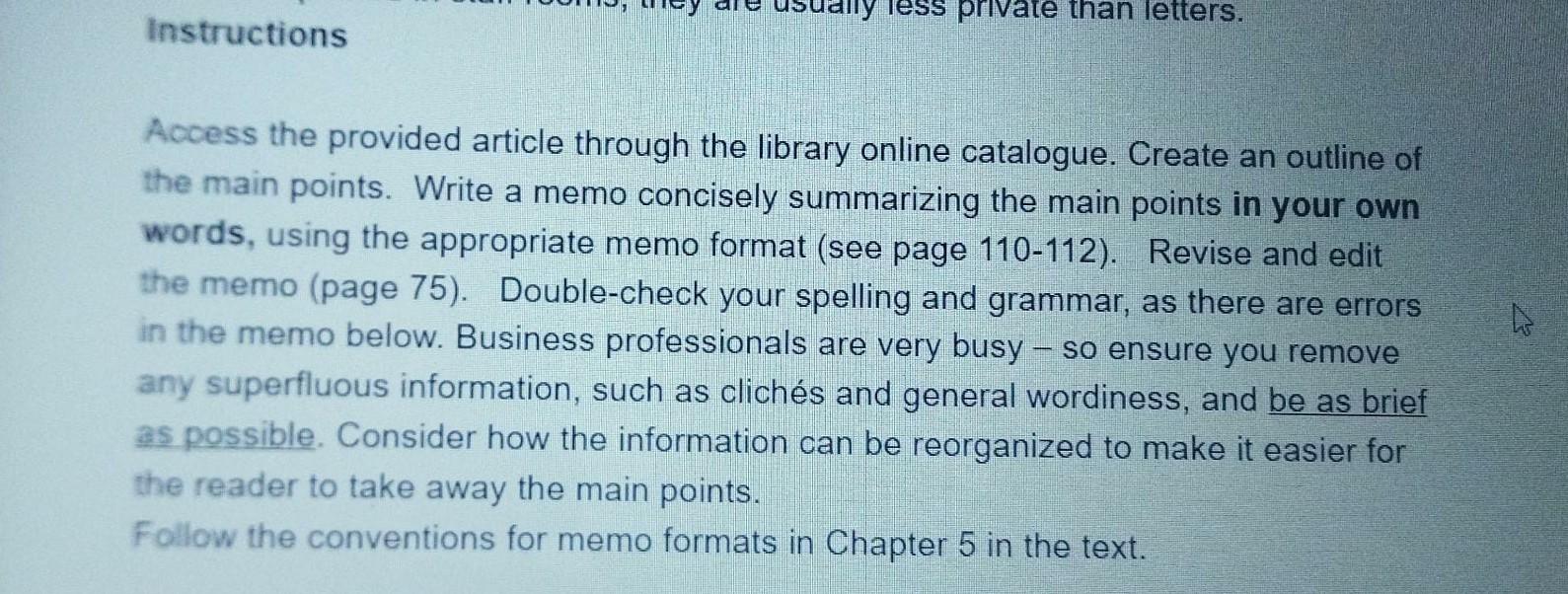
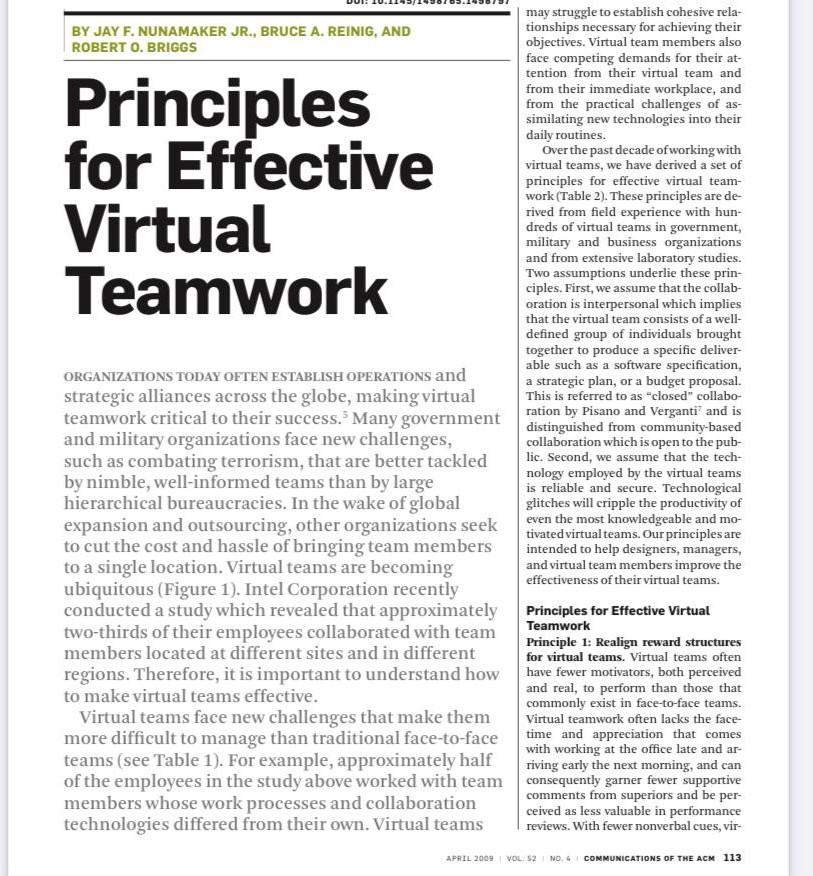
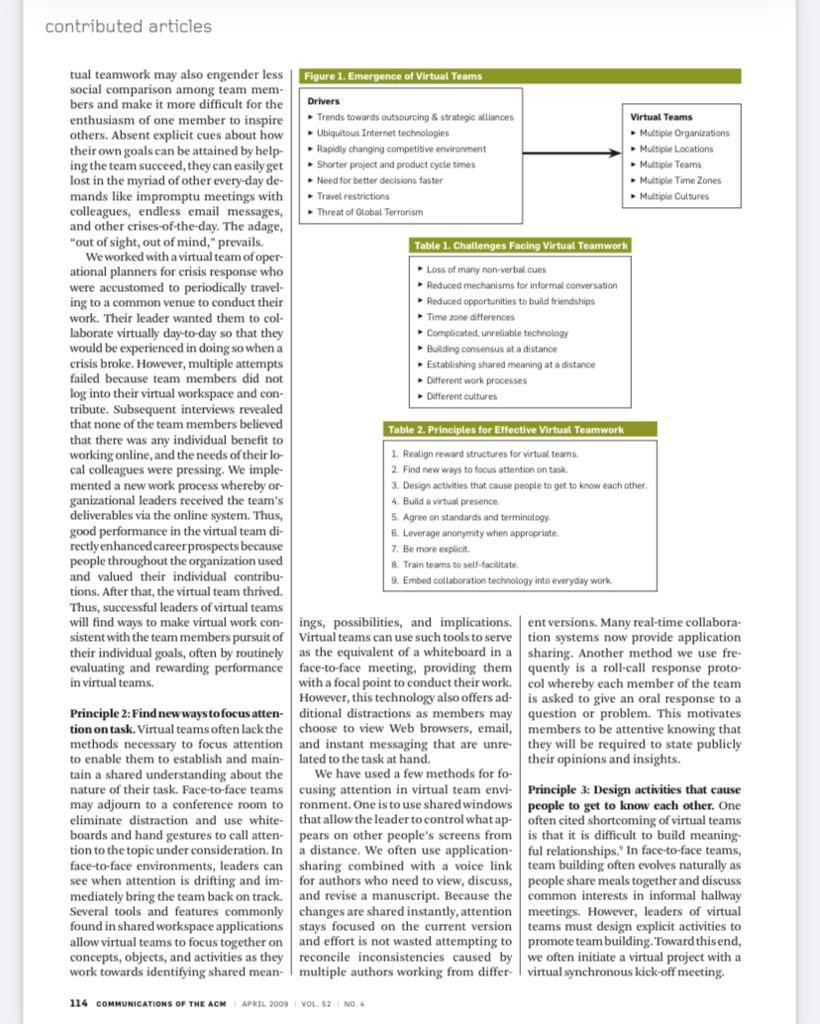
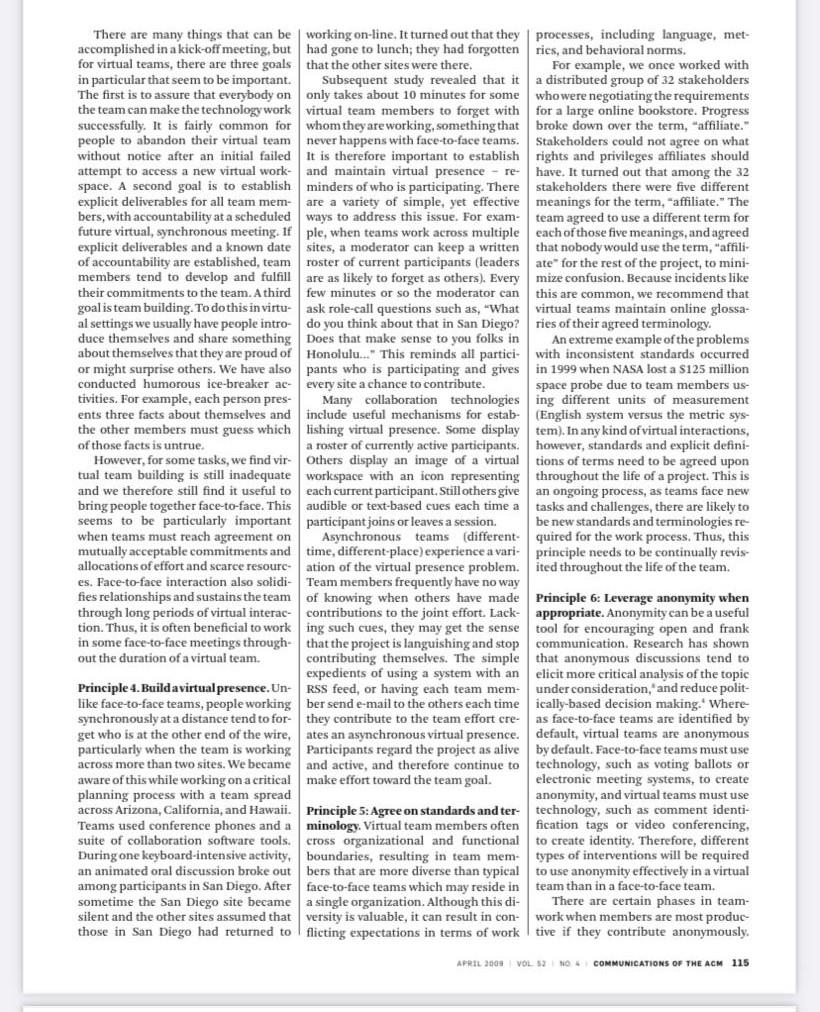
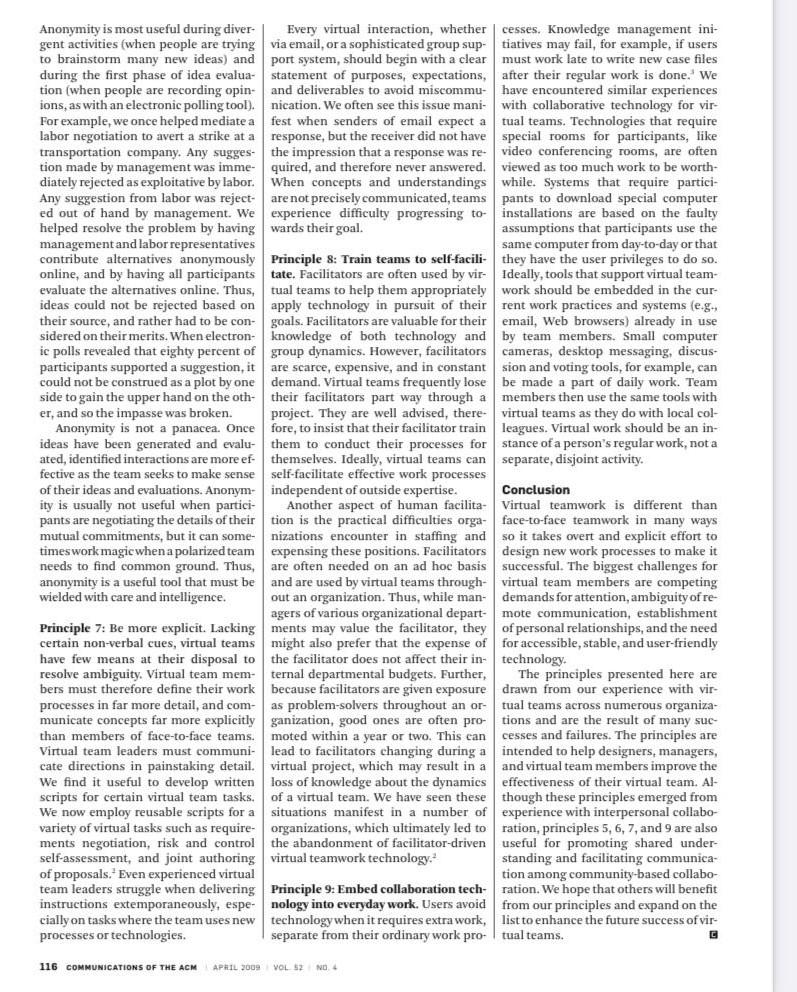
Instructions Access the provided article through the library online catalogue. Create an outline of the main points. Write a memo concisely summarizing the main points in your own words, using the appropriate memo format (see page 110-112). Revise and edit the memo (page 75). Double-check your spelling and grammar, as there are errors in the memo below. Business professionals are very busy - so ensure you remove any superfluous information, such as clichs and general wordiness, and be as brief as possible. Consider how the information can be reorganized to make it easier for the reader to take away the main points. Follow the conventions for memo formats in Chapter 5 in the text. may struggle to establish cohesive relationships necessary for achieving their objectives. Virtual team members also face competing demands for their attention from their virtual team and from their immediate workplace, and from the practical challenges of assimilating new technologies into their daily routines. Over the past decade of working with virtual teams, we have derived a set of principles for effective virtual teamwork (Table 2). These principles are derived from field experience with hundreds of virtual teams in government, military and business organizations and from extensive laboratory studies. Two assumptions underlie these principles. First, we assume that the collaboration is interpersonal which implies that the virtual team consists of a welldefined group of individuals brought together to produce a specific deliverable such as a software specification, ORGANIZATIONS TODAY OFTEN ESTABLISH OPERATIONS and strategic alliances across the globe, making virtual This is referred to as "closed" collaboteamwork critical to their success. 5 Many government ration by Pisano and verganti and is and military organizations face new challenges, distinguishedfromcommunity-basedcollaborationwhichisopentothepub- such as combating terrorism, that are better tackled lic. Second, we assume that the techby nimble, well-informed teams than by large nology employed by the virtual teams hierarchical bureaucracies. In the wake of global glitches will cripple the productivity of expansion and outsourcing, other organizations seek even the most knowledgeable and moto cut the cost and hassle of bringing team members tivatedvirtualteams.Ourprinciplesareintendedtohelpdesigners,managers, to a single Iocation. Virtual teams are becoming and virtual team members improve the ubiquitous (Fioure 1). Intel Comporation recently effectiveness of theirvirtual teams. conducted a study which revealed that approximately Principles for Effective Virtual two-thirds of their employees collaborated with team Teamwork members located at different sites and in different Principle 1: Realign reward structures regions. Therefore, it is important to understand how have fewer motivators, both perceived to make virtual teams effective. and real, to perform than those that Viriual teams faee new challengesthat mace commonly exist in face-to-face teams. -irtual teains firtual teamwork often lacks the facemore difficult to manage than traditional face-to-face time and appreciation that comes teams (see Table 1). For example approximately half with working at the office late and arof the employees in the study above worked with team riving early the next morning, and can members whose work processes and collaboration comments from superiors and be pertechnologies differed from their own. Virtual teams ceivedaslessvaluableinperformancereviews.Withfewernonverbalcues,vir- AFRIL 200H V VOL 52 NO, 4 II COMMUNICATIONS DF TME ACM 113. tual teamwork may also engender less social comparison among team members and make it more difficult for the enthusiasm of one member to inspire others. Absent explicit cues about how their own goals can be attained by helping the team succeed, they can easily get lost in the myriad of other every-day demands like impromptu meetings with colleagues, endless email messages, and other crises-of-the-day. The adage, "out of sight, out of mind," prevails. We worked with a virtual team of operational planners for crisis response who were accustomed to periodically traveling to a common venue to conduct their work. Their leader wanted them to collaborate virtually day-to-day so that they would be experienced in doing so when a crisis broke. However, multiple attempts failed because team members did not log into their virtual workspace and contribute. Subsequent interviews revealed that none of the team members believed that there was any individual benefit to working online, and the needs of their local colleagues were pressing. We implemented a new work process whereby organizational leaders received the team's deliverables via the online system. Thus, good performance in the virtual team directlyenhanced career prospects because people throughout the organization used and valued their individual contributions. After that, the virtual team thrived. Thus, successful leaders of virtual teams will find ways to make virtual work con- ings, possibilities, and implications. | ent versions. Many real-time collaborasistent with the team members pursuit of Virtual teams can use such tools to serve tion systems now provide application their individual goals, often by routinely as the equivalent of a whiteboard in a sharing. Another method we use freevaluating and rewarding performance face-to-face meeting, providing them quently is a roll-call response protoin virtual teams. with a focal point to conduct their work. col whereby each member of the team tion on task. Virtual teams often lack the choose to view Web browsers, email, members to be attentive knowing that methods necessary to focus attention and instant messaging that are unre- they will be required to state publicly to enable them to establish and main- lated to the task at hand. opinions and insights. tain a shared understanding about the We have used a few methods for fonature of their task. Face-to-face teams cusing attention in virtual team envi- Principle 3: Design activities that cause may adjourn to a conference room to ronment. One is to use sharedwindows people to get to know each other. One eliminate distraction and use white- that allow the leader to control what ap- often cited shortcoming of virtual teams boards and hand gestures to call atten- pears on other people's screens from is that it is difficult to build meaningtion to the topic under consideration. In a distance. We often use application- ful relationships." In face-to-face teams, face-to-face environments, leaders can sharing combined with a voice link team building often evolves naturally as see when attention is drifting and im- for authors who need to view, discuss, people share meals together and discuss mediately bring the team back on track. and revise a manuscript. Because the common interests in informal hallway Several tools and features commonly changes are shared instantly, attention meetings. However, leaders of virtual found in shared workspace applications stays focused on the current version teams must design explicit activities to allow virtual teams to focus together on and effort is not wasted attempting to promote teambuilding. Toward thisend, concepts, objects, and activities as they reconcile inconsistencies caused by we often initiate a virtual project with a work towards identifying shared mean- multiple authors working from differ- virtual synchronous kick-off meeting. 114 COMMUNICATIONS OF THE ACM APMIL 2005 VOL. 62 No. 4 There are many things that can be working on-line. It turned out that they processes, including language, metaccomplished in a kick-off meeting, but had gone to lunch; they had forgotten rics, and behavioral norms. \begin{tabular}{l|l} for virtual teams, there are three goals that the other sites were there. For example, we once worked with \end{tabular} in particular that seem to be important. Subsequent study revealed that it a distributed group of 32 stakeholders The first is to assure that everybody on only takes about 10 minutes for some whowere negotiating the requirements the team can make the technologywork virtual team members to forget with for a large online bookstore. Progress successfully. It is fairly common for whom theyareworking, something that broke down over the term, "affiliate." people to abandon their virtual team never happens with face-to-face teams. Stakeholders could not agree on what without notice after an initial failed It is therefore important to establish rights and privileges affiliates should attempt to access a new virtual work- and maintain virtual presence - re- have. It turned out that among the 32 space. A second goal is to establish minders of who is participating. There stakeholders there were five different explicit deliverables for all team mem- are a variety of simple, yet effective meanings for the term, "affiliate." The bers, with accountability at a scheduled ways to address this issue. For exam- team agreed to use a different term for future virtual, synchronous meeting. If ple, when teams work across multiple each of those five meanings, and agreed explicit deliverables and a known date sites, a moderator can keep a written that nobody would use the term, "affiliof accountability are established, team roster of current participants (leaders ate" for the rest of the project, to minimembers tend to develop and fulfill are as likely to forget as others). Every mize confusion. Because incidents like their commitments to the team. A third few minutes or so the moderator can this are common, we recommend that goal is team building. To dothis in virtu- ask role-call questions such as, "What virtual teams maintain online glossaal settings we usually have people intro- do you think about that in San Diego? ries of their agreed terminology. duce themselves and share something Does that make sense to you folks in An extreme example of the problems about themselves that they are proud of Honolulu.." This reminds all partici- with inconsistent standards occurred or might surprise others. We have also pants who is participating and gives in 1999 when NASA lost a S125 million conducted humorous ice-breaker ac- every site a chance to contribute. space probe due to team members ustivities. For example, each person pres- Many collaboration technologies ing different units of measurement ents three facts about themselves and include useful mechanisms for estab- (English system versus the metric systhe other members must guess which lishing virtual presence. Some display tem). In any kind ofvirtual interactions, of those facts is untrue. a roster of currently active participants. however, standards and explicit definiHowever, for some tasks, we find vir- Others display an image of a virtual tions of terms need to be agreed upon tual team building is still inadequate workspace with an icon representing throughout the life of a project. This is and we therefore still find it useful to each current participant. Stillothers give an ongoing process, as teams face new bring people together face-to-face. This audible or text-based cues each time a tasks and challenges, there are likely to seems to be particularly important participant joins or leaves a session. be new standards and terminologies rewhen teams must reach agreement on Asynchronous teams (different- quired for the work process. Thus, this mutually acceptable commitments and time, different-place) experience a vari- principle needs to be continually revisallocations of effort and scarce resourc- ation of the virtual presence problem. ited throughout the life of the team. es. Face-to-face interaction also solidi- Team members frequently have no way fies relationships and sustains the team of knowing when others have made Principle 6: Leverage anonymity when through long periods of virtual interac- contributions to the joint effort. Lack- appropriate. Anonymity can be a useful tion. Thus, it is often beneficial to work ing such cues, they may get the sense tool for encouraging open and frank in some face-to-face meetings through- that the project is languishing and stop communication. Research has shown out the duration of a virtual team. contributing themselves. The simple that anonymous discussions tend to \begin{tabular}{l|l|l} Principle 4. Buildavirtual presence. Un- & expedientsofusingasystemwithanRSSfeed,orhavingeachteammem- & elicitmorecriticalanalysisofthetopicunderconsideration,"andreducepolit- \end{tabular} like face-to-face teams, people working ber send e-mail to the others each time ically-based decision making. 4 Wheresynchronously at a distance tend to for- they contribute to the team effort cre- as face-to-face teams are identified by get who is at the other end of the wire, ates an asynchronous virtual presence. default, virtual teams are anonymous particularly when the team is working Participants regard the project as alive by default. Face-to-face teams must use across more than two sites. We became and active, and therefore continue to technology, such as voting ballots or \begin{tabular}{l|l|l|l|} aware of this while working on a critical & make effort toward the team goal. electronic meeting systems, to create \end{tabular} \begin{tabular}{l|l} planning process with a team spread & anonymity, and virtual teams must use \end{tabular} across Arizona, Califomia, and Hawaii. Principle 5: Agree on standards and ter- technology, such as comment identiTeams used conference phones and a minology. Virtual team members often fication tags or video conferencing, suite of collaboration software tools. cross organizational and functional to create identity. Therefore, different During one keyboard-intensive activity, boundaries, resulting in team mem- types of interventions will be required an animated oral discussion broke out bers that are more diverse than typical to use anonymity effectively in a virtual among participants in San Diego. After face-to-face teams which may reside in team than in a face-to-face team. sometime the San Diego site became a single organization. Although this di- There are certain phases in teamsilent and the other sites assumed that versity is valuable, it can result in con- work when members are most producthose in San Diego had returned to flicting expectations in terms of work tive if they contribute anonymously. aprit 2603 Voi. S2 HO \& COMMUNICATIOMS OF THE ACM 11.5 Anonymity is most useful during diver- Every virtual interaction, whether cesses. Knowledge management inigent activities (when people are trying via email, or a sophisticated group sup- tiatives may fail, for example, if users to brainstorm many new ideas) and port system, should begin with a clear must work late to write new case files during the first phase of idea evalua- statement of purposes, expectations, after their regular work is done. 3 We tion (when people are recording opin- and deliverables to avoid miscommu- have encountered similar experiences ions, as with an electronic polling tool). nication. We often see this issue mani- with collaborative technology for virFor example, we once helped mediate a fest when senders of email expect a tual teams. Technologies that require labor negotiation to avert a strike at a response, but the receiver did not have special rooms for participants, like transportation company. Any sugges- the impression that a response was re- video conferencing rooms, are often tion made by management was imme- quired, and therefore never answered. viewed as too much work to be worthdiately rejected as exploitative by labor. When concepts and understandings while. Systems that require particiAny suggestion from labor was reject- arenot precisely communicated, teams pants to download special computer ed out of hand by management. We experience difficulty progressing to- installations are based on the faulty online, and by having all participants tate. Facilitators are often used by vir- Ideally, tools that support virtual teamevaluate the alternatives online. Thus, tual teams to help them appropriately work should be embedded in the curideas could not be rejected based on apply technology in pursuit of their rent work practices and systems (e.g., their source, and rather had to be con- goals. Facilitators are valuable for their email, Web browsers) already in use sidered on theirmerits. Whenelectron- knowledge of both technology and by team members. Small computer ic polls revealed that eighty percent of group dynamics. However, facilitators cameras, desktop messaging, discusparticipants supported a suggestion, it are scarce, expensive, and in constant sion and voting tools, for example, can could not be construed as a plot by one demand. Virtual teams frequently lose be made a part of daily work. Team side to gain the upper hand on the oth- their facilitators part way through a members then use the same tools with er, and so the impasse was broken. project. They are well advised, there- virtual teams as they do with local colAnonymity is not a panacea. Once fore, to insist that their facilitator train leagues. Virtual work should be an inideas have been generated and evalu- them to conduct their processes for stance of a person's regular work, not a ated, identified interactions are more ef- themselves. Ideally, virtual teams can separate, disjoint activity. fective as the team seeks to make sense self-facilitate effective work processes \begin{tabular}{l|l|l} of their ideas and evaluations. Anonym- \\ ity is usually not useful when partici- & independentofoutsideexpertise.Anotheraspectofhumanfacilita- & ConsionVirtualteamworkisdifferentthan \end{tabular} pants are negotiating the details of their tion is the practical difficulties orga- face-to-face teamwork in many ways mutual commitments, but it can some- nizations encounter in staffing and so it takes overt and explicit effort to timesworkmagic when a polarized team expensing these positions. Facilitators design new work processes to make it needs to find common ground. Thus, are often needed on an ad hoc basis successful. The biggest challenges for anonymity is a useful tool that must be and are used by virtual teams through- virtual team members are competing wielded with care and intelligence. out an organization. Thus, while man- demands for attention, ambiguity of rePrinciple 7: Be more explicit. Lacking agersofvariousorganizationaldepart-mentsmayvaluethefacilitator,theymotecommunication,establishmentofpersonalrelationships,andtheneed certain non-verbal cues, virtual teams might also prefer that the expense of for accessible, stable, and user-friendly have few means at their disposal to the facilitator does not affect their in- technology. resolve ambiguity. Virtual team mem- ternal departmental budgets, Further, The principles presented here are bers must therefore define their work because facilitators are given exposure drawn from our experience with virprocesses in far more detail, and com- as problem-solvers throughout an or- tual teams across numerous organizamunicate concepts far more explicitly ganization, good ones are often pro- tions and are the result of many sucthan members of face-to-face teams. moted within a year or two. This can cesses and failures. The principles are Virtual team leaders must communi- lead to facilitators changing during a intended to help designers, managers, cate directions in painstaking detail. virtual project, which may result in a and virtual team members improve the We find it useful to develop written loss of knowledge about the dynamics effectiveness of their virtual team. Alscripts for certain virtual team tasks. of a virtual team. We have seen these though these principles emerged from We now employ reusable scripts for a situations manifest in a number of experience with interpersonal collabovariety of virtual tasks such as require- organizations, which ultimately led to ration, principles 5, 6, 7, and 9 are also ments negotiation, risk and control the abandonment of facilitator-driven useful for promoting shared under\begin{tabular}{l|l} of proposals. 2 Even experienced virtual & tion among community-based collabo- \end{tabular} team leaders struggle when delivering Principle 9: Embed collaboration tech- ration. We hope that others will benefit instructions extemporaneously, espe- nology into everyday work. Users avoid from our principles and expand on the cially on tasks where the team uses new technologywhen it requires extrawork, list to enhance the future success of virprocesses or technologies. separate from their ordinary work pro- tual teams. 116 communications of the ACM Aphil zous vol 52 wa. 4
Step by Step Solution
There are 3 Steps involved in it

Get step-by-step solutions from verified subject matter experts
 Study Help