



Question: Answer the following: 6. RECORD THE CLOSING ENTIRES FOR - REVENUE ACCOUNTS - EXPENSE ACCOUNTS - DIVIDENT ACCOUNTS a-1. Calculate the return on equity for
Answer the following:
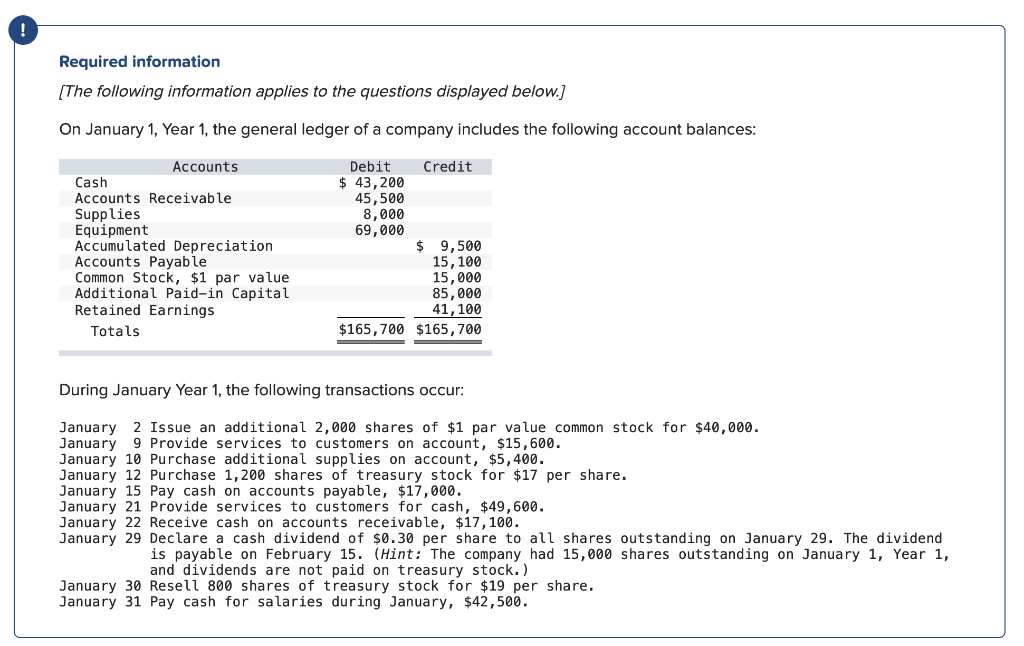
6. RECORD THE CLOSING ENTIRES FOR
- REVENUE ACCOUNTS
- EXPENSE ACCOUNTS
- DIVIDENT ACCOUNTS
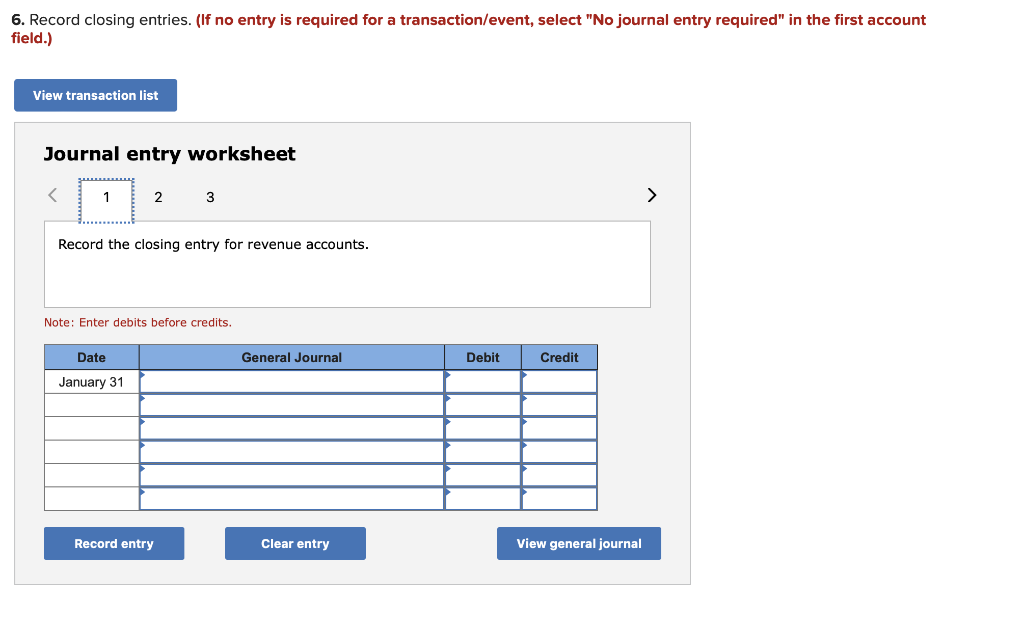
a-1. Calculate the return on equity for the month of January.
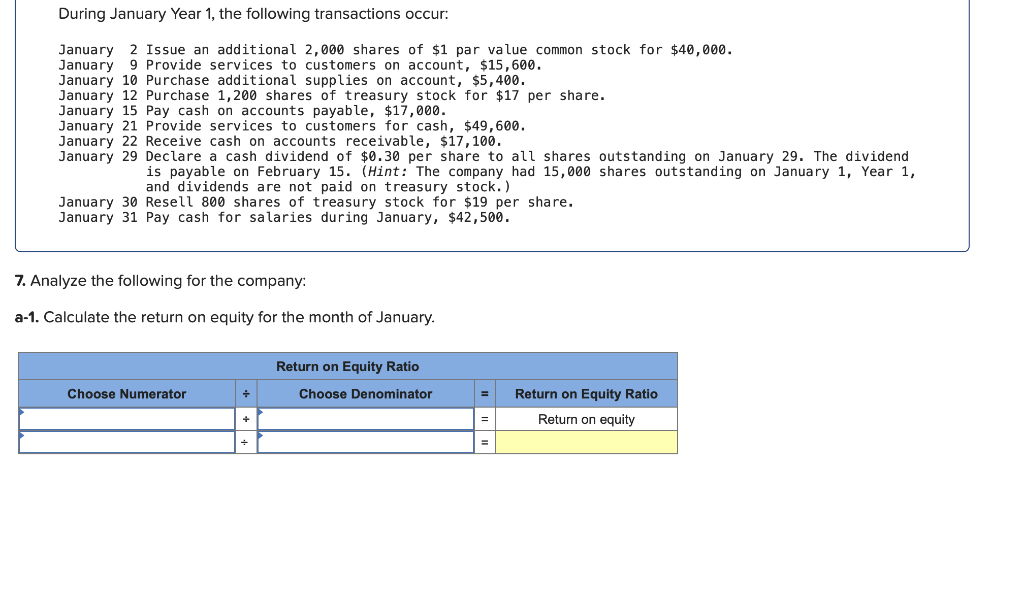
a-2. If the average return on equity for the industry for January is 2.5%, is the company more or less profitable than other companies in the same industry?
b. How many shares of common stock are outstanding as of January 31, Year 1?
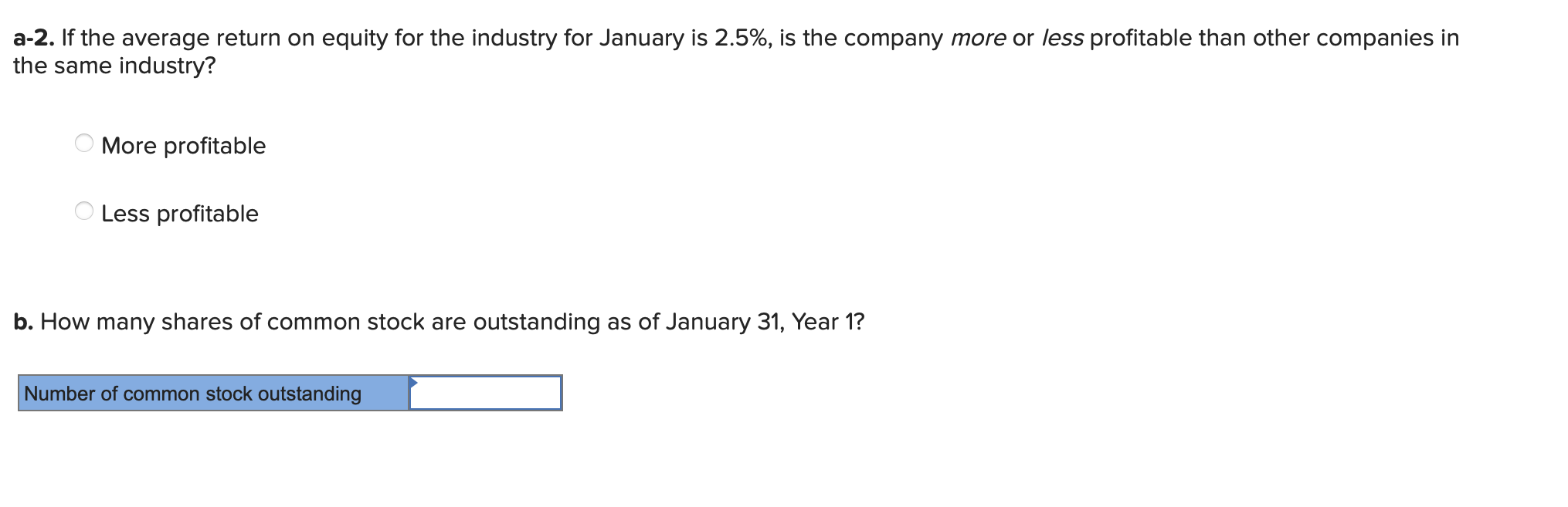
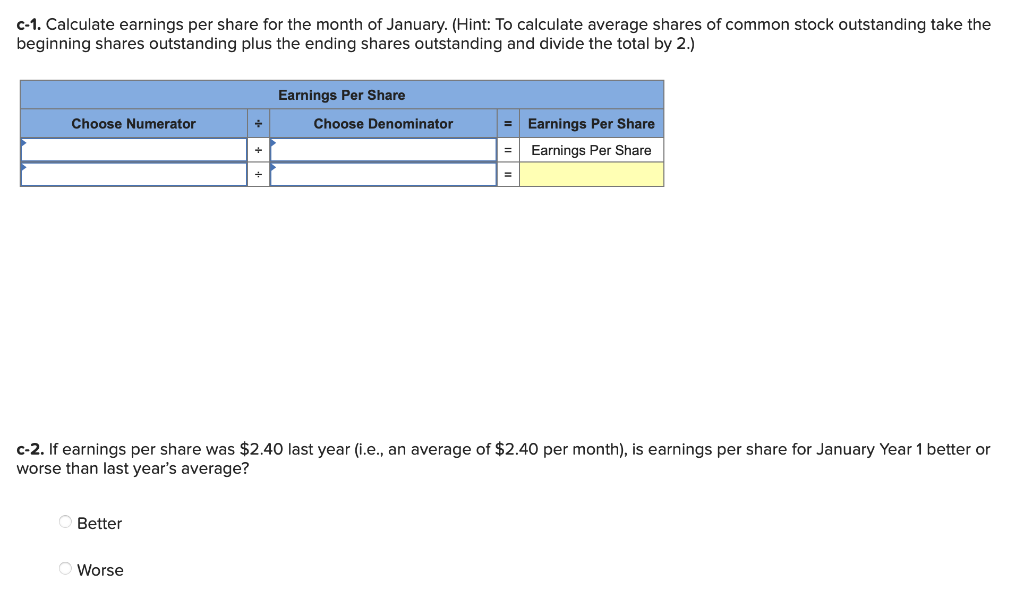
c-1. Calculate earnings per share for the month of January. (Hint: To calculate average shares of common stock outstanding take the beginning shares outstanding plus the ending shares outstanding and divide the total by 2.)
c-2. If earnings per share was $2.40 last year (i.e., an average of $2.40 per month), is earnings per share for January Year 1 better or worse than last years average?
! Required information (The following information applies to the questions displayed below.) On January 1, Year 1, the general ledger of a company includes the following account balances: Supplies Accounts Cash Accounts Receivable Equipment Accumulated Depreciation Accounts Payable Common Stock, $1 par value Additional Paid-in Capital Retained Earnings Totals Debit Credit $ 43,200 45,500 8,000 69,000 $ 9,500 15, 100 15,000 85,000 41,100 $165,700 $165,700 During January Year 1, the following transactions occur: January 2 Issue an additional 2,000 shares of $1 par value common stock for $40,000. January 9 Provide services to customers on account, $15,600. January 10 Purchase additional supplies on account, $5,400. January 12 Purchase 1,200 shares of treasury stock for $17 per share. January 15 Pay cash on accounts payable, $17,000. January 21 Provide services to customers for cash, $49,600. January 22 Receive cash on accounts receivable, $17,100. January 29 Declare a cash dividend of $0.30 per share to all shares outstanding on January 29. The dividend is payable on February 15. (Hint: The company had 15,000 shares outstanding on January 1, Year 1, and dividends are not paid on treasury stock.) January 30 Resell 800 shares of treasury stock for $19 per share. January 31 Pay cash for salaries during January, $42,500. 6. Record closing entries. (If no entry is required for a transaction/event, select "No journal entry required in the first account field.) View transaction list Journal entry worksheet Record the closing entry for revenue accounts. Note: Enter debits before credits. Date General Journal Debit Credit January 31 Record entry Clear entry View general journal During January Year 1, the following transactions occur: January 2 Issue an additional 2,000 shares of $1 par value common stock for $40,000. January 9 Provide services to customers on account, $15,600. January 10 Purchase additional supplies on account, $5,400. January 12 Purchase 1,200 shares of treasury stock for $17 per share. January 15 Pay cash on accounts payable, $17,000. January 21 Provide services to customers for cash, $49,600. January 22 Receive cash on accounts receivable, $17,100. January 29 Declare a cash dividend of $0.30 per share to all shares outstanding on January 29. The dividend is payable on February 15. (Hint: The company had 15,000 shares outstanding on January 1, Year 1, and dividends are not paid on treasury stock:) January 30 Resell 800 shares of treasury stock for $19 per share. January 31 Pay cash for salaries during January, $42,500. 7. Analyze the following for the company: a-1. Calculate the return on equity for the month of January. Return on Equity Ratio Choose Denominator Choose Numerator + Return on Equity Ratio Return on equity a-2. If the average return on equity for the industry for January is 2.5%, is the company more or less profitable than other companies in the same industry? More profitable Less profitable b. How many shares of common stock are outstanding as of January 31, Year 1? Number of common stock outstanding C-1. Calculate earnings per share for the month of January. (Hint: To calculate average shares of common stock outstanding take the beginning shares outstanding plus the ending shares outstanding and divide the total by 2.) Earnings Per Share Choose Denominator Choose Numerator - = Earnings Per Share Earnings Per Share + = c-2. If earnings per share was $2.40 last year (i.e., an average of $2.40 per month), is earnings per share for January Year 1 better or worse than last year's average? Better Worse
Step by Step Solution
There are 3 Steps involved in it

Get step-by-step solutions from verified subject matter experts