







Question: Answer the following Show your complete solution and explain it I provided examples below please explain also how can I easily determine the position, velocity
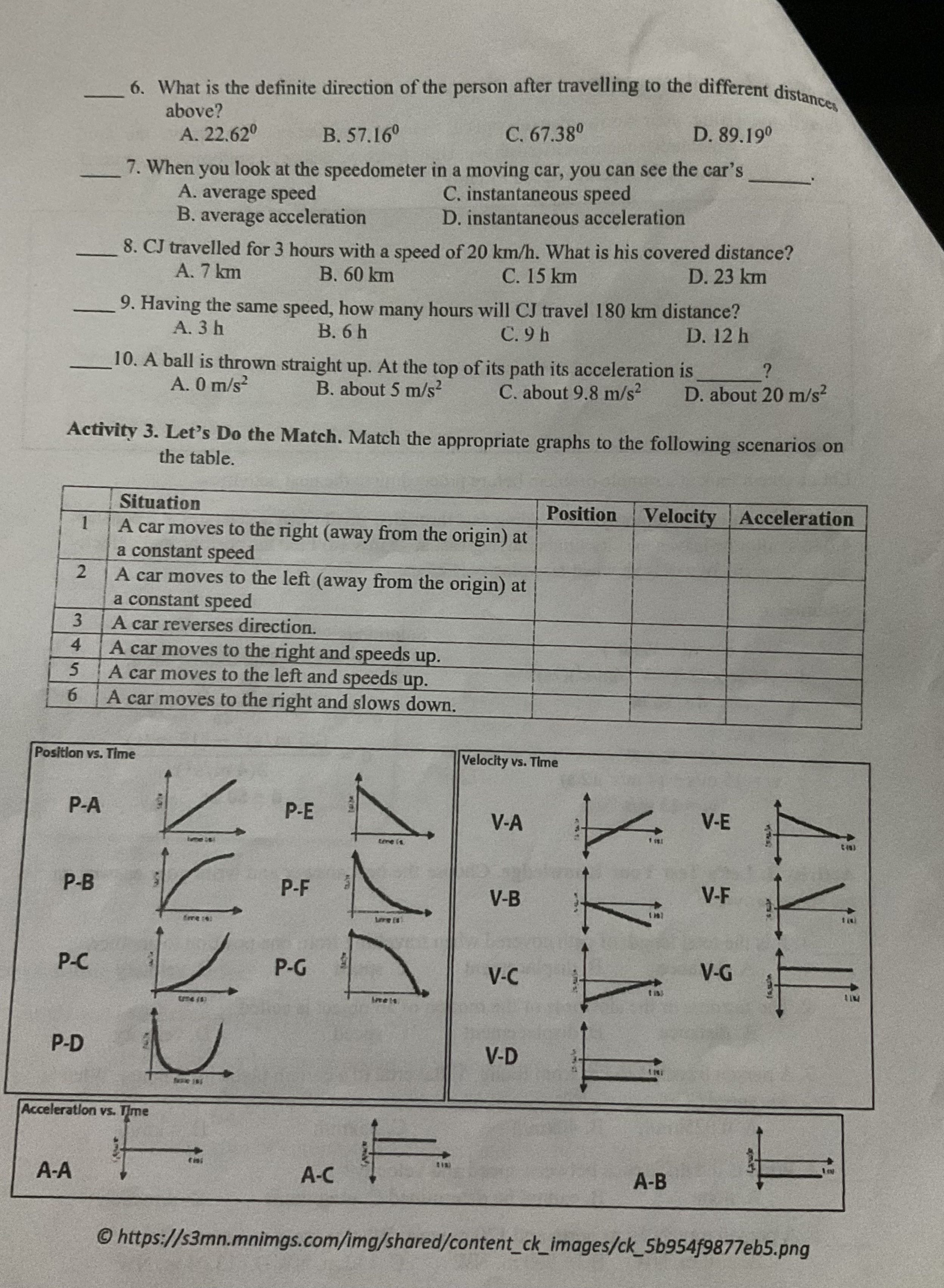
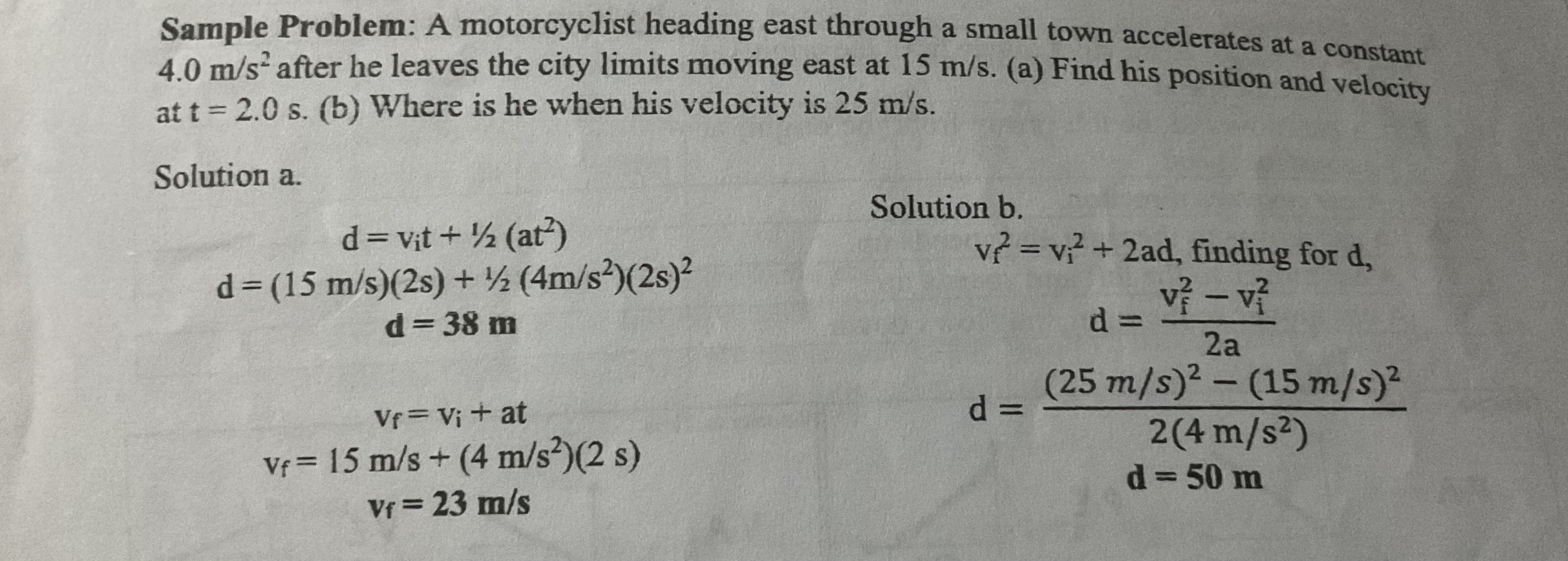
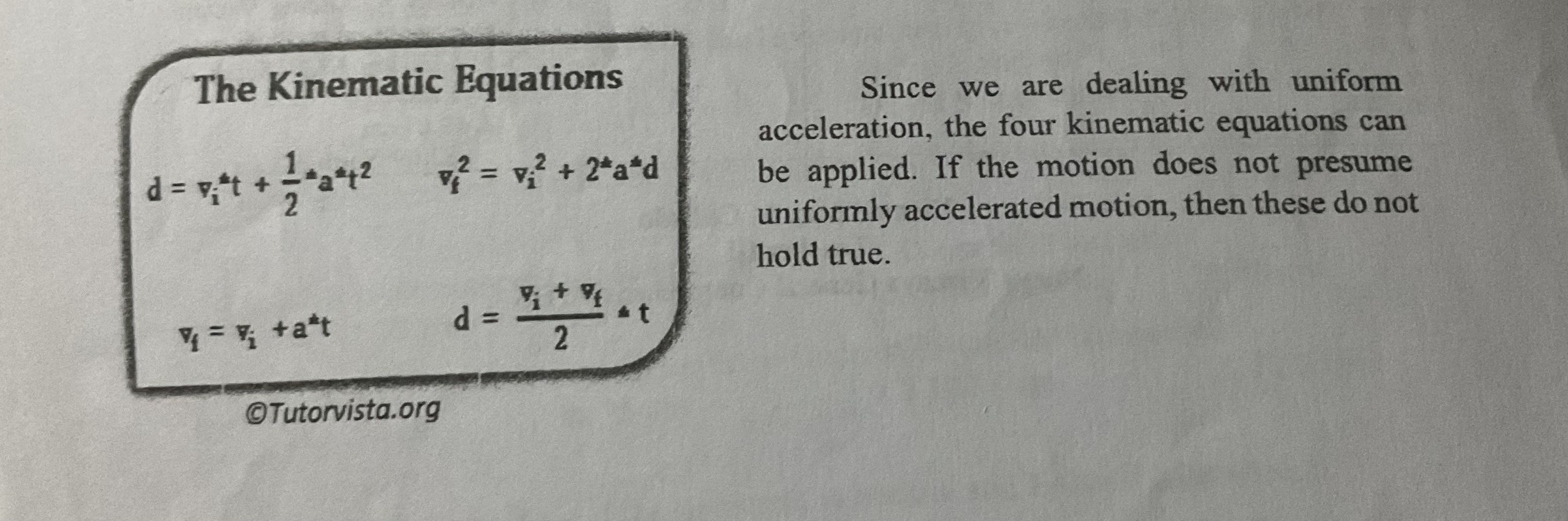
Answer the following Show your complete solution and explain it
I provided examples below
please explain also how can I easily determine the position, velocity and acceleration in activity 3
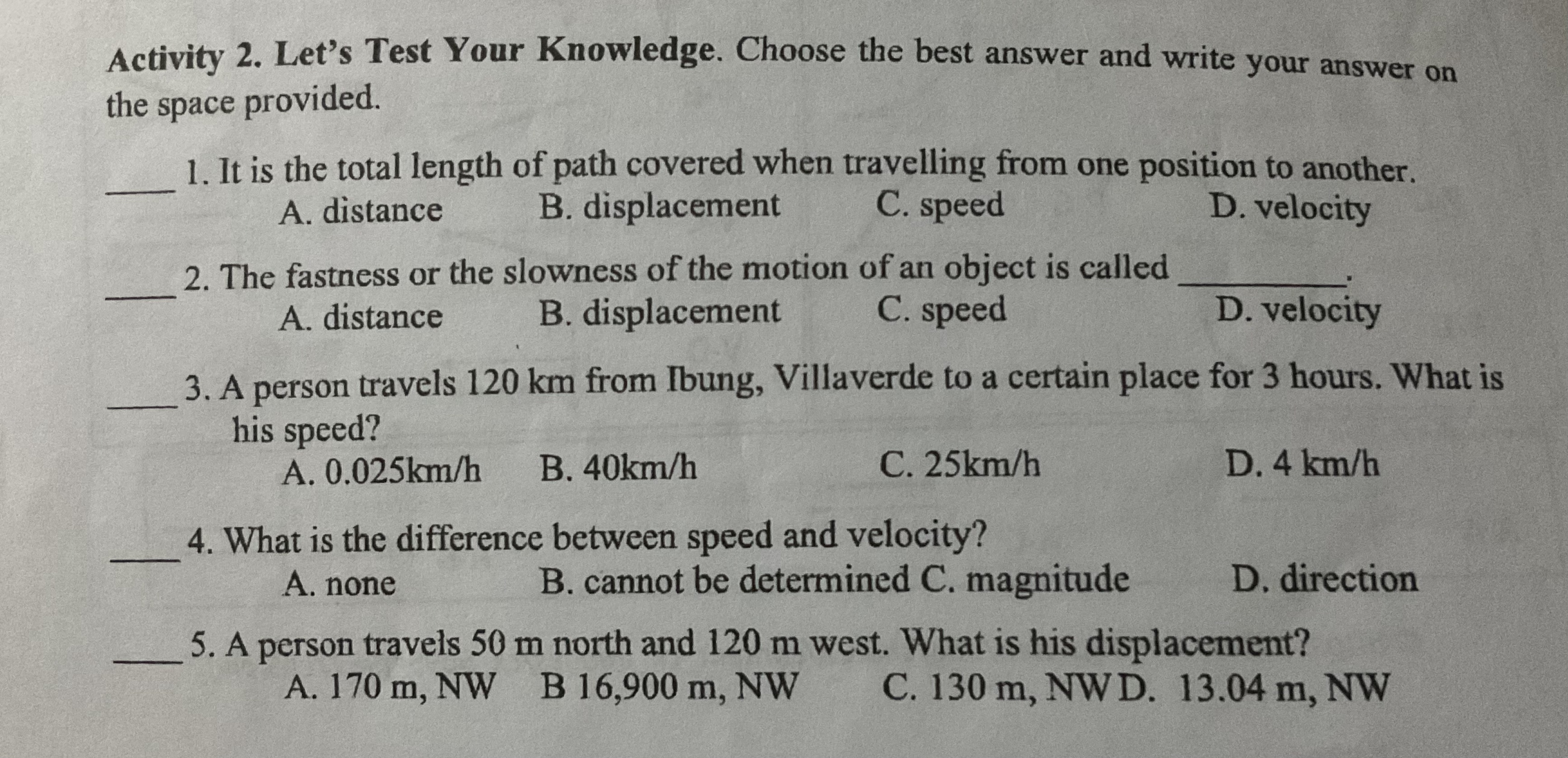
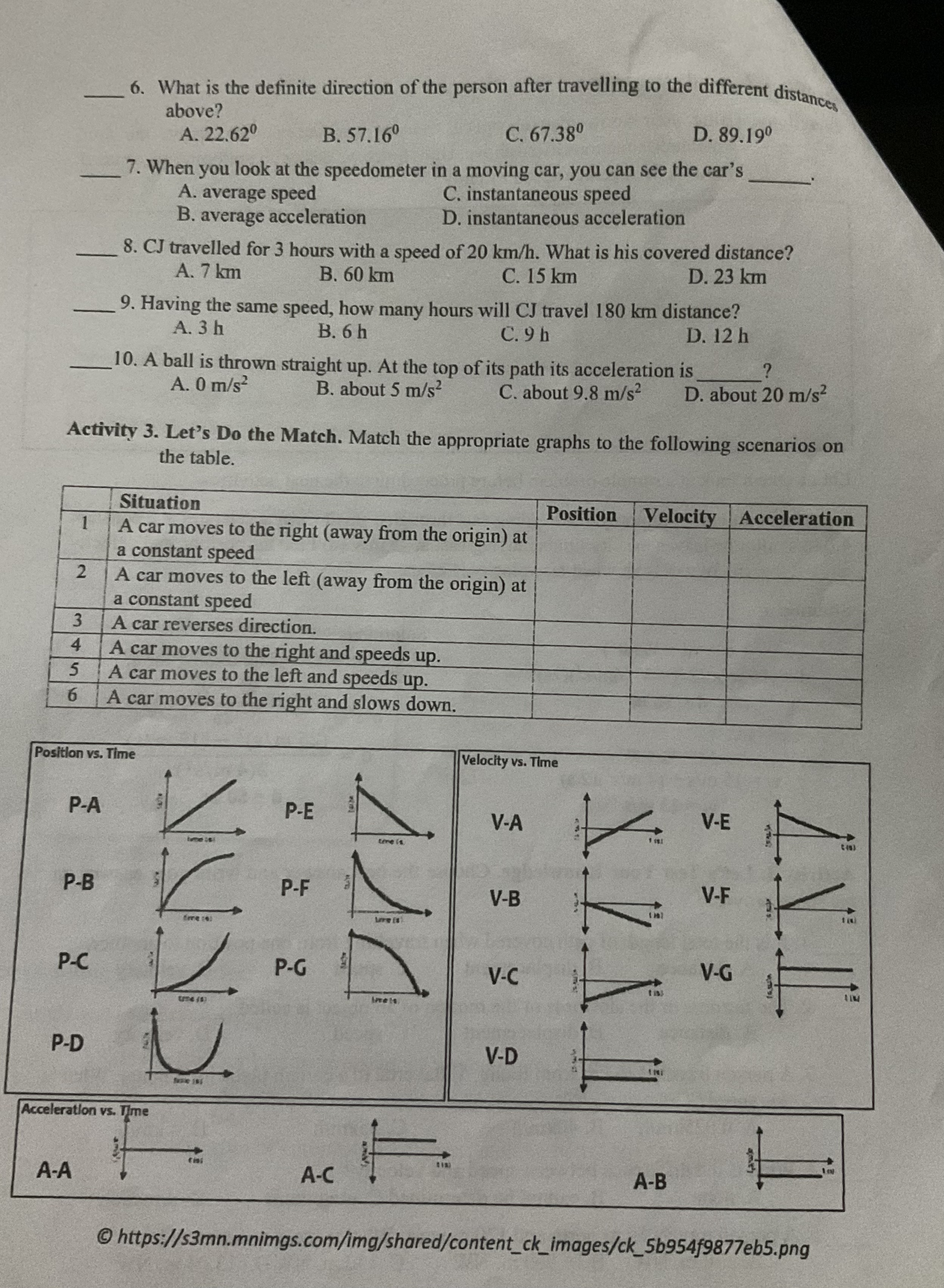
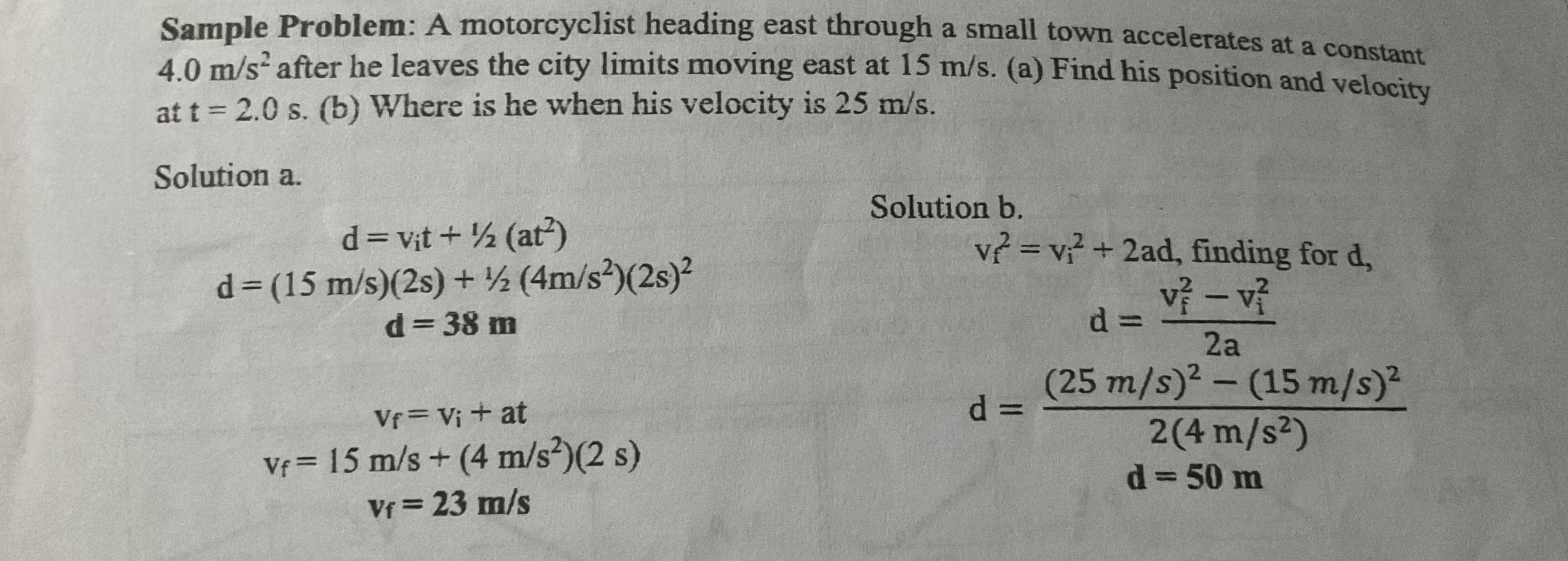
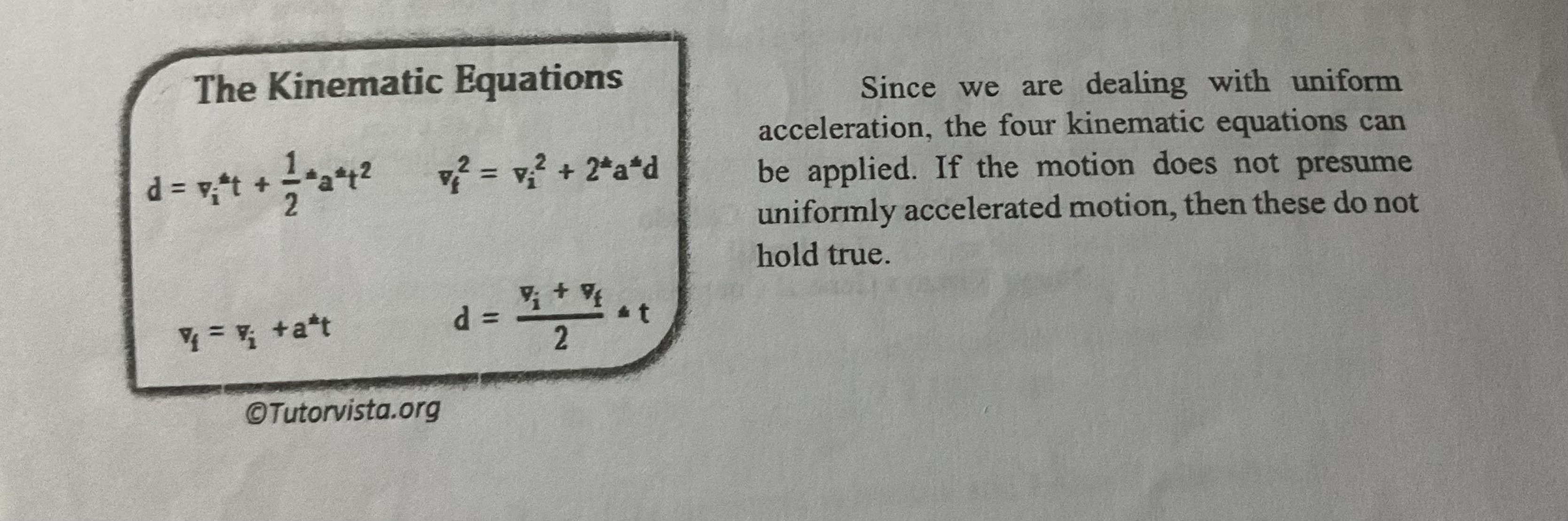
Activity 2. Let's Test Your Knowledge. Choose the best answer and write your answer on the space provided. 1. It is the total length of path covered when travelling from one position to another. A. distance B. displacement C. speed D. velocity 2. The fastness or the slowness of the motion of an object is called A. distance B. displacement C. speed D. velocity 3. A person travels 120 km from Ibung, Villaverde to a certain place for 3 hours. What is his speed? A. 0.025km/h B. 40km/h C. 25km/h D. 4 km/h 4. What is the difference between speed and velocity? A. none B. cannot be determined C. magnitude D. direction 5. A person travels 50 m north and 120 m west. What is his displacement? A. 170 m, NW B 16,900 m, NW C. 130 m, NWD. 13.04 m, NW6. What is the definite direction of the person after travelling to the different distances above? A. 22.620 B. 57.160 C. 67.38 D. 89.190 7. When you look at the speedometer in a moving car, you can see the car's A. average speed C. instantaneous speed B. average acceleration D. instantaneous acceleration 8. CJ travelled for 3 hours with a speed of 20 km/h. What is his covered distance? A. 7 km B. 60 km C. 15 km D. 23 km 9. Having the same speed, how many hours will CJ travel 180 km distance? A. 3 h B. 6 h C. 9h D. 12 h 10. A ball is thrown straight up. At the top of its path its acceleration is A. 0 m/sz B. about 5 m/s2 C. about 9.8 m/s2 D. about 20 m/s2 Activity 3. Let's Do the Match. Match the appropriate graphs to the following scenarios on the table. Situation Position Velocity Acceleration A car moves to the right (away from the origin) at a constant speed 2 A car moves to the left (away from the origin) at a constant speed 3 A car reverses direction. 4 A car moves to the right and speeds up. 5 A car moves to the left and speeds up. 6 A car moves to the right and slows down. Position vs. Time Velocity vs. Time P-A P-E V-A V-E P-B P-F V-B V-F P-C P-G V-C V-G P-D V-D Acceleration vs. Time A-A A-C A-B https://s3mn.mnimgs.com/img/shared/content_ck_images/ck_56954f9877eb5.pngSample Problem: A motorcyclist heading east through a small town accelerates at a constant 4.0 m/s' after he leaves the city limits moving east at 15 m/s. (a) Find his position and velocity at t = 2.0 s. (b) Where is he when his velocity is 25 m/s. Solution a. Solution b. d = vit + 1/2 (at2) d = (15 m/s)(2s) + 1/2 (4m/s2)(2s)2 v? =vi+ 2ad, finding for d, d= 38 m d = VF - vi 2a (25 m/s) 2 - (15 m/s) 2 Vf = Vi + at d = Vf = 15 m/s + (4 m/s2) (2 s) 2 (4 m/s2) vf = 23 m/s d =50 mThe Kinematic Equations Since we are dealing with uniform acceleration, the four kinematic equations can d = vi#t 2 = v.2 + 2*and be applied. If the motion does not presume uniformly accelerated motion, then these do not hold true. = v; +at d = 2 Tutorvista.org
Step by Step Solution
There are 3 Steps involved in it

Get step-by-step solutions from verified subject matter experts
 Study Help